
The phrase "how AI models predict drug price impact of tariffs" sounds like one capability. In the evidence, it is two. One body of work tests whether machine-learning models can estimate pharmaceutical prices from historical purchasing or reimbursement data. A different, much thinner body of material describes tariff-scenario simulators that help companies ask what might happen if trade-policy assumptions change. No published study directly tests an AI model's ability to predict how US pharmaceutical tariffs will affect drug prices.
That distinction matters because a procurement forecast is not judged by whether its demo felt plausible. It is judged later, when a buyer has to explain why a contract price, wholesaler quote, shortage substitute, or value-analysis recommendation moved differently from the forecast. A model that predicts prices in one setting has not automatically earned the right to simulate tariff pass-through in another.

The Best Evidence Supports Price Prediction, Not Tariff Prediction
The strongest peer-reviewed anchor is the 2024 BMC Public Health study by Fazekas and colleagues. The authors trained machine-learning models on more than 237,000 pharmaceutical purchase records covering 970 product categories across 10 countries, and the best-performing random forest model reached an R² of 0.85 for price prediction.[1]
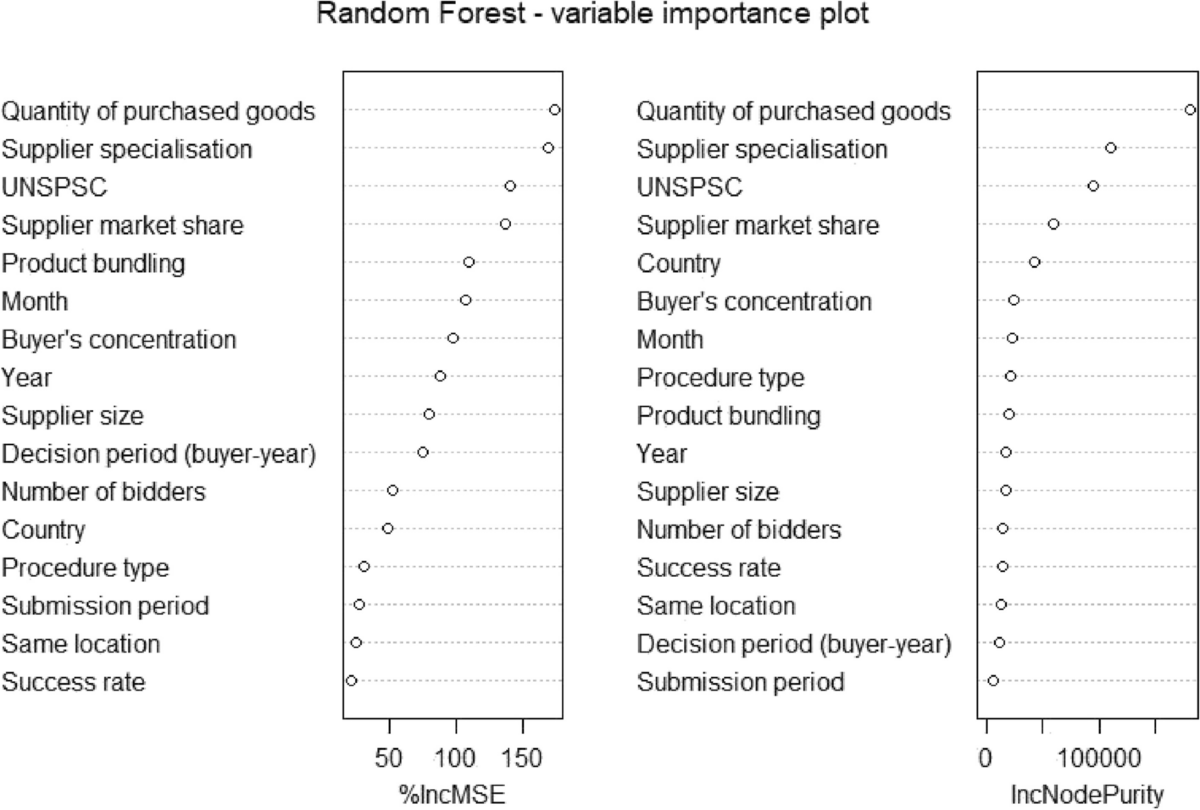
That is not a trivial result. It shows that structured procurement data can contain enough signal for a model to estimate purchase prices with useful explanatory power. For health-system analytics teams, this is the kind of evidence worth taking seriously: a peer-reviewed model, a large transaction-level dataset, multiple countries, and an outcome that maps to a real purchasing quantity rather than a vague business metric.
It also stays inside a narrower lane than many vendor slides would prefer. The study used Latin American public procurement records. It did not validate predictions in US commercial pharmaceutical markets, group purchasing organization contracts, wholesaler acquisition cost dynamics, 340B arrangements, manufacturer rebates, hospital acquisition costs, or a live US tariff regime. Most importantly for the tariff question, it did not test whether the model could identify which portion of a drug's price exposure comes from active pharmaceutical ingredient origin, country-specific tariff treatment, corporate eligibility, onshoring plans, or policy timing.
A high R² in one procurement setting is evidence of pattern recognition in that setting. It is not evidence that the same model, or even the same modeling approach, can predict tariff-induced price changes in US pharmaceutical purchasing. That is the evidentiary jump that should not be hidden inside the word "tariff-aware."
What a 2026 Tariff-Aware Model Would Have to Know
The April 2, 2026 US executive order is a useful stress test because it is not a simple across-the-board percentage. It establishes a multi-tier pharmaceutical tariff structure: a 100% standard rate for patented drugs effective July 31, 2026 for large companies, a 20% rate for drugs covered by onshoring plans, 0% for countries with most-favored-nation deals, 15% for the EU and Japan, and 10% for the UK.[2]
A model built for this environment would need more than historical price curves. At minimum, it would need to know whether the product is covered by the patented-drug provision, whether the manufacturer falls into the affected company category, whether a qualifying onshoring plan applies, which countries are relevant to tariff treatment, and when each policy condition becomes effective. It would also need to decide what the predicted outcome is: list price, net price, acquisition cost, bid price, reimbursement amount, or household medication cost. Those are not interchangeable targets.
| Model input or decision point | Why it matters for tariff impact |
|---|---|
| Drug status and tariff category | The 2026 framework treats patented drugs and other covered products differently. |
| Company size or eligibility | The 100% standard rate applies to large companies under the executive order's timing. |
| Onshoring plan status | Covered onshoring plans are associated with a lower 20% rate. |
| Country-specific treatment | MFN countries, the EU, Japan, and the UK have different stated rates. |
| API country of origin | Tariff exposure depends heavily on origin rules, not just brand ownership or finished-product labeling. |
| Outcome measure | A forecast of list price does not automatically predict hospital acquisition cost or patient household spending. |
The hardest input may be the least visible one. Brookings notes that, under current Customs and Border Protection rules, active pharmaceutical ingredient country of origin is the primary determinant of tariff exposure. It also describes API supply chains as opaque, with 35% of APIs coming from outside the United States and China dominating fine chemicals.[3]
That is a practical modeling problem, not a footnote. If a system cannot reliably identify API origin and the relevant manufacturing pathway, it may be modeling the wrong exposure. A product can look domestic at the package or distributor level while still depending on ingredients or upstream inputs that determine tariff risk. The available peer-reviewed drug-price prediction evidence does not show that these variables were captured, nor that predictions were tested against a tariff policy shock structured this way.
The Vendor Claims Are Directional, Not Validation
Commercial material fills the gap with confident language. Okra's ValueScope has been described as more than 90% accurate in health technology assessment price predictions across more than 1,700 European drugs.[4] That claim deserves a fair read: HTA price prediction is related to drug-pricing analytics, and European reference-pricing systems are structured enough for modeling to be plausible.
But the claim is still not the missing validation. The reported performance comes from company testing, not independent replication. It is tied to European HTA and reference-pricing systems, not US tariff-adjusted pharmaceutical purchasing. It does not prospectively test whether a model can predict price changes after the 2026 US tariff framework takes effect.
Tariff-scenario tools are even more removed from the procurement question. Vendor discussions of AI tariff simulators cite Gartner's 2025 Resilience Benchmark figures, including 28% faster response to disruptions and 19% shorter recovery cycles among companies embedding AI risk models, and point to KPMG's 2026 supply-chain trends framing AI simulators as essential tools.[5] Those numbers may describe disruption response in broad supply-chain contexts. They do not validate pharmaceutical price prediction under US tariff rules, and they are not peer-reviewed pharma-specific evidence.
The same caution applies to general supply-chain AI language. A platform can help unify data, surface supplier dependencies, or support scenario planning without proving that it can predict a drug's tariff-driven price movement accurately enough for a health-system contracting decision. That difference is where budget assumptions become fragile.
Magnitude Context Is Not Model Evidence
Macroeconomic estimates can still be useful. The Yale Budget Lab projection cited in Forbes estimated that a 25% pharmaceutical tariff would increase medication costs by about $600 per household per year.[6] That kind of figure helps explain why procurement teams are asking for better forecasting tools in the first place.
It should not be mistaken for evidence that AI can solve the forecasting problem. A household-cost projection is not a validated model for hospital purchase prices, drug-by-drug acquisition costs, or manufacturer-specific tariff pass-through. It frames possible scale; it does not validate a vendor's model architecture, inputs, calibration, or prospective performance.
What Procurement Teams Should Ask Before Treating the Output as Decision-Grade
A useful review does not need to reject AI drug-pricing tools. It needs to separate an analytic aid from a validated tariff forecast. Before a model output enters a contract scenario, formulary budget impact review, or value-analysis packet, the buyer should be able to answer a few concrete questions.
- What exact price is being predicted: list price, net price, acquisition cost, bid price, reimbursement amount, or household cost?
- Was the model validated in US pharmaceutical purchasing data, or only in non-US procurement, HTA, or general supply-chain settings?
- Does the model explicitly include the 2026 tariff variables: drug status, company eligibility, onshoring-plan treatment, country-specific rates, timing, and API origin?
- Was performance tested prospectively after a policy change, or only retrospectively on historical prices?
- Is the evidence independently replicated, peer-reviewed, or only reported by the vendor?
- How does the model communicate uncertainty when tariff exposure depends on missing or opaque supply-chain data?
The answer to those questions will often be more important than the nominal accuracy metric. A model with a strong historical fit but missing tariff inputs can be precisely wrong. A simulator with elegant scenarios but no drug-level validation can still be useful for discussion while remaining inappropriate as a price forecast.
Evidence Verdict
| Claim | Evidence status | Procurement judgment |
|---|---|---|
| AI can predict some drug prices from structured historical data | Supported by peer-reviewed evidence, especially Fazekas et al., but in Latin American public procurement data | Credible within validated settings; not automatically transferable to US tariff-exposed purchasing |
| AI can predict HTA prices with high accuracy | Supported by vendor-reported Okra ValueScope claims, not independent US tariff validation | Interesting but not decision-grade for US tariff impact |
| AI tariff simulators can help companies model disruption scenarios | Supported mainly by cross-industry and commercial materials | Useful for scenario discussion; insufficient as pharma-specific price prediction evidence |
| A unified AI model can predict US pharmaceutical tariff impact on drug prices | No published study directly validates this capability | Unsubstantiated for procurement decisions until independently tested in the 2026 US context |
The current evidence does not show that tariff-aware AI drug price prediction is impossible. It shows something narrower and more important for governance: the demonstrated capabilities have not yet been connected in the setting where the claim is being sold. Peer-reviewed drug-price prediction exists, but it is context-limited. Tariff-scenario simulation exists, but it is largely cross-industry and non-peer-reviewed. The 2026 US pharmaceutical tariff framework adds policy variables that current published drug-price models have not been shown to incorporate.
Until independent, pharma-specific, US-context validation is available, procurement teams should treat "tariff-aware AI price prediction" as a hypothesis wrapped in two adjacent evidence streams, not as a decision-grade forecasting capability.
References
- Predicting medicine prices using transaction data: a machine learning approach, BMC Public Health, 2024.
- Adjusting Imports of Pharmaceuticals and Pharmaceutical Ingredients Into the United States, The White House, April 2, 2026.
- Pharmaceutical tariffs: How they play out, Brookings.
- Okra AI-based drug price predictor 90% accurate, pharmaphorum.
- AI Tariff Scenario Simulators: What-If Modeling for Trade Policy and Supply Chain in 2026, CXTMS.
- As Tariffs Begin, What Will They Do To Drug Prices And Availability?, Forbes, March 4, 2025.