
The short answer to whether AI tools help defend hospitals against ransomware is: they may help with parts of detection and triage, but the evidence does not show that they independently reduce hospital ransomware risk. The most quoted quantitative claim — that AI-enabled cybersecurity can cut ransomware detection time by 80% and reach greater than 95% accuracy — traces to a single ResearchGate-hosted 2025 literature synthesis and case-analysis paper, not to a peer-reviewed, controlled hospital deployment trial.[1]
That distinction matters in procurement. A model that detects suspicious behavior faster in a synthesis or case analysis has not yet shown that a hospital has fewer ransomware events, shorter downtime, fewer diverted ambulances, cleaner restoration, or less clinical disruption. Those are different endpoints. The first may be useful; the second is what hospital leaders are usually being invited to believe.
| Claim being evaluated | What the evidence supports | What it does not prove |
|---|---|---|
| AI tools can detect ransomware faster | A 2025 ResearchGate-hosted synthesis/case-analysis paper reports an 80% detection-time reduction | That AI-secured hospitals have fewer ransomware attacks or less downtime |
| AI tools can classify ransomware accurately | The same paper reports greater-than-95% accuracy | That the figure replicates across live hospital networks with legacy systems and clinical workflows |
| AI changes the ransomware contest | A 2026 peer-reviewed review describes AI as useful to defenders and attackers | That AI creates a net protective effect for hospitals |
| Ransomware causes real hospital harm | Independent epidemiology and industry reporting show substantial disruption | That AI deployment is the variable explaining better or worse outcomes |
The 80% and 95% Numbers Need Source Tracing
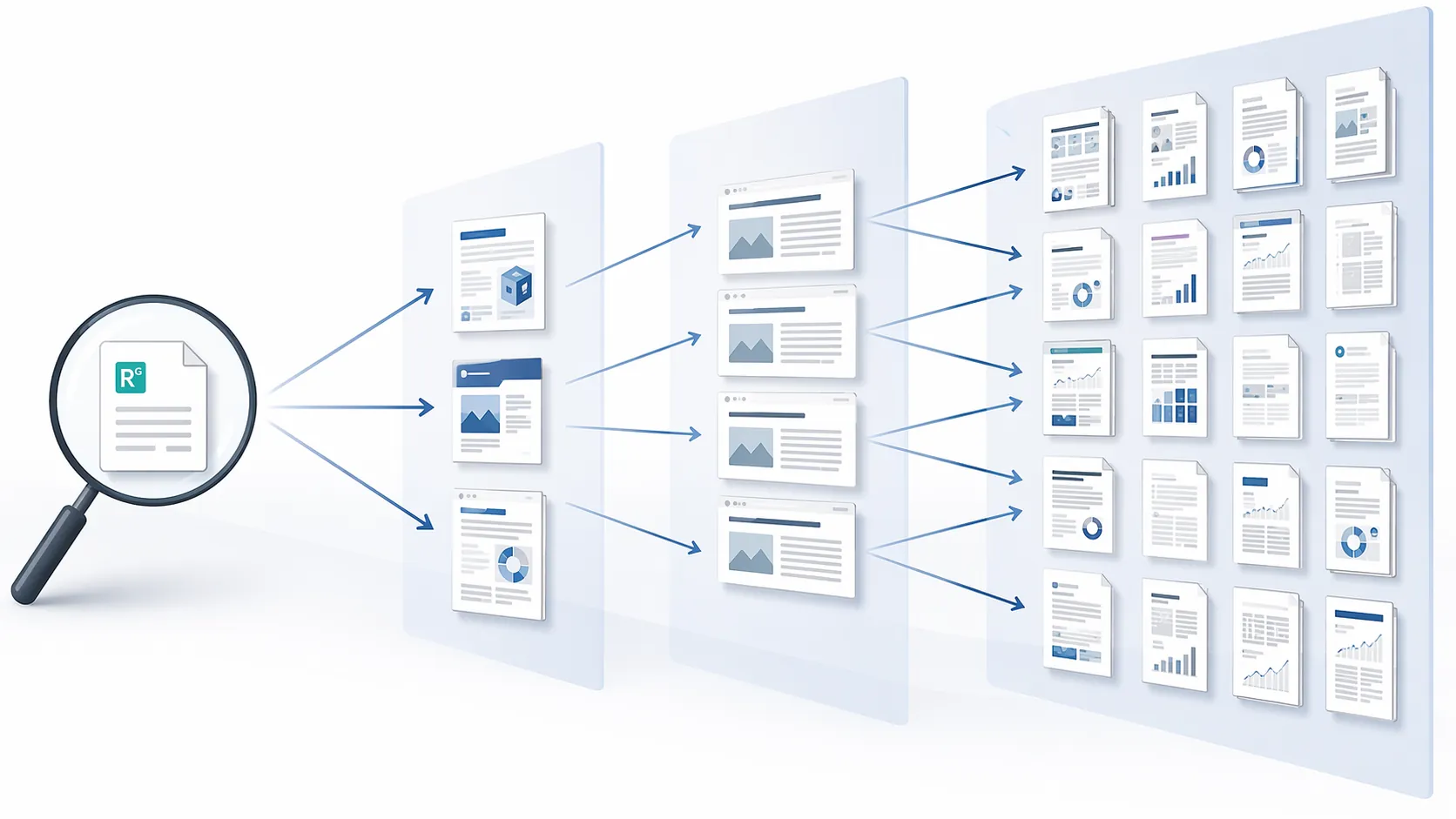
The 80% detection-time reduction and greater-than-95% accuracy figures are not useless. They are simply doing more work in the market than the source can carry. The paper that reports them is hosted on ResearchGate and is described in the available material as a literature synthesis and case analysis. It is not a prospective randomized trial. It is not an independent multicenter hospital deployment study. It does not provide original hospital outcome data showing that AI-protected hospitals experienced fewer ransomware incidents than hospitals using conventional security controls.[1]
A number like “80% faster” has an obvious appeal in a hospital security slide deck. It compresses the messy work of monitoring, alert review, escalation, containment, restoration, and communication into a single measurable improvement. But detection speed is only one part of the event chain. If the alert is noisy, if the affected system is a brittle legacy platform, if the incident response team is understaffed, or if backups are not restorable at clinical speed, faster detection can still leave patients and staff inside a prolonged downtime event.
Accuracy deserves the same caution. A greater-than-95% accuracy figure may describe a model’s performance on a particular dataset, task, or evaluation setup. It does not tell a CIO how many false positives a hospital SOC will face during a normal week, how many alerts will reach clinical leadership, or whether the tool will distinguish malicious behavior from the strange but legitimate traffic patterns created by medical devices, interfaces, remote access workflows, and old systems that were never designed for this kind of inspection.
This is the category error that should make governance committees slow down. “AI detected something earlier” is a detection claim. “AI reduced hospital ransomware risk” is an outcome claim. The current source trail supports the first kind of claim more than the second.
The Strongest Current Peer-Reviewed Source Is More Cautious
The most useful peer-reviewed counterweight in the current evidence base is Martin et al., published in Trauma Surgery & Acute Care Open in 2026. It does not dismiss defensive AI. It describes AI as a “double-edged sword”: defenders may use behavioral analysis and other AI-enabled tools, while attackers may use AI for automated reconnaissance, polymorphic code, and AI-generated phishing.[2]
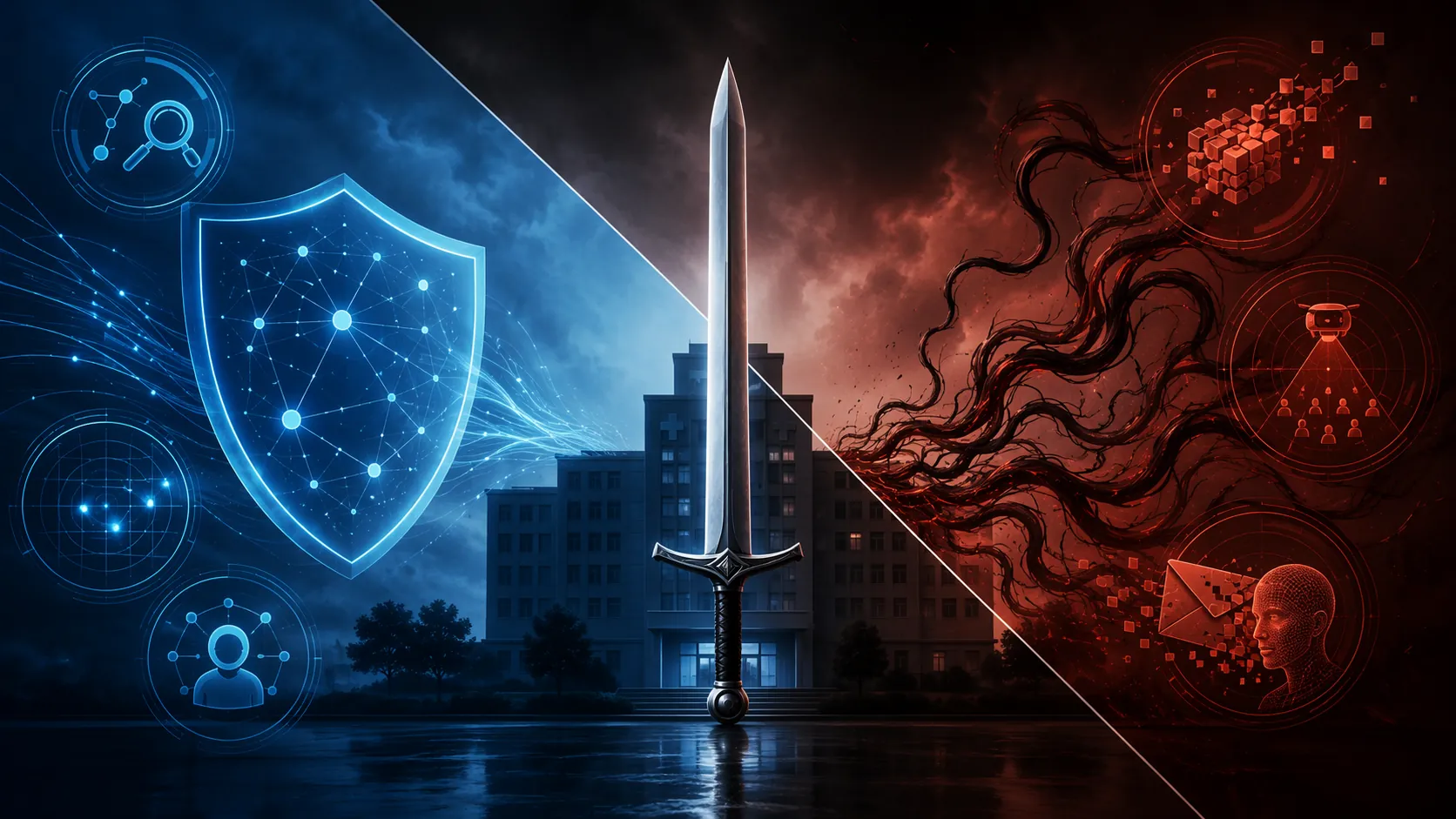
That framing is a better fit for hospitals than the cleaner vendor story. AI is not a shield added to one side of the battlefield. It is a capability that can lower the cost of pattern recognition for defenders and lower the cost of targeting for attackers. If a hospital is buying an AI-enabled security product, it is also operating in an environment where adversaries may use AI to improve phishing content, vary malware behavior, or automate early reconnaissance.
Martin et al. is still not a controlled hospital-outcome study. It is a narrative review in a clinical surgical journal, not a granular head-to-head evaluation of specific cybersecurity tools. Its value is that it keeps the conclusion proportional: some AI methods may help defensive monitoring, but the peer-reviewed literature does not show a clean net reduction in hospital ransomware outcomes.[2]
False Positives and Legacy Systems Are Not Footnotes
The after-demo problem is not whether the dashboard looks intelligent. It is whether the hospital can live with the tool. Maynard, writing from a healthcare practitioner perspective in Infosecurity Magazine in November 2024, reports that AI-driven false positives can create alert fatigue in hospital environments, that legacy-system compatibility limits deployment, and that AI cannot replace human incident response.[3]
Those are operational constraints, not philosophical objections. A hospital SOC analyst facing a stream of machine-prioritized alerts still has to decide what is real. A CIO still has to explain why a system tied to patient care cannot be easily instrumented, segmented, or upgraded. Clinical operations still need downtime procedures, restoration priorities, communications, and command structure. An AI product that improves signal detection may be valuable, but it does not decrypt records, rebuild interfaces, validate backups, or decide whether a service line can safely keep running.
This is where effectiveness claims often get slippery. A vendor can plausibly show that a tool identifies anomalous behavior. A hospital needs to know whether the total system — people, process, architecture, recovery, governance, and tooling — performs better under attack. The current evidence base is much thinner on that second question.
Weak Security Hygiene Can Swallow an AI Benefit
One of the more procurement-relevant findings in Martin et al. is not about a model at all. The review reports that 25% of healthcare institutions do not encrypt cloud data and that 36% of institutions in multi-cloud environments lack encryption.[2] Those gaps are a warning against treating AI as a stand-alone defense layer.
If a hospital lacks basic encryption coverage, has inconsistent identity controls, carries unsupported systems, or cannot restore core applications cleanly, an AI detection layer may sit on top of unresolved risk rather than reduce it. It may find a problem earlier while the organization still lacks the architecture or recovery maturity to contain it.
This is also why comparing “AI-secured” and “non-AI-secured” hospitals would be difficult even if the field had more studies. Better-funded hospitals that buy AI tools may also be more likely to have stronger security teams, better segmentation, more disciplined backup testing, stronger identity governance, and executive attention. Without controlled designs or careful adjustment, AI can be credited for what may actually be baseline security maturity.
Ransomware Harm Is Well Supported; AI Benefit Is Not
The seriousness of hospital ransomware does not need embellishment. Neprash et al., in JAMA Health Forum, identified 374 ransomware attacks on U.S. hospitals, 42 million patient records exposed, and care disruption in 44.4% of attacks.[4] That is the kind of evidence hospital leaders should take seriously because it measures what ransomware does to healthcare delivery, not what a product claims to detect.
Microsoft Threat Intelligence reported in October 2024 that 389 healthcare institutions fell victim to ransomware in FY2024 and that the average hospital loses $900,000 per day in downtime.[5] Microsoft’s recommendations in the report emphasize governance, multifactor authentication, and training more than AI deployment.[5] That emphasis is worth noticing. Even a company with a large AI and security portfolio does not reduce the hospital ransomware problem to buying an AI layer.
Vendor-funded sources add context, but they should not be allowed to settle the AI question. Halcyon’s 2025 white paper characterizes ransomware as a public health crisis and includes a 33% in-hospital mortality increase statistic attributed to a University of Minnesota Medicare analysis, but the white paper is not peer-reviewed and does not isolate AI deployment status.[6] Sophos’ 2026 ransomware survey includes 2,158 respondents across 17 countries, but it is vendor-sponsored and likewise does not isolate whether AI-secured hospitals had different ransomware outcomes.[7]
The patient-harm evidence raises the stakes for ransomware defense. It does not, by itself, validate AI-based defense claims. Severe harm is a reason to demand better evidence, not a reason to lower the standard for accepting a cybersecurity outcome claim.
What a Hospital Can Reasonably Conclude in Q3 2026
The evidence supports a narrow conclusion: AI tools may be reasonable components of a broader hospital ransomware defense stack, especially for anomaly detection, behavioral analysis, alert prioritization, and triage. The evidence does not support claims that AI tools independently prevent ransomware attacks in hospitals or reduce hospital ransomware risk as a demonstrated outcome.
A procurement team should therefore ask vendors to separate model-performance claims from hospital-outcome claims. If the claim is faster detection, ask what dataset, environment, comparator, and false-positive burden produced the number. If the claim is reduced ransomware risk, ask for hospital deployment evidence that measures incidents, containment time, downtime, diversion, restoration, patient-care disruption, and recovery cost. No prospective controlled comparison of AI-secured versus conventionally secured hospitals on ransomware outcomes was found.
The practical question is not whether AI belongs nowhere in hospital cybersecurity. It is whether the tool is being evaluated as one component inside a governed security program or sold as proof that the hospital has solved a clinical operations risk. Those are different purchases.
As of Q3 2026, the source hierarchy is uneven: the most attractive quantitative figures come from a non-peer-reviewed synthesis/case-analysis paper; the most current peer-reviewed treatment is review-level and explicitly double-edged; operational reporting warns about false positives, legacy constraints, and the continuing need for human incident response; and the strongest hospital harm data shows why ransomware matters without proving that AI deployment changes the outcome.
References
- Ransomware in Hospitals: Can AI-Powered Cybersecurity Be the Cure?. ResearchGate, 2025.
- Ransomware Attacks and Cybersecurity Concerns in Modern Hospitals. Trauma Surgery & Acute Care Open, 2026.
- Why Healthcare Needs More Than AI to Fight Cyber-Attacks. Infosecurity Magazine, Nov 2024.
- Trends in Ransomware Attacks on US Hospitals. JAMA Health Forum, 2022.
- Healthcare Ransomware Report. Microsoft Threat Intelligence, Oct 2024.
- Ransomware: A Public Health Crisis. Halcyon Ransomware Research Center, 2025.
- The State of Ransomware 2026. Sophos.