
| Product | Regulatory status | Intended addiction-related use | Strongest peer-reviewed signal in this appraisal | Main evidence gap for adoption |
|---|---|---|---|---|
| reSET | FDA de novo authorization in 2017; described as the first FDA-authorized prescription digital therapeutic for SUD [1][2] | CBT and community reinforcement for cocaine, cannabis, and stimulant use disorders [2] | A regulated digital CBT/community-reinforcement product with peer-reviewed discussion in the SUD DTx literature [2] | The evidence signal is weaker for procurement than the regulatory milestone suggests; no real-world outcomes signal comparable with reSET-O is identified in this evidence set. |
| reSET-O | FDA 510(k) authorization in 2018 as an adjunct to buprenorphine for opioid use disorder [1][2] | OUD treatment alongside buprenorphine, not as a stand-alone replacement for medication treatment [1][2] | A real-world N=602 study reported a 47% reduction in 30-day readmissions and $3,591 lower per-patient costs over 6 months [3] | Two registered RCTs were identified as unpublished as of late 2023: NCT04129580 and NCT04817267 [2] |
| DynamiCare Health | FDA Breakthrough Device Designation in 2022 for smoking cessation in pregnancy [2] | Designated indication is smoking cessation in pregnancy; broader SUD use should not be inferred from the designation [2] | The strongest defensible claim is tied to the designated smoking-cessation context [2] | Published SUD evidence beyond that designated indication remains too limited for broad addiction-treatment claims [2] |
This is the procurement problem hiding inside a neat category label. A formulary committee looking for evidence-based addiction recovery treatments may see three addiction-related digital products with FDA regulatory language around them and assume the hard evidence question has already been answered. It has not. Regulatory status, indication, and clinical evidence strength separate almost immediately.
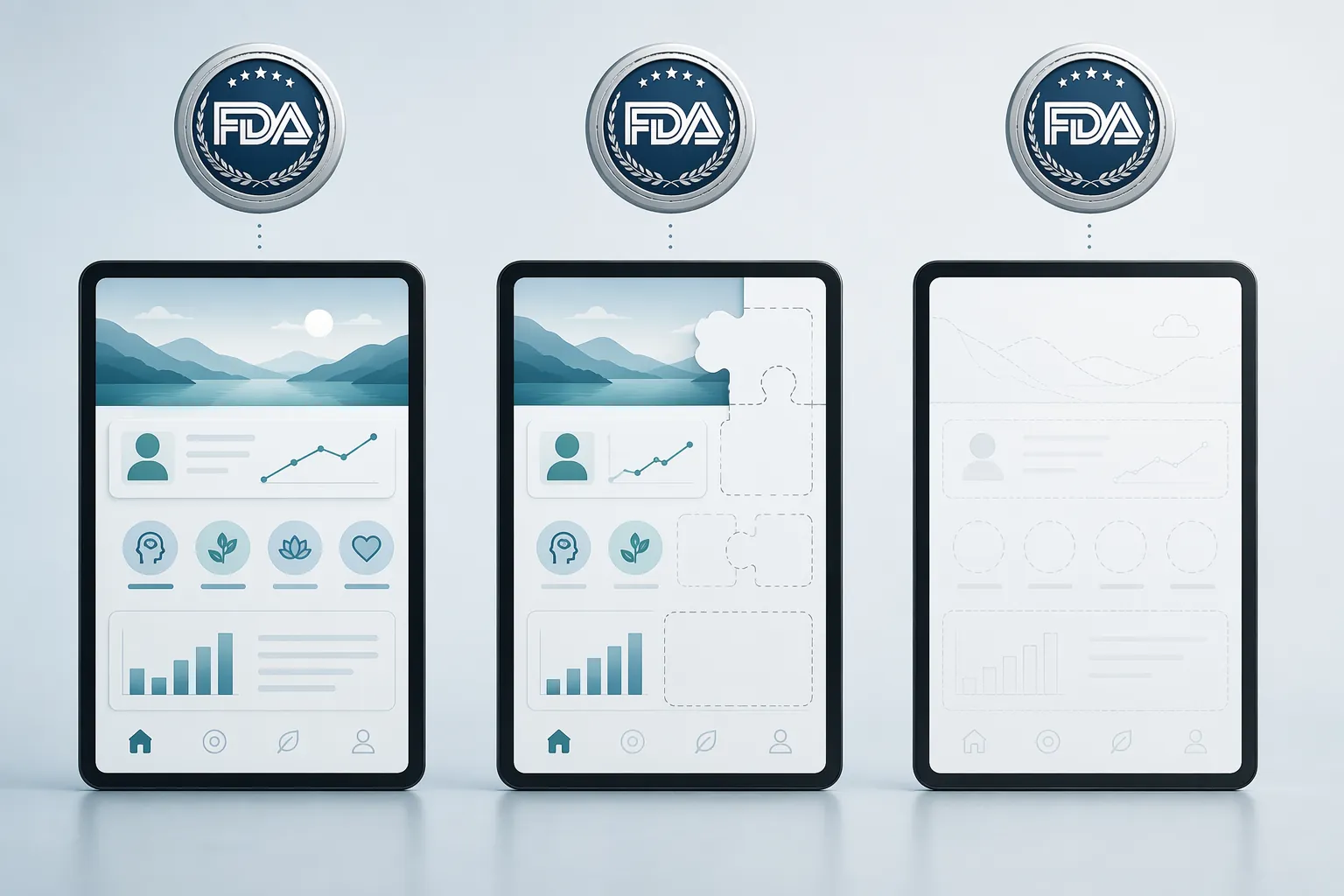
That distinction matters because these products are not being purchased into a quiet, low-risk service line. They enter addiction clinics where staff are already rationing appointment time, payers are looking for measurable benefit, and patients often cycle through fragmented care. A digital CBT module, a contingency-management tool, or a recovery-support app can be useful. But FDA authorization is not an evidence grade, and it should not be allowed to do the work of a trial, an implementation plan, or a support contract.
reSET-O has the most useful outcome signal — and the most important unresolved trial gap
Among the three products, reSET-O deserves the longest look because it has the kind of published outcome signal that procurement teams actually need. Shah et al. reported real-world outcomes in 602 patients, with a 47% reduction in 30-day readmissions and $3,591 lower per-patient costs over 6 months [3]. Those are not vanity engagement metrics. They speak to the pressures addiction systems feel every week: avoidable hospital use, post-discharge instability, and the cost of poorly supported opioid use disorder care.
The product’s role is also clinically bounded. reSET-O is an adjunct to buprenorphine for OUD, not a substitute for medication treatment, and not a generic “opioid recovery app” that can be dropped into any treatment pathway without redesigning care around it [1][2]. That boundary is a strength if the implementation team respects it. It makes the product easier to map to a treatment episode, a prescriber workflow, and a measurable utilization outcome.
The Shah study should still be read as real-world evidence, not as a completed randomized efficacy package. A reduction in readmissions and costs is compelling for a health system or Medicaid program, but it does not erase the need to know whether randomized trials confirm the clinical effect under controlled conditions. The evidence brief identifies two registered reSET-O RCTs that remained unpublished as of late 2023: NCT04129580, with an estimated completion date of September 2023, and NCT04817267, with an estimated completion date of March 2024 [2].
That gap should be handled carefully. Unpublished RCTs are not proof that the product failed. They are also not evidence that it worked. For a procurement committee, the practical consequence is straightforward: reSET-O can be credited with the strongest published real-world support among the FDA-authorized or designated addiction-related digital therapeutics reviewed here, while its randomized evidence file should remain flagged as incomplete until the registered studies are published or otherwise transparently accounted for.
Maricich et al. also provides a peer-reviewed discussion of reSET-O safety and efficacy as an adjunct to buprenorphine treatment for OUD [4]. That helps keep reSET-O out of the category of products supported only by regulatory filings or vendor collateral. But it still does not solve the procurement question by itself: a payer or health system deciding whether to reimburse, train clinicians, and build patient support around reSET-O should ask specifically what published randomized evidence is available as of the contracting date.
reSET is easier to classify than to overclaim
reSET occupies an important regulatory place: FDA de novo authorization in 2017, described in the literature as the first FDA-authorized prescription digital therapeutic for SUD [1][2]. Its intended use is more specific than many sales conversations make it sound. The product delivers CBT and community reinforcement for cocaine, cannabis, and stimulant use disorders [2].
That specificity should guide adoption. A clinic treating stimulant or cannabis use disorder may reasonably consider whether a structured digital CBT/community-reinforcement product can extend limited counseling time. A purchaser looking for an OUD intervention, a polysubstance-use platform, or a general recovery app should not let the 2017 de novo milestone substitute for indication matching.
The evidence problem is not that reSET lacks any basis for use. The problem is that the most decision-relevant published outcome signal in this appraisal belongs to reSET-O, not reSET. If the procurement question is “which product has shown measurable effects on downstream utilization and cost in a published real-world study,” reSET does not carry the same weight in the evidence set provided here.
DynamiCare should not be treated as broad SUD evidence
DynamiCare is the easiest product to overextend. The relevant FDA status in this evidence set is a 2022 Breakthrough Device Designation for smoking cessation in pregnancy [2]. That is not the same as broad clearance for substance use disorder treatment, and it should not be presented that way in a formulary memo.
The distinction is not bureaucratic hair-splitting. Breakthrough designation can indicate that FDA sees a device as potentially important for a serious condition or unmet need, but it does not provide the same evidence answer a coverage committee needs for broad SUD use. In the reviewed literature, evidence for DynamiCare beyond the designated smoking-cessation-in-pregnancy indication remains limited and emerging [2].
For procurement, that means DynamiCare’s claims should be kept close to the studied and designated use case. If a vendor presentation moves from smoking cessation in pregnancy to “substance use disorder treatment” generally, the committee should ask for peer-reviewed data in the exact population and substance category being proposed.
The inconvenient comparator is CBT4CBT
The cleanest way to see why FDA status cannot be treated as an evidence grade is to look outside the FDA-cleared group. CBT4CBT is not FDA-cleared, but the reviewed literature identifies it as having the strongest randomized-trial pedigree across alcohol use disorder, cocaine use disorder, and opioid use disorder, including evidence of durability 6 months after treatment [2].

That comparison is uncomfortable in exactly the way a good evidence appraisal should be. If the goal is to buy the best-supported digital addiction intervention, FDA authorization alone will not rank the options correctly. A non-cleared therapy may have stronger longitudinal evidence across substance types than a cleared or designated commercial product. Conversely, a cleared product may have a narrower but more operationally attractive role, as with reSET-O’s adjunctive use alongside buprenorphine and its published real-world utilization findings.
This does not mean procurement teams should ignore FDA status. It means they should put it in the right column. Regulatory status answers whether a product has passed a particular FDA pathway for a particular claim. It does not answer whether the product has the strongest independent evidence, whether the evidence generalizes to the local population, or whether the vendor can support the product through a full treatment cycle.
Where the evidence cannot yet be generalized
The justice-involved population gap is not a side issue in SUD care. A review of digital health and digital therapeutics in criminal justice settings identifies only one study, Chaple et al. 2016, testing the TES/reSET precursor in that setting, while also noting that 65% of U.S. prisoners have an SUD [5].
That gap should change how adoption is framed. If a county program wants to use a digital therapeutic for jail reentry, probation-linked treatment, drug-court referrals, or post-release OUD support, the evidence base is thinner than the general outpatient SUD label may imply. The right conclusion is not that these tools cannot help justice-involved patients. The right conclusion is that procurement should not assume equivalence between standard outpatient evidence and carceral or reentry settings.
The reviewed literature also flags culturally homogeneous samples and a lack of studies addressing algorithmic bias specifically in SUD digital therapeutics [2]. Some of these products are structured therapeutic programs rather than opaque predictive models, so “algorithmic bias” may not be the central technical risk for every product. The broader implementation issue remains: language, literacy, device access, privacy constraints, and culturally specific treatment engagement are all patient-facing variables. Absence of evidence on those dimensions should not be rounded down to “no concern.”
Pear’s bankruptcy is a deployment risk, not an efficacy result
Pear Therapeutics’ Chapter 11 bankruptcy filing in April 2023 belongs in this appraisal, but not as a clinical outcome [2]. It does not tell us whether reSET or reSET-O works. It tells us that a prescription digital therapeutic can have FDA authorization and still face business-continuity problems that affect access, support, contracting, and implementation.
For a health system, that is not a minor administrative concern. Digital therapeutics require clinician training, patient onboarding, technical support, data workflows, and renewal decisions. If a product’s commercial support changes, patients may experience the interruption long before a committee has finished revising its purchasing documents. Vendor viability should therefore be scored separately from clinical evidence, but it should still be scored.
Procurement-facing verdict
- reSET-O has the most credible published real-world support in this evidence set, especially for readmissions and cost over 6 months, but its registered RCT publication gap remains material for coverage and contracting decisions.
- reSET has clear regulatory and indication boundaries: CBT plus community reinforcement for cocaine, cannabis, and stimulant use disorders. It should not be treated as a general SUD or OUD solution.
- DynamiCare’s defensible FDA-linked status is Breakthrough Device Designation for smoking cessation in pregnancy. Published evidence is too thin to support broad SUD claims without indication-specific data.
- CBT4CBT complicates the category because the strongest longitudinal randomized evidence across multiple substance types belongs to a digital therapy that is not FDA-cleared.
- Justice-involved populations, culturally diverse populations, and bias-related performance questions remain boundary conditions for generalizing the current evidence.
- FDA authorization should be logged as regulatory status, not used as a proxy evidence grade.
This appraisal is procurement-decision support, not clinical guidance. Before adopting or reimbursing any product in Q3 2026, teams should verify current trial publications, product availability, support arrangements, and indication-specific evidence against the population they intend to serve.
References
- FDA regulations and prescription digital therapeutics — PMC
- Artificial Intelligence in Addiction: Challenges and Opportunities — PMC
- Shah et al. 2022 — SpringerLink, 2022
- Safety and efficacy of reSET-O as buprenorphine adjunct — Taylor & Francis Online
- Use of Digital Health and Digital Therapeutics to Treat SUD in Criminal Justice Settings — PMC