
The most consequential AI work in Parkinson’s research is not starting with an algorithm. It is starting with cohorts that have survived long enough, collected enough modalities, and been shared widely enough for algorithms to have something worth learning from. That is where Parkinson’s foundations have changed the field: the Michael J. Fox Foundation’s Parkinson’s Progression Markers Initiative, the Global Parkinson’s Genetics Program, and the Parkinson’s Foundation’s PD GENEration are now part of the evidence substrate behind biomarker models, genetic discovery, subtype work, and disease-progression research.
That infrastructure is the most useful way to understand how foundations are accelerating Parkinson’s AI research. Foundation support matters less as a halo around an AI claim than as a way to ask better appraisal questions: which dataset, collected from whom, with which measurements, under what access rules, and for what target task?
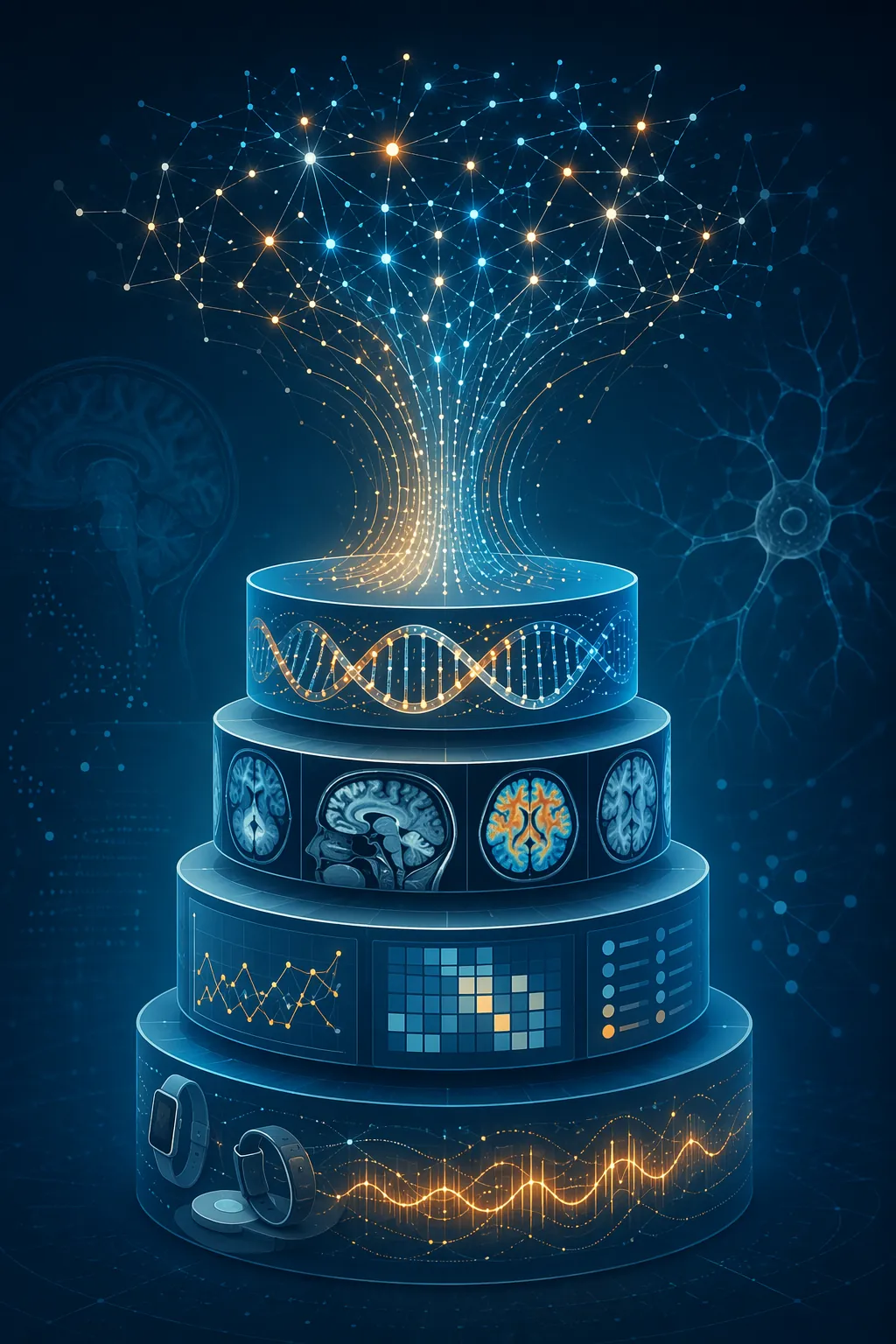
The Dataset Is Part of the Claim
A Parkinson’s AI model trained on longitudinal imaging, biospecimens, genetics, and clinical assessments is making a different kind of claim from a model trained on voice recordings, pose estimates, or sleep-clinic breathing data. A genetics-focused program can support discovery work without being a full multimodal training environment for motor progression. A natural-history cohort can support excellent retrospective modeling and still fall short of clinical deployment evidence.
For governance and procurement readers, the foundation name should be the beginning of due diligence, not the conclusion. The useful questions are ordinary but unforgiving.
- Data size: enough participants and repeated observations to support the modeling task, not merely enough records to train a classifier.
- Cohort diversity: ancestry, geography, disease stage, socioeconomic access, and referral patterns that determine what the model can see.
- Modalities: whether the necessary measurements are present, complete, and aligned at the participant level.
- Accessibility and interoperability: whether outside researchers can reuse the data in ways that make independent replication plausible.
- Peer-reviewed output: useful as a signal of scientific activity, but not equivalent to clinical validation.
- Task fit: whether the dataset was collected for the question the AI system is now being asked to answer.
| Foundation-built resource | Best supported AI use cases | Main appraisal constraint |
|---|---|---|
| PPMI | Longitudinal biomarker modeling, disease maps, subtype analysis, progression research | Natural-history design and cohort representativeness limit direct claims of clinical readiness |
| GP2 | Genetic discovery, ancestry-aware risk analysis, population genetics questions | Not a substitute for a multimodal clinical-AI training cohort |
| PD GENEration | Genetic testing, counseling-linked discovery, bioinformatics-driven analysis | Clinically important genetics infrastructure, but narrower than a full disease-progression AI dataset |
| APDA-funded projects | Targeted AI studies in dyskinesia prediction, network analysis, remote monitoring, and voice prediction | Project-specific evidence must be appraised one tool at a time |
PPMI Shows What Long-Running Multimodal Infrastructure Makes Possible
PPMI deserves the center of the discussion because it looks less like a one-off research dataset and more like durable field infrastructure. The Michael J. Fox Foundation describes PPMI as holding 15 years of multimodal data from more than 2,500 participants, with more than 110 published papers applying machine learning to the dataset.[1]
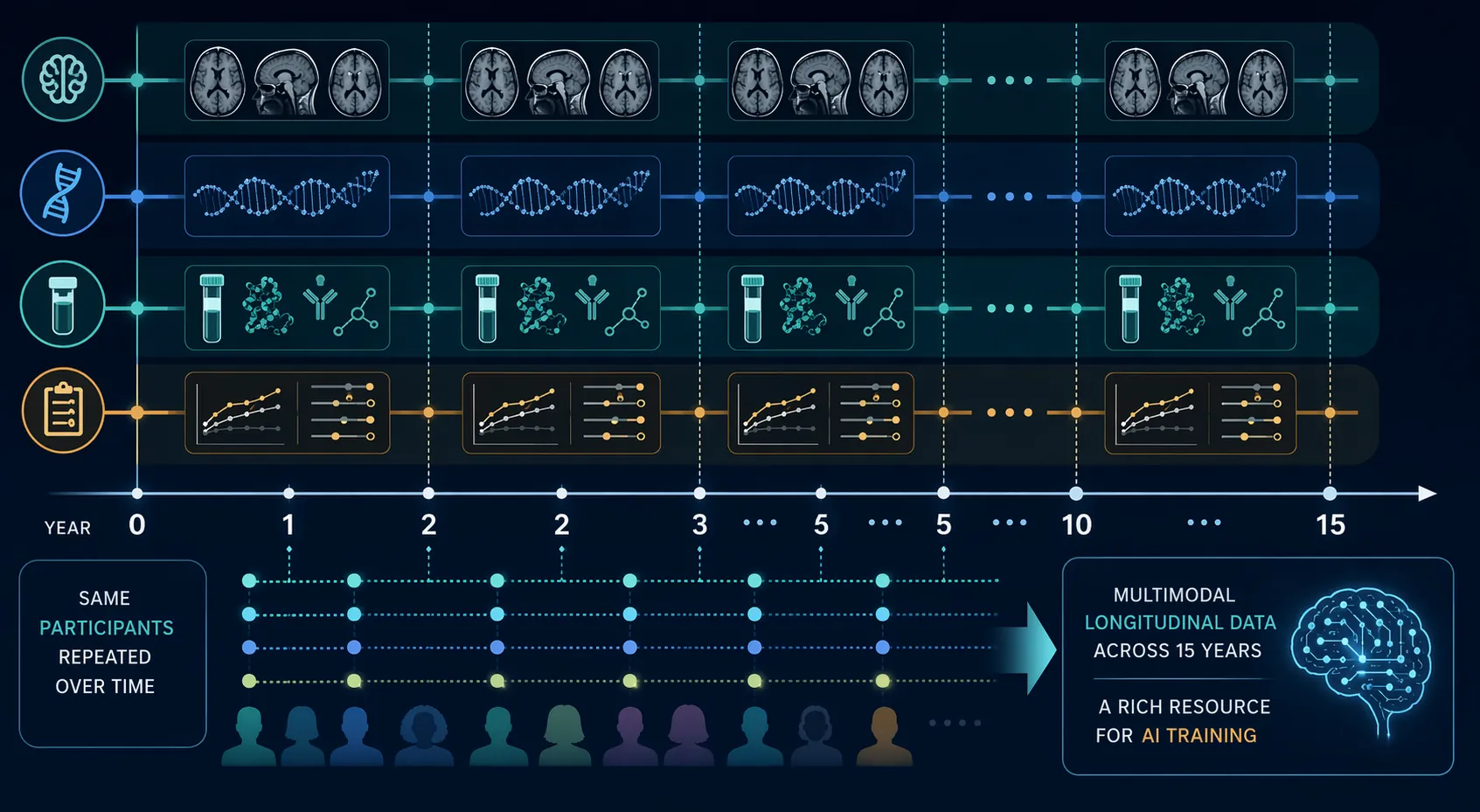
Those numbers matter because Parkinson’s AI is unusually sensitive to longitudinal and multimodal structure. A single cross-sectional measure may separate some cases from controls, but progression modeling, subtype discovery, biomarker interaction work, and prodromal-risk research all benefit from repeated, participant-level measurements across time. PPMI’s value is not just that it is large; it is that imaging, biospecimen, genetic, and clinical-assessment data can be studied in relation to one another.
That structure is what makes a machine-learning “disease map” plausible. MJFF reports that Novartis researchers used PPMI data to create an ML-based disease map presented at the Parkinson’s Disease Therapeutics Conference.[1] The interesting point is not that a pharmaceutical company used AI; it is that a foundation-maintained cohort became reusable enough to support a disease-organization exercise outside the original data-collection team.
For a clinical informatics team, this is the strongest version of foundation acceleration: the foundation absorbs the slow, expensive work of participant follow-up, measurement harmonization, governance, and researcher access. Individual labs can then ask questions that would otherwise require years of cohort construction before the first model is trained.
But the same facts need careful handling. More than 110 machine-learning papers using PPMI is a publication footprint, not a count of clinically validated tools.[1] Those papers can vary in outcome definition, feature engineering, validation strategy, missing-data handling, and external replication. A governance committee reviewing a vendor or institutional model should ask whether the paper used PPMI for exploratory modeling, retrospective validation, or prospective clinical evaluation. Those are not interchangeable evidentiary states.
Representativeness is the other hard boundary. The research record supporting this article flags PPMI as predominantly white and well-resourced. That does not make the dataset weak; it makes its strength conditional. A model that performs well in a PPMI-derived analysis may have learned patterns from participants who are easier to recruit into a long-running observational study, have better access to specialty care, or differ from underrepresented groups in genetic ancestry and care pathways.
This is also where ClinicalMind’s prior appraisal of AI for Parkinson disease diagnosis becomes relevant. Tool-level evidence should be evaluated separately from dataset reputation. A strong source cohort can support weak clinical claims if the model’s target population, validation design, or deployment setting drifts too far from the data.
GP2 Makes Diversity a Discovery Constraint, Not a Courtesy
GP2, the Global Parkinson’s Genetics Program funded by ASAP and MJFF, sharpens the point that cohort diversity is not an ornamental equity metric. MJFF reports that GP2 used AI tools to discover a new Parkinson’s risk gene in people of African ancestry in 2023.[1]
That example carries more weight than a general promise that diverse data will make AI fairer. It shows a concrete consequence of changing the underlying cohort: the discovery space changes. If a genetics program is dominated by European-ancestry participants, the model can be technically sophisticated and still have limited opportunity to detect ancestry-specific or ancestry-enriched risk signals. The problem is not only downstream bias in prediction. It is upstream blindness in discovery.
GP2 is therefore highly relevant to Parkinson’s AI, but its relevance is specific. It strengthens genetic discovery, risk architecture, and population genetics work. It should not be casually treated as though it solves every representativeness problem for multimodal disease-progression AI. A genetic discovery infrastructure does not automatically supply harmonized imaging, biospecimen, motor assessment, wearable, speech, or longitudinal treatment-response data for every participant.
The lesson for AI appraisal is straightforward: diversity must be matched to the task. If the model claims genetic-risk discovery across ancestry groups, GP2-like infrastructure is central. If the model claims to predict near-term motor decline in community neurology clinics, ancestry diversity is still important, but so are disease stage, medication status, visit cadence, clinical assessment quality, and the availability of external validation cohorts.
PD GENEration Is Genetics Infrastructure With Patient-Facing Consequences
PD GENEration, from the Parkinson’s Foundation, sits in a different part of the AI ecosystem. The Parkinson’s Foundation describes it as an international genetic testing study offering free genetic testing and counseling, with results feeding bioinformatics-driven analysis.[2]
The counseling component matters. Genetic testing in Parkinson’s is not simply feature extraction for a model; it returns information to people and families. That creates obligations around interpretation, communication, and follow-up that are quite different from training a retrospective classifier on de-identified research data.
As an AI resource, PD GENEration is best understood as enabling genetics and bioinformatics questions rather than serving as a broad multimodal AI training environment. It can help identify mutation carriers, support variant interpretation workflows, and connect genetic findings to research pipelines. It should not be overstated as if genetic testing plus counseling automatically produces the kind of longitudinal, multi-sensor, imaging-rich dataset needed for general-purpose Parkinson’s progression modeling.
That distinction is not a downgrade. In Parkinson’s research, a well-run genetics program with counseling can be more clinically serious than a larger but less interpretable AI dataset. It simply belongs to a narrower set of modeling questions.
The Wider Project Ecosystem Is Useful, But It Does Not Replace Validation
APDA’s AI portfolio shows that foundation activity is not limited to large shared cohorts. APDA describes funded projects on dyskinesia prediction at Cleveland Clinic, brain network analysis at the University of Minnesota, pose estimation for remote monitoring at Kennedy Krieger, and voice-based Parkinson’s prediction at the University of Michigan.[3]
These projects are valuable signals of breadth. They also show why Parkinson’s AI should not be discussed as one technology. Dyskinesia prediction, brain network analysis, remote motor monitoring, and voice-based prediction each require different ground truth, sampling frequency, sensor reliability, and clinical validation pathways. The evidence needed for a remote-monitoring model is not the same evidence needed for a genetic-risk model or a disease-progression model.
For readers evaluating a specific tool, foundation funding can help explain how the work became possible. It cannot answer whether the model is ready for clinical use. That requires the usual evidence: externally validated performance, clinically meaningful endpoints, handling of missing and noisy data, calibration in the intended population, workflow testing, and a clear account of who acts on the output.
This is also the useful contrast with AI claims that orbit Parkinson’s care but are not strongly tied to clinical evidence. ClinicalMind has separately reviewed AI-powered Parkinson’s support groups as an area where published evidence remains thin. Data infrastructure can accelerate research, but it does not automatically lift every AI-labeled intervention into an evidence-based category.
Large Data Still Has to Fit the Clinical Question
The MIT breathing model is a useful stress test for the whole discussion because it is impressive and uncomfortable at the same time. The Parkinson’s Foundation described a Nature Medicine study in which researchers used 11,964 nights of breathing data and reported 91% AUROC for Parkinson’s detection, with the model trained on sleep-clinic data.[4]
That is a landmark result, but it also illustrates task-design risk. A sleep-clinic dataset can be large and still differ from the population in which a screening, diagnostic, or monitoring tool would eventually be used. Referral pathways, sleep disorders, comorbidities, device placement, and the reasons people entered the dataset may all matter. The model’s performance statistic measures discrimination under the study conditions; it does not, by itself, settle whether the tool will work in primary care, neurology clinics, homes, or undiagnosed community populations.
This is exactly the distinction that gets blurred when dataset size becomes a substitute for dataset design. Large, retrospective, convenient, or clinically adjacent datasets may be excellent for hypothesis generation. They need additional evidence before they can support decisions about diagnosis, treatment selection, disease staging, or monitoring.
A Scorecard for Appraising Foundation-Powered Parkinson’s AI
For evidence appraisal, the most defensible conclusion is conditional rather than skeptical. Parkinson’s foundations have materially accelerated AI research by building resources that individual labs would struggle to create alone. PPMI supports longitudinal multimodal modeling at a scale and duration that make disease maps and progression studies possible. GP2 shows that changing cohort ancestry can change what AI-assisted genetic discovery can find. PD GENEration adds patient-facing genetic testing and counseling infrastructure that can feed bioinformatics analysis. APDA-funded projects broaden the set of AI questions under active study.
The appraisal should still stay close to the data. Foundation-built does not mean clinically ready. Published with PPMI does not mean externally validated. Genetics-rich does not mean multimodal. Large does not mean representative. A model can be scientifically useful and still not belong in a clinical workflow.
| Appraisal domain | What the foundation infrastructure supports | What still has to be proven |
|---|---|---|
| Data size | PPMI provides long-running multimodal data from more than 2,500 participants; other programs expand genetics and project-specific datasets | Whether the sample is large enough for the intended subgroup, endpoint, and deployment setting |
| Cohort diversity | GP2 demonstrates that ancestry-inclusive data can enable discoveries missed by narrower cohorts | Whether the model generalizes across ancestry, geography, disease stage, access to care, and clinical setting |
| Modalities | PPMI supports multimodal analysis; PD GENEration and GP2 strengthen genetic analysis | Whether the required modality is complete, synchronized, and relevant to the model’s claimed task |
| Accessibility | Foundation programs make reuse and cross-institutional research more feasible than isolated lab datasets | Whether access rules, harmonization, and interoperability allow independent replication |
| Peer-reviewed output | PPMI’s machine-learning publication footprint shows sustained scientific reuse | Whether any specific model has external validation, calibration, clinical utility evidence, and workflow testing |
| Real-world impact | Foundation datasets have enabled disease maps, genetic discoveries, and targeted AI projects | Whether outputs improve decisions for patients, clinicians, researchers, or trial sponsors in the intended setting |
The practical governance question is therefore not, “Was this AI tool foundation-supported?” It is: which foundation dataset, collected from whom, with what modalities, for what task, and with what validation?
References
- How Artificial Intelligence Helps Power Parkinson’s Research, Michael J. Fox Foundation.
- Artificial Intelligence in Parkinson’s Care, Parkinson’s Foundation.
- AI and Parkinson’s Disease Research and Care, American Parkinson Disease Association.
- Artificial Intelligence, Parkinson’s Foundation.