
regulatory
Amy's Lentil Soup Recall: What FDA Class II Actually Means
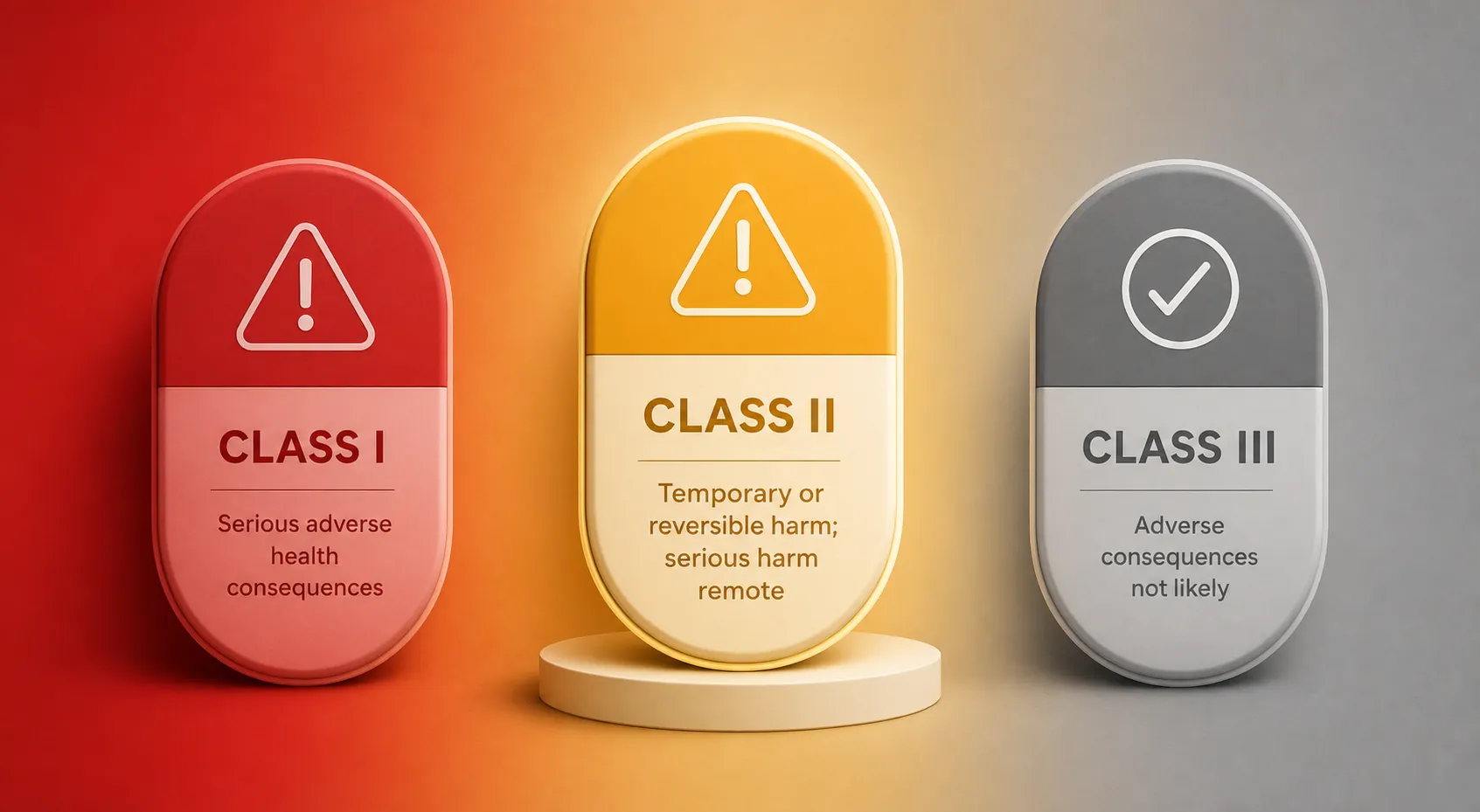
An Amy's lentil soup recall FDA update can sound worse than it is if the phrase “Class II” is read as a product category, an internal severity score, or a quiet synonym for “high risk.” In FDA recall language, Class II means use of or exposure to the product may cause temporary or medically reversible adverse health consequences, or that the probability of serious adverse health consequences is remote. Class I is the higher-risk classification: reasonable probability of serious adverse health consequences or death. Class III is lower: adverse health consequences are not likely. [1]
That definition matters more than the soup brand. Amy's Kitchen voluntarily initiated the recall on June 22, 2026, and the FDA classified it as Class II on July 14, 2026, under Event ID 99306. The recalled product is Organic Lentil Soup – Light in Sodium in 14.5 oz cans, tied to lot 60D0924 and best-by April 2027. Reports citing the FDA enforcement notice describe a pull-tab defect that could allow spoilage organisms into the can; no illnesses had been reported as of late July 2026. [2][3][4]
For procurement, quality, regulatory, or AI governance readers, the useful lesson is not “soup safety.” It is recall literacy. The same FDA recall classes are used across FDA-regulated products, including food, drugs, and medical devices. Class II does not mean “a food recall,” and it does not mean “FDA device Class II.” It is a health-risk classification.
What FDA Class II Means in This Recall
The Amy's classification sits in the middle of the FDA's three-class recall framework. That middle position is easy to misread. It is not a reassurance that the product is safe. A recalled can should not be treated as acceptable inventory just because the classification is not Class I. But it is also not the FDA's highest-risk signal.
| FDA recall class | FDA health-risk meaning | How to read it operationally |
|---|---|---|
| Class I | Reasonable probability that use of or exposure to the product will cause serious adverse health consequences or death. | Escalate as a high-risk health event; serious harm is not remote. |
| Class II | Use of or exposure may cause temporary or medically reversible adverse health consequences, or serious adverse health consequences are remote. | Act on the recall, but do not translate the label into a Class I-level risk without supporting facts. |
| Class III | Use of or exposure is not likely to cause adverse health consequences. | Still a regulatory recall, but the FDA does not expect adverse health consequences. |
In the lentil soup case, the reported defect was mechanical and packaging-related: a pull-tab issue that could permit spoilage organisms. The health consequence described in reports was possible gastrointestinal illness, not a pathogen scenario framed as likely to cause serious outcomes in exposed consumers. That is the definitional lane for Class II: temporary or medically reversible harm may occur, while serious harm is considered remote. [2][3][4]
The “no illnesses reported” line also needs careful handling. It is a status report, not proof that no one became ill. Food-related gastrointestinal symptoms can go unreported, and an ongoing recall can change as firms, retailers, and regulators receive more information. As of late July 2026, the available public reports said no illnesses had been reported; they did not establish that exposure had no consequences. [2][3]
The Case Facts Worth Verifying
The recall is large enough to matter operationally without needing dramatic language. Reports put the affected volume at 15,350 cases, or about 184,200 cans, totaling approximately 166,931 pounds. The product moved through major retailers including Walmart, Kroger, Albertsons, and Wegmans. Distribution was reported across the United States and Canada; public accounts vary slightly on whether the U.S. state count was 27 or 28, with Michigan appearing in some lists but not others. [2][3][4]
- Product: Amy's Kitchen Organic Lentil Soup – Light in Sodium, 14.5 oz cans.
- Recall initiation: voluntary recall initiated June 22, 2026.
- FDA classification: Class II, classified July 14, 2026, Event ID 99306.
- Lot and dating: lot 60D0924, best-by April 2027.
- Reported defect: pull-tab problem that could allow spoilage organisms into the can.
- Reported illness status: no illnesses reported as of late July 2026.
Those details are useful because they let a quality team confirm whether the event touches inventory, patient food service, retail channels, or vendor-management records. They are less useful if they distract from the central classification point: the FDA's label is describing expected health consequences and the probability of serious harm, not the commercial size of the recall.
Why This Was Not Classified Like a Class I Recall
Class I is reserved for a different risk posture: a reasonable probability of serious adverse health consequences or death. The contrast is clearer when the comparison stays within the same brand. Amy's has previously had Class I food recalls, including a 2015 recall involving Listeria monocytogenes risk from contaminated spinach used in frozen meals and a 2023 recall involving undeclared milk allergen risk. Those are not merely “other Amy's recalls.” They involve hazard types that can plausibly support the FDA's highest recall-risk class.
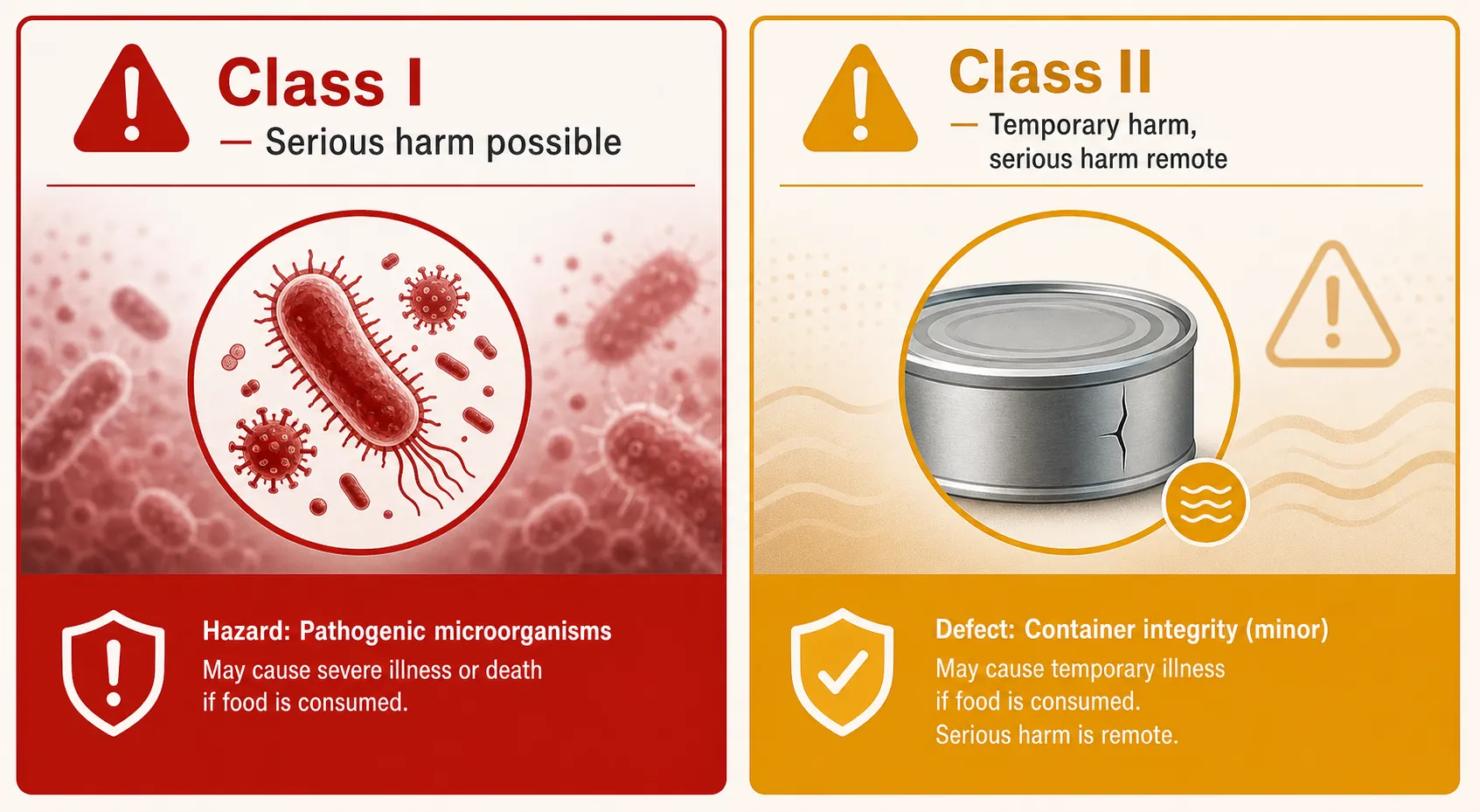
Listeria risk and undeclared major-allergen exposure are not in the same evidentiary bucket as spoilage organisms entering through a defective pull tab. The former can present serious risk for vulnerable consumers or allergic individuals. The latter, as publicly described in this recall, points to possible temporary gastrointestinal symptoms, with serious harm treated as remote. That is why the same company can appear in both Class I and Class II recall records without any contradiction.
This distinction is where many internal memos go wrong. “Class II” should not be softened into “minor” simply because it is not Class I. It also should not be escalated into “serious harm likely” because the word “class” sounds formal. The label has a defined regulatory meaning, and the Amy's case fits that meaning because the identified hazard is associated with temporary or reversible effects rather than a reasonable probability of serious harm.
The Same Recall Classes Apply Beyond Food
The FDA recall-class system is cross-category. It is not a food-only taxonomy, a medical-device classification, or an organization's internal severity scale. It is a recall-risk framework used to communicate relative health risk across FDA-regulated products. [1]
That is why a lentil soup case belongs in the same conversation as health-system governance for regulated technology. A hospital evaluating a drug recall, a software-related device recall, or an AI-enabled medical-device correction needs the same first discipline: separate product category from recall risk class. FDA device Class II tells you something about the device's regulatory classification. FDA recall Class II tells you something different: the expected severity and likelihood of health consequences from the recalled or corrected product.
The distinction also matters when teams are already tracking other FDA concepts. Whether a committee is reading FDA CDS guidance, reviewing a Predetermined Change Control Plan, counting FDA-authorized AI devices, or checking a 510(k) clearance pathway, “Class II” can appear in more than one regulatory context. The words are identical; the question they answer is not.
How to Translate the Amy's Notice Without Distorting It
A clean internal translation would say: Amy's Kitchen recalled a defined lot of Organic Lentil Soup – Light in Sodium after a pull-tab defect could permit spoilage organisms; the FDA classified the recall as Class II, meaning temporary or medically reversible health effects are possible and serious adverse health consequences are remote; no illnesses had been reported as of the latest public accounts, and the recall remained ongoing as of late July 2026. [1][2][3][4]
That wording preserves the risk signal without implying the product is harmless or borrowing urgency from Class I cases that involve pathogen or allergen hazards with a different seriousness profile.
For organizations, the practical move is to keep three fields separate in recall tracking: the regulated product type, the FDA recall class, and the specific hazard. The class does not name the category; it names the recall's relative health risk.
This article supports procurement, regulatory, and research judgment; it is not clinical guidance or consumer medical advice. Anyone concerned about exposure, symptoms, allergies, or individual health risk should rely on appropriate clinical or public-health guidance.
Amy's lentil soup is a useful teaching case precisely because it is ordinary. Cans, lot numbers, a pull-tab defect, and a middle-tier recall classification make the regulatory point easier to see: FDA Class II is a risk-severity signal. In this recall, it means temporary or reversible harm is possible, serious harm is remote, and the status can still change while the recall remains active.
References
- Recalls Background and Definitions, FDA.gov.
- Popular Amy's Kitchen soup recall July 2026, USA Today, July 22, 2026.
- Amy's Kitchen Organic Canned Soup Recall FDA, Prevention.
- Amy's Kitchen recall cans organic lentil soup, NBC Bay Area.