
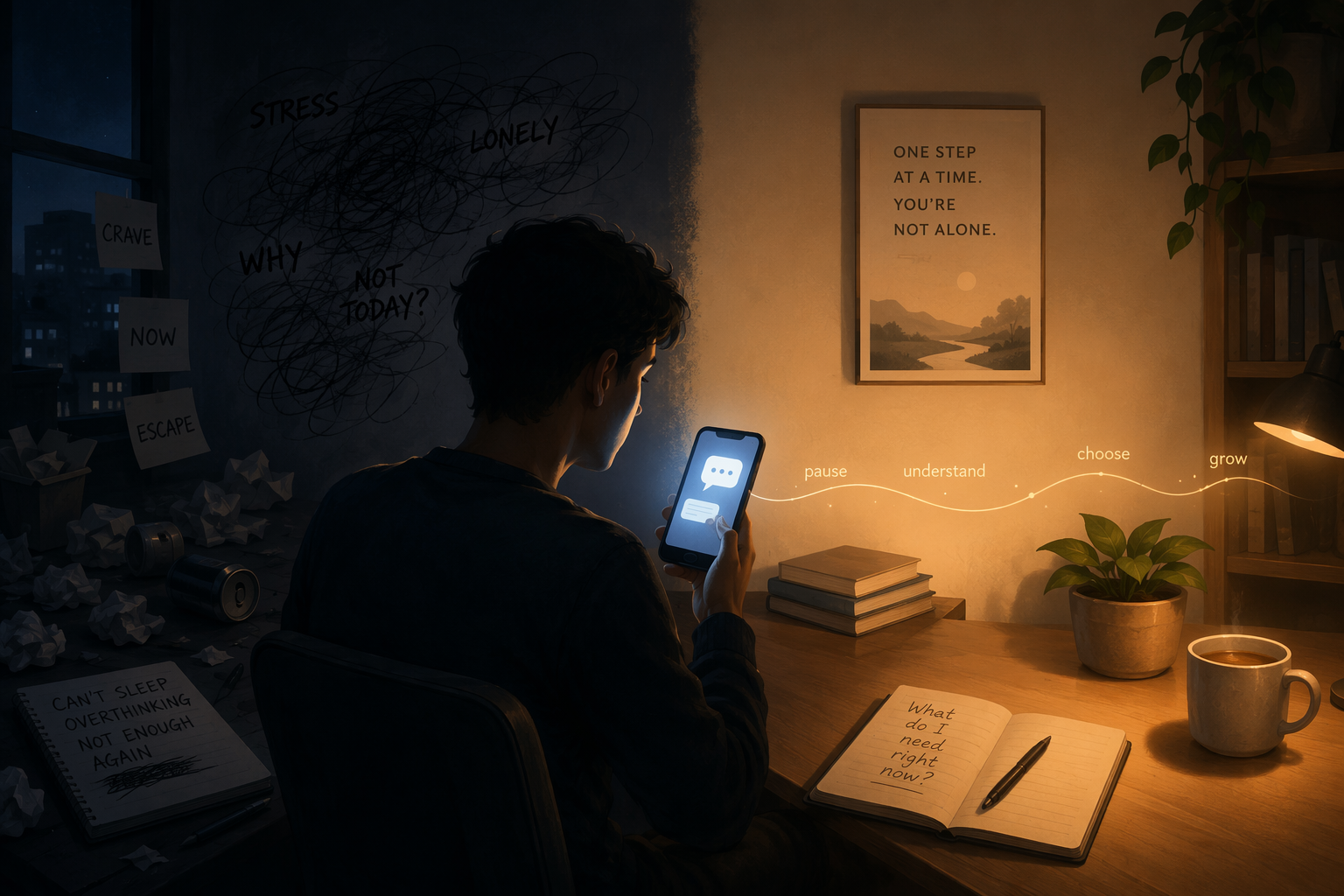
The clinical problem is not that patients never understand what to do. It is that the decisive moment often arrives after clinic hours, when the urge is immediate, the reward feels close, and the next scheduled session is too far away to matter. That is where AI chatbots become interesting: not as a replacement for therapy, but as a between-visit tool that can answer during the brief window when avoidance, craving, or rumination usually wins.
The evidence starts with timing
The strongest argument for AI-powered CBT chatbots is not that they are clever conversationalists. It is that they can be present when reward-seeking is peaking and delayed payoff no longer feels persuasive. In a 2025 systematic review of 10 studies with 44,773 total participants, chatbot-based interventions were associated with statistically significant reductions in depression, anxiety, and substance-use outcomes [1]. That is a meaningful signal. But the same review also makes the evidence discipline unavoidable: only 2 of the 10 studies had control groups, which means a large share of the apparent benefit still sits in designs that cannot fully separate intervention effect from expectation, attention, or simple regression to the mean [1].
- Therabot, the first generative AI therapy chatbot to reach a randomized trial, produced a 51% average reduction in depression symptoms and a 31% reduction in anxiety over 8 weeks, with therapeutic alliance scores reported as comparable to human therapists [2].
- Woebot's substance-use trial reported roughly a one-third reduction in substance-use occasions over 8 weeks, and the companion single-arm study showed a 50% reduction in in-app craving ratings from baseline to week 8; the sample in the randomized trial was 75.2% female, which limits how confidently those numbers travel to other populations [3].
- Youper's longitudinal observational dataset was larger than the other platform-specific studies, with 4,517 users and reported 48% and 43% decreases in depression and anxiety over 4 weeks, respectively, but the design remains observational rather than controlled [4].
Why micro-burst CBT can fit craving better than weekly sessions
The timing advantage is what makes these tools useful. Chatbots can deliver brief CBT, DBT, or motivational interviewing prompts in the same moment a patient is deciding whether to open the app, order the drink, use the substance, or check out from the task in front of them. That micro-burst structure matters because the behavior is often not driven by a durable lack of insight. It is driven by a short-lived mismatch between the speed of the urge and the speed of the support.
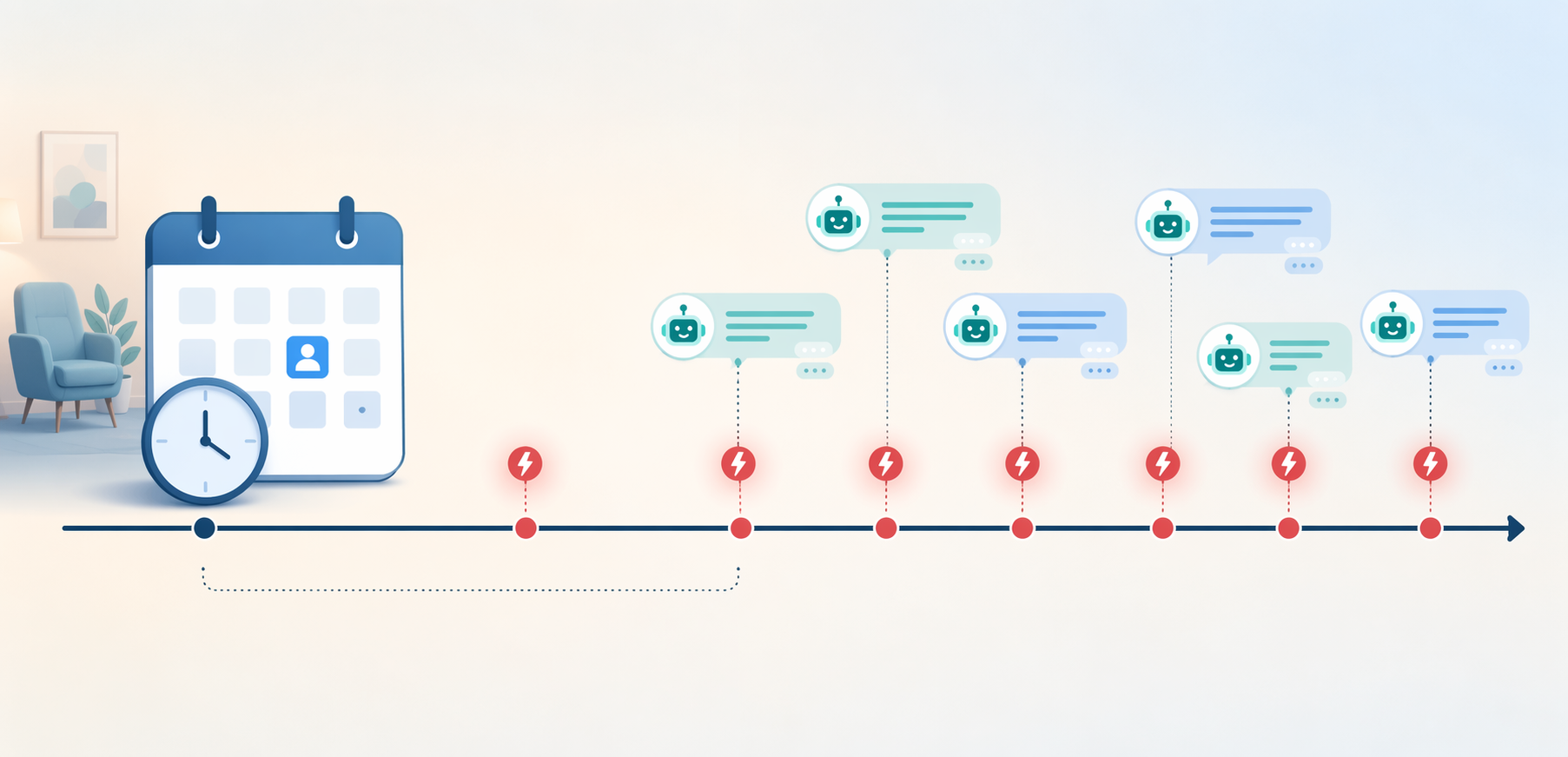
Therabot is the clearest example of that pattern in the current literature. Participants averaged about 6 hours of engagement over 8 weeks, which the Dartmouth team translated into roughly eight therapy-session equivalents, and usage spiked during off-hours rather than only during a neat daytime schedule [2]. That does not prove the chatbot changed reward circuitry, and it does not tell us whether the effect survives beyond the study window. It does show that people reached for it when ordinary care was least available, which is exactly the clinical interval that matters in impulsive behavior.
What these studies do and do not establish
The current evidence base supports a narrower claim than the marketing usually does. Structured AI CBT chatbots can reduce symptoms and, in some studies, substance-use occasions or craving intensity. They do not yet support a broad claim that generic chatbots reliably treat impulse disorders across settings, severities, and populations. Most of the evidence comes from short studies measured in weeks rather than months, and the better-known platforms still have uneven sample diversity and limited data on durability after the novelty wears off [1][3][4].
That caution matters because the phrase "AI in mental health" can hide very different products. A controlled clinical chatbot built around CBT content and outcome tracking is not the same thing as a general-purpose conversational system or a companion app without trial data. In this literature, the distinction is not semantic. It is the boundary between a tool that has at least been studied in behavioral health populations and one that merely sounds therapeutic.
Clinical judgment: promising adjunct, not stand-alone care
For psychiatry and behavioral health, the most defensible reading is that these tools belong in the category of promising adjunctive interventions supported by randomized and systematic-review evidence, especially where the target is a brief high-risk moment rather than a complete course of treatment. The signal is real enough to matter. The limitations are still large enough that no responsible review should treat these chatbots as broadly generalizable, durable, stand-alone treatments for impulse disorders or substance-use disorders.
References
- Systematic review of AI-powered CBT chatbots for mental health. PubMed Central. 2025. https://pmc.ncbi.nlm.nih.gov/articles/PMC11904749/
- First therapy chatbot trial yields mental health benefits. Dartmouth. March 2025. https://home.dartmouth.edu/news/2025/03/first-therapy-chatbot-trial-yields-mental-health-benefits
- Woebot reduced problematic substance use occasions by one-third. Woebot Health. 2021. https://woebothealth.com/new-rct-shows-woebot-reduced-problematic-substance-use-occasions-by-one-third/
- Longitudinal observational study of Youper. PubMed Central. 2021. https://pmc.ncbi.nlm.nih.gov/articles/PMC8423345/
Comments
Join the discussion with an anonymous comment.