Clinical Applications

Structured analyses of AI applications organized by clinical specialty and use case — medical imaging, radiology triage, pathology, cardiology, ambient documentation, sepsis prediction, clinical coding, and more. Each entry covers the clinical problem being addressed, the AI approach, supporting evidence (study type, sample size, key findings), known limitations, regulatory status, and real-world deployment context. This group serves clinicians, researchers, and health IT professionals who need evidence-grounded, specialty-specific understanding of how AI functions in practice. Excludes vendor marketing narratives, speculative capability claims, and content that crosses into individual clinical guidance. Related company profiles and regulatory records link from each entry.

  • medical imaging
  • radiology AI
  • pathology AI
  • cardiology AI
  • ambient documentation
  • clinical decision support
  • sepsis prediction
  • NLP in clinical workflows
  • AI scribes
  • drug discovery
  • oncology AI
  • primary care AI
  • emergency medicine AI
  • ophthalmology AI
  • dermatology AI

Clinical Specialties

  • General clinical decision support
  • Medical Devices
  • Multispecialty
  • clinical decision support
  • healthcare regulation
  • multispecialty
  • primary care

Evidence Quality

  • Expert consensus
  • Prospective multi-center and retrospective studies
  • Randomized controlled trial (RCT)
  • expert consensus

Clinical Application Entries

  • Not regulated (Epic Sepsis Model v2); FDA De Novo authorized (Prenosis ImmunoScore, DEN230036); FDA 510(k) cleared (Bayesian Health TREWS, K250680)

    AI Sepsis Prediction in Hospitals: Epic Sepsis Model Evidence, Alert Burden, and FDA-Cleared Alternatives

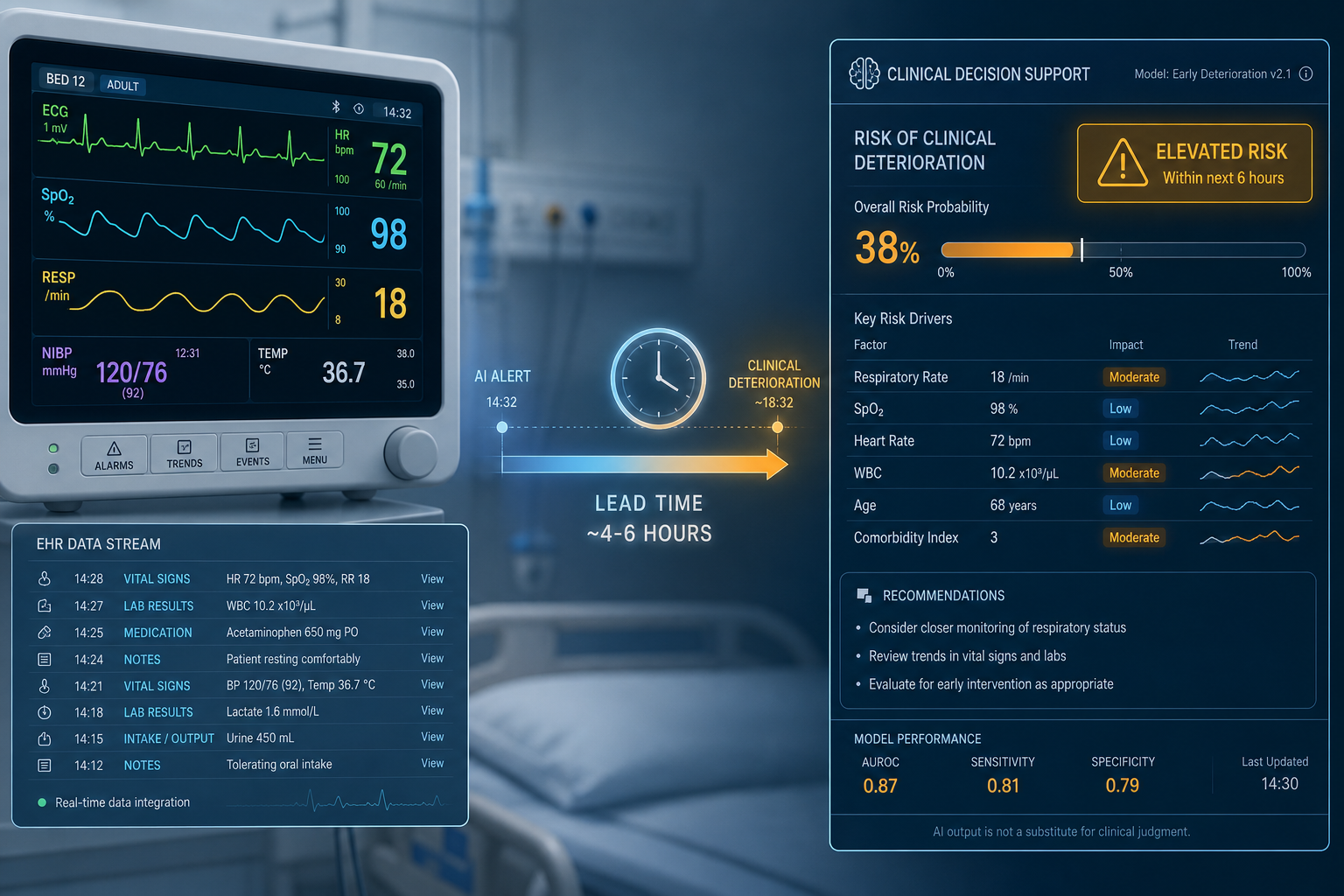
    A structured clinical evidence brief for intensivists, hospitalists, and clinical informatics staff evaluating AI-based sepsis prediction tools — covering the Epic Sepsis Model v1 and v2 validation evidence, institutional variability, alert burden realities, and the two newly FDA-cleared alternatives (Prenosis ImmunoScore and Bayesian Health TREWS) that are reshaping deployment decisions in 2026.

  • Not regulated (classified as administrative documentation tool; no FDA SaMD authorization as of June 2026)

    Ambient AI Scribes in Epic EHR: Real-World Deployment Evidence and Clinical Governance

    A structured evidence review for clinicians, health IT leaders, and informatics professionals evaluating ambient AI clinical documentation tools within Epic EHR environments — covering peer-reviewed deployment outcomes, FDA regulatory status, workflow integration models, and unresolved risks around note accuracy, burnout translation, and patient data governance.

  • Not regulated / Unclear

    AI in Medicine: How It's Actually Reshaping Clinical Workflows

    A structured overview of how AI is deployed across clinical workflows in 2026 — covering ambient documentation, EHR-embedded decision support, and medical coding tools — with evidence status, regulatory context, and known limitations for each category.

  • AI Medical Diagnosis: What the Clinical Evidence Actually Shows

    A structured appraisal of the peer-reviewed evidence base for AI medical diagnosis across major clinical applications — covering study design patterns, performance metrics, external validation gaps, and known limitations that practitioners need to evaluate before drawing conclusions.

  • AI in Healthcare: Specialty Landscape Overview

    A structured synthesis of how AI is deployed across major clinical specialties — covering FDA-cleared tools, peer-reviewed evidence, active trials, dominant companies, and known equity concerns. Organized for verification and cross-referencing, not general browsing.

  • healthcare regulationexpert consensus

    The 2026 State Healthcare AI Law Tracker

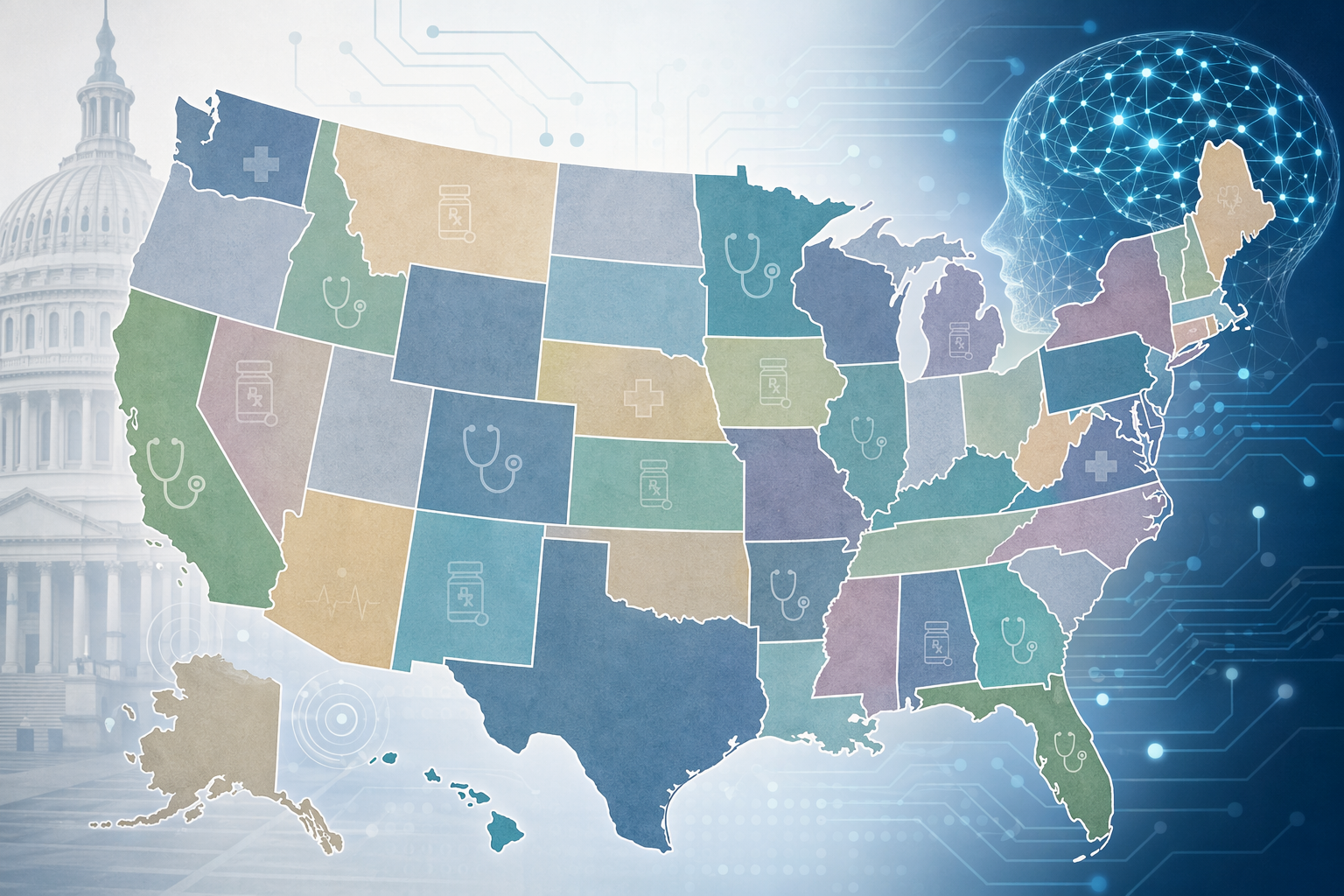
    A state-by-state reference of healthcare AI laws enacted in 2026, covering insurer AI decision-making, clinical oversight, chatbot safety, and regulatory sandboxes. This tracker helps multi-state organizations map compliance obligations amid the current federal preemption uncertainty.

    Known Limitations: Effective dates missing in reviewed sources; state-by-state verification required

  • clinical decision supportexpert consensusresearch/development

    A Practical Governance Blueprint for Agentic AI in Healthcare

    Traditional AI governance is structurally inadequate for autonomous agentic systems in healthcare. Drawing on the five-layer Unified Agent Lifecycle Management (UALM) model and Monte Carlo simulations showing 56–63% incident reduction, this article provides an implementable architecture covering non-human identity, PHI-bounded context, runtime enforcement, orchestration, and lifecycle decommissioning.

    Known Limitations: Synthetic data simulations only; real-world validation pending; partial governance erodes benefits.

  • Medical DevicesExpert consensus

    Does the AI Act's August 2026 Compliance Deadline Still Apply?

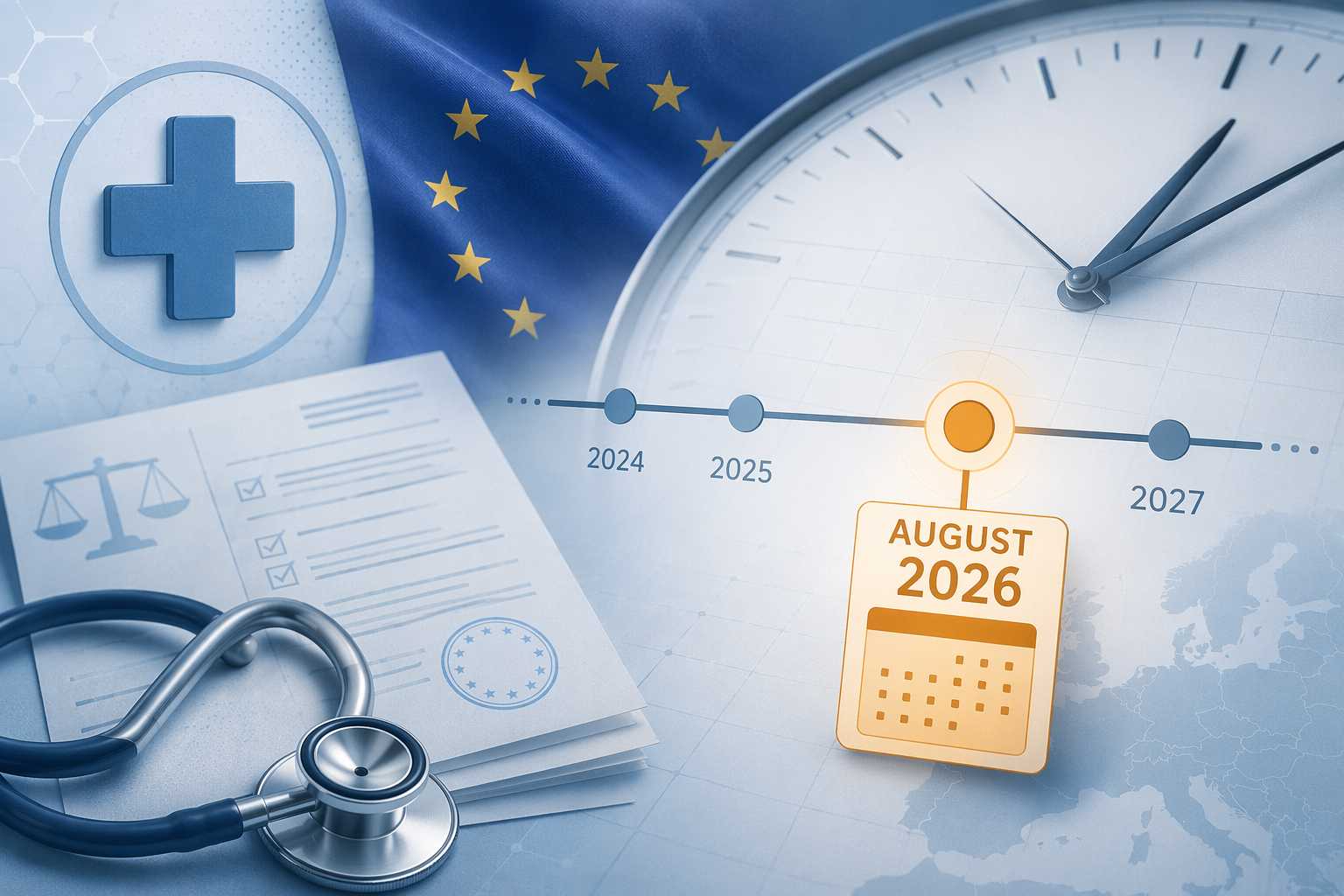
    Even after the Digital Omnibus delayed most high-risk AI compliance dates, Article 50 transparency obligations under the EU AI Act take effect on 2 August 2026 for medical device manufacturers. This article explains what remains in force, what has moved, and how Notified Bodies are already incorporating AI Act expectations into MDR audits.

    Known Limitations: Data governance gaps; provisional Omnibus text; MDR 2.0 uncertainty

  • multispecialtyexpert consensusbroad clinical use

    How U.S. Doctors Are Using Artificial Intelligence in 2026

    Drawing on major physician surveys from the AMA, Doximity, and Offcall, this article provides a data-driven picture of AI adoption rates, tool preferences, specialty variations, and reported benefits and barriers — helping clinicians and health system leaders assess where AI fits in practice.

    Known Limitations: Accuracy and reliability concerns; self-reported benefits not validated; limited institutional oversight; potential for workflow displacement

  • MultispecialtyProspective multi-center and retrospective studiesBroad clinical use (imaging, ambient documentation); predictive AI in pilot to broad use; generative AI in limited deploymentFDA 510(k) for many imaging devices; no generative AI devices cleared

    How Is AI Actually Being Used in Healthcare in 2026?

    A 2026 evidence report on how AI is deployed across US healthcare — covering physician adoption rates, market spending, FDA regulatory approvals, clinical outcomes, ROI, and persistent barriers like immature tools and governance gaps.

    Known Limitations: Immature tools, data fragmentation, governance gaps, false positives

  • General clinical decision supportRandomized controlled trial (RCT)

    The AI-Alone Paradox: Why Physicians Using AI Often Underperform AI Working Independently

    A growing body of evidence shows AI systems working alone can outperform physician-AI teams. This article examines the root causes—automation neglect, confirmation bias, and poor interaction design—and explores alternative workflow models for clinical leaders and health IT decision-makers.

    Known Limitations: Single trial at three academic centers; limited generalizability to community settings; no prompt training provided to physicians; evidence base weighted toward earlier-generation models

  • primary careexpert consensus

    Why Healthcare AI Automation Projects Fail and What Works

    Despite widespread adoption, the majority of healthcare AI automation projects never reach production or generate measurable ROI. This article examines the evidence on what drives successful deployment—proven application clusters, implementation patterns, and the organizational factors that separate high-performing health systems from those stuck in pilot purgatory.

    Known Limitations: Poor data quality, weak governance, vendor sprawl, and low clinician adoption

Blogarama - Blog Directory