
In Yeongdeungpo, Seoul, the sequence began in a way familiar to anyone who has watched a dementia wandering incident move from private panic into public response: an elderly person with dementia was reported missing, and search staff entered the person’s clothing and physical description into an AI-based missing persons rapid search system. The system searched nearby CCTV footage, tracked movement routes in real time, and the person was located within approximately two hours of the report.[1]
That two-hour outcome is the reason these systems are difficult to dismiss. Dementia wandering is not only a family caregiving problem, and it is not only a police problem. Once a person is outside and unlocated, time begins to reorganize everyone’s role: a family member supplies the last known details, police try to reduce a search area, municipal operators review footage, hospitals may become possible destinations, and every delay increases exposure. AI tools for locating missing elderly with dementia and Silver Alerts are often discussed as if they belong to the same public-safety category, but the Seoul case shows a narrower and more concrete intervention: using municipal video analytics to turn a description into a possible route.
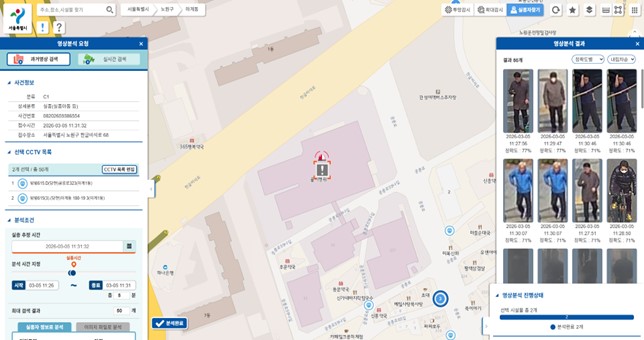
What the Seoul System Actually Does
The important part of the Seoul example is not that “AI” was present. It is the operational shape of the search. A missing person report creates a set of searchable attributes: clothing, physical description, and other distinctive features. The system then analyzes CCTV footage for those features, compares them against past footage to confirm the description, and shares real-time location data with police search teams.[2]
In ordinary missing-person work, a clothing description can be both essential and frustratingly weak. “Dark jacket,” “light pants,” or “hat” may help a human reviewer, but it still leaves operators with hours of footage and many possible directions of travel. Seoul’s system tries to compress that review burden. It does not make the person safe by itself; it narrows where human responders should look next.
That distinction matters for healthcare readers. The clinical-adjacent value is not diagnosis, prediction, or care planning. It is post-incident recovery. The tool enters after prevention has failed: after door alarms, caregiver supervision, neighborhood familiarity, or facility protocols have not kept the person from becoming lost. Its claim to usefulness rests on whether it can shorten the interval between report and location.
| Search stage | What changes when AI video analytics is added |
|---|---|
| Initial report | Clothing and physical description become structured search inputs rather than only narrative details. |
| Footage review | Nearby CCTV streams can be searched for distinctive features instead of relying only on manual sequential review. |
| Route reconstruction | Possible movement paths can be tracked across cameras as new footage is analyzed. |
| Field response | Police search teams can receive location information that narrows where to deploy. |
The Yeongdeungpo case gives the workflow an emotionally legible endpoint: the person was found within roughly two hours.[1] It does not, by itself, tell us how often the system succeeds, how many false leads operators had to inspect, or how the same case would have unfolded under standard search procedures. Still, as a demonstration of the workflow, it is unusually concrete.
From District Pilot to Citywide Ambition
Seoul’s current deployment is not an isolated software trial sitting in a laboratory. The city’s approach follows earlier district-level work, including a Songpa-gu pilot, and Seoul plans to expand the system across all 25 districts by the end of 2026.[1] That planned scale is one reason the case deserves attention from people outside municipal policing. A system that begins as emergency search support can become part of the civic infrastructure around dementia risk.
For clinicians, health IT leaders, and dementia care researchers, this creates a category that does not fit neatly inside conventional healthcare AI. The cameras are municipal. The response team is likely police-led. The trigger is a missing person report. The affected person is a patient, a resident, a parent, or a spouse, but the search itself takes place in public space rather than in an electronic health record or a care facility.
That makes the governance question harder, not easier. A hospital AI model can be evaluated against clinical endpoints and institutional privacy rules. A public CCTV search system touches police procedure, municipal data access, family consent, older adult autonomy, disability vulnerability, and the rights of everyone else captured on the same cameras.
Tokyo Shows Why There Is No Single Model
Tokyo’s Arakawa Ward points in the same broad direction as Seoul but uses a different deployment pattern. In April 2026, the ward installed 33 outdoor AI facial recognition cameras near JR Nippori Station. The ward receives about 100 missing person reports per year involving children and elderly people with dementia, and the trial has already raised privacy concerns under Japan’s personal information protection framework.[3]
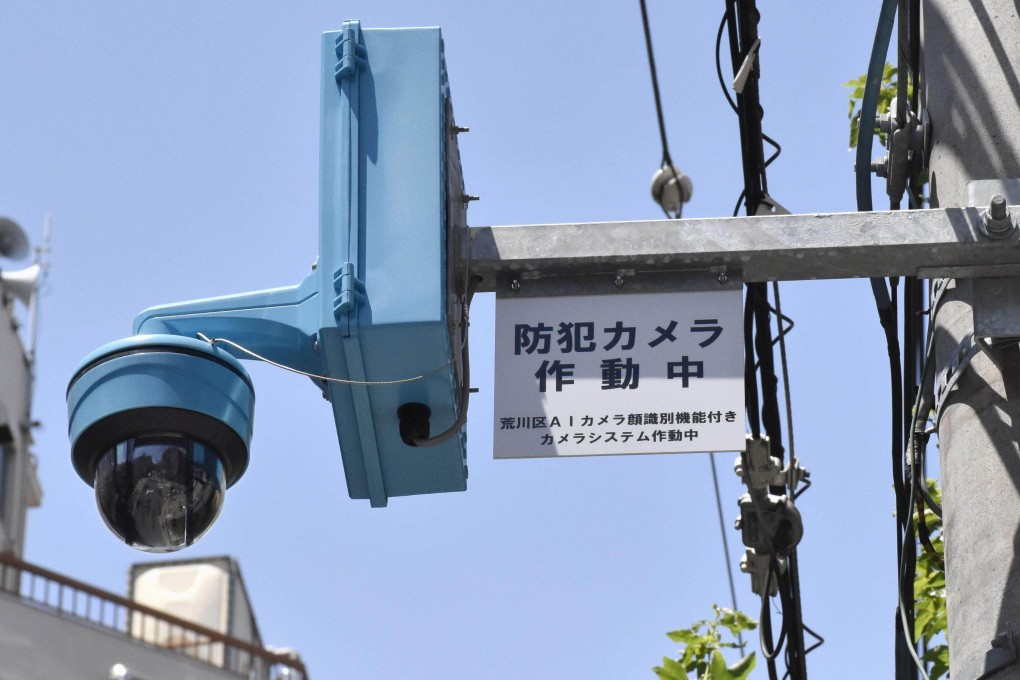
The difference is not cosmetic. Seoul’s described system emphasizes searching CCTV footage for distinctive features and movement routes. Arakawa Ward’s reported trial centers on outdoor AI facial recognition cameras in a defined station-area environment.[2][3] Both sit under the loose public label of AI CCTV search, but they create different privacy, accuracy, and operational questions.
A station-adjacent facial recognition deployment may be attractive because transit areas are plausible places for a lost person to pass through. They are also dense public environments. The camera does not only see the missing child or the older adult with dementia. It sees commuters, workers, tourists, and residents whose presence is unrelated to the emergency. That is why privacy cannot be treated as a closing caveat after the rescue story has done all the persuasive work.
Arakawa’s scale also needs careful reading. About 100 missing person reports per year includes children and elderly people with dementia; it is not a dementia-only denominator, and it is not evidence of detection rate.[3] The figure helps explain why the ward might want a faster search tool. It does not establish that the tool improves outcomes.
The Evidence Is Promising, but It Is Still Case-Level Evidence
The current evidence base supports a disciplined conclusion: AI-powered CCTV search systems have documented case-level use in locating missing elderly people with dementia quickly, including the Yeongdeungpo recovery within approximately two hours.[1] The materials do not support a broader claim that these systems reliably outperform standard missing-person response.
There are no controlled trials in the available materials comparing AI-assisted search against conventional search for missing dementia patients. The support consists of case reports and program descriptions. That matters because missing-person recovery time is influenced by many factors: how soon the report is made, where the person was last seen, camera density, weather, transit access, police staffing, family knowledge, and chance.
A two-hour recovery is meaningful to the family and operationally important to responders. It is not the same thing as an average recovery time, a sensitivity estimate, a false-positive rate, or a comparative effectiveness result. Healthcare professionals are used to this distinction in clinical AI: a vivid case can justify closer evaluation, but it cannot carry the evidentiary weight of systematic testing.
The most useful evaluation would not need to begin with elaborate clinical endpoints. Basic operational measures would already improve the conversation: time from report to first candidate sighting, time from report to confirmed location, number of cameras searched, number of human review decisions required, number of false candidate tracks, and whether the person was found by AI-assisted routing or by another part of the search.
What Healthcare Professionals Can Responsibly Infer
The responsible inference is narrower than the technology marketing version and more useful than blanket skepticism. These systems show that municipal CCTV networks can be repurposed into rapid search infrastructure when a vulnerable person is reported missing. They also show that dementia wandering response may increasingly depend on tools outside healthcare institutions.
That has practical consequences. A memory clinic may never operate an AI camera network, but its counseling around wandering risk may need to acknowledge what local emergency response can and cannot do. A hospital social worker helping a family after a wandering episode may need to know whether the municipality has a rapid CCTV search process, a wearable registration program, a police protocol, or none of these. A long-term care facility may need to understand whether a missing resident report can trigger video analytics and what information must be supplied quickly.
- The strongest current claim: AI CCTV analytics can support rapid route reconstruction in documented municipal cases.
- The unsupported claim: these systems have proven general effectiveness over standard missing-person response.
- The immediate clinical-adjacent relevance: dementia wandering response depends on public-safety infrastructure that families may have to activate under stress.
- The unresolved governance question: emergency usefulness does not settle who may access public-space biometric or video-derived data.
The family caregiver’s position should remain visible in this discussion. When a person with dementia is missing, the caregiver is not weighing privacy and recovery from a seminar table. They are waiting. They may gladly provide a clothing description, a recent photo, a likely route, and permission to search. But the older adult’s vulnerability does not erase the privacy interests of that person or everyone else captured during the search.
Why Silver Alert Comparisons Need Caution
For US readers, the obvious comparison is Silver Alerts. That comparison is understandable but currently premature. The Korean and Japanese examples in the available materials do not describe integration with US-style Silver Alert infrastructure. They are municipal AI video analytics deployments operating under Korean and Japanese personal information protection frameworks, not evidence that American Silver Alert systems can simply add AI CCTV search and expect similar outcomes.
Silver Alerts are public notification systems. AI CCTV search is an investigative and municipal video-analysis function. They could theoretically interact: a report might trigger both public notification and camera-based route reconstruction. But the evidence here does not show that interaction in practice, and it does not answer who would authorize the search, which databases would be queried, how long data would be retained, or how errors would be corrected.
The European transfer question is even more constrained. The research materials identify the EU AI Act’s restrictions on biometric surveillance in public spaces as a direct limit on generalizability. That means Seoul or Tokyo cannot be used casually as templates for EU adoption. The legal environment is part of the system, not an afterthought.
This is where healthcare AI discussions often become too abstract. The same algorithmic capability has different real-world meaning depending on camera coverage, police authority, municipal data rules, consent processes, and biometric surveillance law. A tool that is operationally possible in one city may be legally unavailable, politically unacceptable, or ethically under-specified in another.
The Evaluation Standard Should Match the Stakes
The right standard is not perfection before use. Missing dementia patients face immediate harm, and responders already make urgent decisions with incomplete information. But emergency usefulness should come with auditable limits. A city using AI-assisted CCTV search should be able to explain what input starts the search, which cameras are included, whether facial recognition is used, who can view results, how long search data remains available, and how often the system contributes to a confirmed recovery.
The Seoul materials make the operational case worth watching: distinctive-feature search, past-footage confirmation, real-time location sharing, and a documented recovery within roughly two hours.[1][2] The Tokyo materials make the governance case impossible to postpone: outdoor facial recognition cameras in a public station area, modest annual report volume, and privacy concerns already present inside the deployment.[3]
For now, these systems are best understood as promising clinical-adjacent public-safety tools, not as proven healthcare interventions and not as ready-made models for Silver Alert modernization. They are structured enough to evaluate, emotionally compelling enough to attract attention, and sensitive enough that evaluation should begin before success stories harden into policy assumptions.
References
- Seoul Yeongdeungpo AI-based Missing Persons Rapid Search System case, Khan.co.kr, July 2026
- Seoul Smart City Portal AI missing persons search system description, smartcity.go.kr, 2023
- Tokyo Arakawa Ward AI facial recognition camera deployment, Kyodo News, July 2026
Comments
Join the discussion with an anonymous comment.