
A missed NHS dental appointment is not an abstract inefficiency. It is an empty surgery, a nurse already rostered, instruments and room time set aside, and a patient elsewhere still waiting for care. When the cancellation comes late, the receptionist may have only minutes to find someone who can travel, consent to the slot, and fit the treatment need. If nobody can, the gap becomes lost chair time rather than recovered access.
That is why the question behind AI in NHS dental appointment scheduling should start with the slot, not the software. AI can be useful here only if it predicts a practical scheduling risk early enough for staff to act: send a different reminder, release a slot to a short-notice list, adjust overbooking rules, or triage the appointment into a pathway where failure to attend is less damaging. A probability score that arrives too late, or cannot be acted on inside the practice workflow, is just another number on the screen.
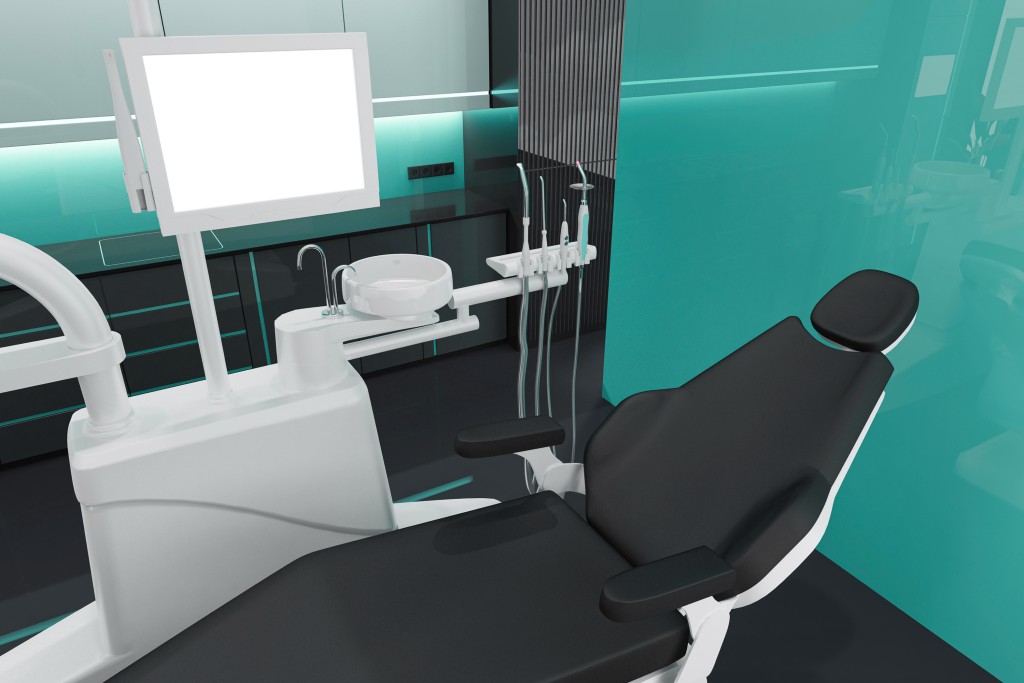
The pressure is real enough without exaggerating it. In May 2026, the BBC reported one NHS dental practice losing more than 83 hours to patients who did not attend, with annual losses estimated at upwards of £56,000.[1] The British Dental Association has also cited ONS-linked access figures showing around 14 million people unable to access NHS dentistry, and reported that 97% of new patients were unable to access NHS care in its analysis.[2] Those two facts belong together, but they should not be collapsed into a simple claim that every missed appointment could have treated someone else. Some abandoned slots are too short, too late, or clinically mismatched. Still, in a system where access is already constrained, avoidable empty chair time deserves more than a shrug.
The NHS Evidence Starts Outside Dentistry
The strongest NHS deployment signal for AI no-show prediction does not come from general dental practice. It comes from Deep Medical’s work with NHS acute hospital trusts, announced by NHS England in March 2024. In that pilot, an AI tool was used to predict patients at higher risk of missing outpatient appointments, supporting targeted interventions rather than blanket reminders. NHS England reported a 30% reduction in missed appointments, 377 prevented DNAs, 1,910 additional patients seen, and projected annual savings of £27.5 million at trust level.[3]
Those figures matter because they show that AI no-show prediction can leave the slide deck and operate inside NHS scheduling workflows. The intervention was not a general promise that algorithms create capacity. It connected risk prediction to operational action: identify patients more likely to miss, intervene before the appointment, and use the recovered capacity to see more people. That is the relevant lesson for dentistry.
But it is not a dental result. Acute outpatient clinics differ from dental practices in appointment length, patient mix, booking routes, clinical urgency, and the options available when a slot is recovered. A hospital trust can aggregate scheduling effects across large services. A dental practice may be trying to rescue a 50-minute block in one surgery with a smaller patient list and fewer same-day alternatives. The Deep Medical pilot supports deployability in the NHS; it does not prove the same effect size will appear in NHS general dental practice.
That distinction is more than academic. If an integrated care board funds an AI scheduling pilot for dental access, the business case should not copy the hospital savings line and change the label. It should specify which appointments are in scope, how far ahead risk is scored, who receives the alert, what action is permitted, how recovered slots are filled, and whether the measured outcome is fewer DNAs, more completed courses of treatment, reduced unused chair time, or improved access for urgent cases.
What the Dental Machine Learning Evidence Actually Shows
The dental-specific evidence is thinner, but it is not empty. A 2022 study in PeerJ Computer Science developed machine learning models to predict dental appointment no-shows using appointment and patient history data. The best-performing approach used gradient boosting with binary sequence encoding of previous no-show history, achieved an AUC of 0.718 and an F1 score of 66.5%, and outperformed baseline approaches by 62%. The strongest predictor was appointment lead time.[4]
AUC 0.718 should not be sold as magic. It means the model had useful discrimination, not that it could reliably identify every patient who would fail to attend. The F1 score also depends on the balance between precision and recall in the study setting. What matters operationally is more modest and more useful: dental no-show risk appears to be predictable above baseline using variables that dental systems can plausibly hold, especially prior attendance behavior and scheduling characteristics.
Lead time being the strongest predictor is also intuitively important. A booking made far in advance creates more opportunity for work patterns, transport, symptoms, childcare, anxiety, or perceived need to change before the patient reaches the chair. That does not mean long lead time causes every DNA. It means the time between booking and appointment is an operational signal worth using when deciding which patients need confirmation, which slots need backup lists, and where reminder intensity should differ.
The main transferability problem is setting. The 2022 model was developed in Saudi Arabia, not in NHS dentistry.[4] Differences in payment systems, appointment booking norms, demographics, clinic access, and patient expectations all matter. A second dental no-show machine learning study published in 2024 adds support that dental appointment attendance can be modeled, but it is also external to the NHS context.[5] These studies make dental deployment plausible; they do not remove the need for local validation.
| Evidence stream | What it supports | What it does not prove |
|---|---|---|
| NHS Deep Medical acute-trust pilot | AI no-show prediction can be deployed in NHS workflows and associated with fewer missed appointments. | The same effect size will occur in NHS general dental practice. |
| 2022 dental machine learning model | Dental no-show risk can be predicted above baseline using appointment history and scheduling variables. | Performance will transfer unchanged to NHS dental populations. |
| 2024 dental no-show study | There is additional dental-specific modeling interest beyond a single paper. | There is independently validated NHS dental outcome evidence. |
| NHS dental access and practice-loss reports | Missed dental appointments have operational and financial consequences under access pressure. | Every predicted no-show can be converted into a treated patient. |
Prediction Only Helps If the Practice Can Act
For an NHS dental practice, the model is only the first component. The intervention is the combination of prediction, workflow, and response. A high-risk flag might justify a tailored reminder, a phone confirmation for a long appointment, an earlier check-in request, or a reserve patient list for short-notice filling. In some circumstances it might support cautious overbooking, but that is where governance becomes more sensitive: overbook too aggressively and staff, patients, and clinicians absorb the failure when everyone turns up.
The practical design question is therefore not simply whether the AI predicts. It is whether the practice has enough lead time and administrative capacity to do something with the prediction. A same-morning risk score for a complex appointment may be too late. A score generated several days before a long treatment slot may let the team confirm attendance, prepare a backup patient, or release time into an urgent-care pathway. The same model output can be useful or useless depending on when and where it lands.
There is also a fairness issue that cannot be treated as a footnote. Patients with unstable work, caring responsibilities, disability, transport barriers, or communication difficulties may be more likely to look “risky” to a model. A safe deployment would not use no-show risk to deny care, push patients into inferior appointment times, or quietly deprioritize them. The safer use is supportive: identify where the system should do more before the appointment, not where the patient should be punished after it.
Where Dental Scheduling Is Already Moving
No-show prediction sits within a wider change in dental scheduling, not apart from it. In April 2025, Digital Health reported an NHS 111 dental booking system that had allowed nearly 10,000 urgent dental appointments to be booked for patients.[6] That is not evidence for AI no-show prediction, and it should not be cited as if it were. It does show that dental access is increasingly being managed through shared booking routes and digital pathways, which makes the question of how slots are protected and released more important.
AI is also being discussed in dentistry beyond appointment reminders. A 2025 survey of dental practices examined AI adoption in dental settings, while a 2024 British Dental Journal discussion considered potential uses such as personalized recall intervals and demand forecasting.[7][8] Those are adjacent operational uses rather than direct proof about DNA reduction. Their relevance is that dentistry is already considering how data-driven planning might affect demand, recall, and capacity. No-show prediction is one of the narrower, more testable applications.
Commercial scheduling products marketed to UK dental practices should be handled with the same discipline. If a vendor claims to screen NHS and private patients differently, or to optimize diary yield, the useful question is whether there is independently evaluated NHS dental outcome evidence. In the material reviewed here, vendor claims do not carry the evidential weight that the NHS acute-trust pilot and dental machine learning studies carry. They may be suitable systems to test; they are not, by themselves, proof of benefit.
The Contract Context Raises the Stakes
Financial incentives matter because NHS dental practices do not experience missed appointments only as inconvenience. They affect chair utilization, staffing, and the ability to deliver contracted activity. The BDA’s discussion of England contract changes from April 2026 referred to an 8.2% urgent care mandate and retained 96% clawback arrangements, though final statutory details should be checked against the enacted contract rules rather than treated as settled from pre-final commentary.[9]
That context can make AI scheduling investment attractive, but it can also distort expectations. A model that reduces DNAs does not automatically solve UDA delivery, recruitment, urgent access, or local commissioning gaps. It may protect some high-value or hard-to-fill slots. It may give reception teams better warning. It may help practices decide which appointments need confirmation rather than sending the same reminder to everyone. Those are worthwhile gains, especially where the alternative is losing dozens of hours of chair time, but they are operational gains, not contract reform by algorithm.
What a Credible NHS Dental Pilot Would Measure
The evidence is strong enough to justify carefully governed NHS dental pilots. It is not strong enough to justify pretending the dental outcome question has already been answered. A credible pilot would start small, use existing appointment and attendance data, and compare results against a meaningful baseline rather than a marketing forecast.
- Define the appointment types in scope, especially long treatment slots, urgent appointments, assessments, and recall visits.
- Record when the risk score is generated, because lead time determines whether staff can act.
- Specify the intervention attached to each risk band, such as SMS, phone confirmation, short-notice list activation, or slot release.
- Measure completed appointments, unused chair time, backfilled slots, patient complaints, and staff workload, not only DNA rate.
- Audit whether high-risk labels cluster around protected or disadvantaged groups, and ensure the response is supportive rather than exclusionary.
- Report calibration and false positives, because an over-anxious model can create unnecessary calls, overbooking, and administrative burden.
The design should also separate adoption from effectiveness. A practice may install an AI scheduling tool and still fail to reduce missed appointments if the workflow is weak. Conversely, a modest model may be helpful if it identifies enough high-risk long appointments early enough for the team to intervene. The result to look for is not algorithmic elegance. It is recovered usable chair time without creating new inequity or staff overload.
So, Can AI Cut Missed NHS Dental Appointments?
The fair answer is yes, probably, if it is deployed as a scheduling-risk tool rather than sold as a capacity cure. The NHS acute-trust evidence shows that AI no-show prediction can work inside NHS appointment systems and be associated with fewer missed appointments and more patients seen.[3] The dental machine learning evidence shows that dental no-show risk can be predicted above baseline using plausible appointment-history and scheduling variables.[4][5] The access and practice-loss evidence explains why even partial reductions matter.[1][2]
The unresolved point is generalization. The Deep Medical figures should not be laundered into a dental-practice claim without saying what changed. The best dental-specific model was not trained in NHS general dental practice. The 2024 dental study adds support but does not close the NHS validation gap. That leaves a practical, defensible position: AI no-show prediction is ready enough for controlled NHS dental deployment with local evaluation, but not yet proven as an NHS dental outcome intervention.
For practices under DNA pressure, that is still meaningful. The next useful question is not whether AI is impressive. It is whether the prediction arrives early enough, is accurate enough for the chosen action, and gives the dental team a realistic chance to turn an empty chair back into care.
References
- Dental no-shows cost practice £56,000 a year, BBC, May 2026
- Dentists: 97% of new patients unable to access NHS care, British Dental Association
- NHS AI expansion to help tackle missed appointments and improve waiting times, NHS England, March 2024
- Predicting no-shows for dental appointments, PeerJ Computer Science, 2022
- Dental appointment no-show prediction study, ScienceDirect, 2024
- System allows NHS 111 to book dental appointments for patients, Digital Health, April 2025
- Artificial intelligence adoption by dental practices, PMC, 2025
- Artificial intelligence in NHS dentistry, British Dental Journal, 2024
- England contract changes from April 2026: how we are shaping the final deal, British Dental Association
Comments
Join the discussion with an anonymous comment.