
The clinical case for using AI in flood preparedness starts with a blunt public-health reality: flooding is not only a disaster-management problem. It is a recurring health-system event. Around 250 million people are affected by floods each year, with more than $40 billion in damages, and the medical burden extends from injuries and contaminated-water exposure to disrupted care, mental health strain, and crowded clinics after the water recedes.[1]
That is why the most important question is not whether an AI model can draw a more impressive flood map. It is whether an earlier warning changes what happens before roads close, wells are contaminated, and district hospitals start seeing the preventable part of post-flood demand.
The Bihar Finding Matters Because It Measures What Families Pay Afterward
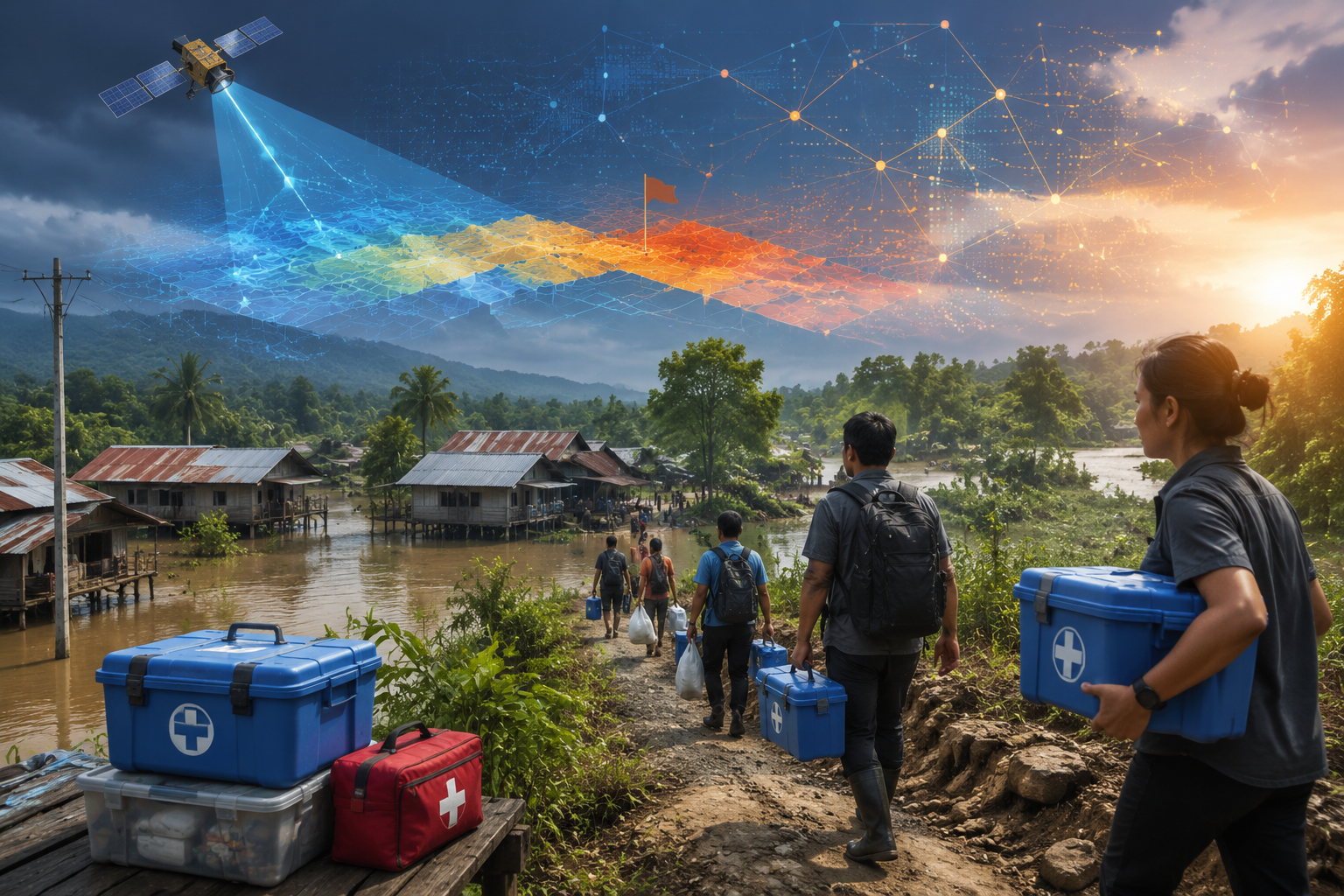
The strongest health-economic signal in the available evidence comes from Bihar, India. A GP2025 case study reported that communities receiving AI-powered flood alerts had statistically lower post-flood healthcare expenditures, with a 30% reduction in medical costs attributed to earlier evacuation and improved household preparedness.[2]
That figure deserves attention for a practical reason. Medical spending after a flood is where preparedness either becomes visible or fails quietly. A family that moves earlier may avoid wading through fast water, keep routine medicines dry, protect identification documents needed for care, and reduce exposure to contaminated water. A clinic that receives fewer preventable cases has more room for the patients who still need urgent care.
The Bihar result should not be read as proof that every AI flood warning system will cut medical costs by the same amount. The source available here is a case study summary, and although it references an IDinsight evaluation, the full methodology was not independently reviewed in the available material.[2] That caveat matters. It limits how far the number can be generalized.
It does not make the finding disposable. For public health planners, the result points to the right evaluative chain: alert timing, household behavior, exposure reduction, clinic demand, and out-of-pocket cost. The value of the AI system is not located only inside the model. It appears when a warning arrives early enough for people and services to act.
What Google Flood Hub Adds to the Health Equation
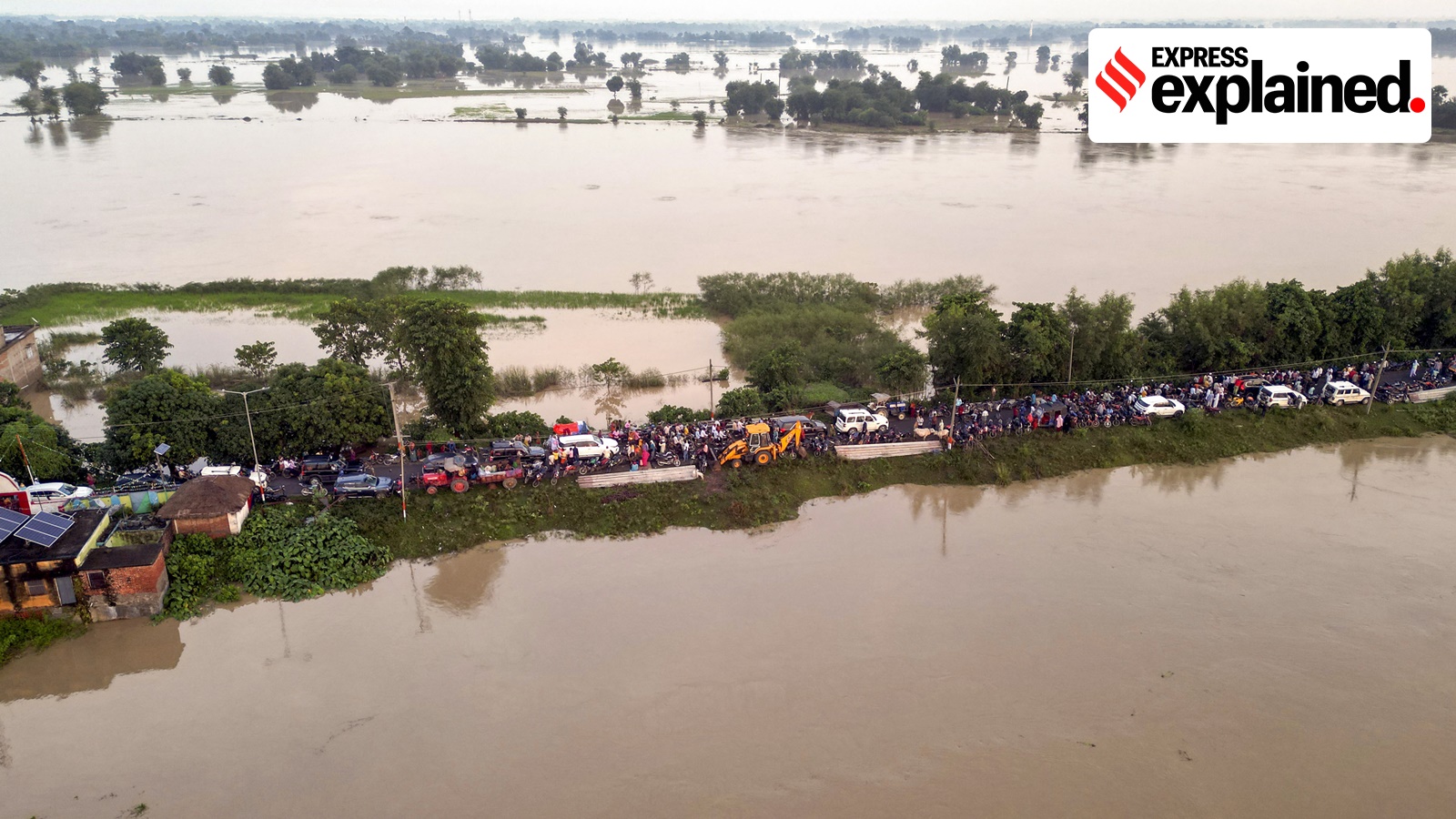
Google Flood Hub is the enabling infrastructure behind much of this discussion. The system uses satellite data, river gauge readings, terrain data, and AI modeling to provide flood forecasts up to seven days in advance. It covers more than 80 countries and is described as protecting more than 460 million people.[1][3]
For health systems, the seven-day window is the operationally interesting part. A same-day alert may still save lives, but it often arrives after the most useful health actions have become difficult. Several days of warning can change the order of work: move mobile clinics, warn dialysis and maternity patients, pre-position oral rehydration salts and essential medicines, shift staff rosters, protect cold-chain supplies, and identify households that need help evacuating.
Coverage at this scale also changes who can use flood intelligence. A district official or humanitarian health team does not need to build a hydrological model from scratch to start planning around likely inundation. But the existence of a forecast is still not the same as a functioning health intervention. Someone has to decide what level of risk triggers action, who has authority to move supplies, and how the warning reaches people who may not have reliable connectivity or trust in outside alerts.
Forecasts Become Health Protection Only When They Trigger Preparedness
The useful bridge between AI forecasting and health outcomes is anticipatory action: pre-agreed triggers, pre-positioned supplies, and pre-arranged financing. This is the part that often receives less attention than the model, but it is where clinical burden is actually changed.
| Forecast element | Health-system action it can trigger |
|---|---|
| Expected flood timing | Move patients, staff, and mobile services before roads become impassable |
| Likely affected area | Place medicines, water treatment supplies, and emergency kits closer to communities |
| Estimated severity | Release pre-arranged funds and activate evacuation support |
| Population exposure | Prioritize outreach to older adults, pregnant patients, children, and people with chronic conditions |
This is also where governance becomes unavoidable. If a warning says one area is at higher risk than another, scarce resources may move accordingly. That can be lifesaving when the trigger is transparent and locally accepted. It can also create conflict if communities do not understand why one clinic receives supplies first or why one evacuation route is prioritized.
The household version is just as important. Earlier warning gives families time to raise medicines above flood level, move children and older relatives, store safe water, protect documents, and leave before nightfall or road failure. These are ordinary actions, but they are exactly the actions that can reduce later clinic visits and emergency spending.
SORA Makes the Health Logistics Link Explicit
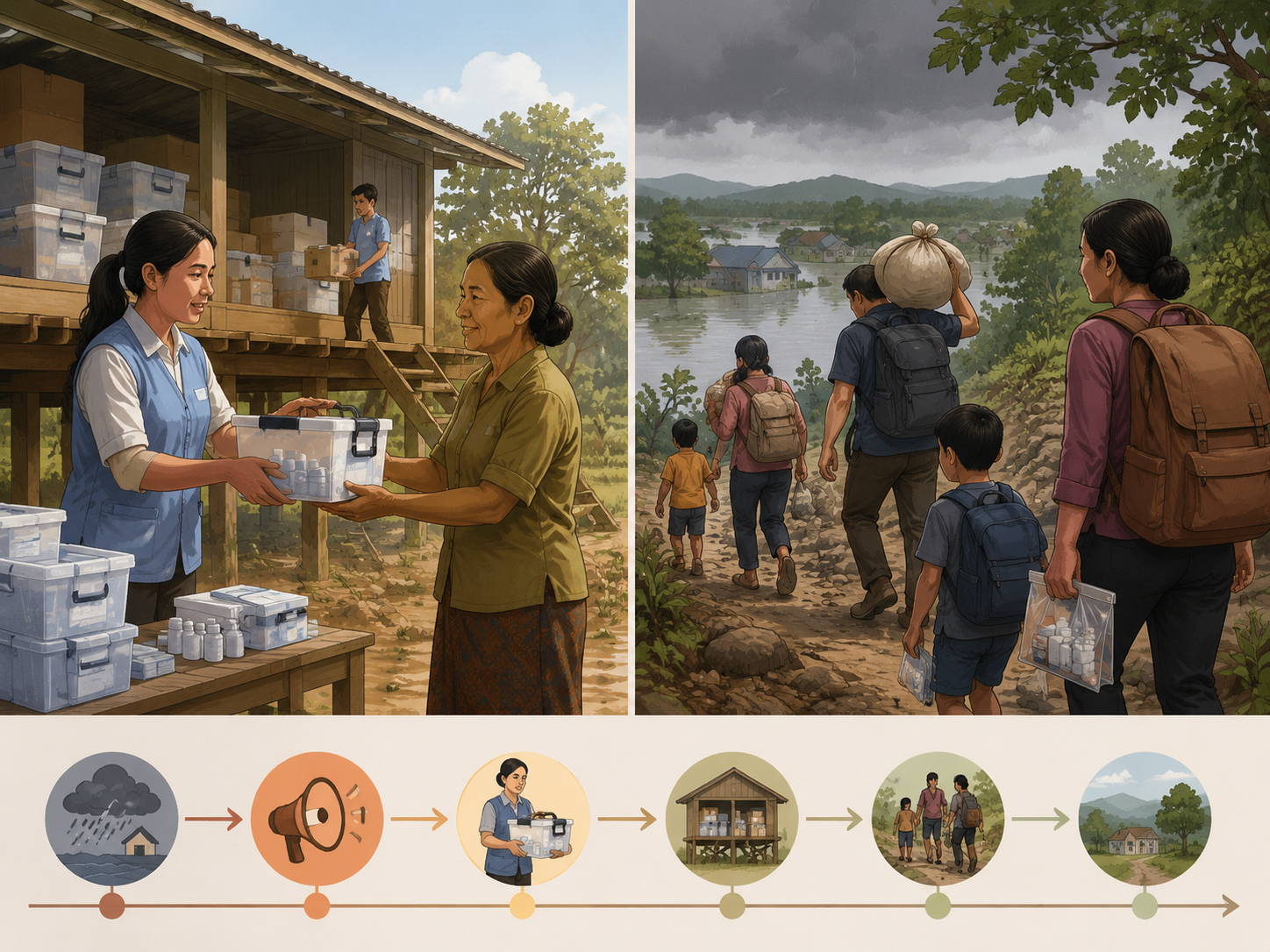
SORA Technology’s Nairobi proof of concept is worth separating from generic flood prediction because it models health-system consequences directly. In July 2025, SORA reported an AI-based flood and infectious disease risk assessment model with 69% flood hotspot prediction accuracy in a Nairobi proof of concept.[4]
More important for health planners, the system forecasts eight items that include affected population, hospital impact, and essential medicine demand.[4] That moves the model closer to the decisions health administrators actually face. A flood polygon may tell a planner where water is expected. A medicine-demand estimate begins to answer what must be moved, in what direction, and before which facilities are cut off.
The limitation is equally clear. This is a single proof of concept, not a validated operational deployment across multiple flood seasons and governance settings.[4] The result should be treated as promising design evidence rather than established effectiveness evidence. It shows what a flood-health model can be asked to predict; it does not yet show, at scale, that those predictions reduce morbidity, mortality, or costs.
East Africa Shows Where Forecasting and Anticipatory Health Action Are Converging
The SEWAA project points in the same direction from a regional early-warning perspective. Columbia’s National Center for Disaster Preparedness describes work with WFP, Oxford, and Google.org to integrate AI into regional weather models, with the goal of improving rainfall forecast accuracy so anticipatory health action can occur in East Africa.[5]
This matters because many flood-health decisions begin before a river gauge confirms local inundation. Rainfall forecasts can inform where health teams watch more closely, which districts prepare outreach, and when financing mechanisms should be readied. The evidence available here does not establish final health outcomes from SEWAA. Its importance is that the project is explicitly connecting AI-enhanced weather modeling to anticipatory action rather than treating the forecast as the endpoint.
The Hard Part Is the Last Mile Before the Flood
The practical barriers are familiar to anyone responsible for emergency health readiness. Data-sparse regions may lack the historical observations, river gauge density, terrain detail, or local validation needed to make warnings reliable enough for costly action. Infrastructure gaps can prevent alerts from reaching the households most exposed. Weak roads, fuel shortages, and fragile supply chains can make a seven-day forecast medically useful on paper but logistically thin in practice.
Trust is another constraint. A household that has seen false alarms, conflicting messages, or delayed government support may not evacuate simply because an AI-enabled platform shows risk. A district hospital may hesitate to move supplies if the budget rules do not protect staff from being blamed later. A community health worker may know exactly which families need help, but lack transport, fuel, or authority.
These are not objections to AI flood forecasting. They are the conditions under which it becomes a public-health tool. Local ownership, clear decision rights, ethical rules for resource allocation, and sustained institutional commitment determine whether forecasts lead to earlier evacuation, lower exposure, and lower post-flood medical spending.
A Better Standard for Evaluating AI Flood Preparedness
The evidence now supports a narrower and more useful claim than the usual technology narrative. AI-powered flood early warning is already showing measurable health and cost benefits where forecasts are timely, trusted, and connected to action systems. Bihar gives the clearest available health-economic signal. Google Flood Hub shows that large-scale, multi-country forecasting infrastructure is no longer speculative. SORA and SEWAA show the field moving toward models that speak more directly to hospitals, medicines, and anticipatory health planning.
None of that makes AI flood preparedness a plug-and-play clinical intervention. The central evaluation question should be less “How accurate is the flood model?” and more “What health action does the warning reliably trigger?” If the answer is earlier evacuation, stocked medicine points, protected continuity of care, and fewer families paying for avoidable post-flood treatment, the model has crossed from forecasting into public health.
References
- Google Flood Hub, AI for Cause, 2026.
- AI meets rising waters: How Google’s Flood Hub is saving lives with smarter forecasts, PreventionWeb, September 2025.
- Using AI to expand global access to reliable flood forecasts, Google Research.
- SORA Technology Proof of Concept in Nairobi, SORA Technology, July 2025.
- AI for Early Warning Systems and Anticipatory Action, Columbia National Center for Disaster Preparedness, 2025.
Comments
Join the discussion with an anonymous comment.