
The real problem in ai for healthcare data breach prevention is not finding more alerts. It is shrinking the queue fast enough that a hospital security team can still work the case before the shift ends. Healthcare breaches average $7.42 million per incident and take 241 days to contain, and organizations that use AI and automation extensively save about $1.76 million to $1.9 million per breach while cutting roughly 100 days from the breach lifecycle. [1][2]
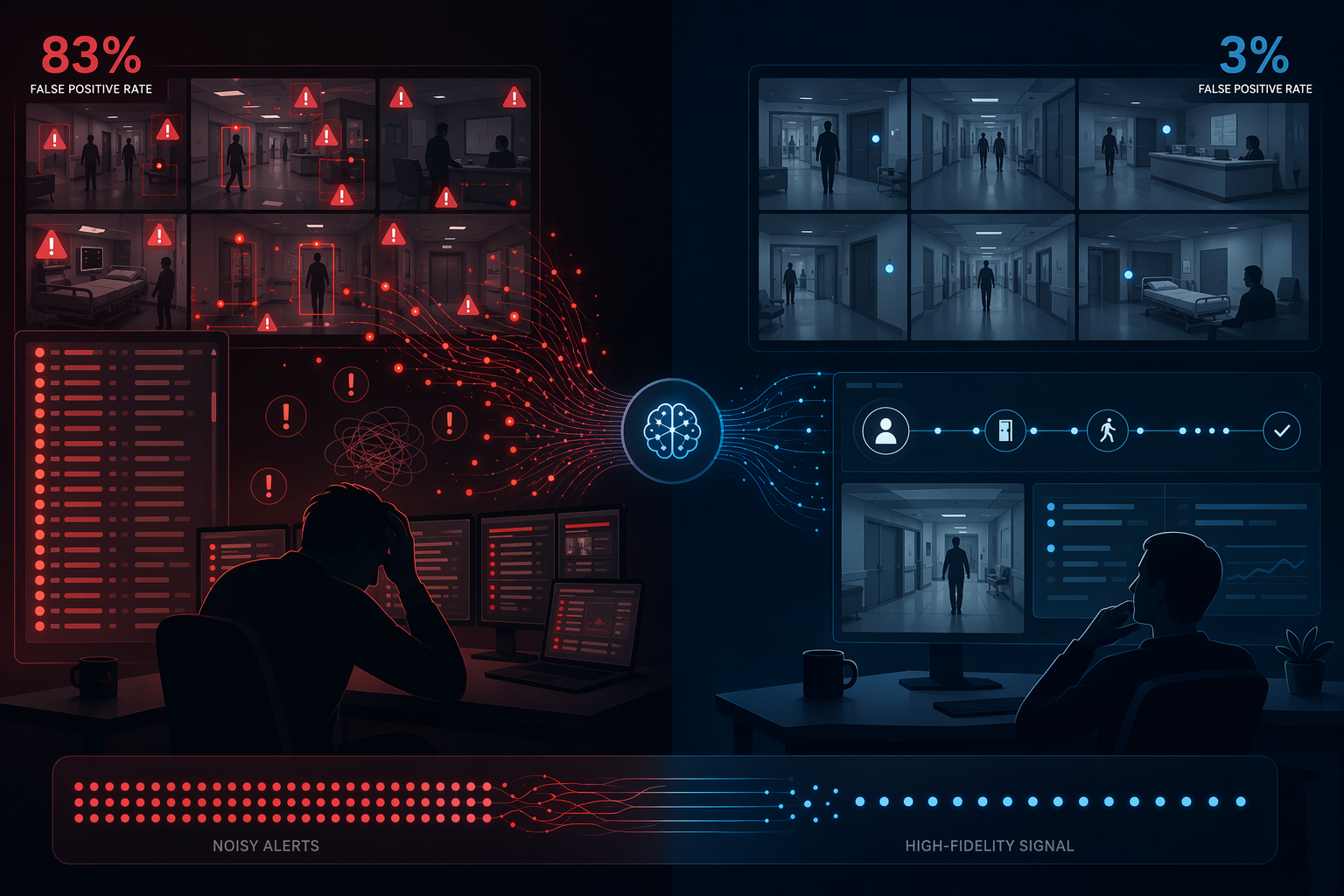
Johns Hopkins and Protenus Results
The strongest proof point is the Johns Hopkins and Protenus deployment. In that case study, the team tracked five KPIs and reported that false-positive breach alerts fell from 83% to 3%, while investigation time per alert dropped from 75 minutes to 5 minutes, a 93% reduction. The same deployment also reinforced an uncomfortable but useful fact: most breaches were tied to employee access inside the organization, not to some external attacker breaking in at the edge. The numbers come from a 2018-era implementation, so they should be read as foundational evidence rather than current system performance, but the operational lesson still holds. [3]
How Behavioral Analytics Works
Behavioral analytics works because it stops asking only whether an action looks malicious in the abstract and starts asking whether it fits the way a specific user, device, or account usually behaves. Supervised models learn from known examples; unsupervised models look for deviations without needing a labeled breach every time. In a hospital, that matters because role-based activity patterns are not uniform. A physician, a registrar, a billing analyst, and a nurse do not touch the EHR in the same way, at the same times, or from the same places. When those patterns shift unexpectedly, the system has something concrete to investigate instead of a generic alarm. Signature tools are still useful, but they are much weaker at catching misuse that happens from inside the network or through valid credentials. [3]
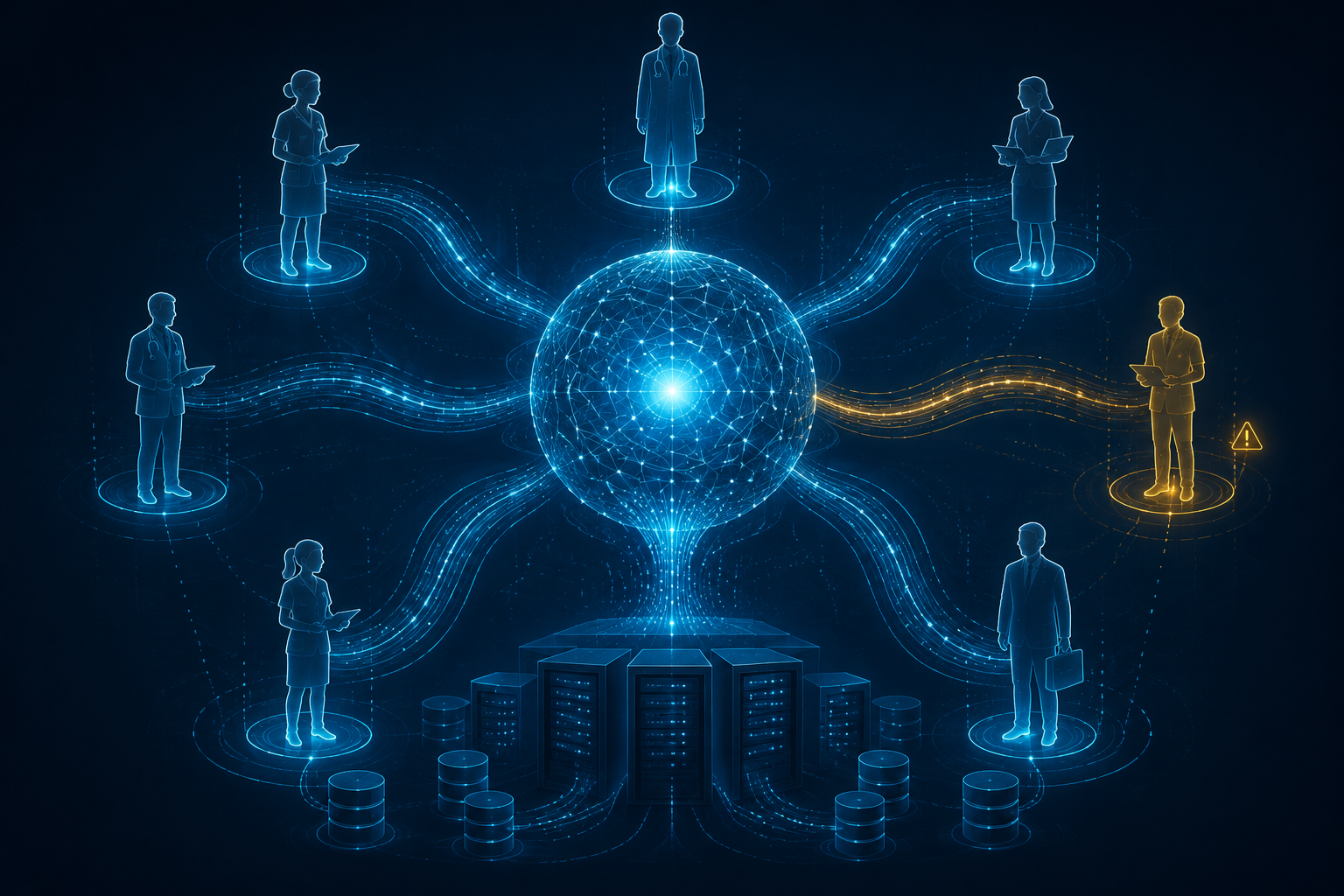
Some platforms extend that same logic beyond access monitoring into automated containment, encrypted traffic analysis, and IoMT anomaly detection, which is why the category is broader than privacy analytics alone. The useful point is not that AI replaces every control. It is that it gives security teams another way to spot abnormal behavior across systems that are too noisy, too distributed, or too dynamic for static rules to cover well. [4][5]
Operational Requirements
The value disappears quickly if the model is treated like a one-time purchase instead of an operational system. Training data has to be clean enough to reflect real workflows, and the baselines have to be retrained as staff, devices, access rights, and care patterns change. Drift is not a theoretical edge case in healthcare; it is the ordinary condition of a hospital. A platform that cannot explain why it flagged a user, or that cannot hand off cleanly into incident response, will just recreate the same alert flood with better branding.
That matters even more now that the attack surface is changing in parallel. ORDR reports that 40% of hospitals have shadow AI, adding an average of $670,000 to breach costs, and that 82% of phishing emails now contain AI-generated content while healthcare is the most-phished industry at a 41.9% vulnerability rate. AI defense is not a permanent fix; it is a faster way to keep up with an adversary that is also using AI. [1]
AI behavioral analytics is narrower than the marketing usually is and stronger than the skeptics assume. It compresses noisy detection into something faster, cleaner, and more actionable, but only when the hospital is prepared to maintain the model, review the exceptions, and keep the workflow tied to the people who actually close incidents.
References
- ORDR - Healthcare Cybersecurity Statistics 2026 Report
- IBM - Cost of a Data Breach: The Healthcare Industry
- HealthCatalyst - How Artificial Intelligence Can Overcome Healthcare Data Security Challenges
- ClearDATA - The Role of AI Cybersecurity Solutions in Healthcare
- Cambridge College of Healthcare & Technology - AI and Machine Learning in Healthcare Cybersecurity
Comments
Join the discussion with an anonymous comment.