When a tropical cyclone forecast reaches a health system, the useful question is not whether the track moved a few miles. It is which hospital entrances, routes, generators, and staffing plans are now exposed. That is where AI in tropical storm preparedness and public health becomes operational rather than decorative: a forecast can move from the weather desk into evacuation timing, bed staging, ambulance routing, and public health messaging. The National Hurricane Center is already using Google DeepMind AI hurricane models alongside traditional models, and the University of Miami’s CNN easterly wave tracker is now part of NHC operations as well.[1][2]
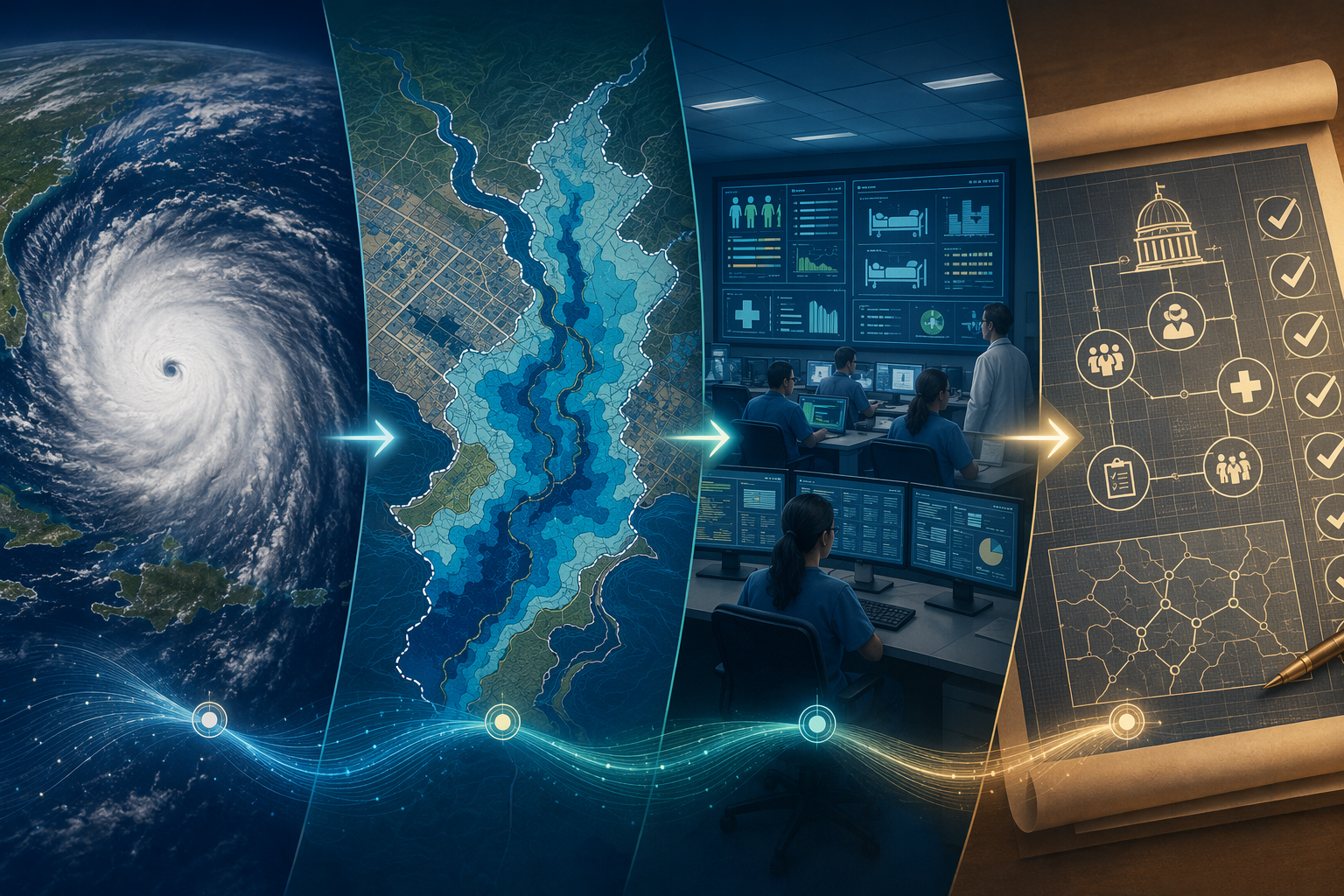
That operational shift depends on more than accuracy. In the comparison highlighted by Pelican Policy, GraphCast and Pangu-Weather produced smaller track errors than traditional numerical weather prediction through five days while using far less compute, and they could run on laptops.[3] For emergency managers, the last detail matters because a model that does not wait on a shared cluster can still be used when pre-landfall decisions are narrowing by the hour.
From track forecast to building-level hazard
The critical step is translation. Georgia Tech’s physics-informed models forecast building-level flood depths three to five days before landfall with more than 90% accuracy, turning a storm corridor into a map of specific structures, streets, and access points.[4] FIU’s storm surge work cuts computation time from hours to minutes.[5] That is not the same as proving a full response system, but it is enough to change what an emergency manager can know before the window for evacuation routing and pre-positioning closes.
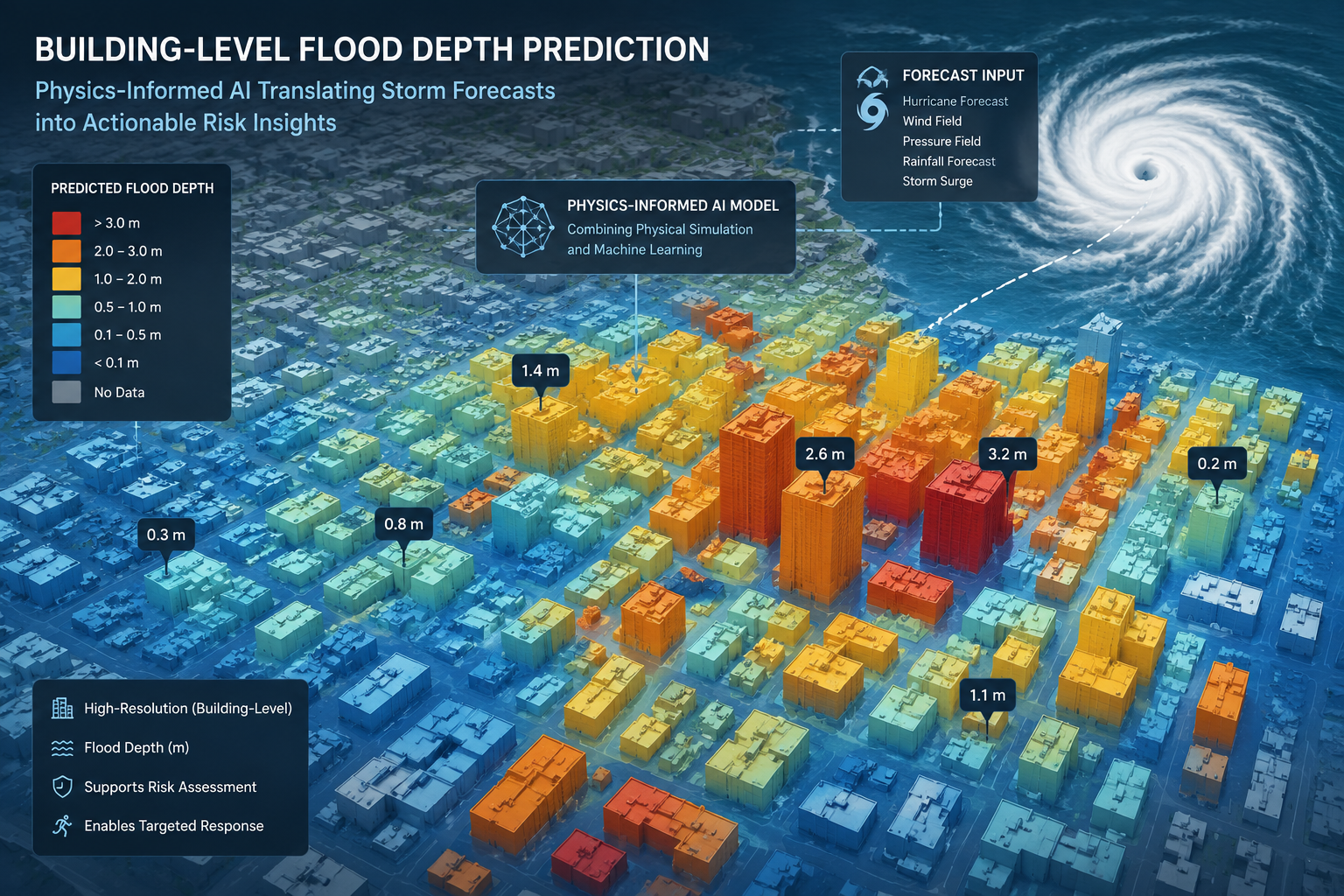
That kind of localization is what separates a generalized hazard bulletin from a decision trigger. A hospital does not need a prettier forecast; it needs to know whether the emergency department driveway, oxygen storage, outpatient annex, or transport corridor is likely to fail first.
The hospital command center is where the forecast gets tested
At Texas A&M’s UrbanResilience.AI Lab, a companion AI for emergency operations centers was field-tested during hurricanes Beryl, Milton, and Helene.[6] The important part is the handoff. A command room can use that kind of tool to keep the forecast, resource checklist, and incident log aligned long enough to act on them. In practice, that may mean deciding earlier on surge beds, ambulance diversions, or facility protection steps before the weather fully arrives.
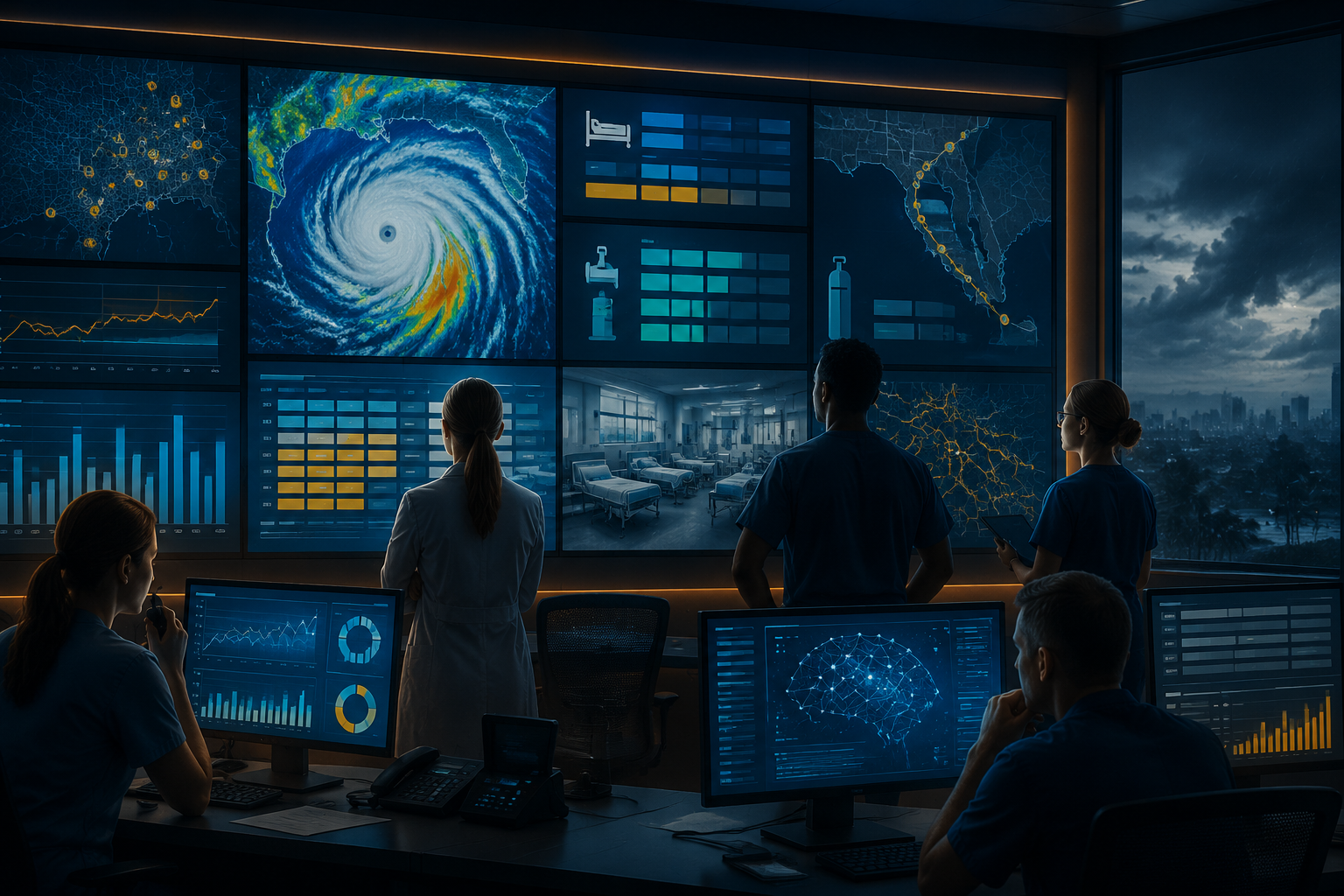
Harvard and Boston Children’s researchers have also shown machine-learning models that combine environmental and infectious-disease data to predict respiratory admission capacity needs to the day.[7] In hurricane preparedness, that matters because the clinical load often shows up after the storm in patients with disrupted chronic care, asthma flares, smoke exposure, or viral spread in crowded shelters. A day-level estimate only helps if the bed-management and staffing teams trust it enough to act.
Governance is now part of the forecast pipeline
RAND’s 2025 analysis shows why the governance layer cannot be an afterthought. If a disaster-allocation model learns from property-damage data, it can over-prioritize wealthier areas where the assets are worth more; once multiple AI agents are chained together, accountability gets harder to trace.[8] In other words, the question is not only whether the model is accurate. It is who is being favored, who can challenge the recommendation, and whether a human can still explain the decision after the fact.
Taken together, the components now resemble an end-to-end preparedness chain: operational storm-track AI at NHC, local hazard translation, emergency-operations support, and clinical capacity forecasting. What is still missing is a single system validated across multiple health systems and a formal endorsement path for this specific use case. As of Q3 2026, the materials here show a fragmented but plausible pipeline, not a closed loop that has been proven, FDA-cleared, CMS-endorsed, or trusted everywhere it would need to run.
References
- AI Hurricane Forecasting — NOAA/National Hurricane Center
- New AI Tool Tracks Early Signs of Hurricane Formation — University of Miami Rosenstiel School — 2025-08
- AI hurricane season — Pelican Policy
- How AI-powered flood forecasts could transform hurricane resilience — Georgia Tech Research News — 2026-06-30
- How AI can improve storm surge forecasts to help save lives — FIU News
- How AI tools are transforming disaster response preparedness — Texas A&M Stories — 2025-10-01
- Machine learning can predict weather and human health — Harvard Medicine Magazine
- How AI is changing our approach to disasters — RAND Commentary — 2025-08
Comments
Join the discussion with an anonymous comment.