
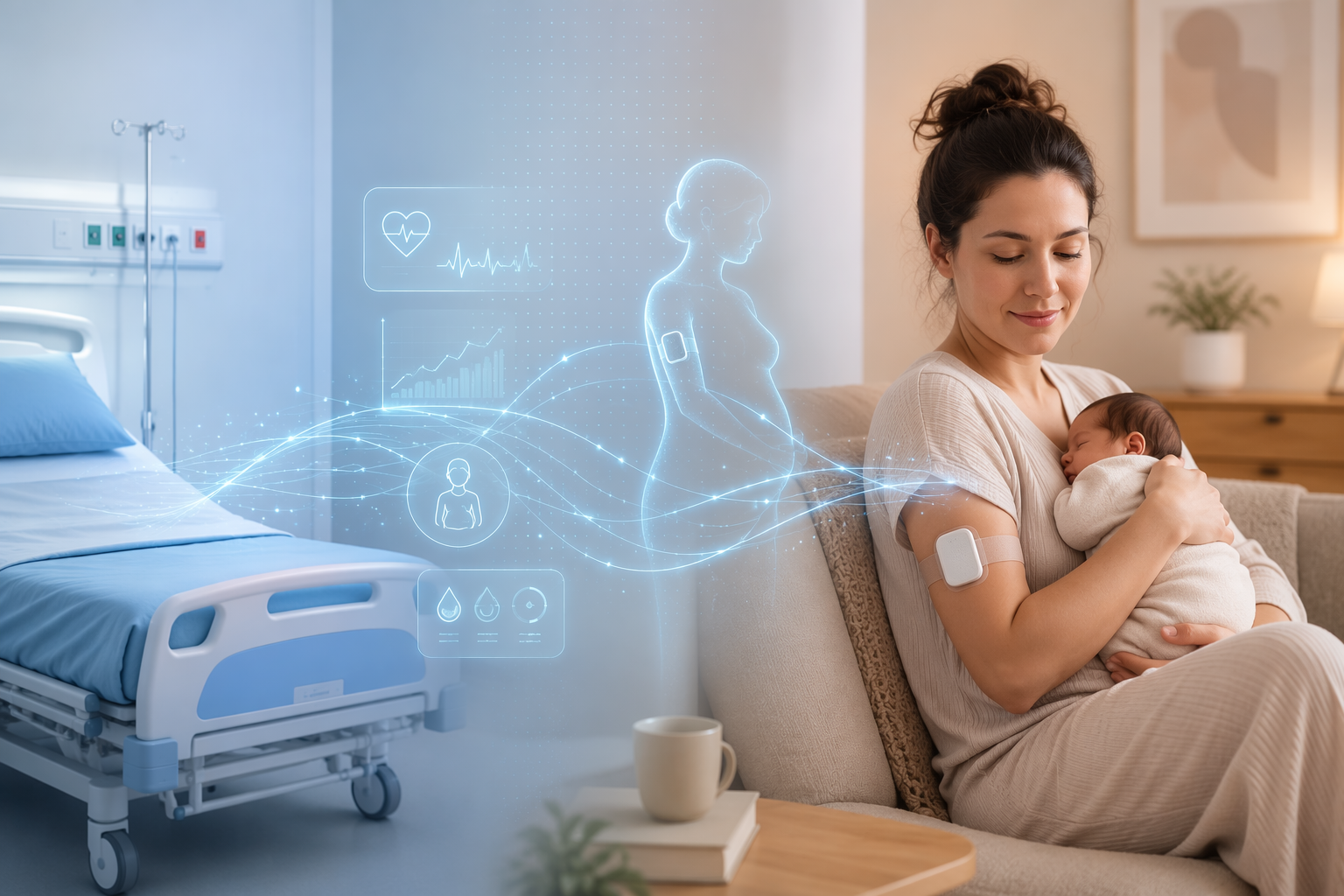
Postpartum body changes and recovery rarely fit inside the old 6-week visit frame. Bleeding patterns change at home. Blood pressure can become a problem after discharge. Pelvic floor symptoms often become obvious only once a patient is walking, lifting, feeding, and sleeping in fragments. Depression and loneliness can surface in the same interval when clinical contact is thinnest.
That is the opening for AI in postpartum care: not as a replacement for obstetric judgment, but as an attempt to extend observation into the days and weeks when risk has not ended but routine surveillance often has. The current field includes AI-enabled wearables and physiologic monitoring, machine-learning models for postpartum hemorrhage prediction, remote maternal monitoring platforms, prescription digital therapeutics, and generative AI or chatbot support. Those categories should not be treated as equally mature.
The Evidence Base Is Still Narrower Than the Market Language
The clearest field-level signal comes from a 2026 systematic review of 33 studies on artificial intelligence for postpartum hemorrhage. The review found that 91% of included studies were retrospective, 55% were single-site, and 76% relied only on internal validation. Classical machine learning appeared in 85% of studies, deep learning in 33%, and large language models in 6%.[1]
Those numbers do not mean AI cannot help. They mean most claims are still closer to model development than operational proof. A retrospective model can identify patterns in existing records. It does not, by itself, show that an alert will reach the right clinician, trigger the right escalation, reduce morbidity, avoid alert fatigue, or perform the same way in another hospital with different documentation, staffing, payer mix, and patient population.
| Tool category | Current posture | Main adoption question |
|---|---|---|
| Wearable hemorrhage or physiologic monitoring | Some regulated devices and active trials; outcome evidence varies by product and indication | Who receives the signal, and what clinical action follows? |
| Machine-learning hemorrhage prediction | Strong research interest, but the broader literature is mostly retrospective and internally validated | Has the model been prospectively tested outside its development setting? |
| Remote maternal monitoring platforms | Potential to connect home data to care teams; not all platforms are FDA-regulated devices | Does monitoring reduce missed deterioration without shifting work to patients or nurses? |
| Prescription digital therapeutics | More formal regulatory pathway for selected conditions | Does clearance correspond to real-world access and measurable improvement? |
| Generative AI and chatbots | Early clinical trials and pilots for education, loneliness, and support | Is the content safe, bounded, and integrated with escalation pathways? |
Physical Complication Monitoring Is Where the Clinical Stakes Are Most Immediate
Postpartum hemorrhage prediction has attracted serious AI work because the consequence is acute and the signal may be physiologic before it is obvious in a routine workflow. But even here, the products and models sit at different levels of maturity.
Baymatob’s Oli wearable is being tested as an AI-guided electromyography monitor that detects uterine muscle fatigue, with the aim of identifying postpartum hemorrhage risk. A May 2026 report described a global clinical trial enrolling at Woman’s Hospital in Louisiana and four other U.S. sites, with the company targeting FDA clearance after 2026.[2]
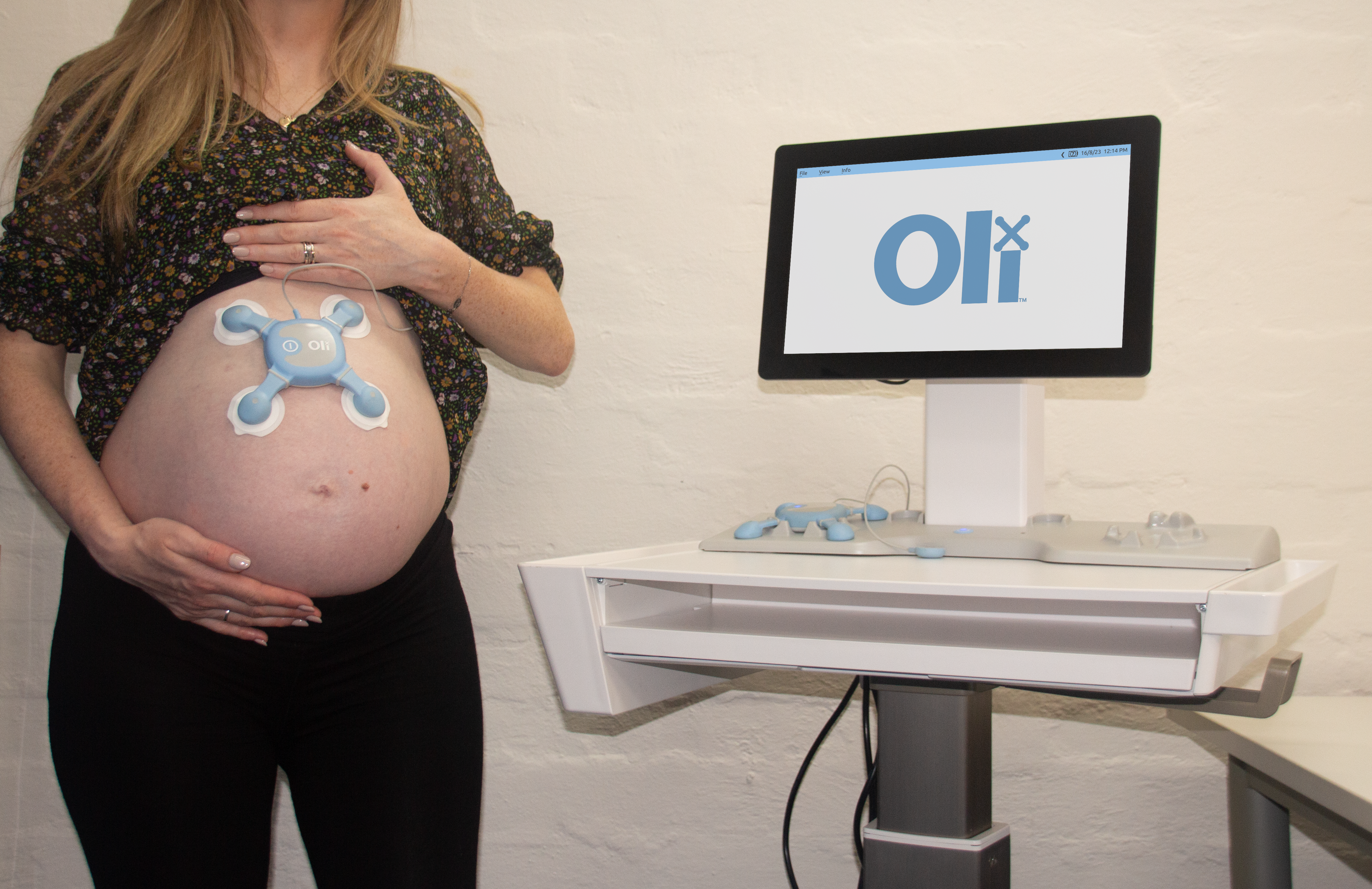
That description matters because it places Oli in an investigational posture, not an already-cleared clinical standard. The promise is plausible: a physiologic sensor could notice fatigue or change before a human observer sees enough bleeding to escalate. The adoption question is more operational: if the device flags risk, does the alert go to labor and delivery staff, a remote monitoring team, the obstetrician, or an algorithmic dashboard that someone may or may not be watching?
Cedars-Sinai’s time-series machine-learning work shows a different approach. Rather than relying on a wearable signal, the model used clinical data over time to predict severe postpartum hemorrhage morbidity. Reported performance improved from an AUC of 0.7 at admission to 0.88 postpartum.[3]
The improvement is meaningful as a prediction result, especially because postpartum data can sharpen risk estimates after delivery. It still leaves the implementation question untouched unless a health system knows when the score updates, what threshold generates action, whether staff can see the reason for the alert, and whether the model has been tested prospectively in other settings. An AUC can describe discrimination; it does not describe the labor of responding.
Sibel Health’s ANNE Maternal belongs in a separate regulatory bucket. The company announced FDA 510(k) clearance for what it described as the first fully wireless comprehensive maternal-fetal monitoring platform.[4] Clearance is not the same as proof that postpartum outcomes improve, but it does indicate that the device has passed a defined regulatory pathway for its cleared use.
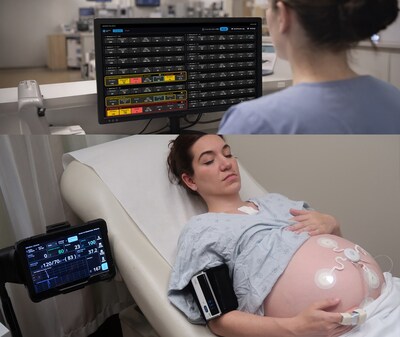
For postpartum recovery programs, the practical value of a wireless monitoring platform depends less on the elegance of the sensor and more on the care model around it. Continuous vital-sign collection can be helpful only if it is paired with triage rules, escalation ownership, documentation expectations, and staffing that can absorb the work. Otherwise, monitoring becomes another stream of unassigned responsibility.
What Health Systems Should Ask Before Treating a Model as Ready
- Was the model tested prospectively, or only on existing records?
- Was validation external, or limited to the same institution or dataset family?
- Does the study population resemble the health system’s postpartum population by race, language, insurance status, comorbidity, and access to follow-up?
- What event does the model predict: hemorrhage, severe morbidity, transfusion, intervention, readmission, or another endpoint?
- Who is accountable for reviewing and acting on the signal after discharge?
These questions are not barriers for their own sake. They are the difference between a model that performs well in a paper and a tool that can safely extend postpartum surveillance.
Mental Health and Recovery Support Are Moving Through a Different Evidence Path
Physical monitoring tends to focus on detection: blood pressure, bleeding risk, physiologic change, deterioration. Mental health and pelvic floor recovery tools often work through education, symptom support, behavioral activation, or triage. The evidence standards still matter, but the endpoints and workflows are different.
The UC San Diego PEARL trial is evaluating a generative AI chatbot using retrieval-augmented generation for postpartum pelvic floor education and loneliness reduction. The ClinicalTrials.gov record lists enrollment of 130 primiparous women.[5]
That is an appropriate use case to study, because many patients have pelvic floor questions well before they can access specialty care, and loneliness is not solved by handing someone a discharge packet. But trial registration is not evidence of effectiveness. For a generative AI tool, the safety review should include not only outcomes but also the retrieval sources, response boundaries, crisis escalation, language accessibility, and how the system handles symptoms that should not be managed as education alone.
Curio MamaLift Plus is described as the first FDA-cleared prescription digital therapeutic for postpartum depression.[6] That places it in a more formal category than general wellness apps or unregulated chatbots. It also narrows the claim: a prescription digital therapeutic for postpartum depression is not the same as a broad AI companion for all postpartum distress, nor is FDA clearance interchangeable with universal access, payer coverage, or demonstrated performance across all patient groups.
This distinction is easy to lose in postpartum technology discussions. A patient-facing tool may feel supportive, and a chatbot may answer quickly, but clinical adoption should depend on the condition being addressed, the evidence behind the intervention, and the handoff when the patient needs human care. Depression, suicidal ideation, intimate partner violence, severe anxiety, and psychosis cannot be treated as generic engagement problems.
Virtual Maternal Care Platforms Need Separate Attribution
Maven Clinic is often cited as an example of AI-personalized virtual maternal care. A 2025 article reported that Maven had raised more than $300 million and reported a 28% reduction in NICU admissions.[6]
Those facts are relevant to market scale and claimed outcomes, but they should be handled cautiously. A virtual care platform may combine care navigation, education, coaching, provider access, benefits design, and AI-supported personalization. Unless the population, comparator, AI component, and outcome attribution are independently established, the NICU figure should not be read as proof that AI alone produced the reduction.
For health systems, the more useful question is whether a platform closes a known postpartum gap. Does it route elevated blood pressure to a licensed clinician? Does it identify depressive symptoms and connect the patient to care? Does it reduce unnecessary emergency visits while catching true deterioration? Does it document in a way the obstetrics team can use? Consumer-grade convenience and clinical-grade accountability are different things.
Regulatory Status Helps, but It Does Not Settle Clinical Value
Regulatory language needs to stay precise in postpartum AI because the same article or vendor deck may mention cleared devices, prescription digital therapeutics, registered trials, and consumer services in adjacent paragraphs. FDA 510(k) clearance for a monitoring device is not the same as randomized evidence that a postpartum program improves outcomes. A registered trial is not a positive trial. A digital therapeutic clearance is not a guarantee that a health system can deploy it equitably.
The Policy Center for Maternal Mental Health’s 2026 fact sheet on artificial intelligence and maternal mental health provides a useful reminder that these tools sit inside a policy environment involving privacy, safety, bias, and clinical oversight.[7] That context is especially important because postpartum data can include mental health symptoms, reproductive history, infant information, family circumstances, and physiologic signals collected outside the hospital.
HIPAA and GDPR compliance claims are necessary but not sufficient. A compliant data pipeline can still produce inequitable monitoring if only digitally connected, insured, English-speaking, or highly resourced patients can use it reliably. The current materials do not establish cost, coverage, device access, broadband access, language support, or digital-divide performance for the tools discussed here. That absence should be treated as an adoption constraint, not a footnote.
Adoption Readiness Depends on Workflow Ownership
The strongest postpartum AI candidates are not necessarily the most futuristic. They are the ones that make the chain of responsibility visible: the patient wears or uses the tool, the signal is collected, the risk is interpreted, the alert reaches a named role, and the next clinical step is clear.
For physical recovery and complication monitoring, that means defining escalation before deployment. A hemorrhage-risk signal without a response pathway is not a safety program. A wireless vital-sign feed without staffed review is not continuous care. A risk score that updates after discharge but does not integrate into the postpartum team’s worklist may be technically impressive and operationally weak.
For pelvic floor, loneliness, and depression support, the workflow is different but the standard is similar. Educational chatbots need boundaries. Digital therapeutics need prescribing, follow-up, and access pathways. Mental health tools need escalation for high-risk symptoms. If the tool discovers a need that the system cannot meet, the patient has not been truly monitored; she has been screened into a queue.
The field is promising because it is finally paying attention to the postpartum interval as a period of active clinical risk and recovery. It is still early because clearance, trial registration, retrospective performance, and real-world efficacy are not interchangeable. Health systems evaluating AI for postpartum recovery should treat the category as an emerging clinical-applications field: some pieces are regulated, some are investigational, many are not yet validated at scale, and all require evidence, workflow ownership, and equitable access before they can be called dependable.
References
- Artificial intelligence for postpartum hemorrhage: a systematic review. Frontiers in Global Women’s Health, 2026.
- Woman's Hospital tests AI wearable to detect postpartum hemorrhage. WAFB, May 2026.
- AI Predicts Dangerous Complication for Moms After Delivery. Society for Maternal-Fetal Medicine, 2024.
- Sibel Health Receives FDA-Clearance for ANNE Maternal. PRNewswire, 2025.
- NCT07223736. ClinicalTrials.gov.
- Healing After Birth: How AI is Transforming Postpartum Care. Thier.io, March 2025.
- Artificial Intelligence and Maternal Mental Health. Policy Center for Maternal Mental Health, March 2026.
Comments
Join the discussion with an anonymous comment.