
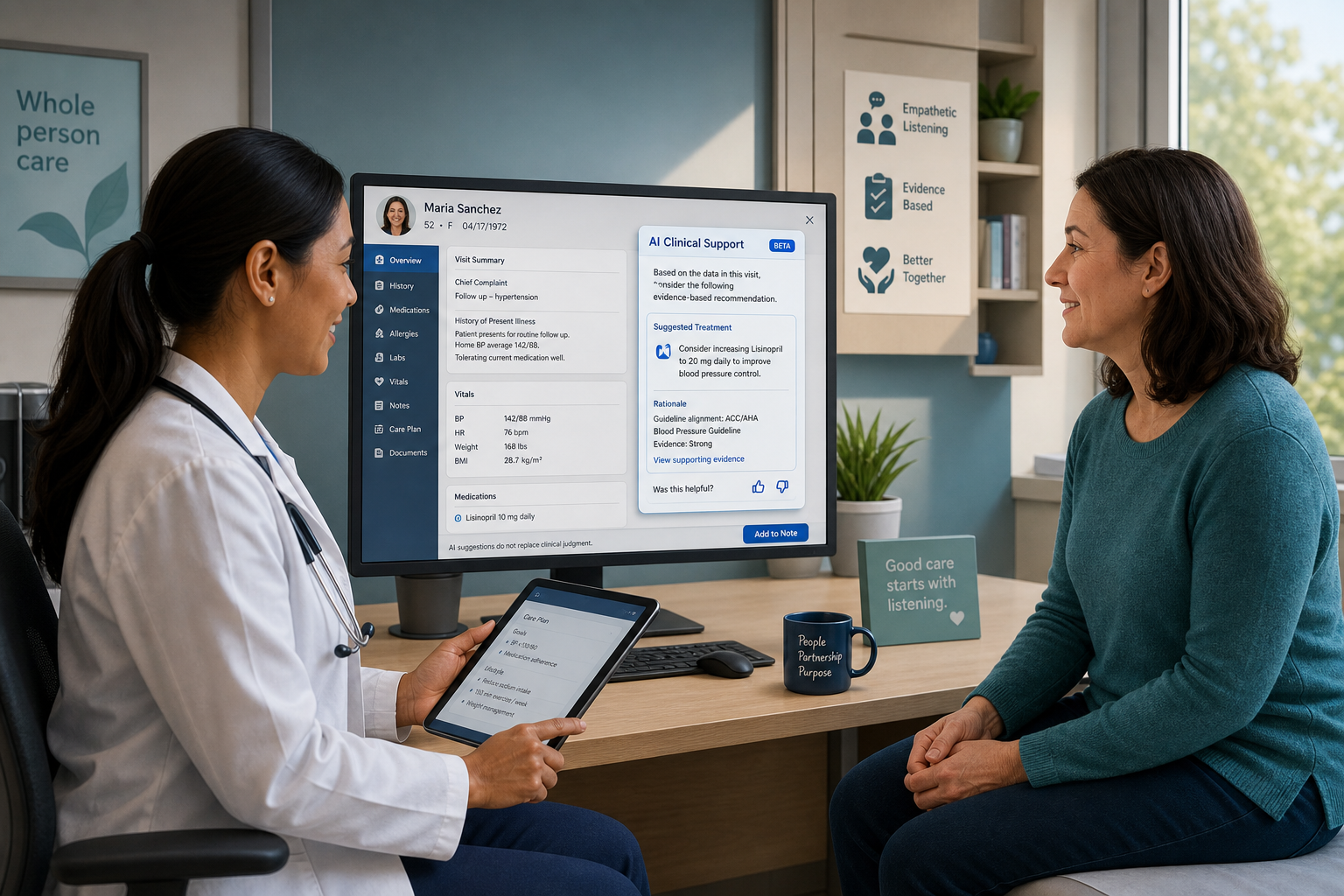
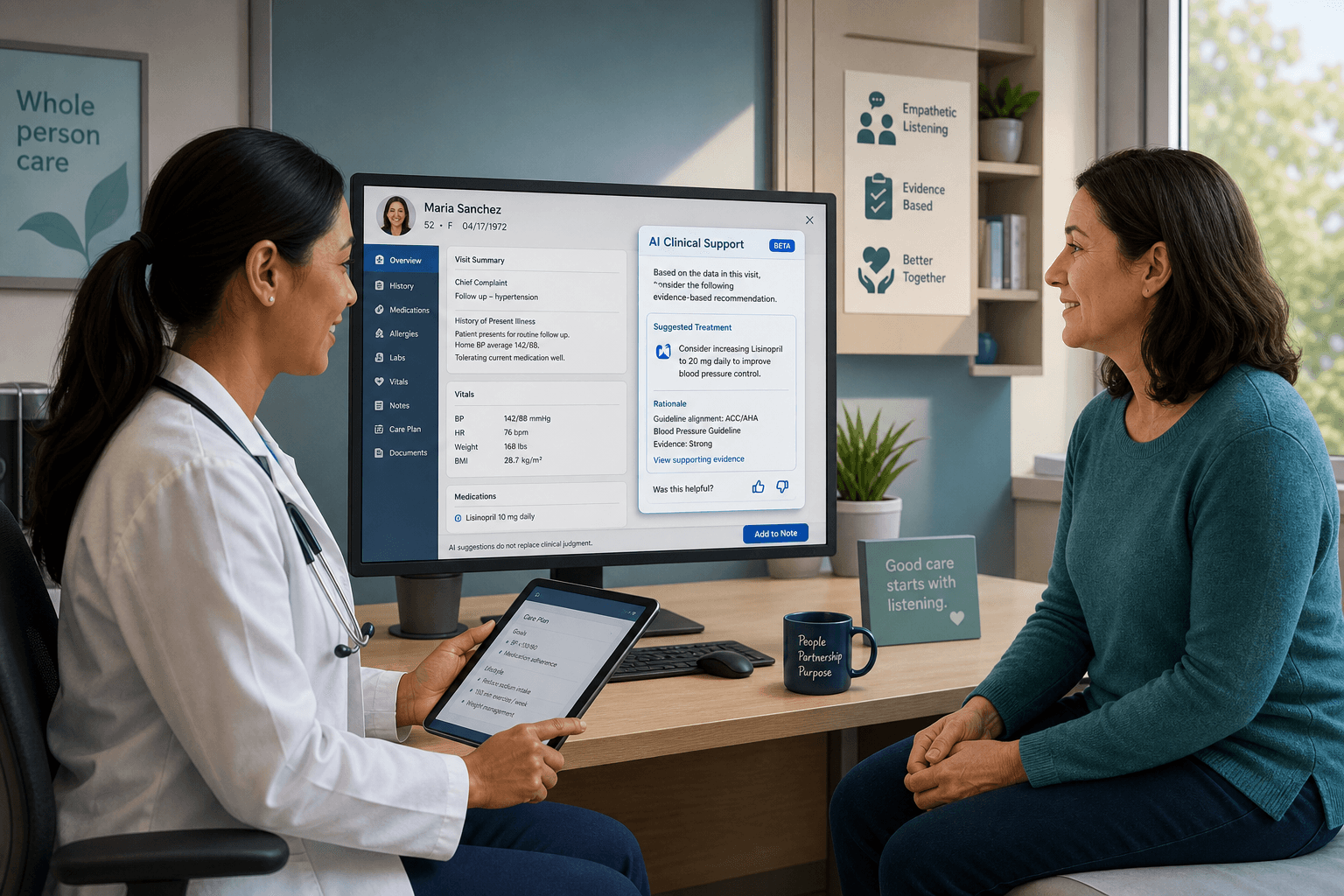
The Promise of AI CDSS in Primary Care: Expanding Specialist-Level Capabilities
Primary care physicians operate at the front line of medicine, managing an extraordinary breadth of conditions — from acute infections and chronic metabolic disease to early cancer detection and mental health — often with limited access to specialist consultation in the moment. This diagnostic and therapeutic breadth creates a natural opening for clinical decision support systems (CDSS) powered by artificial intelligence. The core promise is straightforward: give a generalist a tool that can match or exceed specialist-level pattern recognition for specific tasks, and you raise the floor of care quality across the entire population.
A 2025 scoping review of 73 studies, published in PMC and following PRISMA-ScR methodology, mapped AI applications in primary care into four domains: early intervention and decision support (29% of studies), chronic disease management (22%), operations and patient management (16%), and acceptance and implementation (33%). The decision-support cluster — the focus of this article — includes tools for diagnostic triage, treatment selection, cancer screening, cardiovascular risk assessment, and antibiotic stewardship. These are not speculative prototypes. Many have been tested in real clinical workflows with measurable outcomes.
Comments
Join the discussion with an anonymous comment.