
The comparative map
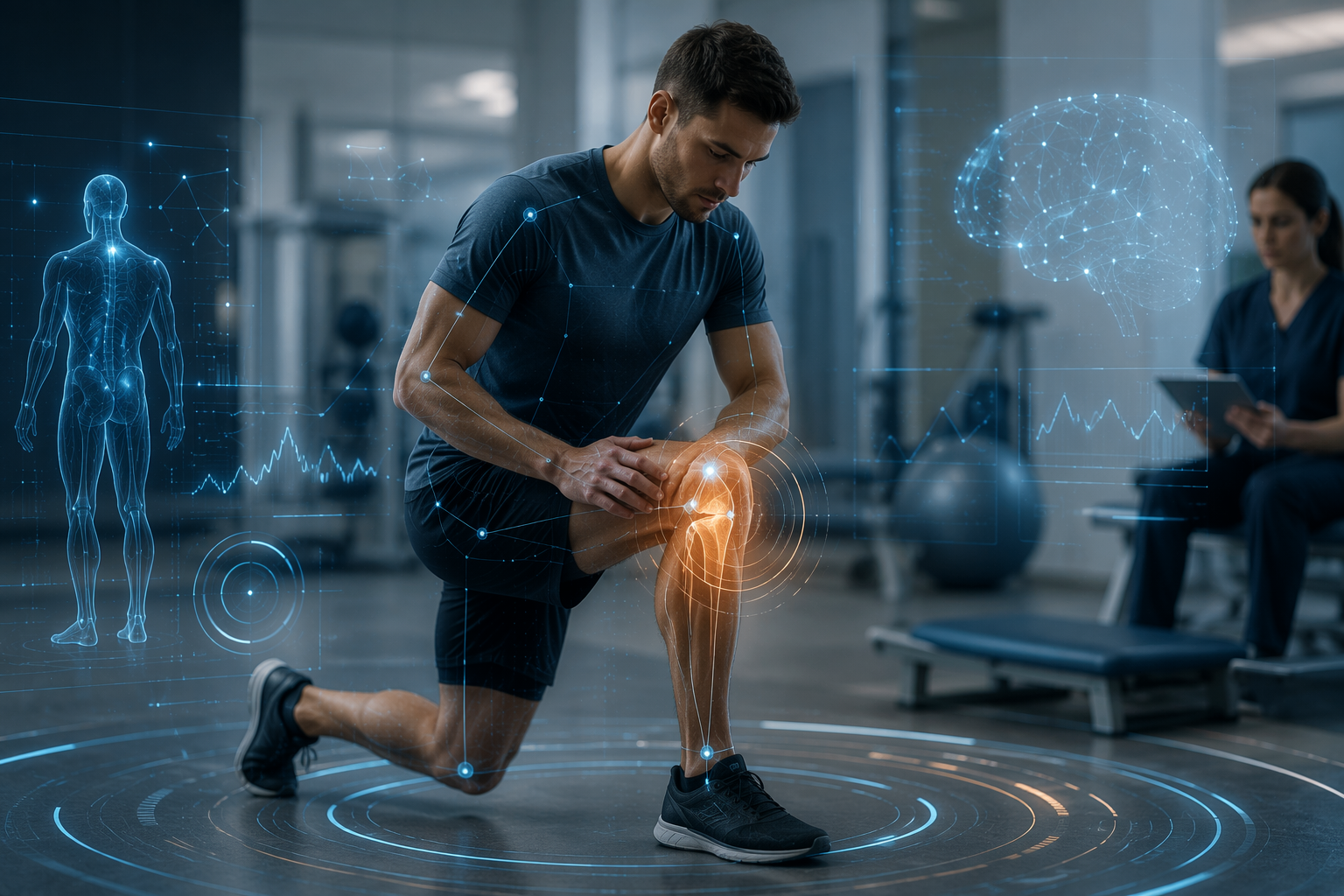
The most useful starting point is the 2025 network meta-analysis by Luo et al., which pooled 33 randomized controlled trials and compared 13 AI-assisted rehabilitation strategies across pain, function, and range of motion. Because the evidence spans musculoskeletal disorders rather than sports injuries alone, it works best as a comparative map for rehabilitation choices, not as a sports-specific final word. [1]
| Domain | Comparative leader | SUCRA | What it means |
|---|---|---|---|
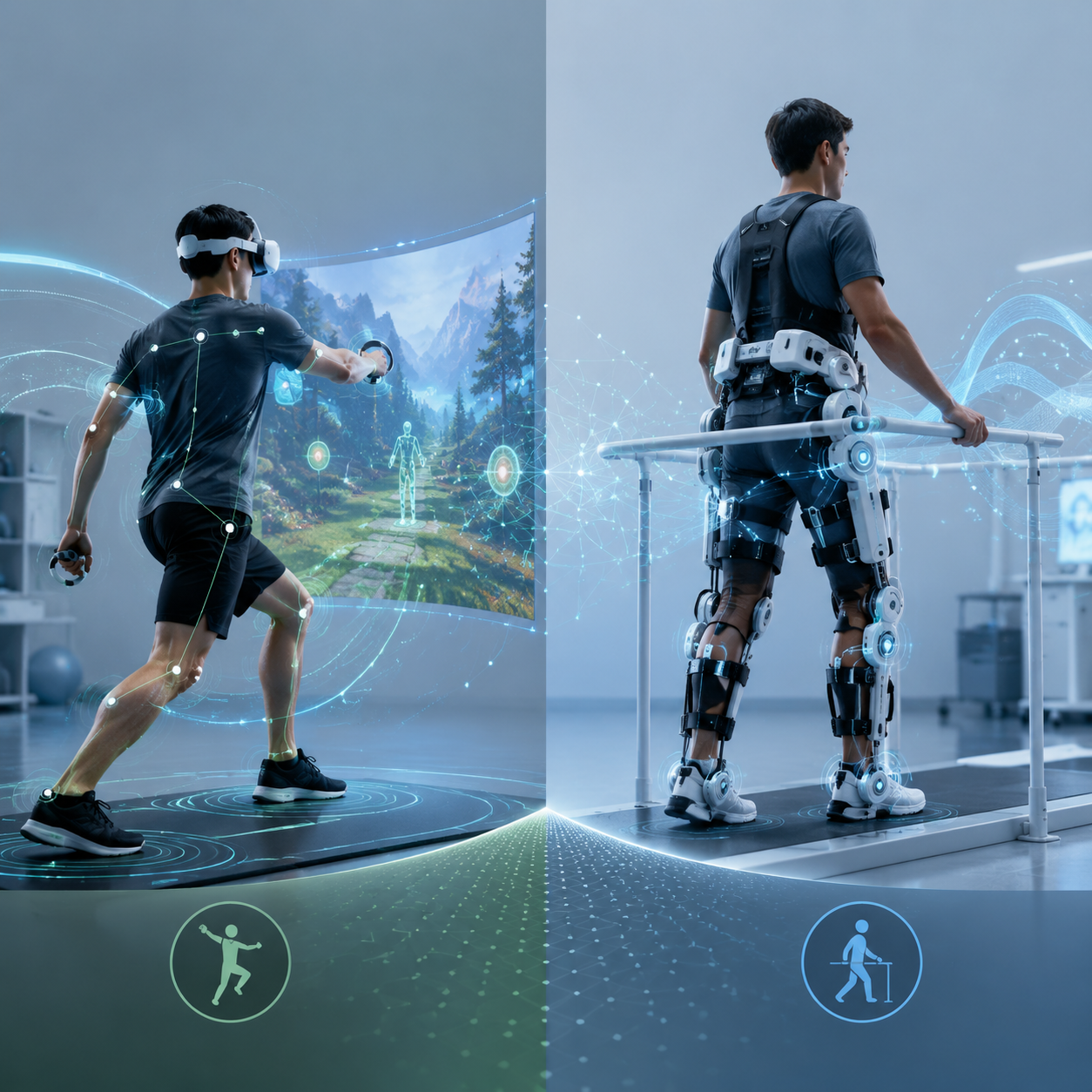
| Pain relief | Therapeutic exergaming; robotic exoskeletons | 87.6%; 86.3% | Best-ranked options for pain in this dataset [1] |
| Function | Gamified exergaming | 99.6% | Strongest functional signal in the review [1] |
| Range of motion | Single-joint rehab robots | 84.7% | Leading ROM option among the included strategies [1] |
Conventional care and asynchronous telerehabilitation sat at the bottom across all three domains, which matters because those are the comparators newer tools have to beat to justify the extra complexity. [1]
Where the signal is strongest
The positive signal is not evenly distributed. The trials suggest greater short-term benefit in younger patients and in mild-to-moderate conditions, and most follow-up was only 2 to 12 weeks. That is enough to say the top modalities look promising now, but not enough to say the advantage lasts once rehab stretches into the months where adherence and load management start to matter. [1]
That is also why SUCRA rankings deserve respect but not certainty. They compare the included studies; they do not erase heterogeneity in devices, protocols, and patient mix. A neat ordering can look more stable than the evidence base really is. [1]
Why the wider AI context still matters
Outside the rehab trial literature, AI in sports medicine is still being discussed mainly as a tool for wearable-sensor monitoring and injury-risk prediction rather than as a proven rehabilitation engine. That broader literature is useful as a reality check: the ecosystem is active, but the rehab-specific outcome data remain much thinner than the product language suggests. [2]
The same gap shows up in orthopaedic device validation. A 2026 review of FDA-cleared orthopaedic AI medical devices found that only 8.6% had prospective trial validation, and rehabilitation and monitoring tools were underrepresented, which helps explain why glossy claims outpace hard comparative evidence. [3]
So the current evidence judgment is narrow but clear: exergaming and robotic exoskeletons are the strongest AI-assisted rehabilitation options on the available trial data, gamified exergaming leads for function, and single-joint rehab robots lead for range of motion. The field is still early, the follow-up is short, and the results are best treated as the strongest comparative snapshot available rather than a settled verdict for sports injury rehabilitation. [1][2][3]
References
- Luo et al., Effectiveness of AI-assisted rehabilitation for musculoskeletal disorders: a network meta-analysis of pain, range of motion, and functional outcomes — Frontiers in Bioengineering and Biotechnology, 2025
- Dong et al., Artificial intelligence and wearable sensors in sports injury risk prediction: current status and future perspectives — Annals of Medicine, 2026
- Lee et al., FDA-Cleared Artificial Intelligence Medical Devices in Orthopaedic Surgery — JAAOS Global, 2026
Comments
Join the discussion with an anonymous comment.