
A tornado warning becomes a public health intervention only when it changes what people and institutions do before impact. The radar signature has to be recognized, the forecaster has to trust the signal enough to act, the warning has to reach people who believe it, and hospitals, EMS agencies, nursing facilities, schools, and households have to convert that warning into protective behavior. AI for tornado safety and public health belongs in that chain, not outside it.
That is why the current generation of AI tornado tools is worth taking seriously. MIT Lincoln Laboratory’s TorNet benchmark was trained on more than 200,000 radar images and, in reported testing, correctly classified more than 85% of EF-2+ tornadoes and about 50% of EF-1 events, outperforming previously published algorithms.[1] For emergency managers and clinicians, the EF-2+ result matters most: these are the storms more likely to produce mass casualty conditions, structural collapse, blunt trauma, penetrating injuries, delayed access to care, and sheltering failures.
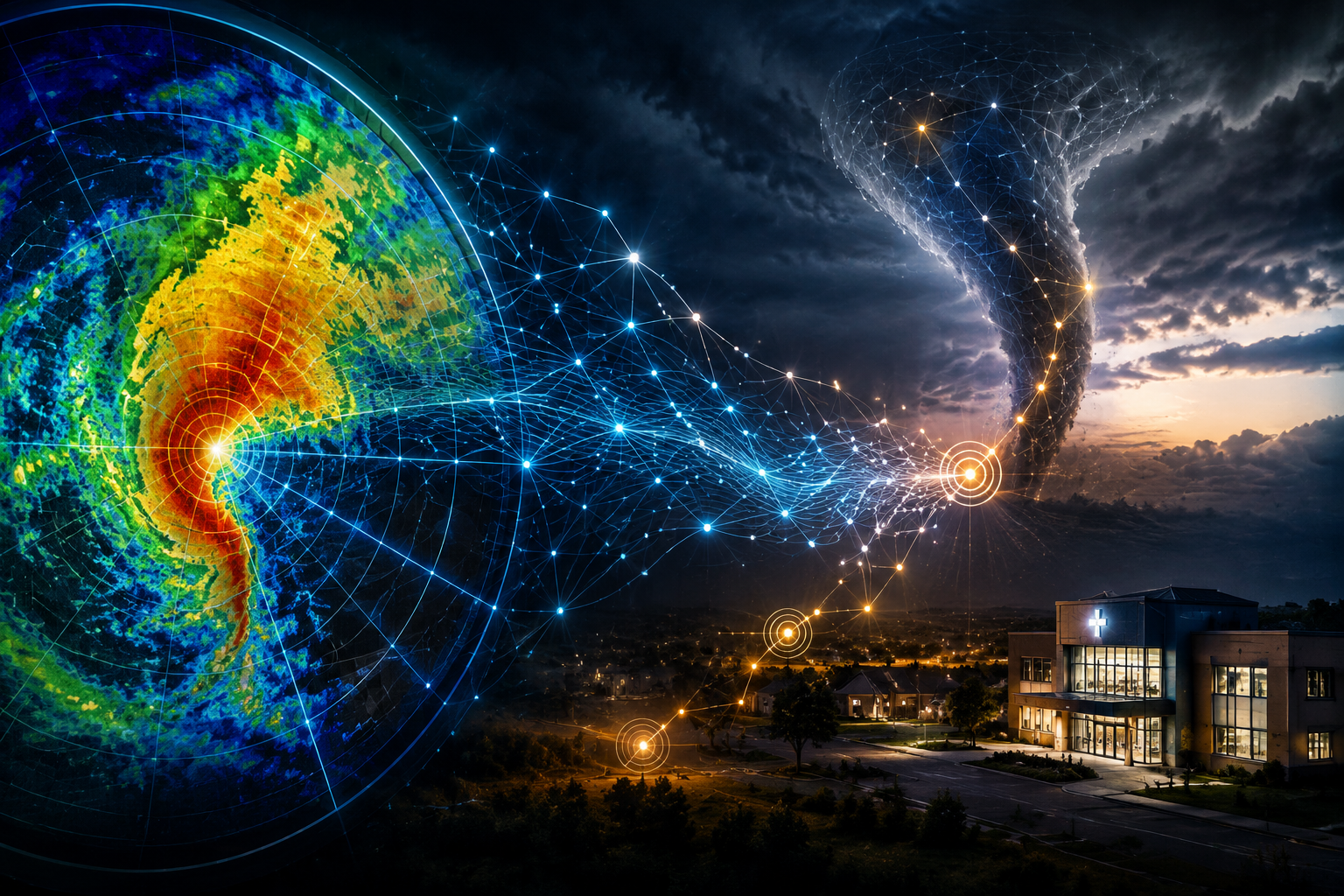
The other reason AI matters is less glamorous but more corrosive: tornado warnings still suffer from a false-alarm problem. Reporting on National Weather Service operations in Pittsburgh describes a tornado warning false-alarm rate above 70%, a level that can make later warnings easier for the public to discount.[2] A false alarm is not just a bad forecast score. It is one more occasion when a family went to the basement for nothing, a facility paused work unnecessarily, or a local official had to explain why the sirens sounded again. Over time, that becomes a public health problem because trust is part of the warning system.
What AI Can Improve Before Anyone Takes Shelter
Traditional tornado warning depends on a difficult human task: interpreting evolving radar signatures under time pressure, often with incomplete ground truth. Deep learning systems such as TorNet are not replacing that judgment; their more realistic value is that they can scan large volumes of radar data consistently and surface patterns that deserve attention. In a fast-moving convective environment, shaving minutes from the recognition step can matter, especially when the storm is approaching a hospital, a mobile-home community, a school event, or a county with limited EMS coverage.
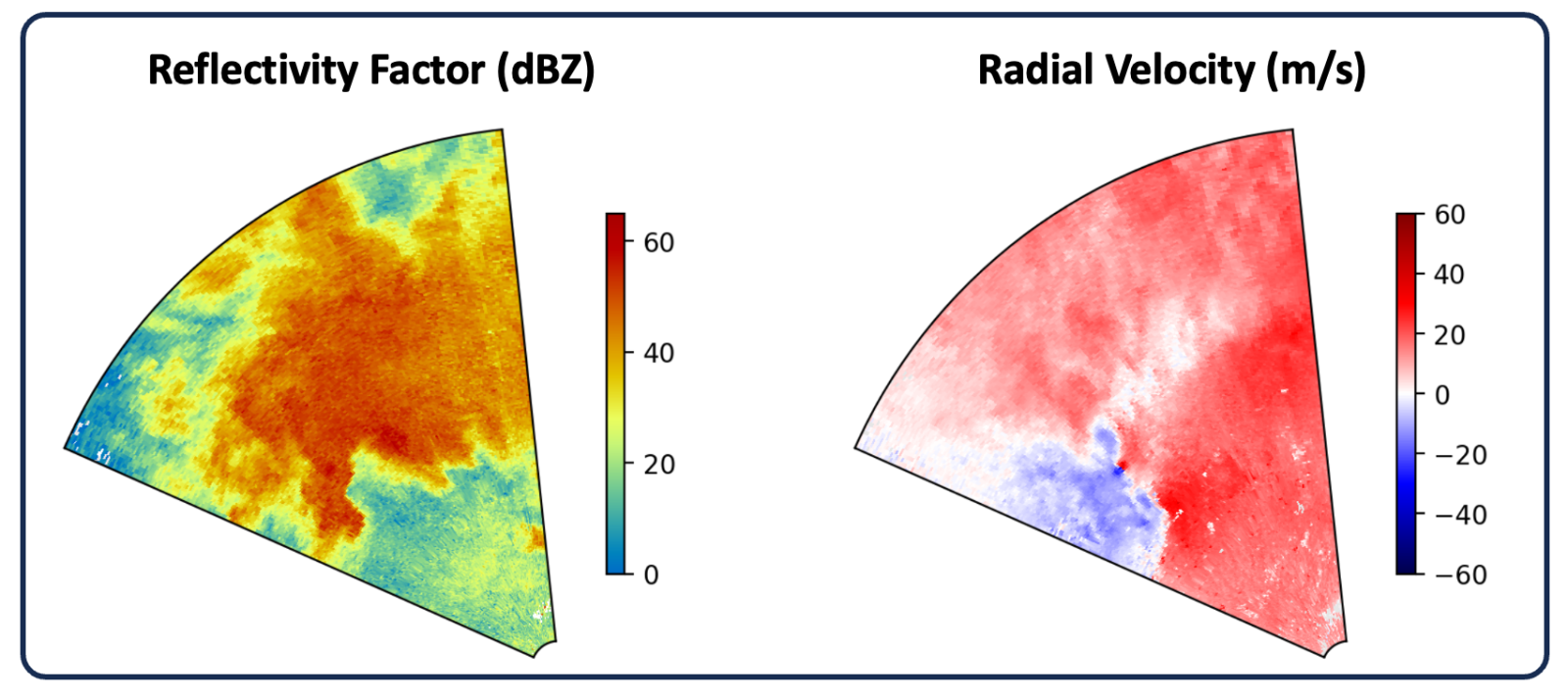
The distinction between detecting more tornadoes and improving safety is important. A model that flags a dangerous circulation earlier may extend lead time. A model that discriminates better between tornadic and non-tornadic storms may reduce false alarms. A model that does both could improve the credibility and usefulness of warnings. But those are still intermediate outcomes. They are closer to public health than a laboratory accuracy score, but they are not the same as fewer deaths or fewer injuries.
For a forecaster, the immediate question is not whether an algorithm is impressive in a benchmark. It is whether the tool changes confidence at the right moment. If AI raises a signal while the radar signature is still ambiguous, it may prompt closer interrogation of the storm. If it gives a probability rather than a binary yes-or-no answer, it may support graduated decisions: monitor, coordinate with emergency management, prepare warning language, or issue a warning. If it repeatedly misses subtle signatures, forecasters will learn that too. PublicSource’s account of AI use in Pittsburgh NWS operations notes both operational adoption of tools such as Nadocast and satellite-based hail detection and continued caution from forecasters, including concern that models can miss subtle radar signatures.[2]
Probability Is More Useful Than a Louder Alarm
The most promising warning systems are not simply faster sirens. NOAA’s Tornado Probability Algorithm, or TORP, points toward a more useful model: probabilistic output that estimates tornado likelihood rather than forcing the world into a binary warning/no-warning frame.[3] That matters because hospitals and public health agencies rarely make all-or-nothing decisions from one alert. They stage responses.
| Warning signal | Operational meaning | Possible health-system action |
|---|---|---|
| Low but rising probability | Storm deserves closer monitoring | Confirm staffing, review shelter locations, monitor bed status |
| Moderate probability near a vulnerable area | Risk is becoming actionable | Notify charge nurses, EMS supervisors, facility leadership, and security |
| High probability or confirmed warning | Protective action should begin | Move patients and staff away from glass, pause exposed transport, prepare for injury surge |
This kind of staged response is where AI could become useful to health systems even before outcome studies exist. A hospital does not need to activate a disaster plan every time a model output rises. It may, however, need a tiered protocol that matches confidence, geography, and time to impact. A rural critical access hospital, an urban trauma center, and a long-term care facility will not use the same threshold because they do not carry the same exposure, staffing reserve, or evacuation options.
The practical gain is specificity. A countywide warning that people distrust may produce less protective action than a narrower, more credible alert that arrives with enough time to move patients from exterior rooms, bring outdoor crews inside, or delay interfacility transport. Probabilistic AI can support that specificity, but only if the probabilities are calibrated, visible to the humans responsible for action, and tested in real workflows rather than admired in isolation.
More Lead Time Is Helpful Until It Is Misunderstood
It is tempting to treat every added minute of warning as an uncomplicated health gain. The evidence is more awkward. Simmons and Sutter found that increasing tornado warning lead time from 0 to roughly 15 minutes was associated with reduced fatalities, but that lead times beyond roughly 15 minutes were associated with increased fatalities in some analyses.[4] That finding should not be read as proof that longer warnings cause deaths. More dangerous storms may be easier to warn on earlier and may also produce more casualties. Still, the result is a useful warning against a lazy metric: longer is not automatically better.
For public health purposes, the question is whether the added time is usable. Five extra minutes can matter if it lets a nursing unit move patients away from windows, an emergency department clear ambulance bay exposure, or a school finish moving children into interior corridors. Fifteen extra minutes can matter if it lets a county contact a mobile-home park or a long-term care facility with limited mobility among residents. Thirty extra minutes may be useful for some institutions, but for the public it can also introduce delay, uncertainty, warning fatigue, or a decision to “wait and see.”
This is where the false-alarm problem and the lead-time problem meet. A warning that arrives early but is vague may be ignored. A warning that is credible but too late may not permit meaningful action. AI’s best public health case is not simply that it extends lead time; it is that it may extend the portion of lead time that people and institutions can use with confidence.
Radar Modernization Is Not a Side Issue
AI can only learn from and act on the data stream it receives. Phased-array radar is therefore central to the public health argument, not a technical footnote. Current conventional radar updates are described in the research literature and operational discussion as occurring at about 5-minute intervals, while phased-array radar can refresh at about 1-minute intervals.[5] That difference changes the warning problem: a tornadic circulation can strengthen, occlude, shift, or become more apparent during the gap between scans.

Rapid-update radar also changes the human workload. A forecaster cannot manually extract every meaningful pattern from a faster, denser stream of storm data while simultaneously coordinating warnings, communicating uncertainty, and monitoring multiple cells. This is where AI’s speed becomes operationally relevant. The model can repeatedly screen new scans, flag pattern changes, and support attention management. The forecaster still owns the warning decision, but the machine may help decide what needs human attention now.
Without that infrastructure, AI may still improve classification on existing radar data. With faster radar, its ceiling is higher. The combination matters because tornado warning is a race against both meteorology and human process: data acquisition, interpretation, warning issuance, dissemination, and action all consume time.
Where the Health Benefit Would Actually Occur
The United States averages 71 tornado fatalities per year.[6] Those deaths are only part of the burden. Tornadoes also produce blunt trauma, lacerations, crush injuries, orthopedic injuries, head injuries, delayed medication access, interrupted dialysis or oxygen support, displacement, and psychological distress. A warning system that reduces harm would do so by changing exposure before the storm hits and by improving readiness immediately afterward.
In a hospital, earlier and more specific warnings could trigger actions that are modest but consequential: moving waiting patients away from glass, securing loose exterior equipment, delaying nonessential patient movement through exposed corridors, checking generator and communications status, staging trauma supplies, notifying surgery and anesthesia leaders, and clarifying who has authority to shift into severe-weather operations. None of these actions requires certainty that a tornado will strike the building. They require a risk threshold that is credible enough to justify disruption.
For EMS and county emergency management, the useful actions are different. A more specific warning can support targeted notification of outdoor venues, manufactured-housing communities, schools, correctional facilities, long-term care facilities, and areas with limited shelter access. It can also help avoid sending ambulances into exposed routes when the warning corridor is shifting. The injury outcome is shaped not only by who hears the warning, but by whether the institutions around them have already decided what the warning means.
The vulnerability data reinforce why generic warning performance is not enough. A study of the 2016 Funing, China tornado found sharply elevated mortality risk in older adults, including a reported relative risk of 82.16 for people ages 75–84.[6] That figure should be handled carefully. Rural Chinese housing, local warning systems, building materials, and disaster response conditions do not map cleanly onto U.S. tornado preparedness. But the broader lesson is portable: frailty, mobility limits, building vulnerability, and access to shelter can determine whether a warning becomes survival time or simply information.
The Missing Evidence: AI-Triggered Clinical Protocols
The strongest current evidence sits on the meteorological side of the chain: model performance, probabilistic detection, forecaster-facing tools, and the known warning literature. The weakest evidence sits where health systems would most like certainty. The research base does not yet show published validation that AI-triggered hospital tornado protocols have reduced mortality, injury severity, time to surgery, ED crowding, or transfer delays in real tornado events.
That absence does not make the use case weak. It makes the claim conditional. Hospitals already act on weather warnings, sometimes informally and sometimes through emergency operations plans. AI-enhanced warning could make those actions earlier and better targeted. But until clinical and public health evaluations follow actual warnings into actual behavior and outcomes, the evidence supports plausibility more than proof.
The right studies would not stop at whether the model detected a tornado. They would ask whether the AI-influenced warning changed the forecaster’s decision, whether the issued warning was earlier or more specific, whether emergency managers and hospitals received and trusted it, what protocols were activated, how much time those protocols gained, and whether injuries, deaths, or care delays changed after accounting for storm severity and exposure. That is a harder study than a benchmark, but it is the study public health needs.
What Counts as Progress
For now, the defensible conclusion is careful but encouraging. AI can plausibly reduce tornado-related mortality and injury by improving warning lead time and specificity, especially when paired with phased-array radar and prepared clinical and public health protocols. TorNet-style deep learning suggests that severe tornado signatures can be identified better than with previously published algorithms.[1] TORP-style probability output suggests a path toward graded operational decisions rather than a single alarm threshold.[3] Forecaster experience in Pittsburgh shows that operational use is already beginning, while also reminding us that trust and validation are still active problems.[2]
The public health standard should be stricter than technical promise. Better detection is progress if it produces warnings that forecasters trust, emergency managers can target, hospitals can operationalize, and residents believe enough to act on. The practical test is not whether the model sees the storm. It is whether earlier and more credible warnings reliably trigger actions that protect the people most likely to be harmed.
References
- An AI dataset carves new paths to tornado detection, MIT Lincoln Laboratory.
- AI could help meteorologists predict severe weather. But it may change forecasting, too., PublicSource.
- Tornado Probability Algorithm, NOAA Institutional Repository.
- Tornado Warnings, Lead Times, and Tornado Casualties: An Empirical Investigation, American Meteorological Society, 2008.
- NOAA National Severe Storms Laboratory Phased Array Radar, NOAA.
- Risk factors of deaths and injuries caused by the 2016 Funing tornado in China, PMC.
Comments
Join the discussion with an anonymous comment.