
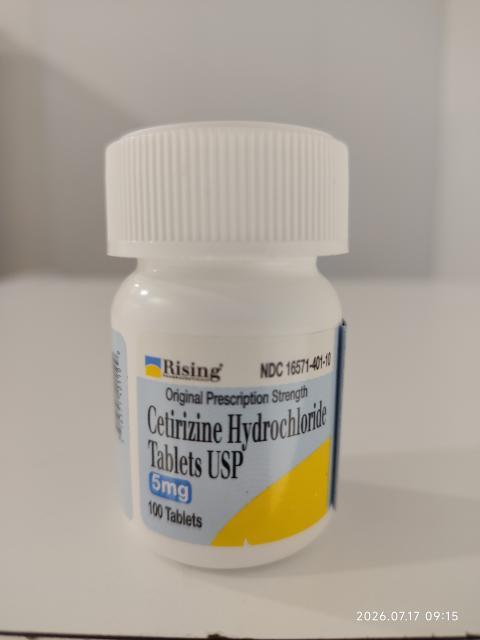
The most uncomfortable detail in the July 2026 cetirizine recall is not buried in a stability table or an adverse-event database. It is visual. A pharmacy technician noticed red dots on tablets while dispensing cetirizine hydrochloride 5 mg, and that observation helped trigger a voluntary nationwide recall by Unique Pharmaceutical Laboratories, a division of J. B. Chemicals & Pharmaceuticals Ltd. The FDA notice identifies four lots and says the tablets may have been cross-contaminated with ranitidine, with no adverse events reported as of the notice date.[1]
That is a hard fact for any manufacturing quality system to sit with. The visible warning sign was first called out downstream, at the dispensing counter, after product had already left the controlled environment where inspection, release, and deviation management are supposed to do their work. For anyone thinking about cetirizine recall and pharmaceutical safety, the practical question is simple: could an AI-powered visual inspection system have seen the red discoloration earlier, at line speed, before the affected tablets moved into distribution?
The narrow answer is yes, plausibly. The broader answer has to stay disciplined. The FDA notice establishes potential cross-contamination with ranitidine and a visible tablet abnormality, but it does not publicly establish the root cause mechanism. It does not say whether the problem originated in shared equipment, material handling, cleaning, packaging, human error, or another route. Until that investigation is public, the failure mode should not be backfilled with a neat story.
What the Recall Actually Shows
The recalled product was cetirizine hydrochloride tablets USP 5 mg. The FDA described the recall as voluntary and nationwide, covering four lots because of potential cross-contamination with ranitidine. The agency’s recall page also states that a pharmacy observed red dots on tablets, and that the firm identified cross-contamination with ranitidine.[1]
That combination matters. This was not a purely analytical signal hidden inside a chromatogram, nor a safety signal that emerged only after patients reported symptoms. The observable clue was on the tablet surface. A human eye saw something that should have been out of place: red discoloration on a product expected to present consistently.
A visible defect does not automatically prove that an upstream camera system would have caught the same defect under production conditions. Lighting, tablet orientation, dust, speed, vibration, and rejection thresholds all matter. But this is still exactly the kind of event that makes visual inspection worth examining. The question is not whether AI can make manufacturing flawless. It is whether a trained machine-vision system could have detected an abnormal color feature sooner than a pharmacy technician did.
The Relevant AI Is Computer Vision, Not Pharmacovigilance
There is a temptation to place every drug-safety AI story under the same umbrella. That is sloppy. The AI relevant to this recall is not primarily natural-language processing of adverse-event reports or statistical detection of postmarket safety signals. Those systems belong to pharmacovigilance. They may help regulators and manufacturers detect patterns after a medicine is used, but they are not the tool that would inspect a tablet moving down a line.
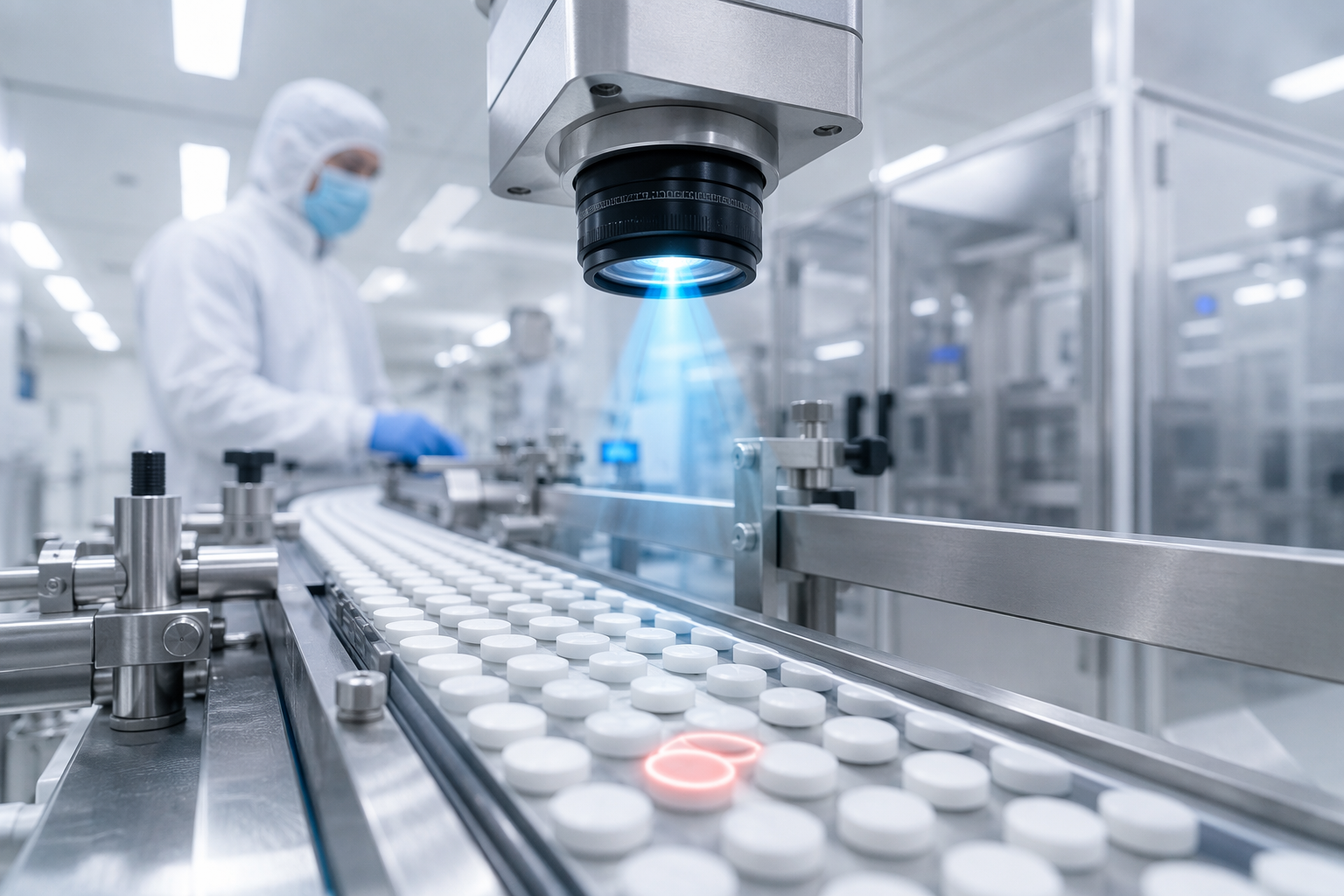
The technology at issue here is AI-enabled computer vision: cameras, lighting, image processing, and trained models that classify tablets or packages as acceptable, suspect, or rejectable based on visible features. In a tablet operation, the relevant defects may include discoloration, coating variation, embedded foreign particles, chips, cracks, mottling, embossing defects, or shape abnormalities. In packaging, the same inspection philosophy extends to blister integrity, print legibility, count verification, and mix-up detection.
Pharmacovigilance AI still belongs in the wider drug-safety ecosystem. A 2025 review in the biomedical literature describes AI use across pharmacovigilance functions such as adverse-event detection, signal management, and case processing, while also emphasizing data quality, transparency, validation, and regulatory challenges.[2] Those issues are relevant to any regulated AI system. They do not, however, turn a postmarket signal-detection tool into an in-process camera.
What AI Visual Inspection Can Catch on a Line
A conventional human inspection process depends on sampling, fatigue tolerance, training consistency, and the amount of time an operator can realistically spend looking at repetitive units. That does not make manual inspection careless. It means the process has physical limits. A person can be highly competent and still miss a faint, intermittent, or low-frequency defect across a high-volume run.
AI visual inspection systems are built for a different burden. Cameras capture every visible unit within the validated inspection field. Software compares each image against learned or rule-based acceptance criteria. Suspect units are rejected automatically, diverted for review, or flagged for batch-level investigation. When the system is properly designed, it does not merely ask whether one tablet looks bad; it can ask whether a subtle pattern is emerging across many tablets before the pattern becomes obvious to a person standing at the line.
| Visible issue | Why it matters in pharmaceutical quality | What AI vision can add |
|---|---|---|
| Discoloration or dots | May indicate contamination, coating irregularity, degradation, or mix-up | Continuous color and pattern comparison against validated limits |
| Coating defects | Can affect appearance, patient confidence, and in some products performance | Detection of mottling, uneven coverage, chips, and edge defects |
| Foreign particles | May indicate contamination from material, equipment, or environment | High-resolution screening for out-of-place visible matter |
| Shape or embossing abnormalities | Can signal tooling problems, tablet damage, or wrong-product risk | Automated comparison of contour, size, imprint, and surface geometry |
The red-dot observation in the cetirizine recall fits the first row of that table. If a discoloration is visible to a pharmacy technician under dispensing conditions, it is reasonable to ask why a controlled inspection station, with stable lighting and magnified imaging, did not identify and escalate it earlier. The answer may eventually involve sampling location, defect frequency, timing, or a contamination route outside the inspected step. But the quality question is still legitimate.
The most useful AI system in this scenario would not be a dashboard that announces “risk.” It would be a qualified inspection point with a defined reject mechanism, image retention, audit trails, alarm criteria, and a workflow that tells QA what changed, when it changed, how many units were affected, and which material path needs to be held. A model that detects red discoloration but cannot support a batch disposition decision is an interesting pilot, not a dependable control.
The Part Vendors Tend to Make Too Clean
Vendors selling AI-driven quality control often claim their systems can find defects that human inspectors miss and can identify process drift shortly after it begins. Those claims are plausible in the general sense; modern vision systems are good at consistent image comparison, especially when lighting, camera placement, and product presentation are tightly controlled. But promotional performance claims are not the same thing as independent validation on a live pharmaceutical line.
For a manufacturer, the important questions are less glamorous: What defect library trained the model? How was the threshold selected? What is the false-reject rate? What is the false-accept rate? Does the system still perform after routine changeover, cleaning, camera replacement, lamp aging, tablet dust buildup, or a new supplier lot? Can the validation package survive an auditor asking why QA trusted the output?
Those questions do not argue against AI inspection. They separate usable inspection from theater. A camera that increases rejects without explaining them creates noise. A camera that catches a rare visual anomaly, preserves the evidence, and forces a controlled hold before distribution changes the risk profile of the batch.
Where It Would Fit in the Quality Workflow
The most obvious place for AI visual inspection is not after a complaint investigation has begun. It belongs where the product can still be stopped: after compression or coating, before packaging, during packaging, or at a final inspection point before release. The right location depends on where the visible defect can first appear and where rejected material can be physically segregated without creating a new mix-up risk.
In a contamination scenario like the cetirizine recall, a useful workflow would look less like a futuristic control room and more like ordinary GMP discipline:
- A validated camera station inspects tablets under controlled lighting.
- Suspect tablets are rejected or segregated with image records preserved.
- An alert threshold triggers line review when similar abnormalities recur.
- QA reviews the visual evidence against batch history, cleaning records, material reconciliation, and prior deviations.
- Affected product remains under control until the investigation supports release, rework, rejection, or recall.
The value is not simply that a machine rejects one odd tablet. The value is that the system can create an earlier interruption point. Instead of waiting for a downstream observer to see red dots, the manufacturer gets a contemporaneous signal tied to a batch, a timestamp, a line condition, and a physical rejection event.
Regulators Are Already Looking at the Larger AI Safety Environment
The FDA’s drug-safety technology posture is not hostile to AI, but it is cautious in the way regulated environments require. CDER’s Emerging Drug Safety Technology Program is designed to support discussion of emerging technologies used in pharmacovigilance, including artificial intelligence and machine learning, while helping the agency and sponsors better understand implementation and regulatory considerations.[3]
FDA’s Sentinel Initiative also shows how the agency has built infrastructure for active safety surveillance using electronic healthcare data, including distributed data partners and analytic tools for monitoring medical product safety.[4] That is not the same as in-line tablet inspection, but it points to the broader direction: drug safety is increasingly data-intensive, and regulators expect the controls around those data systems to be explainable.
For manufacturing AI, explainability has a very practical meaning. QA does not need a poetic description of machine learning. QA needs to know what the system saw, why it classified a unit as suspect, how the system was challenged, what happens when it fails, and how its output is handled under change control.
What This Recall Can and Cannot Prove
The cetirizine recall is a credible example of a visible contamination-related event that stronger visual inspection could plausibly have intercepted earlier. It is not proof that any specific AI vendor would have prevented the recall. It is not proof that computer vision would have identified ranitidine as the contaminant. It is not proof that the contamination mechanism is known.
What it does prove is more limited and more useful: visible tablet abnormalities can escape existing controls and be discovered only after distribution. In this case, the FDA notice ties the recall to four lots, potential ranitidine cross-contamination, and a pharmacy observation of red dots on tablets, with no adverse events reported as of the notice.[1]
That is enough to justify putting AI visual inspection inside the quality-control conversation now. Not as a magic replacement for operators, QA review, cleaning validation, analytical testing, supplier controls, or complaint handling. As an additional in-process control aimed at the kind of defect no manufacturer wants first documented by a pharmacy technician.
References
- Unique Pharmaceutical Laboratories, a division of J. B. Chemicals & Pharmaceuticals Ltd., Issues Voluntary Nationwide Recall of Cetirizine Hydrochloride Tablets USP 5 mg Due to Potential Cross-Contamination With Ranitidine. FDA. https://www.fda.gov/safety/recalls-market-withdrawals-safety-alerts/unique-pharmaceutical-laboratories-div-j-b-chemicals-pharmaceuticals-ltd-issues-voluntary-nationwide
- Artificial Intelligence in Pharmacovigilance. PMC. https://pmc.ncbi.nlm.nih.gov/articles/PMC12317250/
- Emerging Drug Safety Technology Program. FDA. https://www.fda.gov/drugs/surveillance/emerging-drug-safety-technology-program
- FDA’s Sentinel Initiative. FDA. https://www.fda.gov/safety/fdas-sentinel-initiative
Comments
Join the discussion with an anonymous comment.