
In the exam room, the promise of an ambient AI scribe workflow is easy to understand. The patient talks. The clinician listens. A microphone captures the visit in the background, automatic speech recognition turns speech into text, language models organize the conversation into a draft note, and the draft lands in the EHR for clinician review. If it works, the physician or APP spends less of the encounter managing the keyboard and more of it noticing the person in front of them.
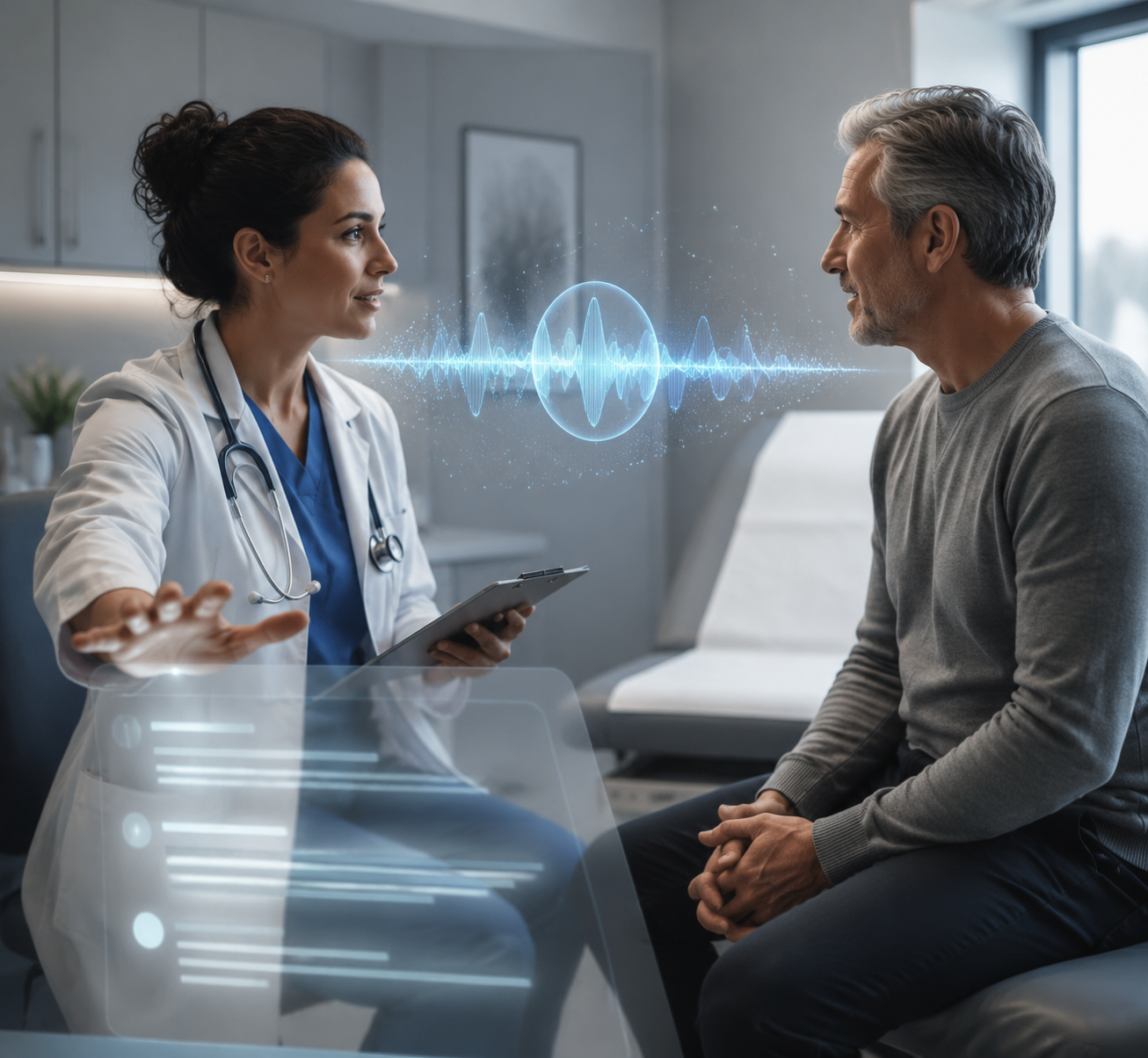
That basic workflow is also where the hard questions start. A draft note is not a harmless artifact. It becomes part of the record, shapes billing and care coordination, and may be read months later by someone who was not in the room. The useful question is not whether ambient scribes can generate plausible documentation. They can. The useful question is whether they reduce documentation burden without pushing new risk into the note, the patient record, or the clinician’s unmeasured after-hours work.
What the System Actually Does During a Visit
Most ambient AI scribe products combine four layers. Automatic speech recognition captures the spoken encounter. Natural language processing identifies clinical concepts and note structure. Large language models summarize, rephrase, and generate sections such as the HPI, assessment, plan, and patient instructions. EHR integration determines whether the output appears as a draft note, a copied text block, or a more structured documentation object.
That architecture matters because the error can enter at any layer. If speech is misrecognized, the model summarizes the wrong substrate. If the conversation contains tangents, uncertainty, family input, or a complex medication history, the summarization layer has to decide what belongs in the chart. If EHR integration is shallow, the clinician may still spend time copying, editing, reconciling templates, and signing orders elsewhere. The keyboard may be quieter during the visit while the documentation burden reappears later.
For readers who need the terminology rather than the deployment tradeoffs, ClinicalMind’s glossary on NLP in clinical documentation is the more direct starting point. Here, the relevant point is simpler: ambient documentation is a supervised clinical workflow, not a detached text-generation task.
The Best Deployment Evidence Is Real, but It Is Not Uniform
The strongest evidence for ambient scribes now comes from deployments large enough to move the discussion beyond the pilot-demo stage. In a 2025 NEJM Catalyst report from The Permanente Medical Group, 7,260 physicians used an ambient AI scribe across 2.5 million encounters over 13 months, with an estimated 15,791 physician-hours saved; the study disclosed funding from Abridge, the vendor whose product was being evaluated.[1]
That scale is difficult to dismiss. A health system does not reach millions of encounters by relying only on a few enthusiasts who already document efficiently. It suggests that, under favorable implementation conditions, ambient scribes can survive contact with routine clinical operations. It does not prove that every clinic will see the same effect, and it does not answer whether the saved time is protected, redistributed, or converted into additional work.
The burnout signal is also meaningful, with similar caveats. A Yale-led multi-site study of 263 physicians across six health systems reported that burnout fell from 51.9% to 38.8% after 30 days of AI scribe use, corresponding to 74% lower odds of burnout; that work was also funded by Abridge.[2] Vendor funding does not invalidate a result, but it changes how much independent confirmation should be expected before a health system treats the finding as settled.
The more complicated 2026 evidence is useful because it narrows the claim. A STAT and Harvard analysis of about 1,800 clinicians found average savings of roughly 16 minutes per 8-hour shift, but the gains varied sharply across three large health systems: Massachusetts General Hospital had a 5.6-minute reduction per appointment, TPMG had an 18-second reduction, and Intermountain had no significant gain, producing a 20-fold spread in time savings.[3] That is not a referendum against ambient scribes. It is a warning that the product category does not carry the outcome by itself.
| Evidence signal | What it supports | What it does not settle |
|---|---|---|
| TPMG deployment: 7,260 physicians, 2.5 million encounters, 15,791 physician-hours saved | Ambient scribes can reduce documentation time at very large scale under favorable conditions | Whether smaller or differently integrated practices will reproduce the same savings |
| Yale multi-site study: burnout 51.9% to 38.8% after 30 days | Burnout improvement is plausible and clinically relevant | Whether the effect persists, generalizes, or remains independent of vendor-funded evaluation |
| STAT/Harvard analysis: about 16 minutes saved per 8-hour shift, with 20-fold variation | Workflow context strongly moderates benefit | Whether adoption alone is enough to reduce burden |
| JAMA Network Open: mental demand 12.2 to 6.3; burnout change not statistically significant | Cognitive workload may improve even when burnout does not clearly change | Whether time savings automatically produce well-being gains |
A JAMA Network Open study makes the same point from another angle. Clinician mental demand measured by NASA-TLX fell from 12.2 to 6.3, while burnout changed from 42.1% to 35.1% without reaching statistical significance.[4] That pattern is familiar to anyone who has watched documentation tools enter a clinic: a tool can make one task feel easier without repairing the staffing model, inbox volume, visit length, or expectation that every open minute should be recaptured.
The practical reading is that ambient scribes have unusually strong evidence for a generative AI healthcare application, but the outcome is conditional. Time savings depend on baseline documentation habits, specialty, visit type, note standards, EHR integration, training, microphone workflow, patient consent process, and the organization’s willingness to leave some of the reclaimed time with the clinician.
Where Accuracy Fails in the Clinical Workflow
The safety problem is not that AI notes contain errors. Human notes do too. The safety problem is whether the errors are visible to the responsible clinician, correctable before signature, and tracked well enough that the organization can see systematic failure rather than treating each bad note as a one-off.
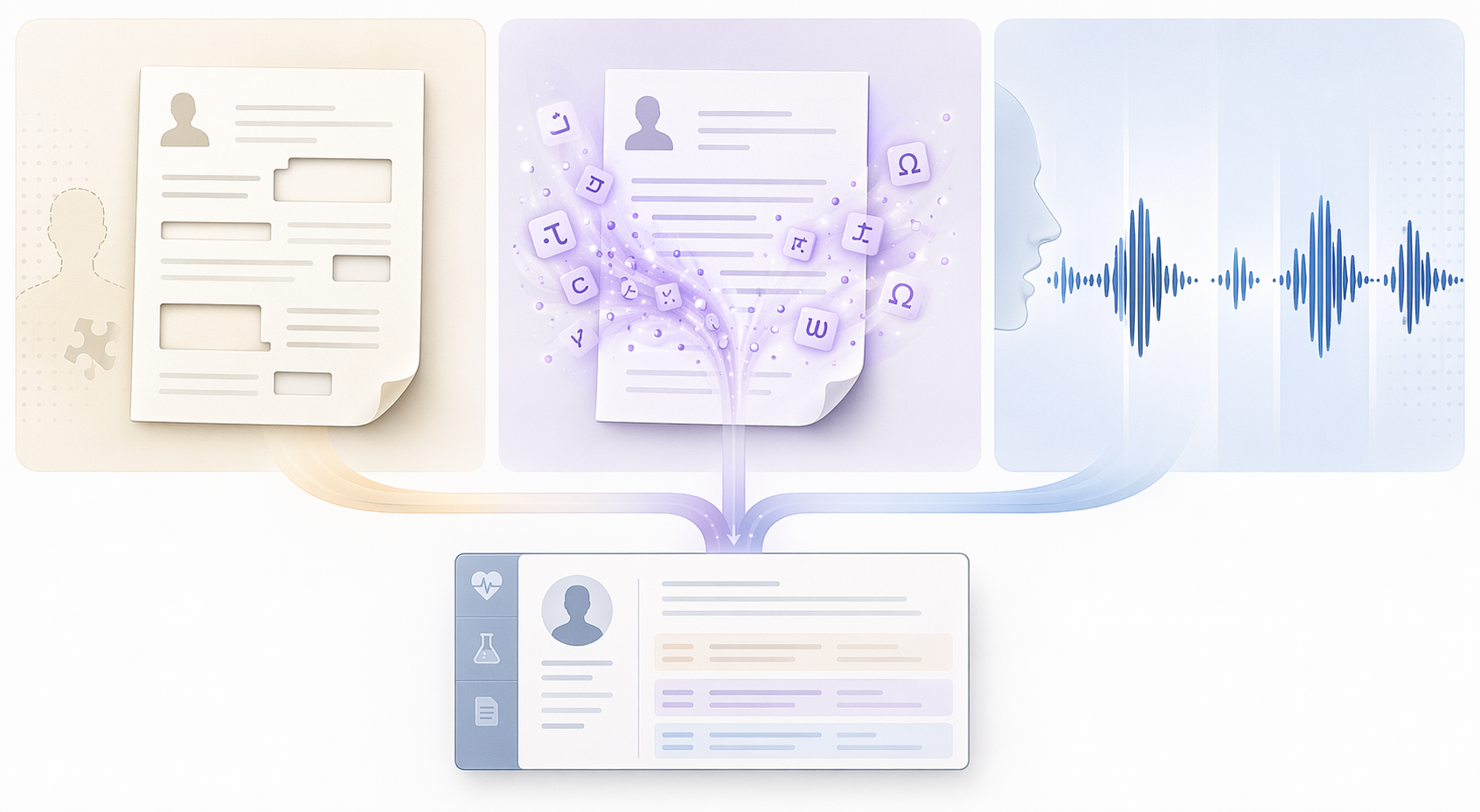
Omissions are the most intuitive failure mode because they make the note look clean while leaving something out. In simulated encounter studies, Biro and colleagues reported that 54% to 83% of AI-generated notes contained omission errors, and a controlled simulation by Kernberg reported an 86% omission rate.[5] Another study by Asgari and colleagues, using optimized prompts, reported a lower 3.45% omission rate and a 1.47% hallucination rate.[6] These studies are not interchangeable, and simulation is not the same as routine clinical deployment, but the pattern is enough to justify mandatory review rather than spot-checking.
An omission can be mundane, such as leaving out a negative symptom that does not change management. It can also be clinically important: a medication intolerance, a red-flag symptom, a family member’s correction, a follow-up contingency, or the fact that a patient declined a recommended test. The clinician who signs the note owns the final version, even when the first draft was machine-generated.
Hallucination is different. Instead of leaving something out, the note adds something the patient did not say or the clinician did not decide. A hallucinated normal exam element, a fabricated counseling statement, or an invented medication adherence detail may be easy to miss because it resembles ordinary clinical prose. Low percentage rates can still matter when the denominator is every signed note in a busy practice.
Speech recognition is the first equity checkpoint. In a PNAS study of major automatic speech recognition platforms, word error rate was 0.35 for Black speakers compared with 0.19 for White speakers.[7] Ambient scribes add summarization and note-generation layers on top of speech capture, so uneven recognition at the front end can propagate downstream into what the clinician is asked to verify. This is not a reason to abandon the technology; it is a reason to monitor performance by accent, race, language, visit complexity, and specialty rather than reporting only a global satisfaction score.
Specialty Fit Is Not a Minor Configuration Detail
Primary care often looks like the natural home for ambient scribes because the documentation burden is broad, repetitive, and conversational. The same product may perform differently in oncology, surgery, psychiatry, obstetrics, or subspecialty follow-up, where the note may depend on longitudinal imaging, procedure history, staging language, risk documentation, or highly specific shared decision-making elements.
A clinician does not need the scribe to produce beautiful generic prose. They need the scribe to preserve the pieces that govern care. In one specialty, that may be medication reconciliation and contingency planning. In another, it may be device settings, laterality, implant details, cancer staging, or a precise neurologic exam. If the implementation team treats specialty templates as cosmetic formatting, the tool will be evaluated on the wrong surface.
The Mayo Clinic narrative review of 18 studies is useful here because it shows a maturing literature, not a single uniform product effect.[8] The clinical application question is therefore local: which note types, specialties, languages, and visit patterns should receive the tool first, and which should be held back until customization and validation are stronger?
The Regulatory Gray Zone Should Change Procurement Behavior
Many ambient AI scribes are positioned as HIPAA-eligible administrative services rather than FDA-cleared medical devices. A 2025 npj Digital Medicine safety analysis describes this regulatory gap, noting that products marketed in this way may bypass FDA 510(k) clearance.[9] That does not automatically make them unsafe. It does mean procurement teams should not mistake privacy eligibility, security review, or administrative classification for clinical safety validation.
The distinction matters at the contract table. A buyer should know what the vendor claims the tool is doing, what it explicitly does not claim, what data are retained, how model updates are handled, how errors are reported, whether performance has been evaluated independently, and whether the system has been tested in the specialties and patient populations where it will be used. The more clinically consequential the generated text becomes, the less satisfying it is to call the entire workflow administrative.
ClinicalMind’s broader discussion of the AI healthcare market’s regulatory crossroads is relevant for teams comparing ambient scribes with higher-risk diagnostic or treatment-support tools. The key operational point for ambient documentation is narrower: if the final legal and clinical responsibility sits with the clinician, the organization must give that clinician enough time and tooling to review the draft properly.
A Safer Deployment Standard
A defensible ambient scribe deployment starts before go-live. The implementation team should decide which visit types are in scope, which note sections the tool may draft, which sections require special attention, what patients are told, how opt-out is handled, and what the clinician must review before signing. The policy should be specific enough that “the AI wrote it” never becomes an explanation for an inaccurate signed note.
- Keep the clinician as the mandatory final reviewer, not a nominal signer.
- Validate performance by specialty, visit type, language, accent, and patient complexity rather than relying only on aggregate satisfaction.
- Track omissions, hallucinations, copied-forward errors, and clinically meaningful edits after go-live.
- Disclose vendor funding, regulatory status, and limits of evidence when presenting results internally.
- Protect some portion of saved time from automatic conversion into more visits, more inbox work, or more documentation expectations.
That last point is not sentimental. It is the difference between reducing documentation burden and increasing throughput with a quieter keyboard. If a clinic saves minutes per session and immediately fills those minutes with more visits, the organization may see productivity improvement while the clinician experiences little relief. Burnout is not caused only by typing speed, so it will not be solved only by faster note generation.
For teams building a local evaluation process, ClinicalMind’s framework for evaluating AI tools in clinical practice and its article on barriers and success factors for conversational AI workflows are better places for implementation mechanics. The standard for ambient scribes is not complicated in principle, but it is hard in practice: the draft must be good enough to reduce work, transparent enough to review, and monitored enough that failure patterns become visible before they become normalized.
Ambient AI scribes are justified when they are treated as supervised documentation assistants: customized to specialty workflows, monitored for accuracy and equity, disclosed with funding and regulatory caveats, and protected by organizational policies that prevent clinician time savings from being silently reclaimed as more work.
References
- Ambient Artificial Intelligence Scribes to Alleviate the Burden of Clinical Documentation, NEJM Catalyst, 2025.
- AI Scribes Reduce Physician Burnout, Return Focus to the Patient, Yale School of Medicine.
- AI ambient scribes show modest time savings for clinical documentation, STAT News, April 2026.
- Ambient Artificial Intelligence Scribes and Physician Well-being, JAMA Network Open, 2025.
- Assessment of Accuracy and Quality of AI-Generated Medical Notes From Simulated Primary Care Encounters, JMIR, 2025.
- Evaluating large language models for ambient clinical documentation, npj Digital Medicine, 2025.
- Racial disparities in automated speech recognition, Proceedings of the National Academy of Sciences, 2020.
- Ambient Artificial Intelligence Scribes in Clinical Practice: A Narrative Review, Mayo Clinic Proceedings: Digital Health.
- Safety and regulatory considerations for ambient artificial intelligence scribes in clinical care, npj Digital Medicine, 2025.
Comments
Join the discussion with an anonymous comment.