
On July 18, 2026, Unique Pharmaceutical Laboratories, a division of JB Chemicals Pharmaceuticals Ltd., voluntarily recalled four lots of cetirizine HCl 5 mg tablets in a nationwide Class II recall after a pharmacy technician detected ranitidine cross-contamination [1]. That is the right place to start, because it turns the real question into an operational one: could publicly available data or pharmacovigilance models have flagged elevated antihistamine recall risk before the contaminated product moved through distribution?
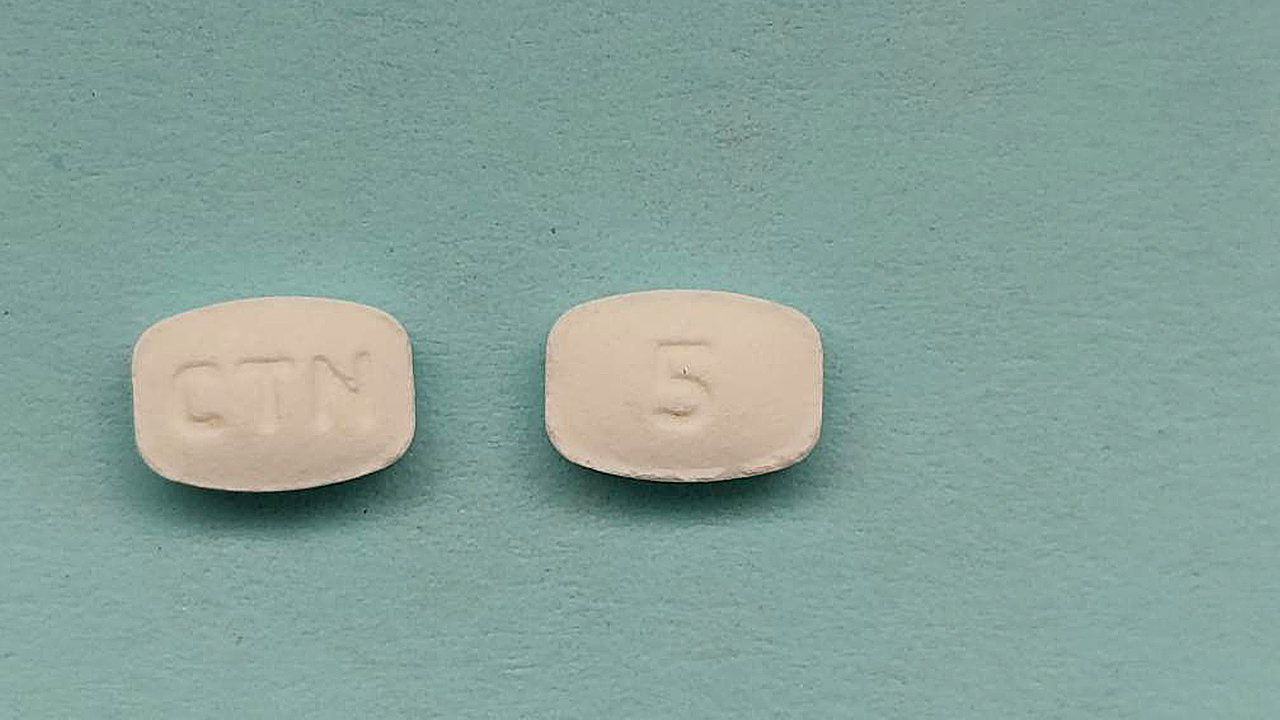
The recall entered through a human check
The technician finding the cross-contamination is reassuring and uncomfortable at the same time. Reassuring, because a person in the process caught a problem before the story became a patient harm event. Uncomfortable, because the signal surfaced reactively: the system still appears to depend on somebody noticing the wrong thing in the wrong place after the product has already been made and distributed [1].
What the model evidence actually covers
| Study | Data and method | Lead time and performance | What it does and does not show |
|---|---|---|---|
| Slivinskis et al. (2024) [2] | Random forest regressor using PubMed publication counts and Google Trends search volumes across 500 medical devices. | 75% sensitivity at 12-month lead time and 90% sensitivity at 3-month lead time, with 100% specificity and 95-98% accuracy. | Shows that public signals can precede device recalls, but it is a medical-device study, not a drug-contamination study. |
| De Abreu Ferreira et al. (2024) [3] | XGBoost trained on adverse-event data for two undisclosed AbbVie products. | 50.0-55.6% sensitivity, 33.3-38.5% PPV, and >95% accuracy; one confirmed signal arrived six months earlier than human reviewers for Drug X. | Closer to pharmacovigilance, but the low PPV and sensitivity are not comfortable deployment numbers. |
The Duke device study is the most striking lead-time result, but it is also the least transferable piece of evidence. Publication counts and Google Trends volumes can be useful public proxies in a device universe, and the reported 3- to 12-month lead times are not trivial [2]. But drug recalls are not device recalls. Contamination, batch release, supplier issues, complaint patterns, and post-market reporting do not line up neatly across those categories, so the device result can support the general idea of early signal detection without proving that an antihistamine contamination risk will behave the same way.
The AbbVie pilot is more relevant to pharmacovigilance, and also more sobering. For one mature product, the model surfaced a confirmed safety signal six months before human reviewers using standard surveillance, which is the kind of time advantage that makes people pay attention [3]. But the same study reported only 50.0-55.6% sensitivity and 33.3-38.5% PPV [3]. In practical terms, that means the model could miss a substantial share of signals and still send a lot of false alarms. That is useful for triage support; it is not a comfortable basis for production recall prediction.
Where recall risk has leverage
Lin and Hertig's expert-panel model helps explain where AI would matter most if it is going to matter at all. In their fuzzy DEMATEL analysis with 11 panelists, risk control was the dominant causal aspect driving pharmaceutical drug recalls, and it drove risk assessment and risk review rather than the other way around; product contamination and hazard detectability also ranked among the top causal criteria [4]. That is a better mechanism than a headline metric. It says predictive tools are most valuable when they strengthen the control layer before contamination reaches patients, not when they simply produce a prettier recall forecast.
That matters for the July 2026 cetirizine recall because the event appears to have been caught by a person looking at the product, not by a model watching the market [1]. A useful AI system would not need to replace that check. It would need to raise the odds that quality teams, pharmacists, and risk managers see the right kind of abnormality earlier: a pattern of complaints, a concentration of lot-level anomalies, a supplier signal, or another weak cue that deserves human review before a contaminated antihistamine batch moves farther downstream.
So the evidence supports a narrower judgment than the marketing copy around machine learning usually wants to make. AI can plausibly move some safety signals earlier by months, and the AbbVie pilot shows that this can happen in pharmacovigilance rather than only in device analytics [2][3]. But the current models are still uneven on sensitivity, weak on positive predictive value, and unproven for transfer into contamination-specific antihistamine recall risk assessment. The near-term benchmark is not autonomous prediction; it is tooling credible enough to bring better questions to human reviewers before a pharmacy technician has to find the problem first.
References
- Unique Pharmaceutical Laboratories Div. JB Chemicals Pharmaceuticals Ltd. Issues Voluntary Nationwide Recall of Cetirizine HCl 5 mg Tablets — FDA, 2026-07-18
- Predicting medical device recalls with public signals — PMC, 2024
- Machine learning pilot for earlier pharmacovigilance signal detection in AbbVie products — Advances in Therapy, 2024
- Fuzzy DEMATEL analysis of pharmaceutical drug recall causes — PMC, 2023
Comments
Join the discussion with an anonymous comment.