
The clinical question behind artificial sweeteners, gut microbiome health effects, and metabolism is no longer whether a sweet taste without sugar can be assumed biologically inert. The harder question is narrower: which sweetener, in which person, under which exposure conditions, and with what metabolic endpoint?
That distinction matters in clinic. A patient may ask whether diet soda is “bad for the gut.” A responsible answer cannot be built from broad microbiome anxiety, but it also cannot ignore the strongest controlled human evidence now available. In that evidence, some non-nutritive sweeteners changed oral and stool metagenomes, and in some participants the metabolic response was transmissible through the microbiome in germ-free mice. That is a meaningful causal signal. It is not, by itself, a blanket rule.
The trial that changed the microbiome conversation
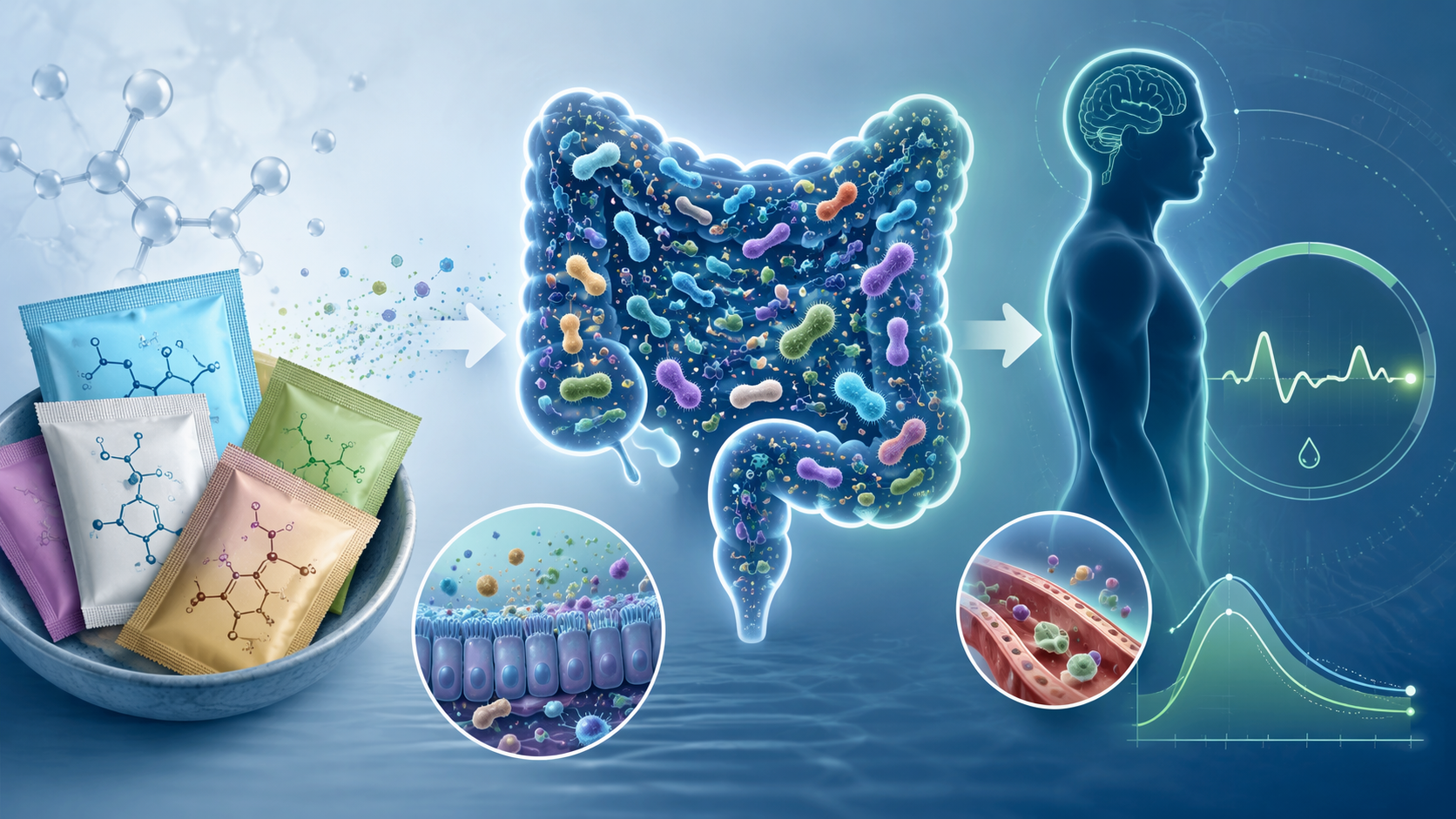
The load-bearing human study is the 2022 randomized controlled trial by Suez and colleagues in Cell. It enrolled 120 healthy adults who had avoided non-nutritive sweeteners for at least 6 months, then assigned them to saccharin, sucralose, aspartame, stevia, or one of two control groups for 14 days. The sweetener doses were below acceptable daily intake levels, and the investigators measured continuous glucose profiles, glucose tolerance, stool metagenomes, oral metagenomes, and downstream microbiome-mediated effects through fecal microbiome transplantation into germ-free mice.[1]
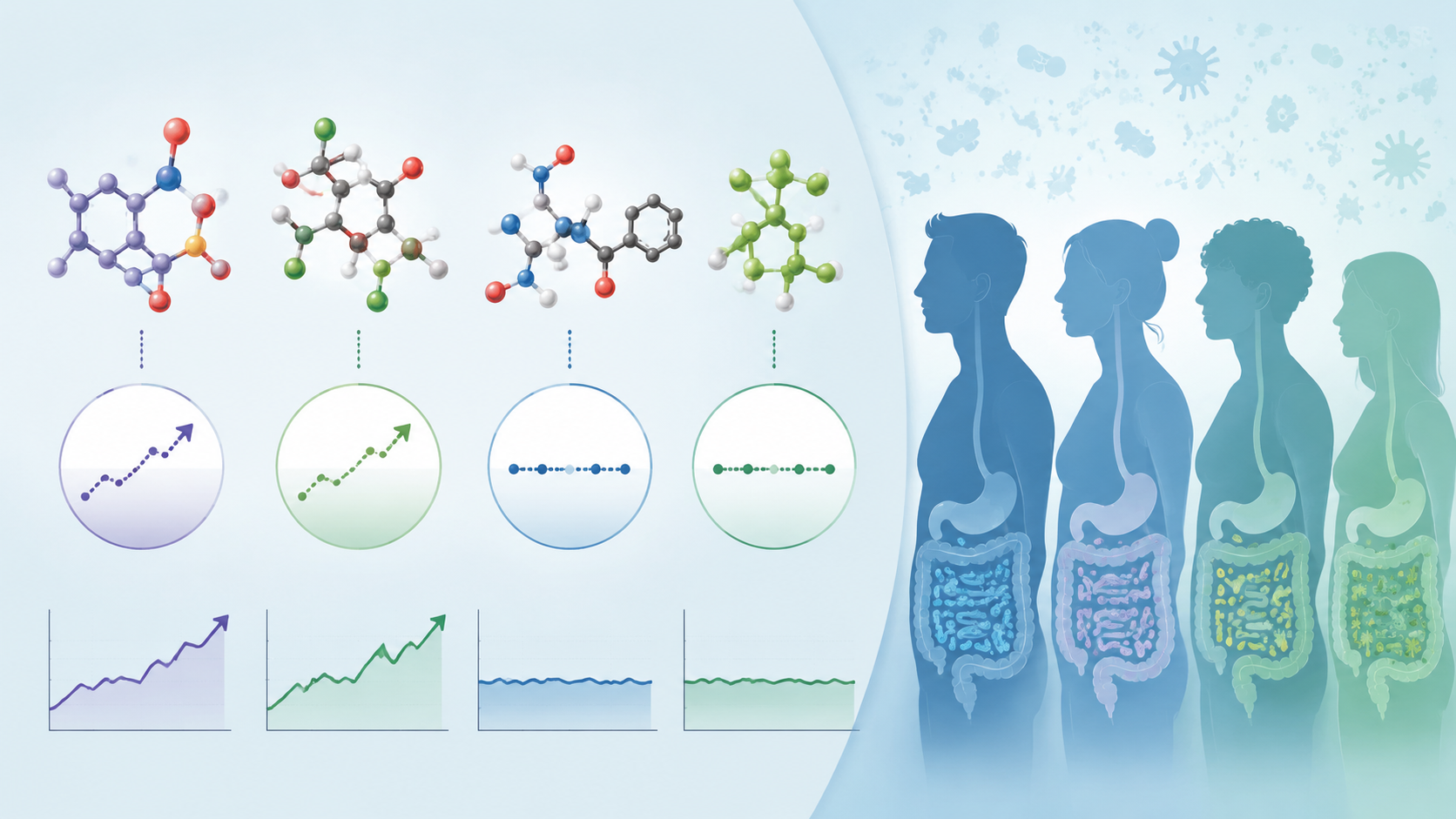
The headline result is often flattened too quickly. At the cohort level, sucralose and saccharin significantly elevated glycemic responses, while aspartame and stevia did not show the same cohort-level glucose tolerance effect. All four sweeteners, however, distinctly altered stool and oral metagenomes. Those two findings should not be merged into a single sentence claiming that “artificial sweeteners damage the microbiome.” A microbiome change is not automatically a clinical injury, and a glycemic effect seen with two sweeteners is not evidence against all sweeteners as a class.[1]
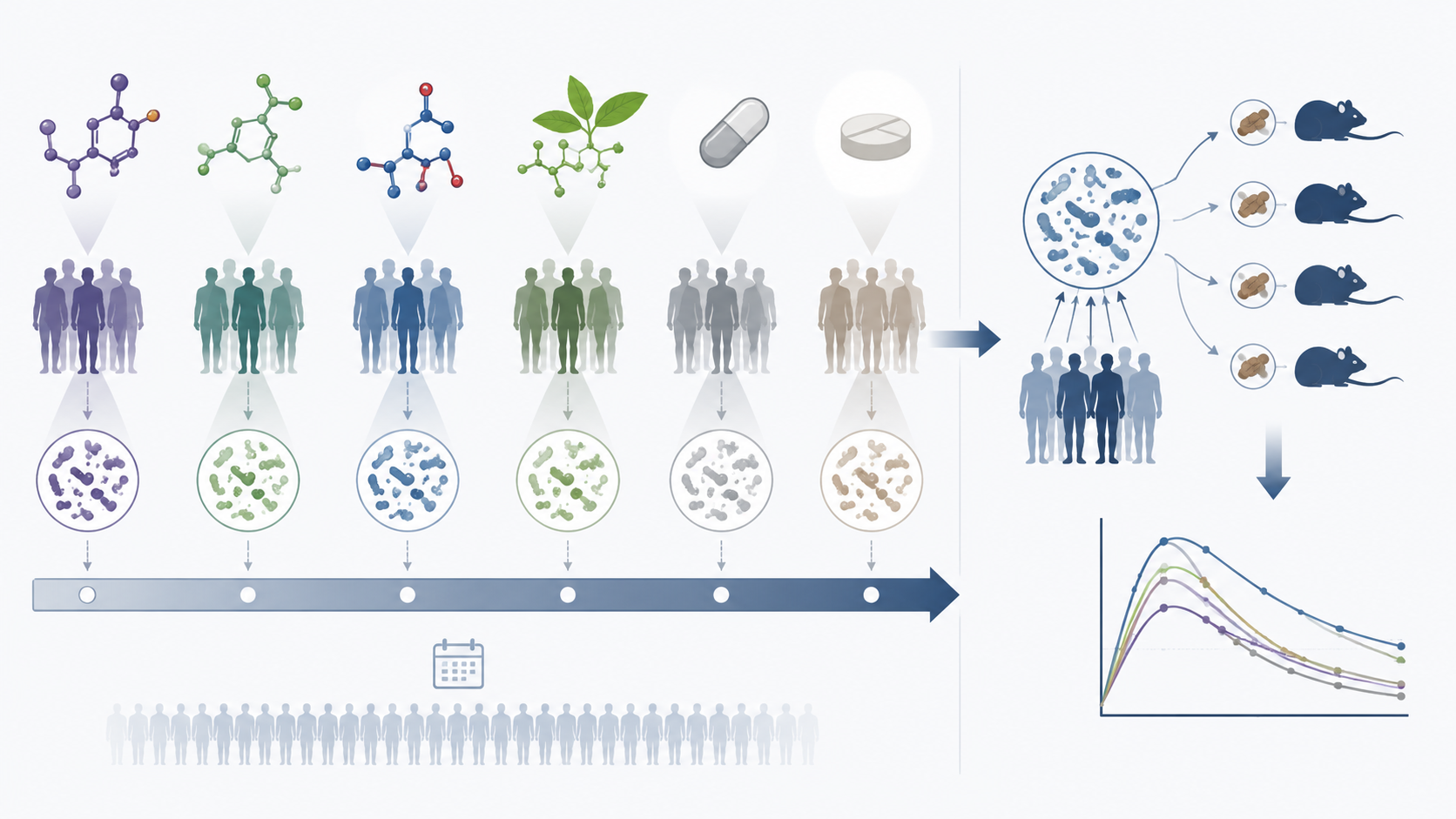
The most important part of the study was not the glucose curve alone. The investigators identified top human responders and transferred their fecal microbiota into germ-free mice. The recipient mice developed glucose intolerance that reflected the human donor response. That closes a stronger causal loop than stool sequencing alone: exposure was followed by microbiome change, a human metabolic phenotype was observed, and the phenotype could be transmitted through microbiota in an experimental animal system.[1]
Even here, the boundary is essential. The transplantation arm supports a microbiome-mediated mechanism for the responder phenotype under the conditions of the trial. It does not prove that every person consuming saccharin or sucralose will develop clinically meaningful dysglycemia, that stool profiles can already identify responders in routine practice, or that the same effect size applies to commercial products, chronic use, people with diabetes, or patients taking drugs that reshape the microbiome.
| Finding in Suez 2022 | What it supports | What it does not support |
|---|---|---|
| Sucralose and saccharin impaired glucose tolerance at the cohort level | Sweetener-specific metabolic effects can appear within 14 days in healthy abstainers | A class-wide claim that all non-nutritive sweeteners impair glucose tolerance |
| Aspartame and stevia altered metagenomes without the same cohort-level glycemic effect | Microbiome shifts and metabolic impairment are not interchangeable endpoints | A claim that any detected microbiome change is clinically harmful |
| FMT from top responders transmitted glucose intolerance to germ-free mice | A microbiome-mediated mechanism in responder phenotypes | Direct generalizable human causality for all users and formulations |
Why the null trials are not disposable
The Suez trial is the strongest single human experiment, but it is not the only controlled human evidence. Serrano 2021 reported no glycemic effect with saccharin in healthy adults. Thomson 2019 reported no significant microbiome or glycemic changes with sucralose. Ahmed 2020 found minimal microbiome alteration with aspartame and sucralose. Those trials are not a minor footnote; they are the reason the clinical conclusion has to remain conditional.
A simple reconciliation would be tempting: one trial positive, several trials negative, so average the concern downward. That is too crude. The more useful interpretation is that these studies may not have tested the same biological question. Baseline microbiome composition, responder status, dose, exposure duration, and product formulation can each change what a trial is capable of detecting.
Responder status is the most clinically awkward variable. If only a subset of participants is susceptible, a trial can look null at the group level while still containing biologically real effects in individuals. Conversely, subgroup signals can be overread if responder definitions are created after the fact or if baseline predictors are not validated prospectively. The Suez design is compelling because it did not stop at subgroup glucose curves; it tested whether a responder phenotype could travel with the microbiome. But the field still lacks a routine pre-exposure test that tells a clinician which patient is likely to respond.
Formulation is another source of apparent disagreement. Some controlled studies use purified sweeteners, often in capsules. Commercial products may combine non-nutritive sweeteners with glucose, maltodextrin, or other carriers. Those carriers are not neutral from a glycemic or microbial standpoint. A trial of a purified compound and a patient’s daily intake of a tabletop packet or beverage may not be interchangeable exposures.
Duration also matters, but not in a predictable direction. A 14-day exposure can reveal short-term metabolic responsiveness, as in Suez 2022. A longer trial could show adaptation, persistence, or delayed effects. Without harmonized endpoints and pre-specified responder analyses, duration differences can explain disagreement only cautiously.
Microbiome change is not one endpoint
Much of the public language around this topic treats “the microbiome” as a single organ with a single direction of health. The trials do not allow that. Stool metagenomics, oral metagenomics, small-bowel sampling, microbial diversity, taxonomic shifts, functional pathways, and glucose tolerance are different measurements. They may move together, but they do not have to.
That is why the anatomical site matters. A 2023 human study from Cedars-Sinai reported that non-nutritive sweeteners significantly altered the small bowel microbiome, adding evidence that fecal sampling may miss relevant upper-intestinal changes.[2] The clinical implication is not that small-bowel microbiome testing is ready for counseling. It is that stool-only studies may be incomplete maps of exposure biology.
Reviews published in 2025 describe non-nutritive sweeteners as potentially double-edged for the gut microbiome, citing antimicrobial effects, gut barrier effects, and personalized variability.[3] Reviews are useful for mapping proposed mechanisms, but they cannot settle whether a given patient’s glycemic response will change after switching from sugar to sucralose or from sucralose to stevia. That question still belongs to controlled human intervention studies.
Mechanistic evidence sharpens the concern, then runs into translation limits
The mechanistic literature did not begin with the 2022 human trial. In 2014, Suez and colleagues reported that non-caloric artificial sweeteners induced glucose intolerance through gut microbiota alterations in mice, a finding that helped move the field from caloric accounting toward host-microbe metabolism.[4] The later human trial is important partly because it tested whether that mechanistic frame could survive contact with controlled human exposure.
Newer model systems keep adding possible mechanisms. A 2025 bioreactor study reported that sucralose reduced alpha diversity and enriched Enterobacteriaceae, while acesulfame K increased diversity but caused persistent structural network disruption that did not revert after withdrawal.[5] Such systems are valuable because they can isolate microbial community behavior under controlled conditions. They are also simplified systems; they do not reproduce the full human diet, immune system, medication exposure, transit time, or enteroendocrine signaling environment.
Animal work also raises questions that would be irresponsible to ignore and equally irresponsible to overstate. A 2026 mouse study reported that sucralose and stevia effects on glucose tolerance and microbiome diversity persisted into the F2 generation, with sucralose showing more persistent effects.[6] That is a signal for mechanistic follow-up, not evidence that human grandchildren inherit metabolic effects from a grandparent’s diet soda.
Where WHO guidance fits—and where it does not
The World Health Organization’s 2023 guideline adds a separate layer of caution. WHO issued a conditional recommendation against using non-sugar sweeteners for weight control, based on evidence showing no long-term benefit for body weight reduction and potential increased risk of type 2 diabetes, cardiovascular disease, and all-cause mortality in observational studies.[7]
That recommendation is relevant context, but it should not be treated as a microbiome verdict. The WHO guideline addresses weight-control use and long-term risk signals more than microbiome mediation. Observational associations also carry familiar problems: reverse causation, residual confounding, and differences between people who choose non-sugar sweeteners and those who do not. A patient at higher metabolic risk may be more likely to use diet products, which can make interpretation difficult even when statistical adjustment is careful.
A 2026 evidence synthesis from Tufts researchers similarly describes growing evidence that sugar substitutes can disrupt gut health and metabolism.[8] Such syntheses are useful for seeing the field’s direction. For microbiome-mediated clinical counseling, however, pooled conclusions still need to be separated by sweetener, dose, formulation, population, and endpoint. A pooled risk signal is not the same as a validated mechanism for an individual patient.
What can be said in a ten-minute visit
For a clinician, the evidence does not support two common shortcuts. It does not support telling patients that all artificial sweeteners are harmless because they contain little or no sugar. It also does not support telling patients that all artificial sweeteners harm the gut microbiome in a clinically meaningful way.
A more accurate counseling frame is narrower. Controlled human evidence shows that sucralose and saccharin can impair glucose tolerance in some healthy adults under short-term exposure conditions, and that this effect can be microbiome-mediated in responder phenotypes. The same trial found metagenomic changes with aspartame and stevia but did not show the same cohort-level glucose tolerance impairment. Other controlled trials have not reproduced a simple harm signal. That is the evidence boundary.
- The strongest causal evidence is sweetener-specific, not class-wide.
- Microbiome alteration and metabolic harm should be discussed as separate endpoints.
- Baseline microbiome composition may help explain responder status, but it is not yet a routine clinical decision tool.
- Commercial formulations may differ from purified sweetener exposures used in trials.
- Observational long-term risk signals should inform caution but not be mistaken for microbiome causality.
This is less satisfying than a clean yes-or-no answer, but it is closer to the evidence. The patient who uses a non-nutritive sweetener to reduce sugar intake is not in the same evidentiary category as a trial participant who had abstained for 6 months, received a defined sweetener exposure for 14 days, and underwent continuous glucose monitoring. The patient with impaired glucose tolerance, metformin use, recent antibiotics, high sweetener intake, or gastrointestinal disease may be a different biological case again.
The precision-nutrition question is now unavoidable
The most useful future study may not be another trial asking whether “artificial sweeteners” change “the microbiome.” The more clinically relevant design would pre-specify the sweetener, formulation, dose, exposure duration, baseline microbiome features, diet background, medication status, and metabolic endpoint. It would then test whether responder status can be predicted before exposure.
That is where predictive modeling could matter. A 2023 review argued for personalized quantification and prediction of non-nutritive sweetener health effects through gut microbiome profiling.[9] In principle, machine-learning models trained on baseline microbial features, diet, host metabolism, and exposure data could help identify who is likely to show a glycemic response to a specific sweetener. In 2026, that remains a research direction, not a counseling instrument.
The clinical evidence judgment is therefore deliberately bounded: human trial evidence supports microbiome-mediated metabolic effects for some sweeteners in some individuals, with sucralose and saccharin carrying the strongest short-term signal. It does not yet support blanket counseling rules for all artificial sweeteners, all users, or all microbiome changes.
References
- Personalized microbiome-driven effects of non-nutritive sweeteners on human glucose tolerance, Cell, 2022.
- Research Alert: Artificial Sweeteners Significantly Alter the Small Bowel Microbiome, Cedars-Sinai, 2023.
- The Impact of Artificial Sweeteners on the Gut Microbiome: A Double-Edged Sword, Diseases, 2025.
- Artificial sweeteners induce glucose intolerance by altering the gut microbiota, Nature, 2014.
- Sucralose and acesulfame potassium exposure differently impact the structure and function of human gut microbiota in vitro, Frontiers in Microbiology, 2025.
- Negative effects of artificial sweeteners may pass to the next generation, Frontiers, 2026.
- WHO advises not to use non-sugar sweeteners for weight control in newly released guideline, World Health Organization, May 15, 2023.
- Growing Evidence Sugar Substitutes Disrupt Gut Health and Metabolism, Tufts Now, June 30, 2026.
- Personalized quantification and prediction of health effects of non-nutritive sweeteners through gut microbiome profiling, Eco-Environment & Health, 2023.
Comments
Join the discussion with an anonymous comment.