
The 2026 Cyclospora outbreak is already doing more than filling a dashboard. On July 14, CDC had 1,645 confirmed cases and more than 5,100 under investigation, a count that was already 6.6 times the 249 cases reported on the same date in 2025.[1] Michigan alone reported 3,309 cases. Those numbers do not describe one clean total; they describe a moving investigation in which confirmed, under-investigation, and state-reported counts are not interchangeable.
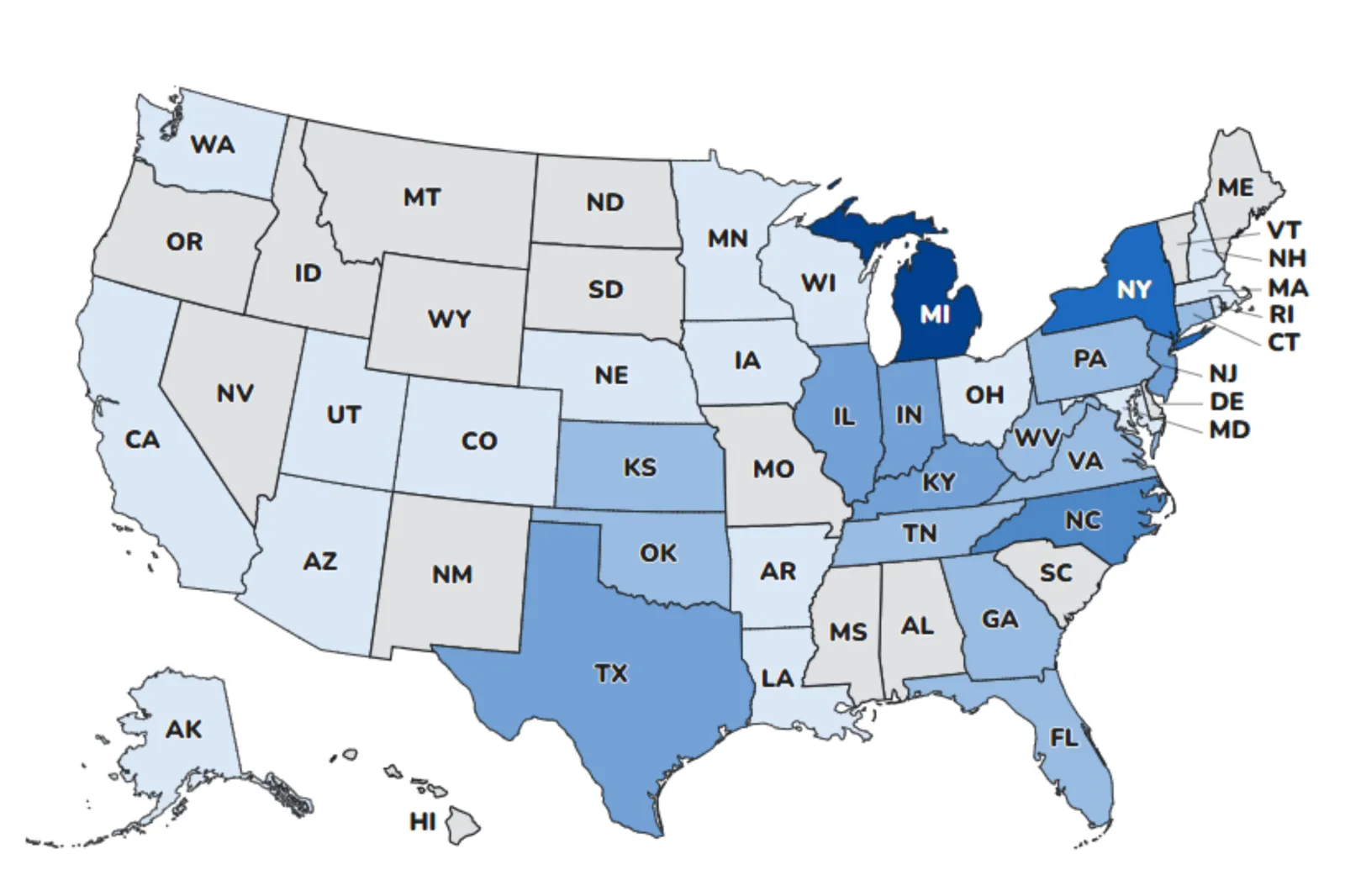
That mismatch matters because the data stream AI would have to learn from is already fractured. Since July 2025, FoodNet has made Cyclospora reporting optional, leaving Salmonella and STEC as the only mandatory pathogens.[2] CDC's parasitic disease branch, not its foodborne disease division, handled the investigation, and observers noted that the team was working in an area where experience was thin.[2] A model cannot compensate for a feed that arrives late, incompletely, and only after local judgment decides whether the case gets pushed upstream.
Michigan's chief medical executive put the operational problem plainly: public health still runs on "very antiquated data systems in public health that desperately need to be modernized."[3] That is the real environment behind the outbreak line list. Someone is reconciling case records, lab feeds, and state dashboards by hand, often after the day has already gone long. In that setting, AI is not competing with elegance; it is competing with clerical burden.
Cyclospora also lacks the surveillance machinery that makes bacterial traceback easier. It cannot be cultured in standard labs, which blocks the whole-genome sequencing subtyping that PulseNet provides for bacterial pathogens.[4] In 2023, three of four Cyclospora outbreaks still ended with no identified source.[4] That is not a model-selection problem. It is a missing-layer problem.
Where AI Helps, And Where It Stops
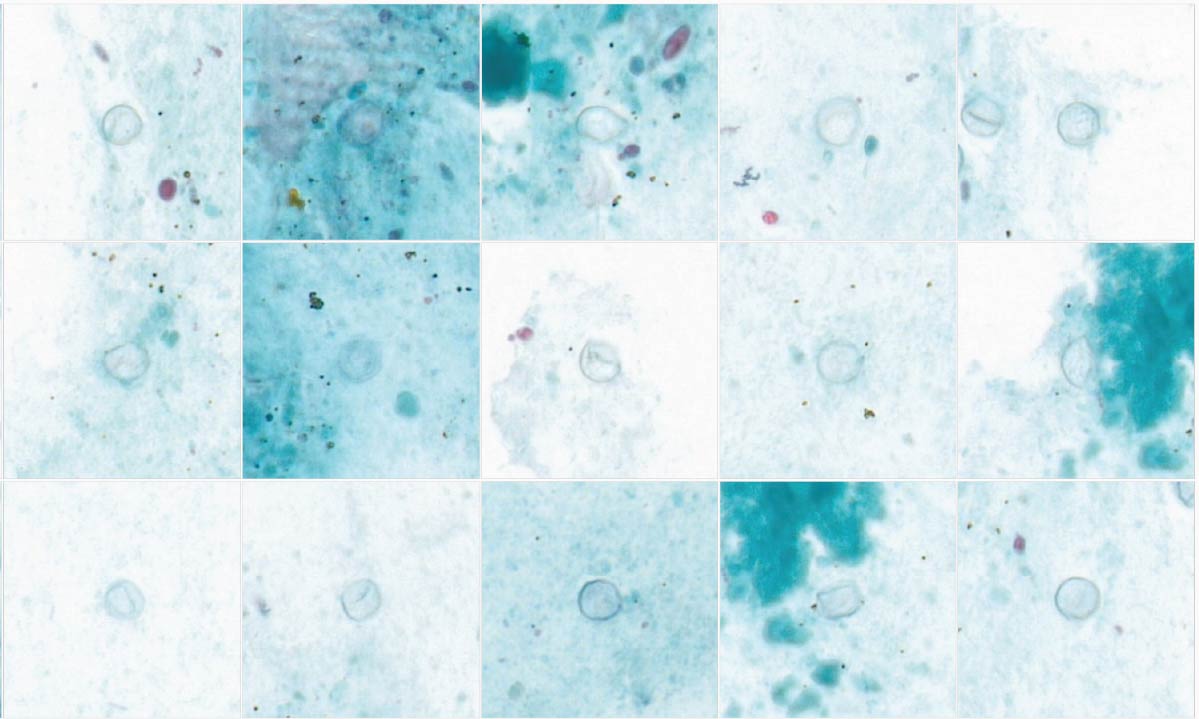
ARUP Laboratories offers the clearest operational win in this outbreak. The lab said its CNN-based microscopy platform absorbed about a 200% testing surge, or roughly 50 positives per day, while scanning slides in about two minutes each; its validation also suggested better sensitivity than human-only review.[5] That is a real reduction in bench-level friction. It helps the lab that is already looking at slides. It does not tell investigators which farm, distributor, or route of exposure should be traced next.
The more ambitious version of this work is early warning. Corewell Health is developing a machine learning system to flag unusual infection patterns, starting with a bacterial pathogen.[3] That is the right instinct, but it is still a single-system tool. It does not solve the harder public-health problem: getting multiple jurisdictions, labs, and clinical systems to describe the same event in ways that can be joined without manual cleanup.
The cross-sector vision is there. Jacob Krell of Suzu Labs argues that AI's value "multiplies when it sits at the intersection of sectors rather than within any one of them," where agricultural import data, genomic sequencing data, and clinical geography can be read together.[6] That is a sensible map of the problem. It also assumes the sectors actually share structured, comparable data. Matt Sims, Tyler Smith, and Ted Miracco all land on the same warning from different angles: if the inputs are poor, AI just scales the poor inputs.[6]
The long view points the same way. CDC WONDER-based counts rose from 537 Cyclospora cases in 2016 to 4,463 in 2023.[3] That is structural pressure, not a one-season anomaly. More cases mean more traceback work, more reconciliation, and more chances for the same broken pipeline to slow down investigators before a source is pinned down.
For machine learning to materially speed traceback and shorten outbreaks, three conditions have to exist before it can help: mandatory Cyclospora reporting, interoperable public health systems, and a parasite-ready surveillance layer that gives investigators something closer to a PulseNet equivalent.[2][3][4] Until those pieces are in place, AI can keep proving that it works inside individual workflows, but it will remain a demonstration inside a broken pipeline.
References
- CDC Health Alert Network notice on the 2026 Cyclospora outbreak, Centers for Disease Control and Prevention, July 14, 2026, CDC HAN
- Cyclospora reporting, FoodNet, and the CDC investigation response, CIDRAP, July 2026, CIDRAP
- How the 2026 Cyclospora outbreak exposed gaps in public health data systems, Consumer Reports, July 2026, Consumer Reports
- Why Cyclospora still lacks PulseNet-style traceback, Consumer Reports, July 2026, Consumer Reports
- ARUP Laboratories deploys AI-enhanced microscopy to manage Cyclospora surge, ARUP Laboratories, July 13, 2026, ARUP Laboratories
- AI at the intersection of sectors, BankInfoSecurity / ISMG, July 2026, BankInfoSecurity
Comments
Join the discussion with an anonymous comment.