
Why Health Systems Need a Structured Approach to Ambient AI Scribe Evaluation
By mid-2025, roughly two-thirds of U.S. hospitals using Epic — approximately 1,744 organizations — had adopted some form of ambient AI documentation, according to reporting from the American Journal of Managed Care. That number has almost certainly grown since. The adoption curve is steep, driven by a well-documented crisis in clinician burnout and the promise of technology that can listen, transcribe, and draft a clinical note while a physician focuses on the patient.
But the gap between a polished vendor demo and a platform that actually works across your specific mix of specialties, EHR configurations, and patient populations can be wide. The evidence from early adopters shows that outcomes vary dramatically. The Permanente Medical Group reported an average time savings of 18 seconds per appointment across 2.5 million encounters, while Mass General Brigham saw a reduction of 5.6 minutes per appointment. Intermountain Health found no statistically significant productivity gains at all. These aren't failures — they reflect real differences in baseline workflows, note complexity, integration depth, and the clinical settings where the tools were deployed.
This article is not another review of whether ambient AI scribes reduce burnout. That question has been answered. Instead, it is a structured procurement guide for health system administrators, CMIOs, and procurement teams who need to move beyond demo-day impressions and evaluate platforms against the dimensions that actually determine success in their specific environment.
Core Evaluation Dimensions for Ambient AI Scribe Platforms
Health systems evaluating ambient AI scribe platforms should assess vendors across six core dimensions. Each dimension has specific, verifiable criteria that go beyond general capability claims.
| Dimension | Key Criteria | What to Ask Vendors |
|---|---|---|
| EHR Integration Depth | Native vs. screen-scrape integration; bidirectional data exchange; real-time note push; support for custom note templates and structured data fields | Is the integration native to the EHR (e.g., Epic App Orchard) or does it rely on a third-party middleware layer? Can it write discrete data elements back to specific note sections? |
| Specialty Coverage | Number of specialties with validated note templates; evidence of performance in high-acuity settings (ED, ICU, surgery); customization for subspecialty workflows | What is the evidence of performance in your specific specialties? How are note templates developed and maintained for less common subspecialties? |
| Accuracy & Hallucination Safeguards | Automated quality checks; LLM-based evaluation layers; provenance tracking (which parts of the note came from audio vs. inference); human-in-the-loop review options | What automated safeguards prevent hallucinated findings? Can the system flag sections where confidence is low? How is provenance tracked in the note output? |
| Security & Compliance | HIPAA compliance; SOC 2 Type II certification; data residency options; audit logging; encryption at rest and in transit; business associate agreements | Where is audio and note data stored? Can you guarantee data residency within specific geographic boundaries? What is the data retention and deletion policy? |
| Total Cost of Ownership | Per-clinician monthly subscription ($100–$600+); implementation and training costs; ongoing template customization fees; integration maintenance costs; potential savings from reduced overtime and locum spend | What is the all-in cost per clinician per month including implementation, training, and ongoing support? Are there volume discounts? What is the contract term? |
| Vendor Stability & Track Record | Funding stage and total disclosed funding; number of deployed health system customers; regulatory history (FDA submissions, enforcement actions); product roadmap transparency | How many health systems of comparable size are actively using the platform? What is the vendor's regulatory strategy regarding SaMD classification? How long has the company been operating? |
The total cost of ownership range — $100 to $600+ per clinician per month — reflects wide variation in platform capabilities, deployment complexity, and contract terms. A platform that costs $100 per clinician per month but requires extensive IT support for template customization and generates notes that need significant editing may end up costing more in total than a $400-per-month platform with robust out-of-the-box specialty templates and automated quality checks.
Emerging Evaluation Frameworks: SCRIBE, CRAFT-MD, and MedHelm
Traditional accuracy metrics — word error rate, BLEU score, ROUGE-L — were designed for general natural language processing tasks, not for clinical documentation where a single hallucinated finding can have patient safety implications. Recognizing this gap, researchers have developed structured evaluation frameworks specifically for ambient AI scribes.
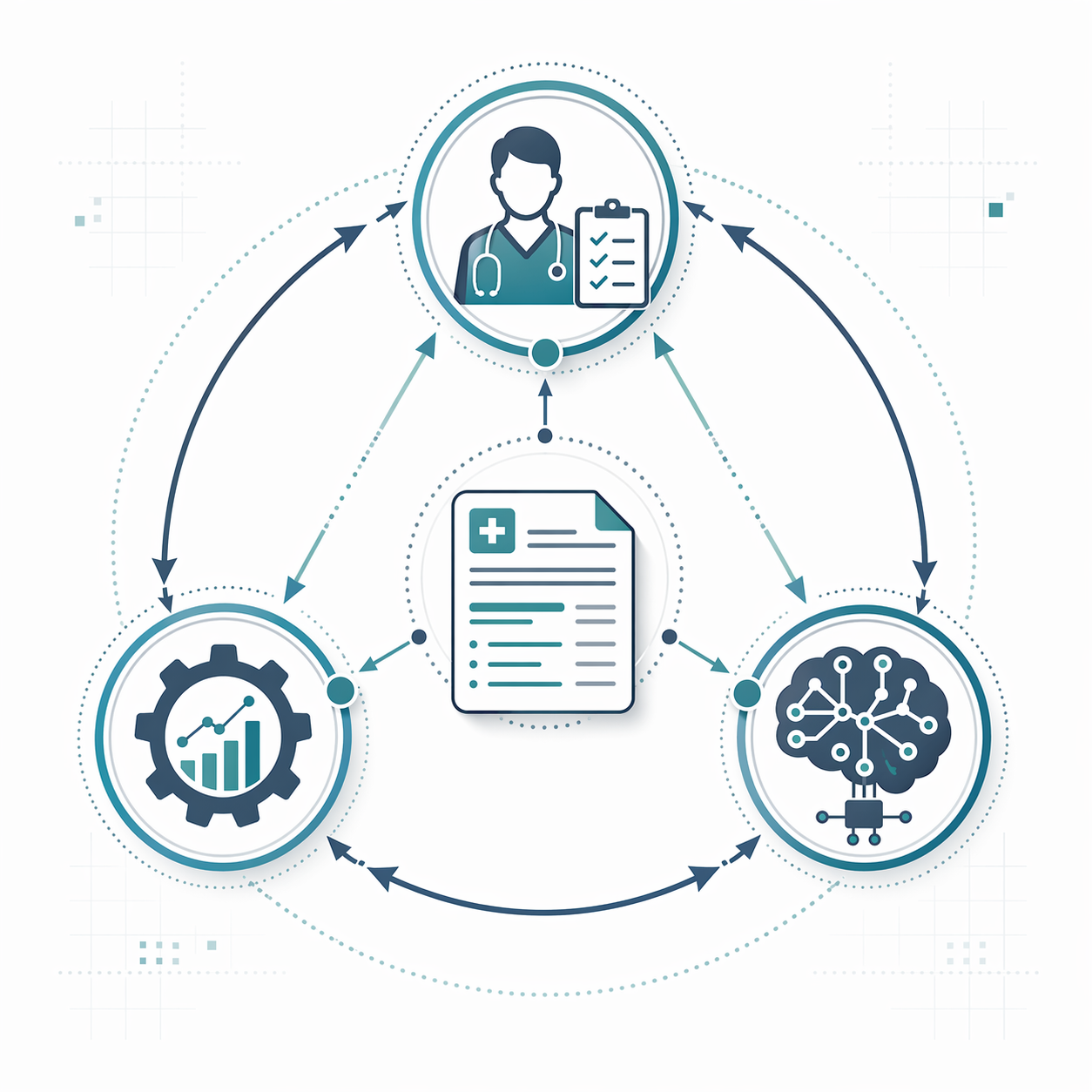
The SCRIBE framework, published in npj Digital Medicine in 2025, proposes a multi-evaluator approach that combines three assessment layers:
- Human evaluators: Clinicians review a sample of AI-generated notes for clinical accuracy, completeness, and appropriateness. This is the gold standard but is resource-intensive and does not scale to every note.
- Automated metrics: Standardized NLP metrics (word error rate, semantic similarity, fact extraction overlap) provide consistent, scalable measurement but may miss clinically meaningful errors.
- LLM-based evaluation: A separate large language model assesses the AI-generated note against the original audio transcript, flagging potential hallucinations, omissions, or inconsistencies. This layer bridges the gap between human review and automated metrics.
CRAFT-MD takes a different approach, using scenario-based AI-agent evaluation. Instead of measuring accuracy on individual notes, CRAFT-MD presents the ambient AI system with standardized clinical scenarios — a patient with chest pain in a noisy ED, a multi-speaker family conference in an ICU, a telemedicine visit with audio compression artifacts — and evaluates how the system handles each scenario. This approach is particularly useful for assessing performance in the challenging, high-acuity settings where traditional metrics may not capture failure modes.
Stanford's MedHelm provides a complementary tool: a structured benchmarking platform that allows health systems to compare ambient AI scribe performance across standardized clinical vignettes. MedHelm includes provenance-aware metrics that track which parts of a generated note can be attributed to the audio input versus the model's own inference — a critical capability for identifying and managing hallucination risk.
Setting-Specific Challenges and Evaluation Adaptations
A platform that performs well in a quiet primary care clinic may fail catastrophically in an emergency department or intensive care unit. Health systems must evaluate ambient AI scribe performance in the specific clinical environments where the tool will be deployed, not just in the vendor's demo environment.
| Clinical Setting | Primary Challenges | Evaluation Adaptations |
|---|---|---|
| Emergency Department | High ambient noise (alarms, pagers, multiple conversations); multi-speaker interactions (patient, family, nurses, consultants); frequent interruptions; rapid patient turnover | Test with simulated ED audio recordings; measure accuracy in multi-speaker scenarios; assess note completion time under time pressure; evaluate performance during shift transitions |
| Intensive Care Unit | Bi-directional real-time data exchange requirements (ventilator settings, lab values, medication drips); critical alerts that must not be missed; complex multi-provider documentation | Verify integration with physiologic monitoring systems; test alert handling (does the system pause or flag critical events?); evaluate structured data capture from devices |
| Pre-Hospital / EMS | Connectivity limitations (ambulance, rural areas); need for on-device processing; variable audio quality (sirens, road noise, patient distress); time-critical documentation | Test offline mode and on-device processing capability; evaluate audio quality handling in moving vehicle simulations; measure note generation time under connectivity constraints |
| Low- and Middle-Income Countries | Infrastructure constraints (intermittent power, limited bandwidth); language diversity (multiple local languages, dialects); lack of standardized EHR systems; variable clinician digital literacy | Assess on-device edge computing capability; test language support for relevant local languages; evaluate offline functionality; assess training and support requirements |
The emergency department presents perhaps the most challenging environment for ambient AI scribes. Noise levels can exceed 70 decibels during peak hours, with multiple conversations occurring simultaneously. Speaker diarization — the ability to distinguish who said what — becomes significantly more difficult when a patient, two family members, a nurse, and a consulting physician are all speaking over each other. Health systems evaluating ambient AI for ED deployment should request vendor data specifically from ED pilots, not extrapolated from primary care performance.
For a deeper look at the specific challenges and evidence for ambient AI scribes in emergency medicine, see our separate analysis: AI Scribes in Emergency Medicine: Clinical Deployment Evidence, Workflow Challenges, and Safety Considerations.
Ethical, Regulatory, and Governance Considerations in Procurement
Ambient AI scribe procurement decisions must account for a rapidly evolving regulatory and ethical landscape. Several factors should be incorporated into vendor evaluation and contract negotiation.
- Patient consent requirements: Most health systems using ambient AI scribes, including Cleveland Clinic and TPMG, obtain verbal consent from patients before each encounter. However, requirements vary by jurisdiction. In two-party consent states, recording a conversation without explicit consent from all parties may violate wiretapping laws. Health systems must ensure their chosen platform supports consent workflows and that their legal team has reviewed applicable state laws.
- Data retention and governance: Ambient AI scribes generate audio recordings and draft notes that may contain highly sensitive patient information. Health systems need clear policies on how long audio recordings are retained, who has access to them, and under what circumstances they can be used for model improvement. Some vendors may require access to audio data for model training as part of their standard terms — this should be explicitly negotiated.
- SaMD classification ambiguity: The regulatory status of ambient AI scribes remains uncertain. The FDA has not issued definitive guidance on whether these systems qualify as Software as a Medical Device (SaMD). If an ambient AI scribe generates a note that contains a hallucinated clinical finding — for example, documenting a heart murmur that was never mentioned — and a clinician fails to catch the error, questions of liability and regulatory jurisdiction arise. Health systems should ask vendors about their regulatory strategy and whether they have submitted or plan to submit a 510(k) or De Novo application.
- NHS England guidance: In 2025, NHS England issued what is described as the first comprehensive guidance on AI-enabled ambient scribing products. While this guidance is specific to the UK, its framework for evaluating safety, effectiveness, and data governance may inform U.S. health system procurement standards. Health systems with international operations or those seeking to align with emerging best practices should review this guidance.
- Note bloat and automation bias: Early evidence suggests that ambient AI scribes may generate longer, more detailed notes than traditional dictation or typing. While comprehensiveness is generally positive, note bloat can bury clinically relevant information under irrelevant detail. More concerning is automation bias — the tendency for clinicians to accept AI-generated notes without careful review, potentially propagating errors. Health systems should establish policies for note review and acceptance, and vendors should provide tools to flag potentially inaccurate sections.
Implementation Change Management and Post-Deployment Monitoring
Selecting the right platform is only half the battle. Successful deployment of ambient AI scribes requires structured change management and ongoing monitoring. The experience of early adopters — Cleveland Clinic, TPMG, Providence — offers practical lessons.
- Select clinical champions early: Cleveland Clinic's deployment across 4,000 physicians began with a year-long pilot evaluating five products across 250 physicians in 80+ specialties. The pilot identified clinical champions who could advocate for the technology and provide peer-to-peer training. Health systems should identify champions from each major specialty area, not just primary care.
- Customize note templates: TPMG's experience highlighted that lack of integration with existing note templates was a barrier to adoption. Vendors should provide tools for customizing note templates to match specialty-specific documentation requirements. Health systems should budget for the time required to develop and validate these templates.
- Conduct silent testing phases: Before full deployment, run a silent testing phase where the ambient AI scribe generates notes that are reviewed but not used in the medical record. This allows clinicians to build trust in the system's accuracy and identify failure modes without patient safety risk.
- Establish post-deployment monitoring: Performance drift — where a model's accuracy degrades over time due to changes in clinical workflows, patient populations, or audio environments — is a known risk. Health systems should establish ongoing monitoring protocols that track accuracy metrics, clinician satisfaction, documentation quality, and unsafe acceptance rates.
| Metric | Measurement Method | Monitoring Frequency |
|---|---|---|
| Time savings per appointment | EHR metadata analysis (time in note, time in system, pajama time) | Monthly |
| Clinician satisfaction | Survey (e.g., PDQI-9, custom satisfaction questionnaire) | Quarterly |
| Documentation quality | SCRIBE framework (human + automated + LLM evaluation) | Monthly sample review |
| Unsafe acceptance rate | Audit of AI-generated notes that were accepted without modification but contained errors | Weekly (during pilot); monthly (post-deployment) |
| Hallucination rate | Automated provenance tracking + random audit | Continuous (automated); monthly (human audit) |
The Providence RCT, published in PMC, demonstrated that structured implementation can produce meaningful outcomes: a 30.3% reduction in burnout, a 49.5% reduction in frustration with documentation, and a 51.7% reduction in time spent on documentation. But these results came from a carefully designed step-wedge implementation with dedicated training and support. Health systems should not expect similar outcomes from a simple software rollout without corresponding investment in change management.
Building a Vendor Scorecard: Key Questions for Procurement Teams
The following scorecard synthesizes the evaluation dimensions, emerging frameworks, setting-specific considerations, and governance factors discussed above into a practical tool for RFPs and pilot evaluations.
| Category | Key Questions |
|---|---|
| EHR Integration | Is the integration native to our EHR (Epic, Oracle Health, Meditech)? Can it write to specific note sections and structured data fields? Does it support bidirectional data exchange? What is the implementation timeline and IT resource requirement? |
| Specialty Coverage | What is the evidence of performance in our specific specialties? How are note templates developed and maintained? Can the platform handle multi-specialty encounters (e.g., a patient seen by both cardiology and primary care in the same visit)? |
| Accuracy & Safety | What is the word error rate and clinical accuracy rate in your target specialties? How are hallucinations detected and flagged? Does the platform use provenance tracking? What is the methodology for accuracy measurement? |
| Security & Compliance | Is the platform HIPAA compliant? Does it have SOC 2 Type II certification? Where is data stored? What is the data retention policy? Can we negotiate a business associate agreement that prohibits use of our data for model training? |
| Total Cost of Ownership | What is the per-clinician monthly cost? Are there implementation, training, and template customization fees? What is the contract term and termination policy? Are there volume discounts? |
| Vendor Stability | What is the company's funding stage and total funding raised? How many health systems of comparable size are active customers? What is the regulatory strategy regarding SaMD classification? Has the company had any FDA enforcement actions? |
| Setting-Specific Performance | Do you have deployment data from settings comparable to ours (ED, ICU, outpatient, etc.)? Can we conduct a pilot in our specific clinical environment? How does the platform handle noise, multi-speaker interactions, and interruptions? |
| References | Can we speak with health systems of similar size and specialty mix? What were their adoption rates, time savings, and clinician satisfaction outcomes? What challenges did they encounter during deployment? |
For a broader perspective on how ambient AI scribes fit into the overall AI procurement landscape for primary care, see our guide: AI in Primary Care: An Evidence-Graded Guide to What Works, What Doesn't, and Where the Data Stands.