
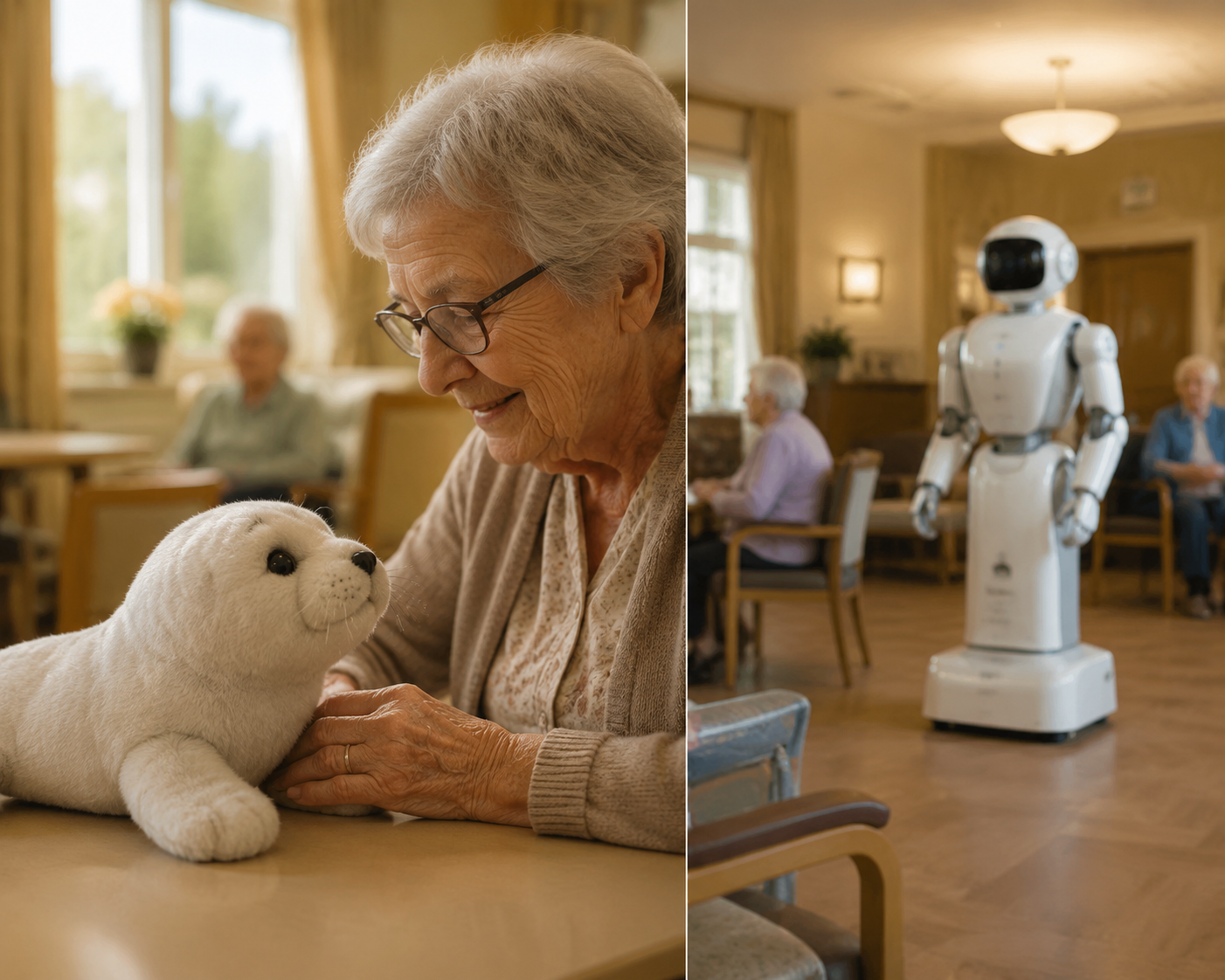
The phrase “humanoid robots for senior care and loneliness” tends to summon the wrong image first: a full-size machine standing in for a nurse, a family member, or a friend. The clinical evidence points somewhere quieter. The stronger signal is not that human-shaped robots are ready to take over care work, but that some socially assistive companion robots may help certain older adults feel less lonely over short periods, especially when they are used to prompt conversation, routine, reminiscence, and attention from human caregivers.
That distinction matters because the need is real. AARP’s 2025 overview describes loneliness and social isolation as major health concerns in later life, citing that 1 in 3 adults aged 50 to 80 report loneliness and 1 in 4 adults aged 65 and older are socially isolated.[1] Those figures are large enough to make any plausible psychosocial support worth studying. They are not, however, a license to treat every robot with a face, voice, screen, flipper, wheel base, or torso as the same intervention.
The Evidence Is Positive, but It Is Not Equally Distributed
The most encouraging summary finding comes from a 2025 meta-analysis reported to include 19 studies and 1,083 participants, with a significant loneliness reduction effect size of -0.59 and p<0.01.[2] In plain clinical language, that suggests a moderate beneficial effect across the included studies. It is enough to take the category seriously.
It is also not enough to buy a platform on faith. The meta-analysis finding could not be directly checked against the primary source during review because the source was blocked behind reCAPTCHA and had to be assessed through secondary summaries. That does not make the finding unusable, but it does mean the most important number in the field should be handled with visible caution until the included studies, robot types, comparators, and outcome measures can be inspected directly.
The best individual clinical signal in the materials is more modest and more useful: a 2024 randomized controlled trial of PARO, the robotic seal, in 52 older adults with mild dementia. Over 8 weeks, the trial reported significant reductions in both depression and loneliness, with p<0.001 for each outcome.[3] The sample was small and the follow-up was short, but the design is the kind of evidence geriatric care teams can actually evaluate: a defined population, a bounded intervention, measurable outcomes, and a comparator framework.
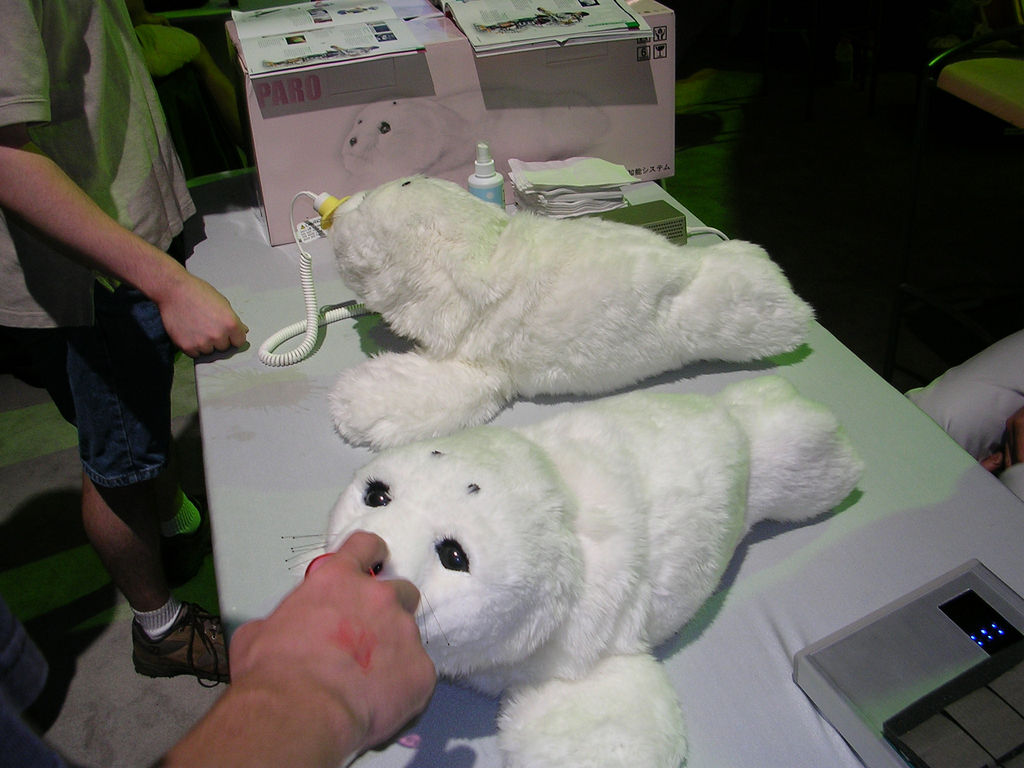
PARO is not impressive because it looks like the future. It is impressive because it does not ask to be mistaken for a person. A resident can stroke it, talk to it, laugh at it, refuse it, or use it as a bridge into conversation with a staff member. In a dementia care setting, that kind of interaction is not trivial. It can organize attention for a few minutes, soften agitation, or give an activities director something concrete to build around. The trial does not prove durable loneliness reduction across all older adults, but it does show why companion robots should not be dismissed as toys.
The brake pedal comes from the broader literature. A 2026 JMIR Aging scoping review, summarized as covering 59 studies across 25 platforms, noted a “striking lack of randomized controlled trials” in the field.[4] That sentence should sit next to every optimistic effect estimate. A field can have many pilot studies, usability papers, feasibility reports, and enthusiastic demonstrations while still lacking enough randomized evidence to recommend one platform over another for clinical adoption.
| Evidence signal | What it supports | What it does not settle |
|---|---|---|
| 2025 meta-analysis: 19 studies, n=1,083, effect size -0.59, p<0.01 | Socially assistive robots may reduce loneliness across pooled short-term studies | Which specific platforms should be purchased or prescribed |
| 2024 PARO RCT: n=52, mild dementia, 8 weeks, p<0.001 for loneliness and depression | A companion-type robot can produce measurable short-term psychosocial benefit in a defined population | Long-term effect, generalizability to other populations, or superiority over human-led activities |
| 2026 scoping review: 59 studies across 25 platforms with a striking lack of RCTs | The field is active and diverse | A mature clinical evidence base for platform-specific recommendations |
Companion Robots and Humanoid Robots Should Not Be Pooled Carelessly
A seal-shaped therapeutic robot, a tabletop voice companion, a small Korean social robot, and a full-size humanoid platform are not clinically interchangeable. They ask different things of the user. They ask different things of staff. They fail in different ways.
Companion robots such as Paro, ElliQ, and Hyodol are usually built around engagement rather than labor substitution. Their promise is psychosocial: greet the person, prompt a check-in, play music, invite reminiscence, encourage a routine, or become an object around which a human interaction can start. The outcome of interest is often subjective loneliness, mood, perceived connection, or engagement. Those outcomes deserve respect because loneliness is partly subjective by nature. A person saying “I feel less alone” is not a soft substitute for the real endpoint; it is often the endpoint.
Humanoid robots such as Pepper and NAO are often discussed in broader senior-care terms, but the evidence base for loneliness reduction does not become stronger just because the robot has a torso, arms, or a face-like display. A 2025 scoping review by Ruiz et al. found that 62.1% of humanoid robot care studies focused on social interaction.[5] That is an important finding, but it should be read in the right direction: even in humanoid robotics, the studied care function is still mostly interaction, not robust physical assistance.
That matters for procurement claims. If a humanoid robot is being justified as a loneliness intervention, the relevant evidence is not whether it can wave, navigate a hallway, or lead a scripted exercise. The relevant questions are whether older adults used it after the novelty period, whether loneliness changed against a meaningful comparator, whether the effect persisted, and whether staff could integrate it without quietly adding another maintenance burden.
Why PARO’s Small Trial Carries More Weight Than a Spectacular Demo
Small randomized trials are not glamorous, but they discipline the conversation. The PARO RCT does not prove that robotic companions solve loneliness in senior care. It shows that, in older adults with mild dementia over 8 weeks, a specific companion robot was associated with statistically significant improvements in loneliness and depression.[3] The limits are built into the sentence: specific robot, specific population, short follow-up.
Those limits make the result more credible, not less. A care home intervention that works for 8 weeks in a dementia population still has to answer hard next questions: What happens at 3 months? Does use fade after the novelty period? Are the benefits mediated by staff attention around the robot? Does the resident keep engaging if the device is not introduced by a trusted aide or activities director? These are not objections to the intervention. They are the ordinary questions that separate a promising psychosocial tool from a scalable clinical recommendation.
Real-World Engagement Is Useful Evidence, but It Is Not the Same as an RCT
ElliQ is one of the more interesting real-world cases because the reported engagement is concrete. New York State Office for the Aging describes its ElliQ initiative as a proactive care companion program for older adults, and public program materials report deployment to more than 900 seniors, 41 daily interactions, 79% of users feeling more connected, and a 94% loneliness reduction figure.[6]
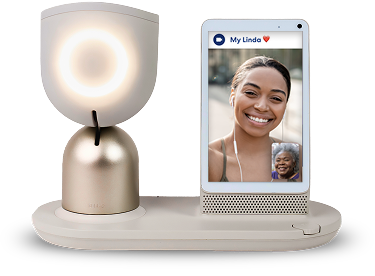
The 41 daily interactions figure is the kind of implementation detail that deserves attention. A device that sits unused on a counter is not an intervention. A device that an older adult speaks with many times a day may be doing something clinically relevant, even if that something is companionship, cueing, amusement, reassurance, or a predictable rhythm rather than treatment in a medical-device sense.
The 94% loneliness reduction claim needs a different posture. The figure has been repeated in public coverage, including a 2026 New York Post article about older New Yorkers using the robots, but the methodology behind that number was not independently verifiable from the available materials.[7] Without a published evaluation design, baseline measure, follow-up window, attrition accounting, and comparator, it should be treated as a program signal rather than peer-reviewed clinical evidence.
That is not a dismissal. Implementation evidence can reveal whether older adults tolerate a device, whether they invite it into daily life, and whether the support burden is manageable. But it should not be promoted as equivalent to a randomized trial. A family caregiver deciding whether their mother enjoys ElliQ is asking one kind of question. A health system deciding whether to fund robotic companions as a loneliness intervention is asking another.
The Market Is Moving Faster Than the Clinical Evidence
The commercial interest is easy to understand. Grand View Research frames elder-care assistive robots as a growing market through 2026 to 2033, and market estimates in this area vary widely depending on what gets counted as an elder-care robot.[8] A monitoring device, a mobility aid, a social companion, and a humanoid platform can all appear under the same broad commercial umbrella while having very different clinical purposes.
That umbrella is useful for investors and much less useful for clinicians. For loneliness, the evidence question is narrow: Does this platform reduce loneliness or social isolation in the population being served, compared with an appropriate alternative, for long enough to matter? Market growth does not answer that question. Adoption does not answer it either. A widely deployed robot may be engaging, familiar, and operationally viable without yet having strong clinical outcome evidence.
Platform viability is part of the evidence boundary because these are not one-time supplies. Robots need updates, replacement parts, support teams, privacy maintenance, staff training, and user trust. Aldebaran’s bankruptcy in February 2025, involving the company behind Pepper and NAO, is a useful cautionary example for any care organization considering hardware-dependent interventions.[9] If a resident builds a routine around a robot, the vendor’s stability is not a back-office detail.
The Ethics Question Is Real, but It Should Stay Attached to the Use Case
Robotic companions raise familiar concerns about deception, attachment, privacy, and substitution for human contact. These concerns are not imaginary, especially in dementia care or in programs serving people with limited social support. But an ethics discussion can become unhelpfully broad if it treats every affective response to a robot as deception.
A 2023 survey by Berridge et al. found that 69.3% of respondents were uncomfortable with deception in the use of socially assistive robots, but the sample was 95% white, highly educated, and above average in digital literacy.[10] That makes the result relevant but not broadly generalizable. It is evidence that many people care about transparency, not proof that older adults in every care context will reject robotic companions.
The more practical ethical distinction is whether the robot is presented as a tool or allowed to masquerade as a relationship it cannot sustain. A PARO session facilitated by staff, an ElliQ reminder that prompts a call, or a tabletop companion that helps someone keep a morning rhythm is different from telling a resident that a machine loves them. The evidence base does not require pretending otherwise.
What Can Be Said Clinically in 2026
The fairest reading of the evidence is conditional optimism. Socially assistive and companion-type robots have shown promising short-term effects on loneliness, with the strongest clinical example in the available materials coming from PARO’s randomized trial in older adults with mild dementia.[3] The pooled meta-analytic signal is encouraging, but it still needs direct verification against the primary source and careful separation by robot type, population, and study design.[2]
Humanoid robots are a weaker case for this specific outcome. They may support social interaction, and much of the humanoid care literature is aimed at that domain, but that is not the same as showing that full-size humanoid platforms reduce loneliness better than lower-cost companion devices, structured activities, human calls, group programming, or other psychosocial supports.[5]
The unresolved problem is not whether robots can ever help. Some clearly can get older adults to talk, smile, touch, remember, answer, or return to a small daily ritual. The unresolved problem is whether current studies are strong enough to recommend specific platforms for clinical adoption. In 2026, they are not yet there.
Before confidence catches up with procurement, the field needs more randomized controlled trials, longer follow-up than the common 8- to 12-week window, transparent program evaluations, and platform-specific comparisons that do not collapse Paro, ElliQ, Hyodol, Pepper, NAO, and full-size humanoid systems into one evidence category. Companion robots remain plausible psychosocial supports for some older adults when used as part of human care. They are not yet a clinically proven substitute for it.
References
- AI Companion Bots Fight Loneliness, Improve Health, AARP, 2025.
- PMC meta-analysis, 2025.
- JAMDA, 2024.
- Humanoid Robots in Elderly Care, There’s A Robot For That, 2026.
- Ruiz et al., Invest Educ Enferm, 2025.
- ElliQ Proactive Care Companion Initiative, New York State Office for the Aging.
- These elderly New Yorkers are inviting robots into their homes, New York Post, 2026.
- Elder Care Assistive Robots Market Report, Grand View Research.
- Humanoid Robots in Elderly Care, RoboZaps, 2026.
- Berridge et al., Frontiers in Psychology, 2023.
Comments
Join the discussion with an anonymous comment.