
By mid-2026, AI in food safety recall detection and monitoring is no longer a procurement slide or a pilot tucked inside one FDA office. Elsa, the FDA’s agency-wide generative AI tool, launched across the agency in June 2025 on the FDA’s GovCloud environment and was described as a way to summarize adverse event reports, identify high-priority inspection targets, detect labeling inconsistencies, and accelerate scientific review work under mandatory human oversight.[1] Less than a year later, the agency said it had expanded Elsa to version 4.0 with custom agents, quantitative data analysis capabilities, and integration with HALO, its enterprise data platform.[2]
That is a real infrastructure change. Review queues, inspection targeting, recall monitoring, and labeling review are not abstract administrative chores; they are the pipes through which safety signals either move or stall. But infrastructure deserves a harder question than whether it is modern. The question is whether it changes the path from contamination signal to inspection decision to recall initiation quickly enough to matter before unsafe food has already moved through the supply chain.
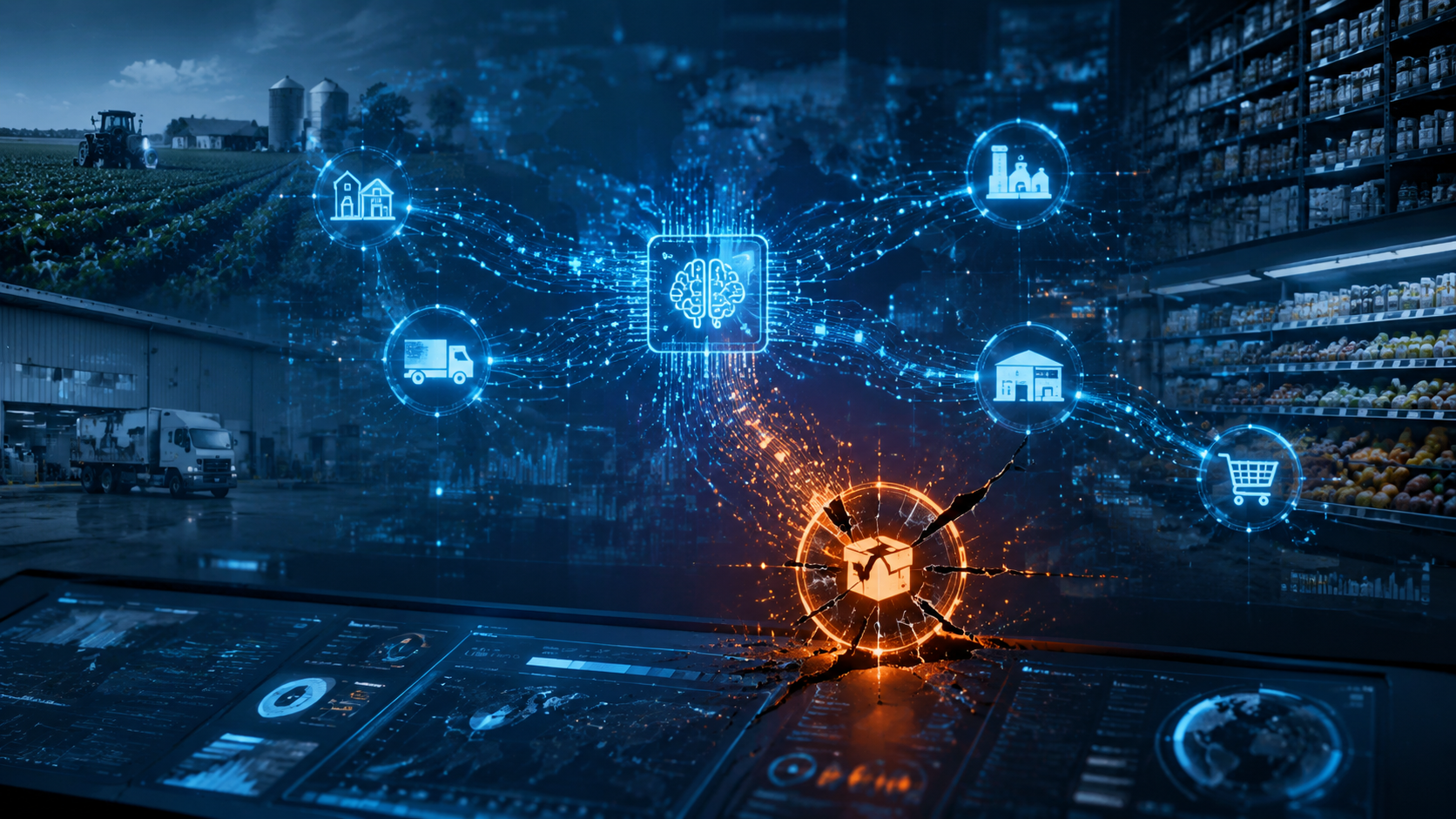
The restraint matters because the FDA’s own public descriptions of Elsa are operational but not yet independently audited in production. The agency has described human oversight as mandatory and has laid out intended uses, but as of mid-2026 there is no published independent production audit showing Elsa’s accuracy, false-positive rate, false-negative rate, or measurable effect on recall timing.[1][2] That does not make the system trivial. It means the right standard is traceability, not applause.
What Elsa Actually Changes Inside the FDA
Elsa’s most credible near-term value is not that it “detects recalls” in the cinematic sense of discovering a hidden pathogen before anyone else sees it. The stronger case is more procedural: it can reduce the time reviewers spend extracting meaning from dense records, comparing labels, organizing adverse event narratives, and deciding which inspection leads deserve faster attention.
Those are not minor gains. A regulator who can summarize a stack of adverse event reports faster may see a pattern sooner. An inspection program that can sort high-priority targets more consistently may allocate finite field capacity better. A review team that can compare labels and submissions faster may close compliance loops that otherwise sit in a queue. Elsa’s move onto GovCloud and into HALO matters because tools embedded in agency data infrastructure have a chance to shape default behavior, not just provide optional side assistance.[1][2]
| Elsa function described by FDA | Likely regulatory effect | What it does not prove by itself |
|---|---|---|
| Summarizing adverse event reports | Faster review of narrative safety signals | That microbial contamination is detected earlier |
| Detecting labeling inconsistencies | More efficient compliance review | That product contamination is contained sooner |
| Identifying high-priority inspection targets | Better triage of limited inspection capacity | That prioritization prevents cascade recalls |
| Accelerating scientific reviews | Shorter internal review workstreams | That recall initiation delays have fallen |
The distinction is not semantic. Recall detection and monitoring involve several different failure points: the initial hazard may not be observed, the signal may not be connected to a facility or lot, the inspection response may be delayed, the recall scope may be incomplete, or downstream firms may not act quickly enough. An AI tool that improves one link can still leave the most damaging link untouched.
The 2025 Recall Data Points to a Different Center of Gravity
The strongest stress test for Elsa’s promise is the 2025 food recall pattern. Mergen AI’s analysis of FDA recall data counted 1,576 total U.S. food recalls in 2025, including 770 Class I recalls, the most serious category. The same analysis attributed 73.7% of Class I recalls to microbial contamination and reported an average 23-to-31-day delay from contamination event to recall initiation based on 2025 date patterns.[3]
Those numbers need careful handling. Mergen AI is a vendor selling label-compliance software, so its interpretation of recall-system failure is not neutral. The recall counts are presented as FDA-sourced, but the framing around what the data mean should be read as a vendor analysis, not an independent government finding.[3] Still, the proportions are hard to ignore because they aim attention at the part of the system where harm concentrates: serious recalls dominated by microbial hazards, not only paperwork mistakes.
That is where the current AI story becomes less satisfying. Label inconsistency detection can improve compliance. Summarization can make reviewers faster. Inspection prioritization can move scarce attention toward higher-risk targets. But microbial contamination is often a live supply-chain problem, not a document comparison problem. It depends on sampling, environmental monitoring, illness surveillance, lot traceability, supplier controls, and the speed with which a suspected source can be narrowed before product disperses.
A 23-to-31-day delay from contamination event to recall initiation, if borne out across the underlying cases, is not just a workflow inconvenience.[3] It is time for product to move from supplier to processor to distributor to retailer, and sometimes into other manufactured foods. AI-assisted review may reduce administrative drag after a signal appears, but the central measurement should be whether the signal appears earlier, is linked faster, and produces a narrower, more defensible recall before the distribution map becomes unmanageable.
The Cucumber Cascade Shows the Monitoring Problem
The June 2025 cucumber supplier case is useful because it resists a neat technology story. Mergen AI reported that contamination tied to a single cucumber supplier triggered 258 downstream recalls.[3] One upstream failure became hundreds of downstream regulatory events. That is not merely a large recall count; it is a map of supply-chain brittleness.
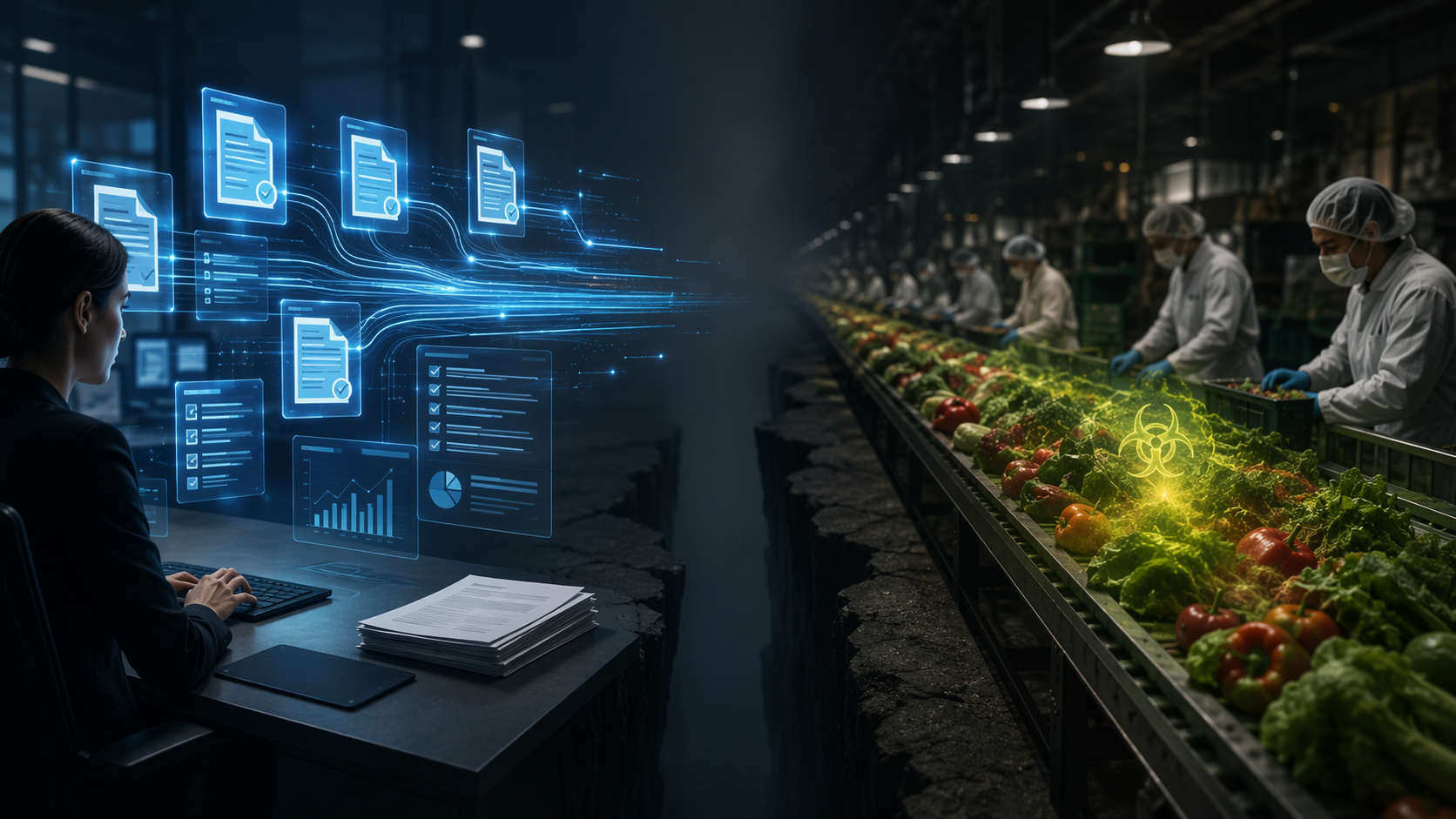
A recall monitor watching that case after the fact has a different job from a label reviewer comparing claims or ingredients. The monitor needs to know which firms received implicated product, which lots were transformed into other products, which public notices are duplicative, which firms have not yet acted, and whether the recall scope is expanding in a way that suggests the original containment boundary was wrong. The cost of delay is paid by downstream firms that did not create the upstream hazard but must still remove product, notify customers, document disposition, and manage consumer risk.
Elsa could plausibly help with pieces of that work: summarizing recall notices, clustering related records, flagging inconsistent product descriptions, or helping staff triage which inspection or compliance follow-up deserves immediate review. The available public evidence does not show that Elsa prevented that kind of cascade, shortened it, or changed the initial detection timing. That narrower statement is less exciting, but it is the one the record supports.
Accuracy Concerns Are Operational, Not Cosmetic
Civil Eats reported in May 2025 that FDA staff had raised questions about Elsa’s accuracy with large datasets, including concern that automated label-consistency checks could generate false positives.[4] That reporting should not be converted into a measured failure rate; the public materials do not provide one. But the concern belongs near the center of any serious discussion of AI in food safety recall detection and monitoring, because false positives and shaky outputs land on real desks.
For a reviewer, a false positive is not just an amusing AI mistake. It can pull attention away from higher-risk work, create needless back-and-forth with firms, or force staff to spend time proving that the tool is wrong. For an inspector, questionable prioritization can affect which facility gets attention first. For a compliance officer, an AI-generated inconsistency that cannot be traced back to source documents is not a defensible basis for action.
Mandatory human oversight helps, but it also reveals the operational bargain. If humans must verify the tool’s outputs, then the benefit depends on whether Elsa reduces cognitive load more than it creates review burden. In a stable, well-scoped task, that trade can be favorable. In a messy recall event with large datasets, inconsistent firm submissions, duplicate product names, and changing recall scopes, the trade needs evidence.
Other Public-Health AI Work Sets a More Testable Bar
The UK Health Security Agency offers a useful comparison without turning this into an international survey. In 2025, the UK government described work evaluating large language models for restaurant review analysis using more than 3,000 reviews annotated by epidemiologists to help detect and investigate foodborne illness outbreaks.[5] The important detail is not that another agency is using AI. It is that the task is tied to an annotated outbreak-detection benchmark.
That kind of design makes evaluation easier to discuss. A model can be tested against known annotations. Investigators can ask what it missed, what it overcalled, and how it performed on the public-health task it was supposed to support. Elsa’s public descriptions are broader and more infrastructural, which may be appropriate for an agency-wide platform, but it also makes the evidence question sharper: which food-safety tasks have been benchmarked, against what ground truth, and with what operational consequences?
Market Growth Does Not Equal Recall Detection Progress
The commercial market is moving quickly. BCC Research projected the AI in food safety and quality control market would grow from $2.7 billion in 2024 to $13.7 billion in 2030, a 30.9% compound annual growth rate.[6] As industry context, that projection is useful. It signals that vendors, food companies, and regulators are all operating in a field where AI tooling is becoming normal.
It is not evidence that recall detection is improving. Market size can grow because companies buy label-review tools, sanitation analytics, supplier-risk dashboards, computer vision systems, document automation, or consulting services. Those purchases may be rational and still leave the microbial recall gap mostly intact. A dollar spent on AI does not say which hazard was monitored, which signal was caught, or which recall started earlier.
The Mid-2026 Standard Should Be Hazard Fit
Elsa is best understood as a regulatory capacity upgrade. It can help the FDA move information through parts of the agency faster, especially where staff are summarizing records, comparing documents, triaging inspection targets, or preparing review work. Its GovCloud footing, HALO integration, and custom-agent direction are exactly the kinds of back-end changes that can alter day-to-day agency behavior.[1][2]
The evidence available by mid-2026 does not support the stronger claim that AI has closed the food recall detection gap. The most serious recalls in the 2025 analysis were largely microbial, and the reported delay from contamination event to recall initiation still runs in weeks, not hours.[3] The public record shows a fast-moving FDA AI platform; it does not yet show that the platform has been pointed with enough force at microbial surveillance, supplier traceability, and recall containment.
That is the operational question regulators and compliance leaders should keep asking. Not whether the FDA has adopted AI. It has. Not whether Elsa can make some work faster. It probably can. The harder question is whether the agency’s AI infrastructure is being evaluated against the hazards that drive Class I recall harm, and whether faster internal review is becoming faster public-health protection before contaminated food has already spread.
References
- FDA Launches Agency-Wide AI Tool to Optimize Performance for the American People — FDA, June 2025
- FDA Expands AI Capabilities and Completes Data Platform Consolidation — FDA, May 2026
- The Anatomy of Failure: A Data-Driven Investigation into the 2025 FDA Food Recall Crisis — Mergen AI
- FDA Expanding Use of AI in Food Safety Inspection — Civil Eats, May 27, 2025
- AI Could Help Detect and Investigate Foodborne Illness Outbreaks — UK Government, 2025
- AI Revolutionizes Food Safety and Quality Control Market — BCC Research via IFT
Comments
Join the discussion with an anonymous comment.