
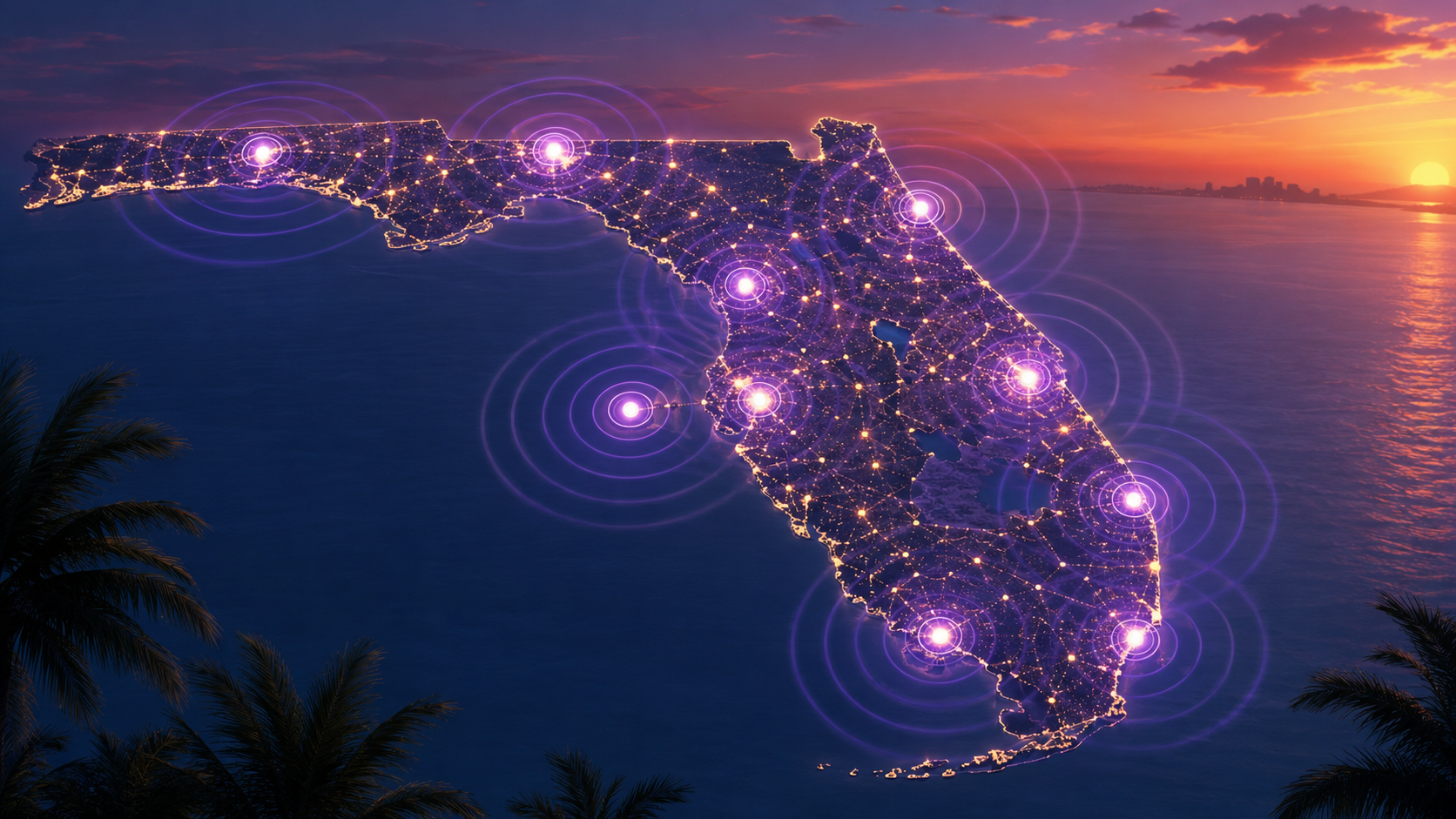
By July 2024, two years after Florida launched Purple Alert, the Florida Department of Law Enforcement had recorded 447 activations and 438 recoveries, a 98% safe-recovery rate for missing adults with covered cognitive disabilities. [1] That is a strong early result for an alert category built around adults who too often sit awkwardly between disability services, law enforcement procedure, and health-system discharge planning.
The number also needs its boundary placed beside it. A Florida Purple Alert for missing adults with cognitive disabilities is not a general missing-vulnerable-adult alert. The statute covers adults 18 or older with an intellectual or developmental disability, a brain injury, or another cognitive disability that is not related to substance abuse and is not Alzheimer’s disease or dementia. [2] The recovery rate measures what happened after people entered that channel. It does not tell us how many distressed families or front-line officers had to be redirected to another pathway, or found no pathway that quite fit.
Why Florida Created a Separate Adult Disability Alert
Purple Alert came out of a specific failure. Joshua Marshall, a 21-year-old man with autism, wandered from his Hillsborough County home in 2018 and died. His mother, Kayla Marshall, pushed for a public alert system that would recognize wandering by adults with developmental disabilities as an urgent safety event rather than a routine missing-person report. [3]
That origin matters because “wandering” is not a loose description of noncompliance or family anxiety. In this context, it describes a predictable safety risk for people whose disability may affect orientation, communication, judgment, or response to danger. The law’s premise is practical: when an adult with a qualifying disability is missing, waiting for conventional missing-person assumptions to play out can cost the search its most useful hours.
Florida’s first year showed the alert was not symbolic. FDLE reported 255 Purple Alert activations and 250 recoveries by July 2023. [1] By the second-year mark, the total had risen to 447 activations and 438 recoveries. [1] The available public figures do not prove that the alert alone caused each recovery, but they do show that once activated, the system was associated with a very high rate of safe location.
The 2024 Reform Fixed a Mismatch in How People Were Going Missing
The important policy development after launch was not a rebranding exercise. In 2024, Florida enacted HB 937 to create a two-tier Purple Alert structure: a local alert for people believed to be missing on foot and a statewide alert when a vehicle is involved or broader dissemination is needed. [4]
The rationale was unusually concrete. Legislative and news coverage of the reform reported that about 70% of Purple Alert activations involved people missing on foot rather than in a vehicle. [4] A statewide broadcast model can be powerful when a person is traveling by car, but it is poorly matched to a search that may depend on a nearby store clerk, transit worker, neighbor, security guard, or patrol officer noticing someone within a small radius.
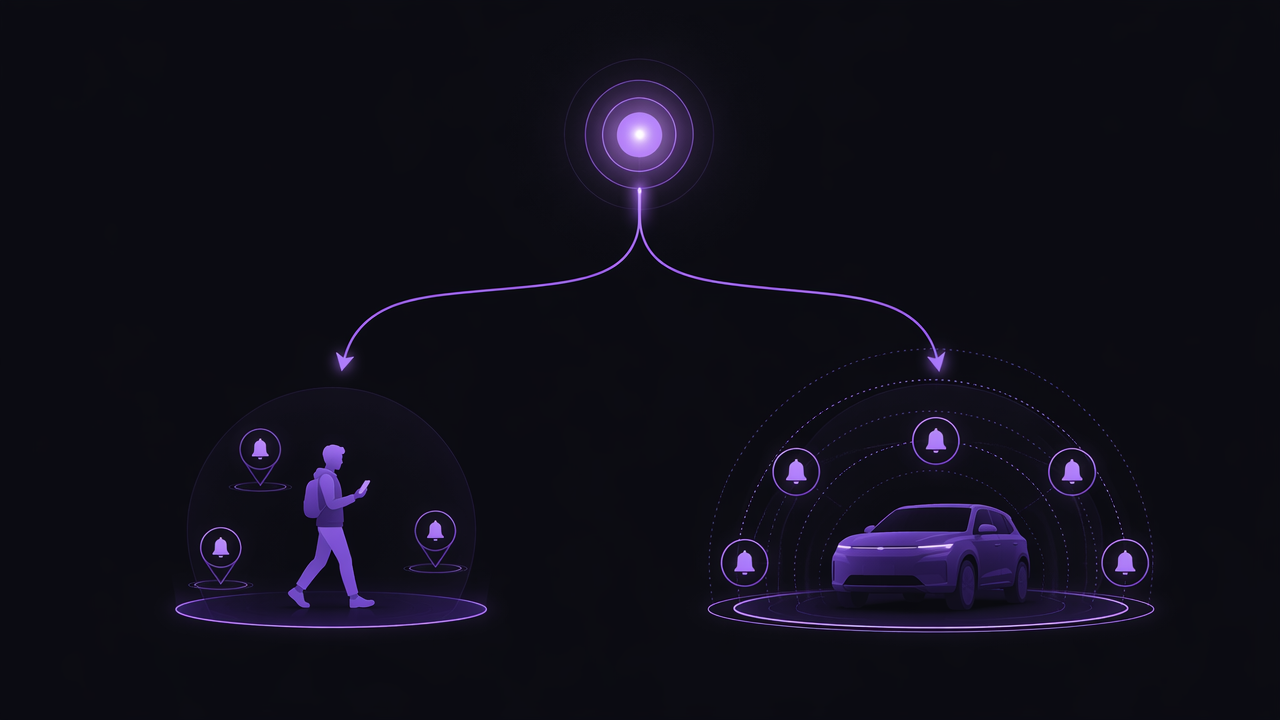
That distinction changes the operational burden. A local officer or dispatcher first has to determine whether the person meets Purple Alert criteria. Then the agency has to decide whether the facts support a local alert or a statewide activation. The reform recognizes that “missing adult with cognitive disability” is not one search pattern. Some cases need highway signage, media distribution, and vehicle information. Many others need fast saturation of the immediate community before the person moves into traffic, water, heat exposure, or an area where communication barriers become dangerous.
| Alert pathway | Typical trigger | Operational purpose |
|---|---|---|
| Local Purple Alert | Adult with a covered cognitive disability believed to be missing on foot | Push identifying information quickly into the nearby community where the person may still be located |
| Statewide Purple Alert | Covered adult missing in a vehicle or circumstances requiring broader reach | Use wider public-safety broadcast channels when the search area may expand rapidly |
This is where the two-year recovery data and HB 937 belong together. The high recovery rate made the system worth refining; the 70% on-foot figure showed what refinement had to address. For administrators studying the model, the lesson is not simply that Florida added another alert level. It is that the state adjusted the alert architecture after seeing how eligible adults were actually disappearing.
Eligibility Is the Hard Part, Not a Footnote
Florida law requires the missing person to be at least 18 and to have an intellectual disability, developmental disability, brain injury, or another cognitive disability that is not caused by substance abuse and is not Alzheimer’s disease or dementia. [2] That language is doing a great deal of gatekeeping at the moment when a caregiver may be frightened, a call-taker may have incomplete facts, and a responding officer may have to translate a diagnosis into an alert category.
- Included: adults 18 or older with intellectual disabilities, developmental disabilities, brain injuries, or other qualifying cognitive disabilities.
- Rerouted: missing adults with Alzheimer’s disease or dementia, who are directed to Florida’s Silver Alert framework rather than Purple Alert.
- Excluded: cognitive impairment related to substance abuse, which the Purple Alert statute does not cover.
- Separate child pathway: children under 18 with autism fall outside adult Purple Alert and are addressed through Florida’s new Spectrum Alert framework effective July 2026.
The dementia exclusion can be administratively coherent if the Silver Alert pathway is timely, understood, and available. But it should be described plainly because it affects who gets counted in Purple Alert performance. A caregiver reporting an adult with dementia is not experiencing a less urgent event; the case is being routed through a different legal tool.
The substance-abuse exclusion is harder to square with the public-safety logic. The statute draws a bright line between covered cognitive disability and impairment related to substance abuse. [2] The research available here does not show how often that exclusion blocks an alert or what alternative pathway is used. That absence matters. If the system is designed around functional danger while missing, then an exclusion based on the source of impairment can leave local agencies making a moralized distinction under operational pressure.
The Population Pressure Behind the Alert
Florida’s legislative analysis cited estimates that 12% to 60% of cognitively disabled individuals engage in wandering and that about 5% of wandering incidents result in physical harm. [5] Those figures should be read as secondary legislative citations, not as a direct Purple Alert outcome study. Still, they explain why the law treats wandering as a foreseeable emergency condition rather than an unusual family crisis.
Autism prevalence adds to that pressure. CDC data placed Florida fourth nationally for autism prevalence. [6] That ranking does not predict Purple Alert activations by itself, and autism is not the only qualifying condition. But it does help explain why an adult-focused disability alert has relevance beyond a small set of rare cases, especially as children with autism age into adult emergency-response systems.
The new Spectrum Alert, effective July 2026, partly fills the child side of that transition by creating an alert pathway for missing children under 18 with autism. [4] For families and agencies, the handoff still matters: a child may move from a school-based safety plan into adult services, guardianship arrangements, supported living, or less formal family care. Alert eligibility needs to remain legible across that aging-out boundary.
What Other States Should Copy—and What They Should Test
Purple Alert is no longer only a Florida policy experiment. News reports have described adoption or development of similar Purple Alert models in Connecticut, Maryland, Rhode Island, Pennsylvania, and Washington. [7] Diffusion is understandable. A named alert category gives officers, dispatchers, transportation partners, media outlets, and the public a common script for urgent disability-related searches.
But the transferable part of Florida’s model is not just the color and the headline recovery rate. The useful policy package has three parts: a defined adult disability population, a documented activation-and-recovery record, and a willingness to adjust the mechanism when the data showed most people were missing on foot.
States copying the model should test the definitions before the first high-profile case exposes them. The cleanest statutory categories may not match the messy facts in a 911 call: a person with a developmental disability and a co-occurring substance-use history, an adult with early cognitive decline but no dementia diagnosis in hand, or a young adult whose family knows the risk pattern but lacks formal documentation immediately available to law enforcement.
Florida’s results deserve attention because 438 recoveries out of 447 activations is not a ceremonial achievement. [1] The July 2024 date stamp also matters. By July 2026, the underlying count may be higher, but the cited public benchmark remains the two-year FDLE figure. For policy evaluation, that is strong early evidence within a defined time window, not a permanent guarantee that every eligible person will be found or that every endangered adult can enter the system.
The fair judgment is narrow and demanding: Florida built an evidence-backed, disability-aware emergency response model with strong early recovery results. Its value for other states depends on copying the operational learning and confronting the eligibility questions at the same time. A Purple Alert system that reaches the right adult quickly is public-safety infrastructure. A Purple Alert system that is celebrated without checking who is left outside it is only half evaluated.
References
- FDLE: Purple Alert Marks Two Years of Success, Capital Soup, July 2024.
- Florida Statutes Section 937.0205, Florida Senate.
- Purple Alert inspired by Joshua Marshall, FOX 13 Tampa Bay.
- Florida Purple Alert law creates local alert tier, WUFT / Fresh Take Florida.
- Senate Bill Analysis and Fiscal Impact Statement: CS/HB 937, Florida Senate.
- Data & Statistics on Autism Spectrum Disorder, Centers for Disease Control and Prevention.
- News reports on Purple Alert adoption in Connecticut, Maryland, Rhode Island, Pennsylvania, and Washington.
Comments
Join the discussion with an anonymous comment.