
Emergency Pattern
Kratom is showing up in poison-center workups more often, not less: U.S. reports increased by about 1,200% from 2015 to 2025, reaching 3,434 in 2025, and CDC identified 233 kratom-associated deaths in that period. In that death set, 79% involved multiple substances, hospitalization was more common when other substances were present, and suspected suicide attempts were also more frequent in the multiple-substance group [1].

What Shows Up First
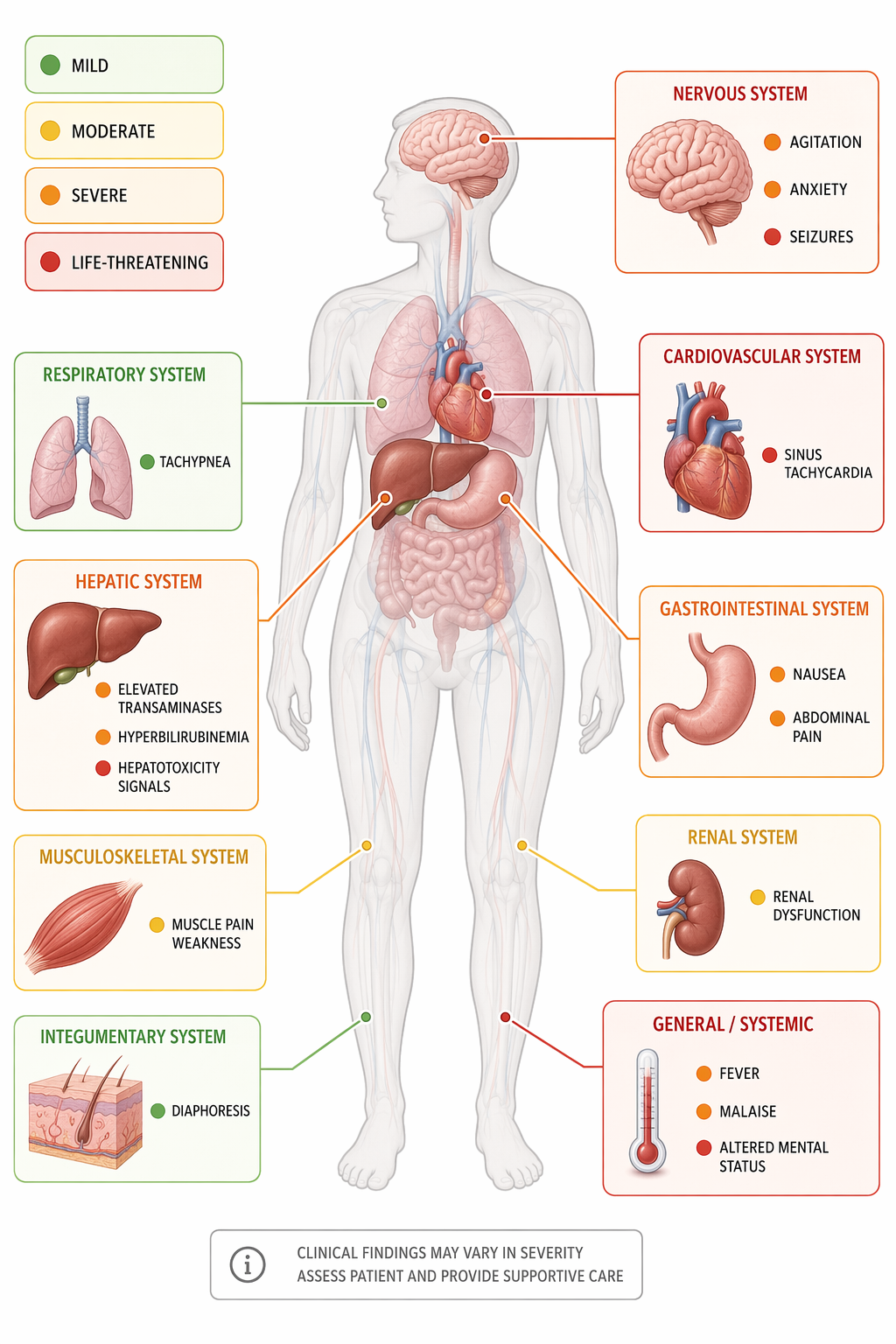
The bedside pattern is usually not dramatic when kratom is the only exposure. Single-substance cases are most often described as mild to moderate and self-limited, with sinus tachycardia, nausea, abdominal pain, anxiety, and agitation making up much of the clinical picture. In survey and observational data, about 19.3% of past-year users reported any adverse effect, 78.1% of users reporting negative reactions described stomach problems, and one review found the odds of sinus tachycardia were 8.6 times higher among kratom users than controls [2].
| System | Common acute findings | Why it matters in the ED |
|---|---|---|
| Cardiovascular | Sinus tachycardia, sometimes palpitations or hypertension [2] | Persistent tachycardia plus co-ingestant concerns should widen monitoring. |
| Gastrointestinal | Nausea, abdominal pain, vomiting; stomach complaints are common among users reporting negative reactions [2] | Fluid loss or abdominal tenderness should stop you from treating this as a trivial exposure. |
| Neuropsychiatric | Anxiety, agitation, restlessness; suspected suicide attempts appear more often in multiple-substance exposures [1] | Agitation changes disposition because it raises the odds of co-ingestion, unsafe discharge, or need for observation. |
| Neurologic | Seizures are the most consistent serious signal in confirmed mitragynine-only cases [3] | Any seizure pushes the case out of the mild bucket until other causes are excluded. |
| Hepatic | Less common liver-injury signals and transaminase elevation | Check liver tests when symptoms, jaundice, or a prolonged course make injury plausible. |
Why Severe Cases Look Worse
The cases that matter most for disposition usually differ from the benign ones in one of three ways: another substance is present, the product is not a plain leaf preparation, or the exposure interacts with the patient’s medications. Smallets et al. found that 91% of fatal cases had at least one confounding substance, and the authors’ ties to TRC Companies should be kept visible when weighing that conclusion against the broader observational literature [3].
That same caution applies to risk communication. The literature summarized in that review placed the estimated death rate for past-year kratom use at 0.30 per 100,000 users, compared with 417 per 100,000 for any opioid use, which argues against treating kratom alone as a common cause of fatal toxicity [3]. But the comparison does not make a given patient safe, because the real-world exposure category is messy: leaf, extract, and semisynthetic 7-OH products are not interchangeable, and poison-center data do not cleanly separate them.
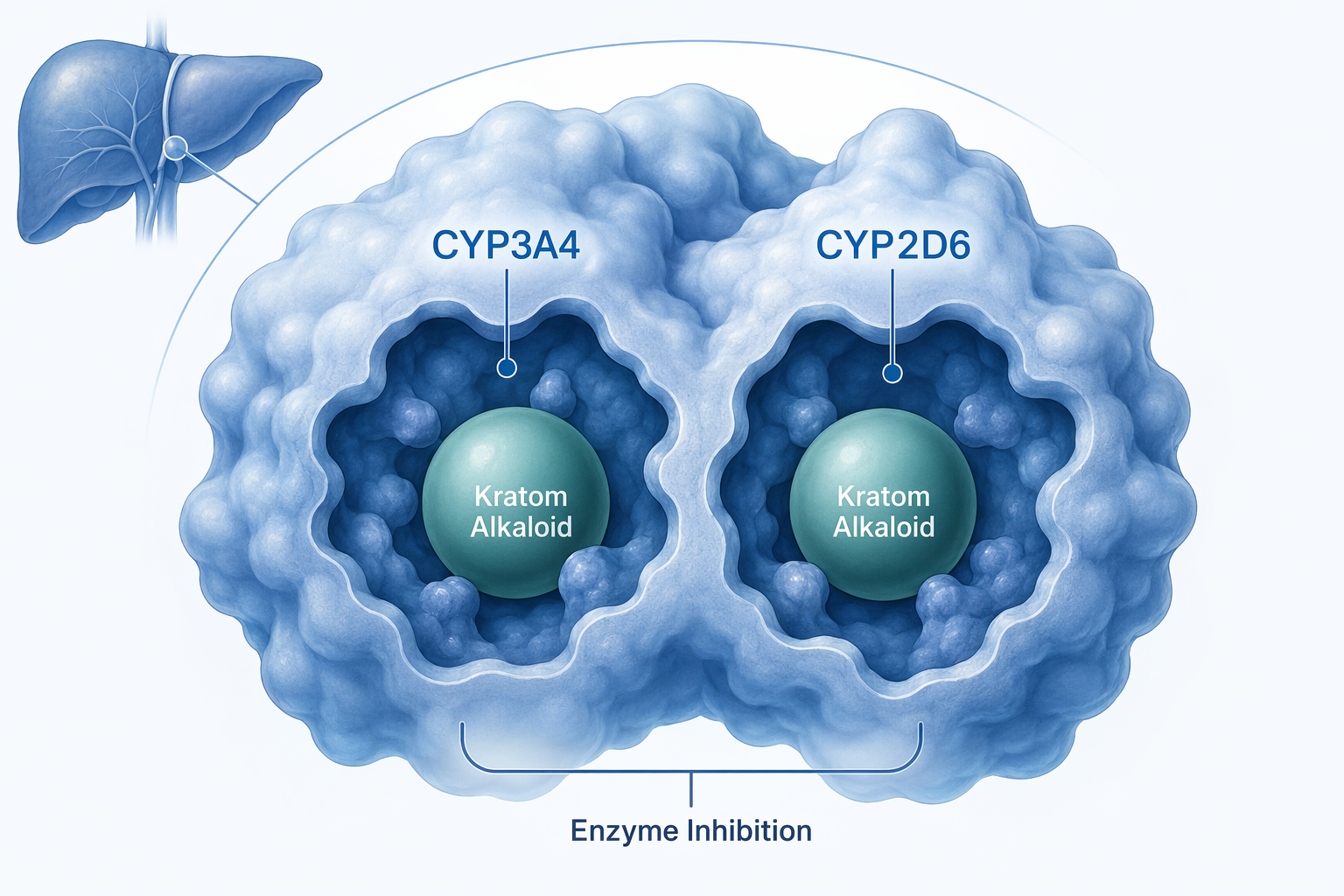
Medication interactions matter because kratom alkaloids inhibit CYP3A4 and CYP2D6. In a clinical study, kratom increased midazolam AUC 1.5-fold, which is enough to make an otherwise ordinary medication list clinically relevant in the ED [4]. That does not prove every exposure will create a dangerous interaction, but it does justify looking for amplified sedation, unexpected toxicity, or reduced clearance when the patient is also taking opioids, benzodiazepines, antidepressants, antipsychotics, or other CYP substrates.
What Management Needs
- Treat the patient, not the label: assess airway, breathing, circulation, mental status, temperature, glucose, and ECG when the presentation is severe or unclear.
- Use benzodiazepines for agitation or seizures, and escalate airway support when mental status or respiration is threatened.
- Ask specifically about co-ingestants, product type, source, extract versus leaf use, and any opioid or sedative exposure.
- Review the medication list for CYP3A4 and CYP2D6 substrates, plus drugs that lower seizure threshold or complicate sedation.
- Consult poison center or medical toxicology early when the history is incomplete, the product is uncertain, or the clinical course is changing.
If the story suggests self-harm or does not fit the exam, psychiatric assessment belongs after stabilization. The CDC data make that a real bedside issue, not a theoretical one, because suspected suicide attempts were more common in multiple-substance exposures [1].
Clinical Bottom Line
Single-substance kratom exposures are usually mild to moderate and often self-limited, but that fact should not flatten triage. The patients who become sick enough to admit, monitor longer, or re-evaluate are usually the ones with co-ingestants, unknown formulations, seizure or agitation, tachycardia that does not settle, suicidality, or a medication list that makes CYP inhibition matter. In the ED, kratom is best treated as an uncertain exposure with an often-benign single-agent phenotype and a much less benign polysubstance phenotype [1][3][4].
References
- CDC MMWR: Increases in Kratom-Related Reports to Poison Centers — NPDS, US, 2015–2025 — Centers for Disease Control and Prevention.
- Frontiers in Pharmacology: The acute adverse health effects of kratom: an evaluation of case reports.
- PubMed Central: An update on the clinical pharmacology of kratom.
- PubMed Central: Kratom use and adverse effects.
Comments
Join the discussion with an anonymous comment.