
A PHI-safe generative AI workflow has to assume that protected health information can escape through more than one door at the same time. It can be present in training data, pulled into a retrieval-augmented generation context window, or emitted in a generated answer. A redaction layer helps with one part of that problem. A business associate agreement helps with another. Neither one proves that the workflow is safe enough to operate in a health system.
The uncomfortable detail is that some of the data forms people treat as “transformed” are still exposure surfaces. AWS’s healthcare architecture guidance states that vector embeddings created from PHI should be treated as PHI and protected with the same encryption and access controls as source records; it also cites research showing up to 92% inversion success from embeddings alone.[1] That finding changes the design conversation. The vector store is not a harmless cache. It is part of the regulated data path.
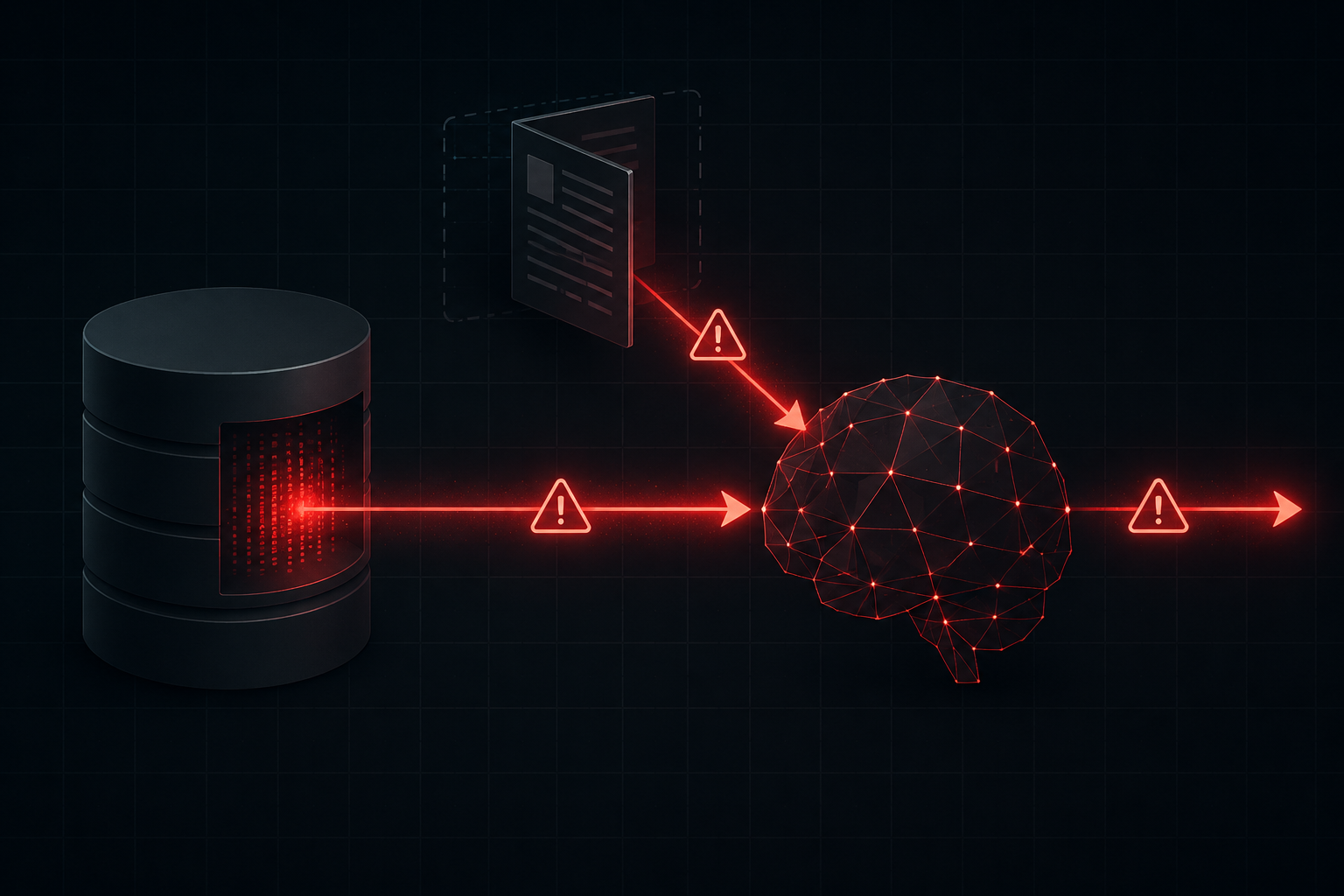
The reference architecture below treats PHI safety as a chain of independently enforceable controls. Each layer can be adopted incrementally, but the mature-state design is not just a vendor platform choice or a model selection exercise. It is a workflow in which prompts, retrieval calls, model answers, guardrail decisions, access records, and audit events can be reconstructed after the fact.

| Layer | Control objective | HIPAA mapping supported by the cited guidance |
|---|---|---|
| 1. Edge protection | Authenticate users, constrain network paths, encrypt traffic, and fail closed before PHI reaches the GenAI workflow. | 45 CFR 164.312(a)(1) access control, identified in AWS guidance as an addressable implementation specification.[1] |
| 2. BAA and platform boundary | Keep workloads inside a HIPAA-eligible environment with contractual and technical risk review. | 45 CFR 164.308(a)(1) risk analysis, as mapped in AWS guidance.[1] |
| 3. Prompt intake and risk classification | Classify whether a request contains no PHI, de-identified data, or PHI requiring isolated handling. | Edenlab describes low, medium, and high prompt-ingestion tiers; this is guidance, not a statutory safe harbor.[2] |
| 4. PHI redaction and metadata-first handling | Prevent raw PHI from entering model pathways when task-scoped codes, aggregates, or FHIR resources are sufficient. | 45 CFR 164.514(a) de-identification is the closest cited mapping for the redaction layer in AWS guidance.[1] |
| 5. Grounded RAG and vector-store protection | Limit retrieval to minimum-necessary context, protect embeddings as PHI, and block ungrounded clinical statements. | 45 CFR 164.312(c)(1) integrity controls, as mapped in AWS guidance.[1] |
| 6. Session isolation | Bind each patient interaction to a unique session context so access, retrieval, guardrail, and output events do not blur together. | Supports access-control and auditability objectives; the specific session-correlation evidence comes from John Snow Labs guidance.[4] |
| 7. Immutable audit and review | Preserve reconstructable evidence of who accessed what, what the model saw, what was blocked, and what was generated. | 45 CFR 164.312(b) audit controls and 45 CFR 164.308(a)(1)(ii)(D) information system activity review, as mapped in AWS guidance.[1] |
Start With The Three Surfaces, Not The Model
The first mistake in many “HIPAA-compliant AI” discussions is to ask whether the model is compliant. HIPAA does not become satisfied because a model endpoint sits behind encryption, or because a vendor signs a BAA. The design question is narrower and more operational: which protected data can enter the workflow, which intermediate systems can retain or infer it, and which generated statements can leave the system.
Training data is the oldest surface. If PHI is used to train or fine-tune a model without the right controls, the risk is memorization and later reproduction. Retrieval windows are the newer operational surface. A RAG system may retrieve a note, discharge summary, medication list, or task-scoped FHIR R4 resource and place it into the model’s working context. Output is the final surface: the generated answer may include PHI, or it may produce an ungrounded clinical statement that creates a different kind of compliance and safety problem.
Those surfaces overlap but do not collapse into one another. A clean training boundary does not prevent a retrieval window from overexposing a chart. A strong redaction filter does not prove that a generated clinical recommendation is grounded in retrieved evidence. A BAA does not tell an investigator which document chunk entered a prompt six months ago.
Layers 1 And 2: Keep The Boundary Boring
Edge protection is the least novel layer, but it is still where the workflow should fail closed. Users authenticate before they reach the GenAI application. Network paths are constrained. Traffic is encrypted. Service-to-service calls are not allowed to drift into unmanaged endpoints. AWS maps edge protection to the access-control requirements of 45 CFR 164.312(a)(1), while treating the implementation details as addressable rather than a single mandated product design.[1]
The platform boundary sits next to that edge. A HIPAA-eligible service and a signed BAA matter because they set the contractual and infrastructure perimeter for PHI processing. They do not decide what a prompt may contain, what a retrieval call may expose, or whether a model answer should be blocked. AWS maps the BAA and platform-selection layer to 45 CFR 164.308(a)(1) risk analysis, which is a useful placement: this is part of risk management, not proof that every downstream workflow is controlled.[1]
As of July 2026, proposed HIPAA Security Rule changes should be handled carefully in architecture documents. The 2026 NPRM has been proposed but not finalized, so references to mandatory MFA or AI-specific risk assessments should be labeled as proposed requirements that may change, not current obligations. A design can prepare for them without writing them into policy as if the final rule already exists.
Layer 3: Classify The Prompt Before It Becomes A Prompt
Prompt intake is where many workflows quietly lose control. By the time raw clinical text is already inside a model request, the organization is relying on downstream filters to compensate for an upstream design decision. Edenlab’s healthcare LLM guidance describes a three-tier prompt-ingestion model: low-risk prompts with no PHI move through standard inference, medium-risk prompts with de-identified data use grounded RAG with blocking-mode guardrails, and high-risk prompts require an isolated HIPAA-eligible environment with a BAA.[2]
That tiering is vendor guidance, not a universal legal standard. Its practical value is that it forces the workflow to make a decision before model contact. A request to summarize a public drug monograph is not the same as a request to draft patient-specific discharge instructions. A request that includes a chart excerpt should not be routed through the same path as a prompt that contains no PHI.
The policy proxy belongs here. It should inspect the request, identify whether PHI is present, assign the risk tier, enforce the user’s role and purpose of use, and decide whether the workflow can continue, must redact, must use isolated infrastructure, or must stop. This is where “minimum necessary” starts to become executable rather than decorative.
Layer 4: Redaction Helps, But Metadata-First Design Helps More
PHI redaction should be treated as a control with measurable residual risk, not as a magic eraser. Censinet cites published testing in which hybrid PHI sanitization combining automated techniques such as Regex and BERT-based models with human oversight reached 99.4% precision, with three instances of PHI leakage across 500 clinical notes.[3] That is a useful result precisely because it is not perfect. It gives architects a way to talk about leakage as an operational risk that needs containment before and after redaction.
For many tasks, the better design is to avoid sending raw PHI into the model path at all. Edenlab’s metadata-first principle is that models work on codes, aggregates, and task-scoped FHIR R4 resources, while a policy proxy enforces minimum-necessary access, redacts sensitive strings, and blocks risky egress.[2] The important distinction is that redaction removes or masks sensitive strings after they appear; metadata-first design asks whether the string had to appear in the model path in the first place.
A hypothetical example makes the difference visible. If a care-management assistant only needs to identify whether a patient meets a follow-up criterion, it may not need the full note text. It may need a coded diagnosis, a recent encounter type, and a task status. If the workflow sends the whole note anyway, the system has increased exposure before the model has done any useful work.
AWS maps the PHI redaction layer to 45 CFR 164.514(a) de-identification.[1] That mapping should not be overread. De-identification is difficult in clinical text, and many generative AI workflows use patient-specific context by design. The safer architectural reading is that redaction and de-identification support exposure reduction, while access control, retrieval scoping, guardrails, session isolation, and audit controls still have to do their own work.
Layer 5: Grounded RAG Must Control Both Retrieval And Output
RAG is often introduced as a safety improvement because it grounds model answers in approved sources. That is true only if retrieval is scoped and the grounding check is enforced. Otherwise, RAG becomes a convenient way to package PHI into context windows and hand it to a model that may not need all of it.
The retrieval layer should apply the same minimum-necessary logic as the prompt layer. It should restrict which records, document chunks, FHIR resources, or embeddings can be retrieved for the user, the patient interaction, and the task. If embeddings were created from PHI, they need PHI-grade encryption and access controls because the embedding itself can carry recoverable information.[1]
The output side needs a separate control. AWS describes grounding checks in blocking mode, where ungrounded clinical statements are treated as compliance violations rather than merely quality issues; responses below a grounding threshold, such as less than 85% confidence, are blocked rather than only logged.[1] The exact threshold is a policy and validation decision, but the architectural point is clear: the guardrail is in the path of the answer, not sitting beside it as an after-action report.
This is the layer most likely to expose the gap between a demo and a production workflow. In a demo, a generated answer that includes an unsupported clinical statement is a model-quality defect. In a production health-system workflow, that same answer may become a documentation, care, or privacy incident. Blocking mode gives the system a way to fail closed.
Layer 6: Session Isolation Makes The Incident Reconstructable
A session identifier can look like administrative plumbing until something goes wrong. Then it becomes the difference between a coherent investigation and a pile of logs that almost line up. John Snow Labs describes the use of a unique session identifier per patient interaction as an audit correlation key across CloudTrail events, guardrail evaluations, and data access records, supporting end-to-end audit trail reconstruction with six-year retention and cryptographic verification.[4]

The session boundary should be created before retrieval, maintained through guardrail evaluation, and carried into the generated answer record. It should bind together the authenticated user, patient context, task, prompt classification, retrieval set, model endpoint, guardrail result, output disposition, and reviewer action when human review is required. If an analyst later asks why PHI appeared in a retrieval window, the system should not require guesswork across unrelated event streams.
Session isolation also matters for agentic designs, where a system may take multiple tool calls or retrieval steps inside one user-facing request. A broader governance pattern for this problem is covered in A Practical Governance Blueprint for Agentic AI in Healthcare, but the practical requirement is simple: the workflow should not let one patient interaction bleed into another, and it should not let an autonomous step escape the audit boundary that governed the original request.
Layer 7: Audit Controls Are Part Of The Product, Not A Report Export
Immutable audit is the layer that proves whether the others operated. AWS maps audit logging to 45 CFR 164.312(b) audit controls and 45 CFR 164.308(a)(1)(ii)(D) information system activity review.[1] In a generative AI workflow, that means more than recording that a user clicked a button. The audit trail needs to show what data entered the system, what the model was allowed to see, what the system blocked, what it generated, and who reviewed or released the result.
The audit event schema should include the prompt risk tier, redaction outcome, retrieval identifiers, embedding-store access, grounding score or pass-fail result, output filter decision, session identifier, user identity, patient-context reference, and timestamp. It should also preserve negative events: blocked egress, failed grounding, denied retrieval, attempted access outside scope, and redaction failure. Those events are often the ones that show the control worked.
This is also where vendor guidance needs disciplined reading. AWS, Edenlab, John Snow Labs, and Censinet each provide useful architecture patterns or reported testing, but vendor-published material can slide from “possible on this stack” to “reference standard” if it is copied too casually. The safer move is to extract the control objective, map it to the organization’s environment, and test whether the evidence would satisfy an internal privacy, security, and clinical governance review.
Adopt The Layers In The Order That Reduces Exposure Fastest
The seven-layer design is a mature-state architecture. Most organizations will not implement every layer perfectly on the first release, and pretending otherwise encourages paper controls. The adoption path should close the largest exposure gaps first while preserving the ability to investigate from day one.
- First, establish the edge, platform boundary, and audit spine so no GenAI workload processes PHI outside known access, contract, and logging controls.
- Second, add prompt classification and metadata-first routing so raw PHI does not enter model pathways when codes, aggregates, or task-scoped resources are enough.
- Third, protect retrieval and vector stores as regulated data paths, including encryption, access control, and minimum-necessary retrieval.
- Fourth, put grounding and output checks in blocking mode for clinical statements that cannot be supported by the approved context.
- Fifth, tighten session isolation so every patient interaction can be reconstructed across prompt, retrieval, guardrail, output, and review events.
That order is not the only possible rollout. A health system with an existing mature audit platform may start by hardening RAG and redaction. Another may need to stop unmanaged prompt entry before it does anything more ambitious. The priority is to avoid building a polished assistant whose most important safety evidence exists only in policy language.
PHI-safe GenAI is a workflow property, not a model property. The organization should be able to prove which data entered the system, what the model was allowed to see, which controls blocked or transformed the request, what was generated, and who reviewed it. That is the standard that will matter to the CISO, the privacy officer, the analyst reconstructing logs, and the informatics lead explaining the retrieval window after the fact.
References
- Building a HIPAA-ready generative AI architecture for healthcare on AWS, AWS Healthcare Architecture Guide, 2026.
- Best Practices for HIPAA Compliant AI & LLMs in Healthcare, Edenlab.
- AI Risk Management for HIPAA Privacy Rule Compliance, Censinet.
- How Generative AI Lab Delivers Complete Visibility and Control for HIPAA-Compliant AI Workflows, John Snow Labs.
Comments
Join the discussion with an anonymous comment.