
The phrase machine learning and healthcare now covers two very different clinical realities. In one, a model looks at a bounded input, such as retinal photographs or mammography images, and produces a narrow output that can be validated against a defined endpoint. In the other, a general-purpose system is asked to reason across symptoms, histories, missing data, and uncertain next steps. In 2026, the evidence is much stronger for the first reality than the second.
That distinction is not semantic. The Stanford-Harvard ARISE Network’s 2026 synthesis reports 96% accuracy for diabetic retinopathy detection and 90–92% sensitivity for breast cancer screening in bounded tasks, while also finding that model accuracy can fall by more than a third when the task framing moves away from the training distribution or requires handling uncertainty.[1] A broad review of clinical AI literature, meanwhile, reports that generative AI systems average roughly 50% diagnostic accuracy in meta-analyses, comparable to non-expert clinicians and below specialist performance.[2]
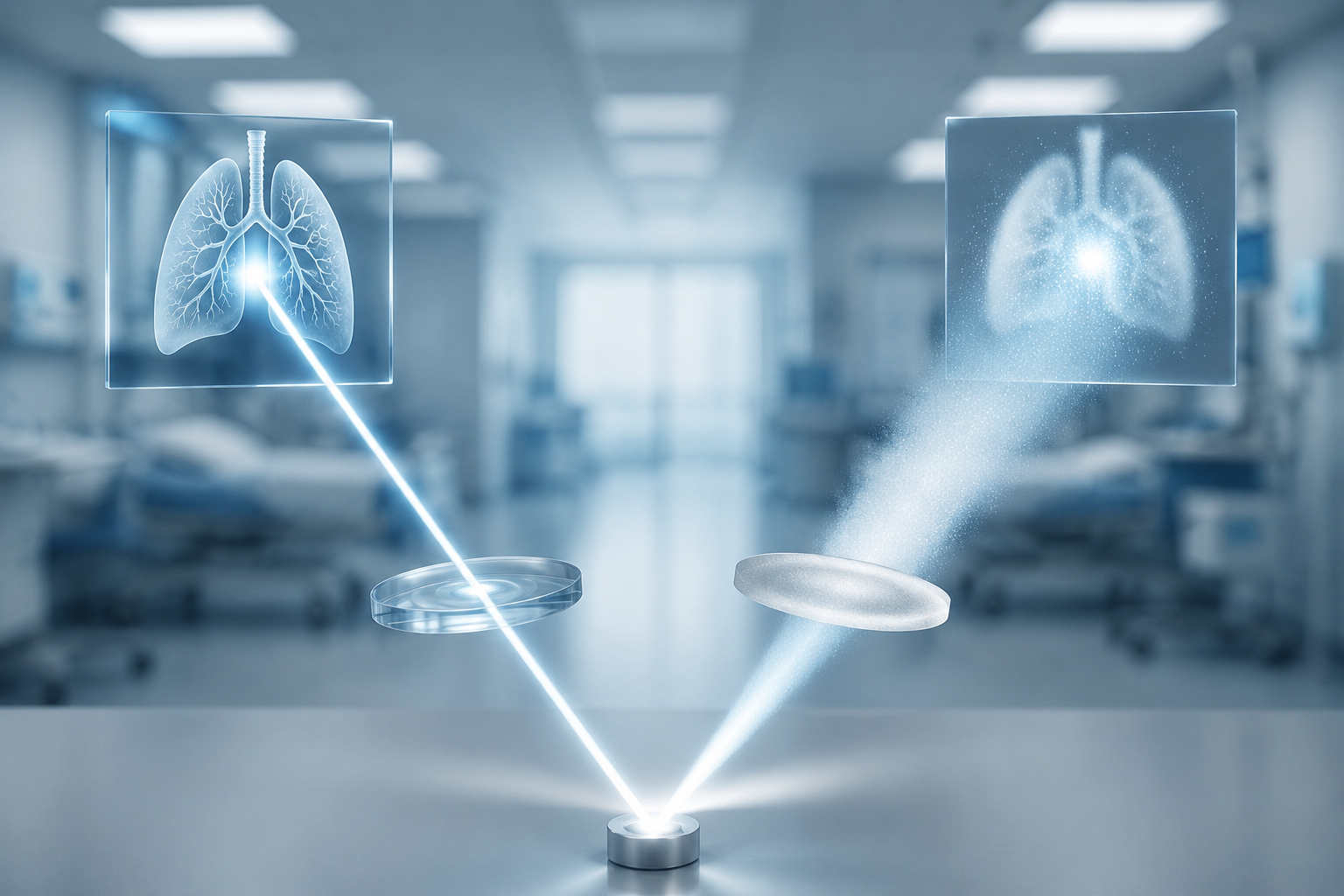
The useful question, then, is not whether AI works in medicine. It is which task was tested, on what data, with what output, in which population, and what a clinician is expected to do with the result.
The Evidence Is Strongest Where the Job Is Narrow
The best-performing clinical machine learning systems tend to have a modest job description. They do not “diagnose the patient” in the broad sense. They classify an image, flag a pattern, estimate risk over a defined time horizon, or prioritize a queue for review. The input is constrained. The output is constrained. The clinical action is usually constrained as well.
That is why diabetic retinopathy screening is such an instructive example. A model trained and validated on retinal images is not being asked to reconcile a patient’s full metabolic history, medication adherence, kidney function, visual symptoms, and social barriers. It is being asked to detect image features associated with a defined screening target. A 96% accuracy figure in that setting is meaningful, but its meaning stays inside the frame of the task: the image type, disease definition, validation population, and referral threshold.[1]
Breast cancer screening sits in a similar category. Reported sensitivity of 90–92% is not a generic claim that AI “finds cancer.” It is evidence that, in a specific screening context, a model can identify suspicious imaging patterns at a level that compares favorably with specialist performance.[1] The operational consequence can be substantial: fewer missed findings, different triage of images, or more consistent second reads. But the claim still depends on the screening population, imaging protocol, disease prevalence, and how discordant AI-human reads are handled.
| Clinical AI claim | What the evidence actually supports | What it does not automatically support |
|---|---|---|
| Diabetic retinopathy detection reaches 96% accuracy | A bounded image-based screening task can perform very well under the tested conditions | A general claim that AI can manage diabetic eye disease across settings |
| Breast cancer screening sensitivity reaches 90–92% | A model can detect suspicious imaging patterns in a defined screening workflow | A claim that AI replaces specialist judgment or downstream diagnostic workup |
| Deterioration alerts can warn earlier than standard alerts | A risk model may surface physiologic change before conventional thresholds fire | A guarantee that earlier warning improves outcomes without workflow response |
| Generative AI averages roughly 50% diagnostic accuracy | General-purpose diagnostic reasoning remains brittle across heterogeneous tasks | A universal failure rate for every specialty, prompt, or use case |
The same discipline applies to hospital deterioration models. Compilations of 2026 healthcare AI statistics, cross-referenced with clinical AI literature, report that early warning systems can predict patient deterioration 8–24 hours before standard clinical alerts in hospital settings.[3][2] That is a clinically important window only if someone is listening, has authority to act, and can distinguish useful signal from alert fatigue. An earlier warning that waits in an inbox is not the same thing as an earlier intervention.
FDA Clearances Show Where Products Cluster, Not Where Outcomes Are Proven
Regulatory clearance counts are often used as shorthand for maturity. They are better read as a map of where AI products have found clear, reviewable tasks. By May 2025, about 1,250 AI/ML-enabled medical devices had been cleared, and roughly 76% were in radiology.[3] That concentration makes sense. Radiology provides digitized inputs, repeated pattern-recognition tasks, structured comparison against human interpretation or follow-up, and workflows where triage or second-read support can be specified.
The clearance landscape should not be mistaken for outcome evidence. A device may be cleared to assist with image analysis, prioritization, measurement, or detection; that does not answer whether patient outcomes improve, whether downstream testing increases, or whether performance holds in a hospital whose scanners, protocols, case mix, or staffing patterns differ from the validation environment. Clearance tells us that a defined product met a regulatory pathway for a defined use. It does not convert all adjacent uses into evidence-based practice.
This is where narrow models deserve both respect and surveillance. Specificity is a strength because it limits the number of ways a system can be wrong. It is also a vulnerability because the model may have learned the local texture of a dataset: the scanner, the acquisition protocol, the disease mix, the documentation pattern, or the referral population. When those conditions shift, performance can shift too. A narrow model is easier to evaluate than a general one, but it is not automatically safe.
Generative AI Fails in a Different Way
Generative AI systems enter the clinical conversation with a different promise: not just pattern recognition, but synthesis. They can summarize notes, draft messages, explain possibilities, and produce diagnostic suggestions in fluent language. That fluency is useful in some administrative and communication tasks. It also creates a diagnostic hazard, because coherent text can look like clinical reasoning even when the system has not anchored its answer in the right facts.
The roughly 50% diagnostic accuracy figure from meta-analyses should be read carefully. It aggregates across varying clinical tasks, specialties, prompts, and difficulty levels; it is not a single universal operating characteristic.[2] Still, it is a useful warning against importing credibility from image classifiers into open-ended diagnostic work. A system that performs well on a board-style vignette may not perform the same way when the medication list is incomplete, the chief complaint is vague, the timeline is contradictory, and the next question matters more than the final answer.
The Stanford-Harvard synthesis makes the mechanism clearer: accuracy drops by more than a third when task framing deviates from the training distribution or requires managing uncertainty.[1] In clinical terms, that is not an edge case. Uncertainty is routine. The first presentation is incomplete, the patient’s account changes, prior records are missing, test results arrive asynchronously, and a reasonable clinician often needs to decide what not to conclude yet.
The Testing Environment Is Often Cleaner Than the Clinic
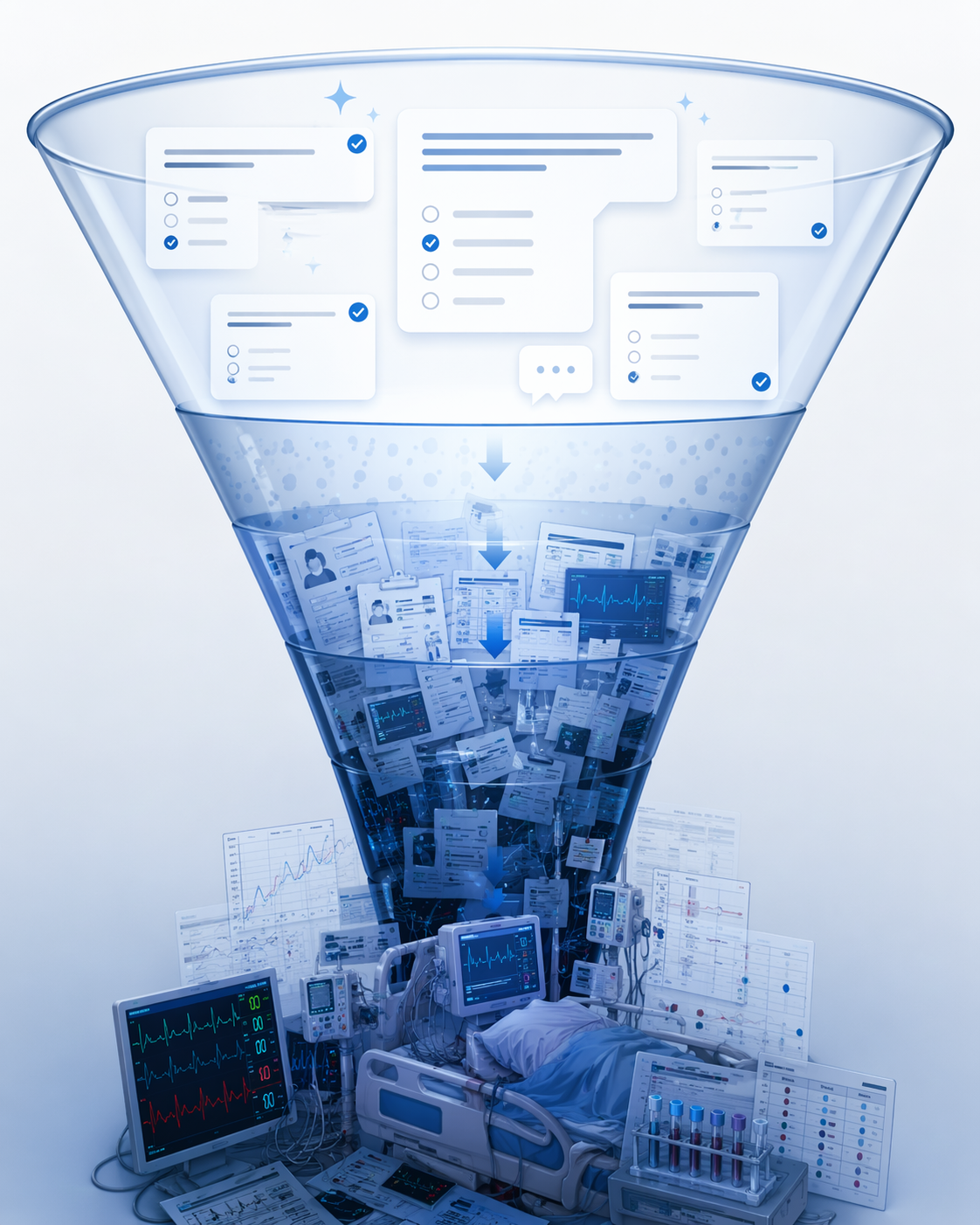
A large part of the performance divide comes from how systems are evaluated. The clinical AI review reports that fewer than 5% of published clinical AI studies measure performance on real patient data, while nearly half use exam-style questions.[2] Exam questions are not worthless. They can test retrieval, pattern recognition, and some forms of reasoning. But they remove much of the work that makes clinical diagnosis difficult.
A vignette usually tells the model which facts matter by including them. A chart does not. A multiple-choice question limits the answer space. A clinic visit expands it. An exam stem rarely asks who will call the patient, whether the test can be done today, whether the result will return after discharge, or whether the apparent diagnosis depends on a medication reconciliation that no one has completed.
This matters because evaluation quality can make brittle systems appear mature. If a generative model is tested on clean, self-contained questions, the study may measure medical knowledge more than clinical performance. If it is tested on retrospectively selected cases, the result may not capture the interruptions, missingness, and handoffs of live care. If the endpoint is whether the correct diagnosis appears somewhere in a list, the study may not measure whether the system helps a clinician make the next safe decision.
Human Response Is Part of the System
Clinical AI is not only the model. It is the model plus the interface, the alert, the explanation, the human reviewer, the escalation path, and the organizational expectation around use. A technically strong output can fail if it arrives too late, too often, or without a clear action. A technically weak output can become dangerous if it is framed with too much authority.
The Stanford-Harvard synthesis reports over-reliance in trials where clinicians followed incorrect AI recommendations even when errors were detectable, worsening decision accuracy.[1] That finding should make health systems cautious about any deployment that treats clinician oversight as a magic safeguard. Oversight is work. It requires time, domain knowledge, visible uncertainty, and permission to disagree with the system.
This is especially important for generative AI because its outputs are linguistically persuasive. A probability score that says a mammogram needs review invites one kind of response. A paragraph that explains why a patient “likely has” a condition invites another. The second may feel more like a colleague than a device, even when the evidentiary basis is weaker.
Adoption Pressure Is Real, but It Is Not Evidence
Health systems are not waiting for perfect evidence. A Fierce Healthcare report citing Eliciting Insights found that 75% of U.S. health systems use or plan to use an AI platform in 2026.[4] That figure is useful for understanding organizational pressure: leaders are being asked to evaluate tools now, often across documentation, operations, imaging, triage, patient communication, and decision support.
But adoption and effectiveness are different claims. A health system may adopt AI to reduce documentation burden, improve scheduling, support coding, prioritize imaging, or test a diagnostic assistant. Those uses have different risk profiles and should not be collapsed into one maturity story. The existence of an AI platform in a hospital does not tell us whether a diagnostic model improves patient outcomes, whether a summarization tool preserves key negatives, or whether an alert changes clinician behavior in a beneficial way.
How to Read the Next Clinical AI Claim
The most useful evaluation habit is to make the claim smaller before judging it. If a vendor, paper, or executive presentation says an AI system “improves diagnosis,” the first move is to identify the actual unit of work. Is the model detecting an image feature, ranking a differential, summarizing a chart, predicting deterioration, drafting a message, or recommending treatment? Those are not interchangeable tasks.
- Input: What data did the model see — image, waveform, structured EHR fields, free-text notes, patient message, or a curated vignette?
- Output: Did it produce a classification, risk score, ranked list, free-text explanation, recommendation, or autonomous action?
- Population: Was it tested on the patients, devices, sites, and disease prevalence where it will be used?
- Comparator: Was performance compared with specialists, non-expert clinicians, usual care, or exam-answer keys?
- Workflow: Who receives the output, when do they receive it, and what are they expected to do next?
- Monitoring: What happens when the patient mix, documentation pattern, scanner, protocol, or clinical practice changes?
A strong answer does not have to be glamorous. “This model flags retinal images for referral in adults screened under these conditions, with this threshold, reviewed through this workflow, and monitored for drift” is a more credible clinical statement than “AI detects disease.” The narrower sentence gives a clinician something to verify and a patient something to be protected by.
The same standard should be applied to generative systems, with extra attention to uncertainty. If the tool is being used to draft a differential diagnosis, ask whether it was tested on real patient records or exam-style prompts. If it is summarizing charts, ask whether omissions were measured, not just whether the summary sounded plausible. If it recommends next steps, ask whether clinicians become more accurate with it, not merely whether the model can produce an impressive answer on its own.
The 2026 Position
Machine learning has earned a place in healthcare where the clinical problem is bounded, the validation is relevant, and the workflow role is explicit. Image-based screening, selected early warning systems, and other repeated pattern-recognition tasks can reduce burden and improve consistency when they are deployed with monitoring and clear human responsibility.
General-purpose generative AI should not inherit that credibility simply because it shares the AI label. Its diagnostic performance remains heterogeneous, its average accuracy in meta-analytic evidence is modest, and its weaknesses emerge precisely where clinical care is least tidy: uncertainty, missing information, changing context, and multi-step decisions.
The practical stance is neither rejection nor enthusiasm. Believe the claim that matches the evidence. Trust the bounded model only inside its boundary. Treat fluent diagnostic language as a hypothesis generator until real-patient testing, clinician performance data, and post-deployment monitoring show otherwise.
References
- The State of Clinical AI (2026), Stanford-Harvard ARISE Network, 2026.
- Artificial intelligence in healthcare and medicine: clinical applications, therapeutic advances, and future perspectives, PMC, 2025.
- AI in Healthcare Statistics 2026: 80+ Key Data Points, Uvik Software.
- 75% of US health systems use, plan to use an AI in 2026: survey, Fierce Healthcare.
Comments
Join the discussion with an anonymous comment.