
Before starting levetiracetam, the question is not whether an algorithm can sound convincing. It is whether it can help with a decision that patients and clinicians already have to make under pressure: is this person likely to become seizure-free on this medication, or are months being spent on a treatment that will not work?
That distinction matters for the phrase levetiracetam for epilepsy prevention. In this evidence base, levetiracetam is being considered for seizure control in people who already have epilepsy, not for primary prevention of developing epilepsy. Machine learning studies are asking whether pretreatment or early-treatment data can predict antiseizure medication response, not whether levetiracetam prevents epilepsy from arising in the first place.
The clinical need is real. Across the epilepsy treatment literature summarized in the available studies, only about 39% to 57% of newly diagnosed patients become seizure-free on their first antiseizure medication, and 30% to 40% eventually develop drug-resistant epilepsy.[1] Those numbers explain why prediction is attractive. They do not, by themselves, prove that the current models are ready to guide prescribing.
What The Small Levetiracetam Studies Suggest
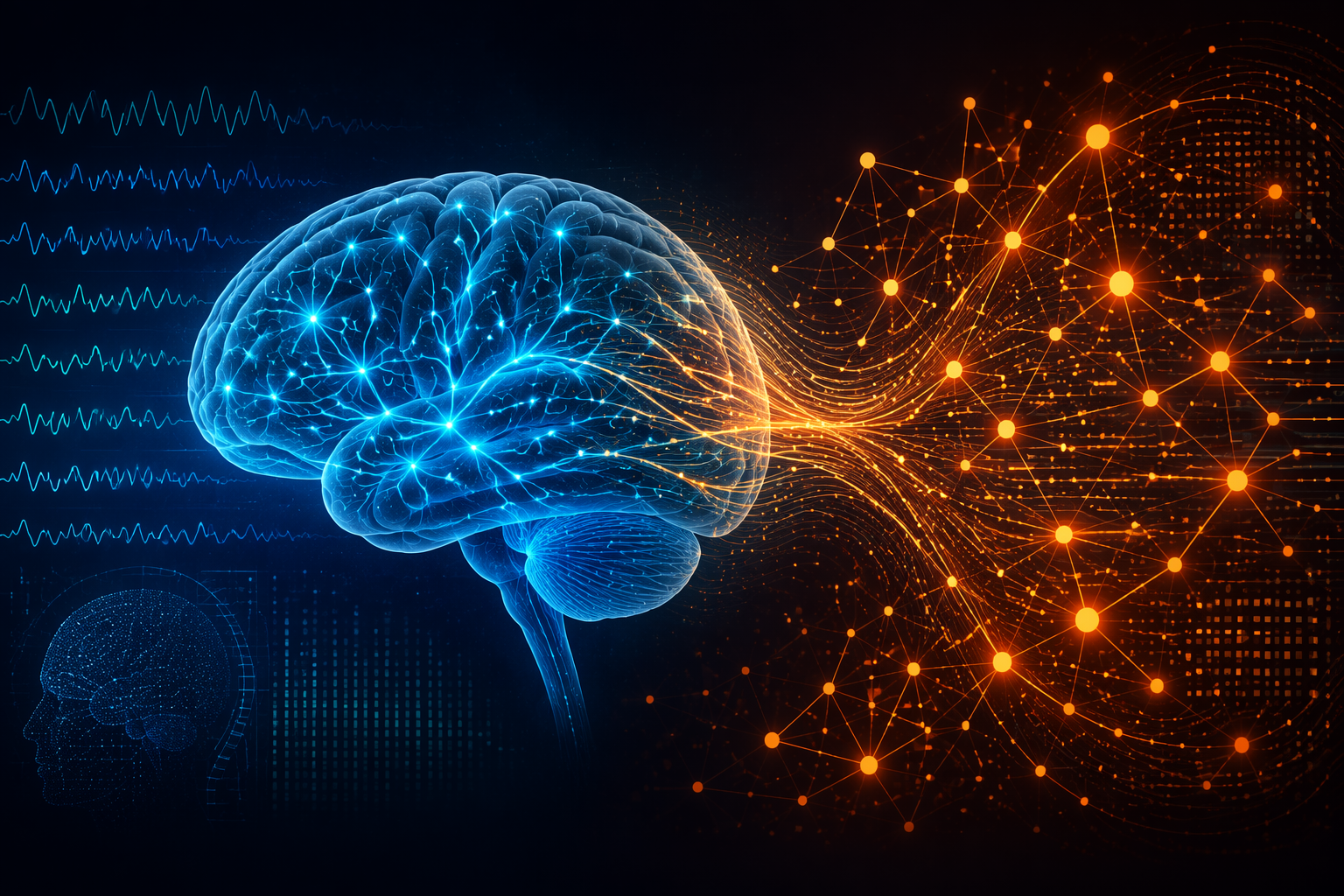
The most striking levetiracetam-specific result comes from Zhang and colleagues, who studied 46 patients with epilepsy and built a support vector machine model using 11 clinical features plus 4 EEG sample-entropy features. In the 10-patient test set, the model reached 90% accuracy and an AUC of 0.96.[2]
Those results are worth attention because the model was not only fed generic demographic variables. The investigators incorporated EEG-derived entropy features, and sample entropy in α-band F4, β-band Fp2 and F8, and θ-band C3 differed significantly between seizure-free and non-seizure-free groups. The β-band feature from the Fp2 channel contributed most heavily to the classifier.[2] That kind of signal has at least a biologically plausible shape: background rhythm complexity may carry information that a routine clinical note does not.
But the same result also shows why antiseizure-medication prediction is so easy to overread. A 90% test accuracy sounds clinical. A 10-patient test set is not clinical proof. One patient classified differently would noticeably change the result. The study makes levetiracetam response prediction plausible; it does not establish that a neurologist should change treatment based on the output.
A separate EEG-based machine learning pipeline in temporal lobe epilepsy took a related but somewhat different approach. It combined pretreatment EEG features with EEG features after 3 months of levetiracetam therapy and reported an AUC of 0.800 in 23 patients.[3] That is not a clean answer to the pretreatment prescribing question, because part of the predictive signal came after treatment had already begun. It is still clinically interesting as a dynamic monitoring concept: early physiologic change may help identify whether the chosen antiseizure medication is on the right track.
| Study | Population and Data | Model Question | Reported Performance | Clinical Interpretation |
|---|---|---|---|---|
| Zhang et al. 2018 | 46 patients; 10-patient test set; clinical variables plus EEG entropy features | Can pretreatment features predict levetiracetam seizure-free response? | 90% test accuracy; AUC 0.96 | Promising proof of concept, but too small for deployment |
| 2021 temporal lobe epilepsy EEG pipeline | 23 patients; pretreatment and 3-month EEG features | Can EEG features support levetiracetam response monitoring? | AUC 0.800 | Suggests dynamic monitoring potential, not a validated pretreatment tool |
| Hakeem et al. 2022 | 1,798 adults across 4 countries; clinical records; 7 antiseizure medications including levetiracetam | Can ML predict antiseizure medication treatment outcome at larger scale? | AUROC values in the 0.50s to 0.60s across 6 algorithms | Best stress test to date; performance remains modest |
Why The Larger Study Changes The Weight Of The Evidence
The most important study for clinical realism is not the one with the highest AUC. It is Hakeem and colleagues’ 2022 JAMA Neurology study, which included 1,798 adults from 4 countries and evaluated 6 machine learning algorithms: a transformer model, support vector machine, logistic regression, multilayer perceptron, random forest, and XGBoost.[1]
Levetiracetam was included, but it was evaluated alongside 6 other mostly older antiseizure medications: phenytoin, valproate, carbamazepine, oxcarbazepine, lamotrigine, and topiramate.[1] That design makes the study more useful for judging whether machine learning can assist antiseizure medication selection in ordinary practice, but less useful if someone wants a definitive levetiracetam-only calculator.
The result was sobering. Across the 6 algorithms, AUROC values were in the 0.50s to 0.60s, meaning performance was only modestly better than chance.[1] That does not erase the smaller EEG findings. It does put them in their proper place. When models move from compact, carefully described datasets to larger, multi-country clinical records, the tidy signal may become diluted by differences in documentation, epilepsy syndrome mix, outcome ascertainment, dosing decisions, comorbidities, and follow-up patterns.
Scale also changes what an error means. In a proof-of-concept paper, a misclassification is a performance statistic. In clinic, it may mean continuing a medication through ongoing seizures, delaying escalation, or steering a patient away from a treatment that might have worked. For a decision support model to justify that kind of influence, it has to add meaningful value over experienced care, not merely produce a mathematically detectable signal.
That bar is high because clinician-guided antiseizure medication care already works for many patients. Chiang and Rao noted in an editorial accompanying the JAMA Neurology work that roughly two-thirds of people with epilepsy achieve seizure control through clinician experience alone.[4] A model that performs in the AUROC 0.50s or 0.60s may be scientifically informative, but it is not yet a prescribing instrument.
The Evidence Gap Is Not Just Algorithm Choice
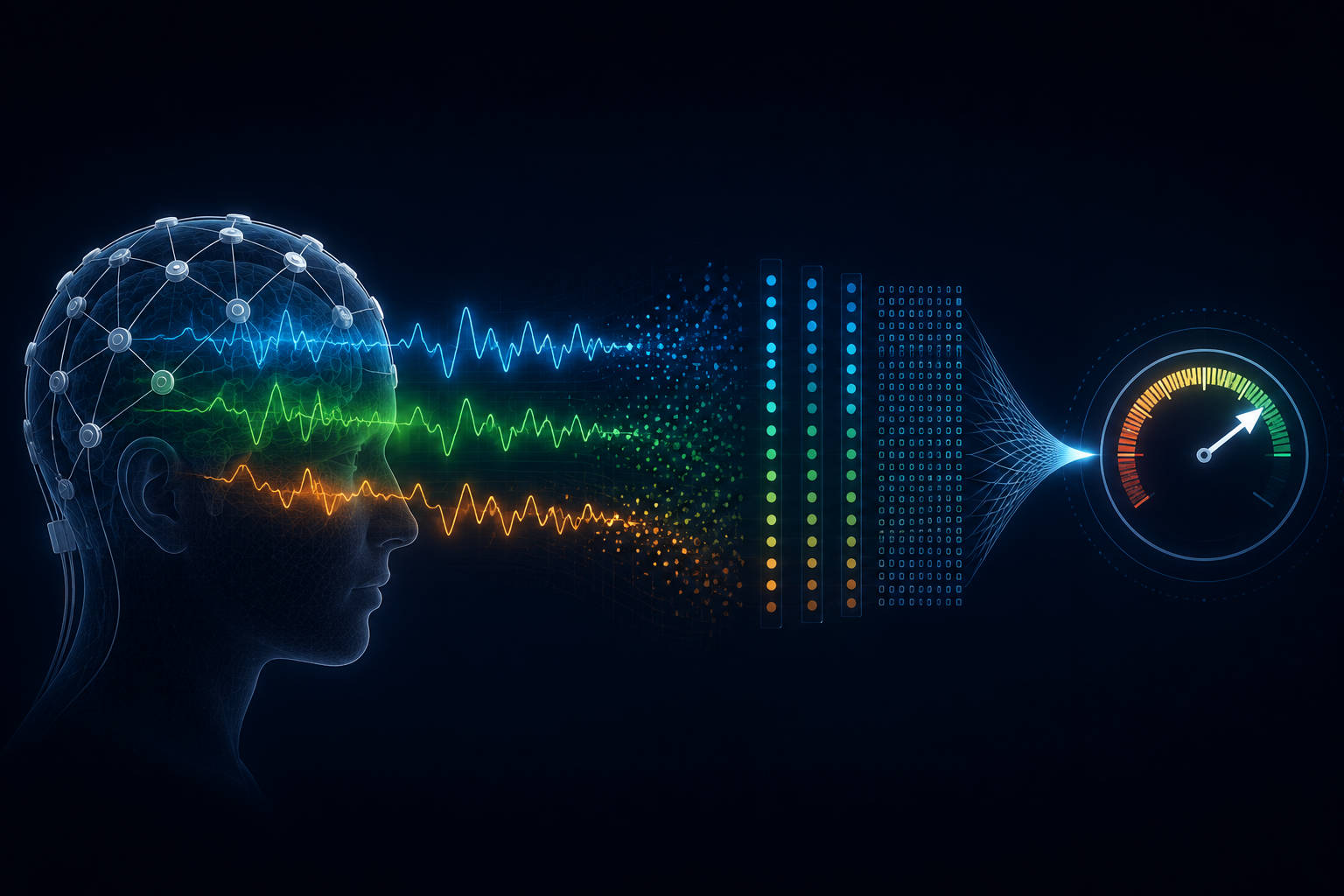
It is tempting to frame the problem as a competition among algorithms: support vector machines versus transformers, EEG classifiers versus electronic health record models. The evidence does not support such a clean hierarchy. The smaller levetiracetam studies used richer physiologic features but had tiny cohorts. The larger study had broader clinical reach but produced modest discrimination. A better algorithm alone may not solve a dataset problem.
The recurring limitations are practical and clinical: retrospective designs, limited cross-institutional validation, underrepresentation of generalized epilepsy and specific epilepsy syndromes, and weak representation of patients with intellectual disability. These are not minor technical footnotes. They are exactly the groups and settings where a model may fail if it has learned the habits of one center rather than the biology of treatment response.
Medication coverage is another constraint. The Hakeem study did not include newer agents such as brivaracetam, cenobamate, or fenfluramine.[1] That does not invalidate the study, but it limits the translation to current prescribing discussions, especially in specialty epilepsy care where newer options may enter the conversation after first-line treatment failure.
The EEG findings remain among the more interesting signals because they point toward measurable brain-state features rather than relying only on labels in a chart. Still, background rhythm entropy being associated with levetiracetam response is not the same as proving that the feature will generalize across EEG machines, montage practices, medication histories, sleep states, and epilepsy syndromes. The next step is not another impressive single-center AUC. It is external validation under conditions that resemble the patients who will actually receive the recommendation.
What Would Have To Be True Before Clinical Use
As of Q3 2026, no AI or machine learning tool for antiseizure medication selection is FDA-cleared or deployed in routine clinical practice anywhere in the world. For levetiracetam response prediction to move from research to care, several conditions would have to be met.
- External validation would need to show stable performance across institutions, countries, EEG acquisition practices, and documentation systems.
- The model would need clinically meaningful lift over usual specialist care, not only statistical performance above chance.
- Epilepsy syndrome representation would need to improve, including generalized epilepsies, focal syndromes, intellectual disability, and patients with complex comorbidity.
- Medication choices would need to reflect contemporary practice, including newer antiseizure medications when they are relevant to the decision being modeled.
- Prospective testing would need to show that using the model improves patient-important outcomes, such as time to seizure control, adverse-effect burden, or avoidance of ineffective treatment trials.
Even if those conditions are met, the output should not behave like an automated prescription. A qualitative study of patients and neurologists found conditional support for machine learning decision support in antiseizure medication selection, but that support depended on transparency, clinician oversight, and preservation of a human-in-the-loop process.[5] That is the right instinct. A model may eventually help organize risk, but the final decision still has to account for seizure type, reproductive considerations, psychiatric history, renal function, drug interactions, adverse-effect tolerance, cost, and patient preference.
Where This Leaves Levetiracetam Prediction
Machine learning has produced plausible signals for levetiracetam response in epilepsy, especially when EEG background features are included. The Zhang study is intriguing because it links clinical data with EEG entropy and reports high test performance, but its 10-patient test set keeps it firmly in proof-of-concept territory.[2] The 2021 temporal lobe epilepsy pipeline adds a useful monitoring angle, but it does not solve pretreatment selection.[3] The largest, most generalizable study gives the most clinically important answer so far: when tested at scale across countries and algorithms, performance remains modest.[1]
So the answer to the practical question is narrow but clear. Machine learning may eventually help personalize levetiracetam selection for seizure control in people with epilepsy. As of Q3 2026, it does not provide a clinically validated prediction for an individual patient, and it should not be used as a routine basis for starting, avoiding, or replacing levetiracetam.
References
- Machine learning for predicting treatment outcomes in patients with epilepsy, JAMA Neurology, 2022, https://pubmed.ncbi.nlm.nih.gov/36036923/
- Prediction of levetiracetam treatment response in patients with epilepsy by machine learning, British Journal of Clinical Pharmacology, 2018, https://pmc.ncbi.nlm.nih.gov/articles/PMC6177722/
- Machine learning-based prediction of levetiracetam treatment response in temporal lobe epilepsy using electroencephalography, PubMed, 2021, https://pubmed.ncbi.nlm.nih.gov/34717224/
- Machine learning for epilepsy treatment: A step forward, but not yet ready for prime time, JAMA Neurology, 2022
- Patient and neurologist perspectives on machine learning clinical decision support for antiseizure medication selection, PubMed, 2025, https://pubmed.ncbi.nlm.nih.gov/41056684/
Comments
Join the discussion with an anonymous comment.