
AI in sexual health and female orgasm research is no longer a blank space, but it is still a very uneven one. A 2025 WHO-associated scoping review of 2,666 studies on AI in sexual and reproductive health found that only 0.4% addressed sexual health, while maternal health, reproductive cancers, and infertility accounted for much larger shares of the literature.[1] That proportion matters because it explains why the evidence arrives as fragments rather than as a mature clinical pathway: one predictive model for sexual satisfaction, one exploratory comparison of chatbots and expert education, one sensor-derived dataset from a commercial vibrator platform.
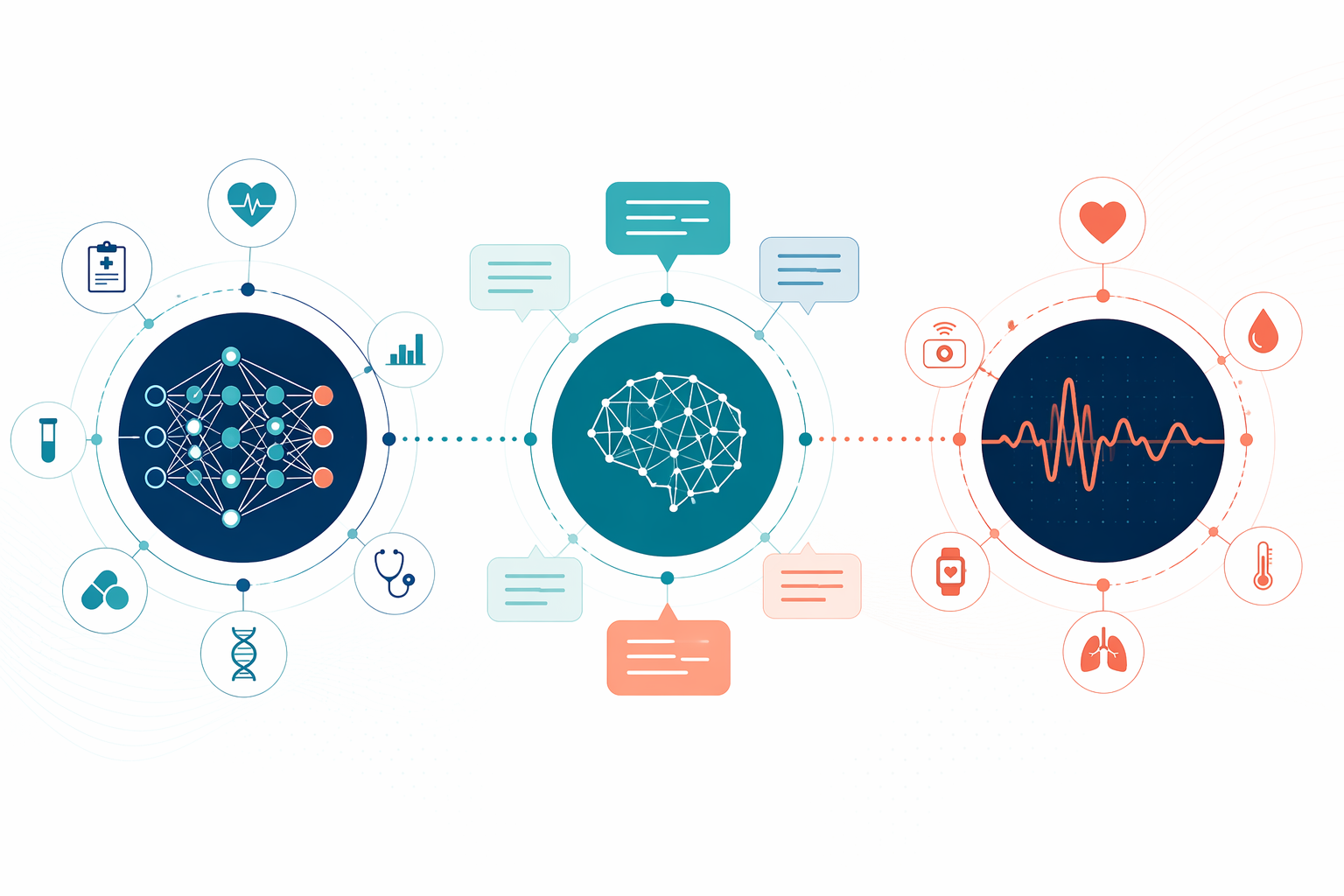
Those fragments are not interchangeable. Predictive machine learning asks whether patterns in survey or clinical variables can classify satisfaction, desire, or dysfunction. Large language models generate answers to sensitive patient questions and have to be judged as educational tools, not diagnostic systems. Biometric sensing turns sexual response into a data stream, which may be useful for physiology research before it is useful for care.
| Use case | AI approach | Core evidence | Sample or evaluation size | Main finding | Validation caveat | Clinical readiness |
|---|---|---|---|---|---|---|
| Sexual satisfaction prediction | Supervised machine learning, including XGBoost | Romero et al. classified female sexual satisfaction | 857 Colombian adults | 84% accuracy; top predictors included sexual functioning, sexual drive, conscientiousness, and sociosexual behavior | Young, geographically narrow, snowball sample; no broad external validation described | Research-useful, not bedside-ready |
| Patient education | Large language models | Kadakia et al. compared ChatGPT, Copilot, and DeepSeek with ISSWSH expert-reviewed content | 12 questions, 2 physician raters | AI responses were rated comparable in accuracy; one rater rated AI responses more relevant | Small exploratory setup; quality ratings do not establish safe individualized advice | Near-term support tool, with clinical guardrails |
| Orgasm physiology research | Biometric sensing and pattern analysis | Lioness platform data analyzed for orgasmic motor signatures | 52 women in the signature analysis; platform reported more than 30,000 orgasms of biometric data | Three motor signatures were described: Wave, Avalanche, and Volcano | Small analytic sample and commercial data context; categories are not universal physiology | Promising research data stream, not clinical classification |
The first split: prediction, education, and measurement
The temptation is to file all of this under sex tech or AI in women’s health. That makes the field easier to market and harder to evaluate. A classifier trained on survey responses, a chatbot answering a question about dyspareunia, and a sensor measuring pelvic floor contractions do not fail in the same way. They do not expose users to the same risks. They also do not need the same next study.
The predictive models are closest to conventional clinical AI evaluation because they have inputs, labels, performance metrics, and the familiar problem of generalizability. The LLM studies are closer to health communication evaluation: relevance, accuracy, readability, omission, and unsafe specificity matter more than a single accuracy score. The biometric work is different again. It is not trying to counsel or diagnose. It is creating measurements in an area where measurement has often been sparse, awkward, or filtered through retrospective self-report.
That separation is the difference between interest and overclaim. A model can be worth studying without being safe to deploy. A chatbot response can resemble expert-reviewed education without becoming clinical advice. A sensor can capture a repeatable-looking pattern without proving a general taxonomy of female orgasm.
Predictive ML: useful signal, narrow evidence
The clearest predictive example is Romero et al.’s 2025 study in Current Psychology, which used XGBoost to classify female sexual satisfaction and reported 84% accuracy in a sample of 857 Colombian adults.[2] The most influential predictors were sexual functioning, sexual drive, conscientiousness, and sociosexual behavior.[2] As a research finding, that is not trivial. It says sexual satisfaction can be modeled from interacting psychological, behavioral, and functioning variables rather than treated as an inaccessible private state.
The performance number is also where caution should start, not stop. The sample was recruited through snowball sampling, had a mean age of 23, and was described as largely heterosexual and highly educated.[2] Those details are not decorative demographics. They shape what the model has had a chance to learn. A young, educated, Colombian sample may contain coherent signals about sexual satisfaction in that population, while still being a poor guide for older women, women in different relationship structures, menopausal patients, patients with chronic pelvic pain, postpartum patients, or populations with different cultural constraints around disclosure.
The top predictors are clinically plausible, but plausibility does not solve transportability. Sexual functioning and sexual drive are already close to the outcome space, so strong predictive value is expected. Conscientiousness and sociosexual behavior may add useful context, but they also raise questions about whether the model is learning stable relationships, local response patterns, or measurement artifacts from self-report instruments. None of that invalidates the study. It means the 84% figure should be read as internal research performance under specific sampling conditions, not as a claim that an algorithm can identify sexual satisfaction across clinical populations.
A clinically meaningful next step would not be another isolated accuracy number. It would be external validation in a deliberately different cohort, with prespecified subgroup analysis and a clear decision context. The model might eventually support research screening, population segmentation, or hypothesis generation. It is harder to justify as an individual patient-facing assessment unless the task, harms, and follow-up pathway are explicit.
What the model does not know
Sexual satisfaction is not a lab value. It is affected by pain, relationship context, trauma history, medication, endocrine status, culture, stigma, safety, identity, and the patient’s own definition of satisfaction. A prediction model trained on survey data can represent only the variables it was given and the population willing or able to answer. In sexual health, missingness is not random in any casual sense. The people least safe disclosing sexual distress may be underrepresented precisely where better care is needed.
That is why predictive ML currently looks more mature as a research instrument than as clinical software. It can help make neglected relationships visible. It should not be allowed to convert a probabilistic classification into a verdict about a patient’s sexual life.
LLMs: education is the plausible near-term use case
Large language models enter female sexual health through a different door: people ask questions they may not want to ask out loud. For clinicians, that creates an obvious use case and an obvious safety problem. A model that can produce clear, nonjudgmental education may lower a barrier to information. The same model can also sound confident while missing red flags, flattening uncertainty, or giving advice that should depend on examination, history, medication review, or trauma-informed care.
Kadakia et al.’s 2026 exploratory study compared ChatGPT, Copilot, and DeepSeek responses to 12 women’s sexual health questions against International Society for the Study of Women’s Sexual Health expert-reviewed content.[3] Two physician raters scored the responses. The AI-generated answers were rated comparable in accuracy to the expert-reviewed material, and one of the two raters rated the AI responses as more relevant.[3]
That is enough to make LLMs worth evaluating for patient education. It is not enough to treat them as autonomous sexual health counselors. Twelve questions and two raters can show feasibility and surface quality; they cannot establish safety across the range of questions patients actually ask. The difficult cases are not only the textbook questions. They are questions wrapped in shame, coercion, pain, medication effects, infection risk, infertility anxiety, relationship pressure, gender dysphoria, past trauma, or fear of dismissal.
The evaluation target also matters. Accuracy comparable to expert-reviewed educational content is a meaningful benchmark for general information. It does not prove that a model knows when to stop answering and refer. In a patient-facing setting, a good answer may need to say less, not more: seek urgent care for certain symptoms, discuss medication changes with a clinician, avoid assuming pain is psychological, or recognize that consent and safety are clinical context, not lifestyle extras.
The pleasure omission problem
The broader literature review by Döring et al. gives the LLM education story a useful complication. In a five-year review of AI and human sexuality from 2020 through 2024, 12 of 14 empirical studies rated AI-generated sexual health information as high quality, but only 2 of 14 covered pleasure-related topics; most focused on risk, dysfunction, or disease.[4] That pattern is familiar in sexual health research. Pleasure is acknowledged as relevant, then quietly displaced by pathology because pathology fits more easily into medical risk frameworks.
For female orgasm research, this matters directly. An LLM can be accurate within the topics it is asked to address and still reproduce a thin version of sexual health if the evaluated content mostly avoids pleasure. A patient who asks about orgasm after childbirth, arousal while taking antidepressants, pain that interrupts pleasure, or never having had an orgasm may need information that is neither disease-only nor wellness fluff. The content has to be clinically careful and explicit enough to be useful.
The near-term role for LLMs is therefore bounded but real. They can draft or deliver plain-language education, help clinicians anticipate common questions, and support access to baseline information on stigmatized topics. The safer deployments will be retrieval-grounded, locally reviewed, clear about limits, and designed to route symptoms or safety concerns to human care. The least defensible deployments will be the ones that turn a pleasant conversational tone into a substitute for clinical judgment.
Biometric sensing: a new data stream, not a universal map
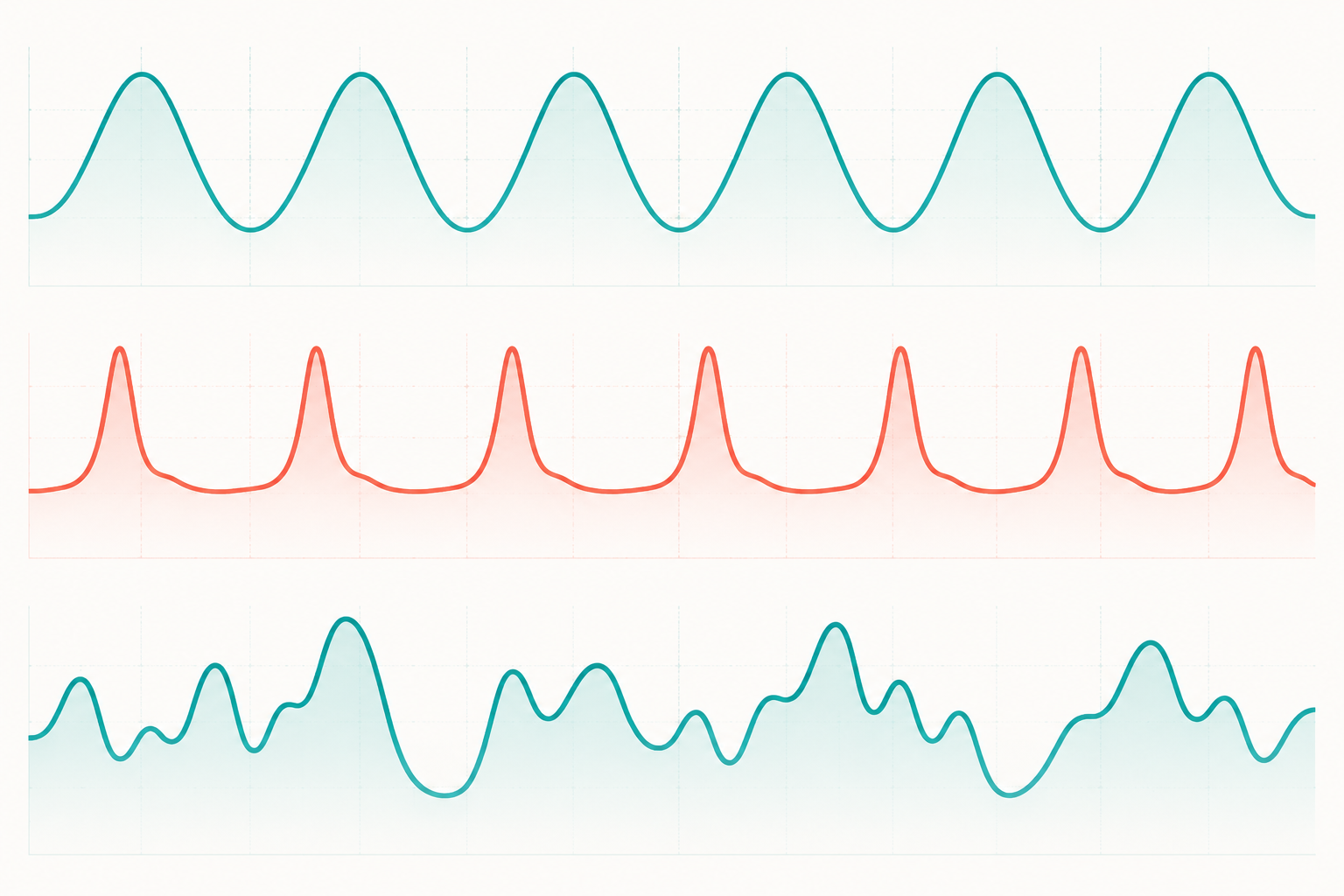
The biometric sensing work is the most visually vivid and the easiest to overread. The Lioness platform combines a smart vibrator with pelvic floor sensors, temperature monitoring, and movement tracking; a 2025 Forbes feature reported that the platform had generated biometric data from more than 30,000 orgasms.[5] In research described in that feature, Dr. James Pfaus of Charles University identified three orgasmic motor signatures from 52 women across multiple sessions: Wave, Avalanche, and Volcano.[5]
This is a meaningful shift in measurement. Much of female orgasm research has depended on recall, questionnaires, laboratory constraints, or partner-reported assumptions. A device that records pelvic floor activity and related signals during real-world use can create a different kind of dataset. It can also support questions that are hard to ask with survey instruments alone: whether patterns are stable within a person, how arousal and orgasm signals vary across sessions, and how subjective reports align or fail to align with physiological measures.
The n=52 signature analysis is not, however, a definitive anatomy of orgasm.[5] It is a small analytic sample drawn from users of a specific commercial device. The people who buy or use that device, consent to data use, and generate analyzable sessions are not a neutral sample of women. Device position, user behavior, physiology, medication, pelvic floor conditions, arousal context, and signal-processing choices could all affect the patterns. The reported signatures are better understood as candidate motor patterns in one dataset than as universal categories.
That distinction is not a dismissal. Sexual physiology research needs better data, and commercial devices may sometimes create datasets that academic labs could not easily assemble. But the evidentiary burden changes when a consumer product becomes a research instrument. Consent, privacy, data governance, representativeness, and analytic transparency become part of the scientific claim. In a stigmatized domain, a biometric record of sexual response is not just another wearable signal.
Clinical readiness depends on the claim being made
The most useful way to assess these applications is to ask what claim each one is trying to support. Predictive ML can reasonably claim that sexual satisfaction or related constructs contain modelable signal in selected datasets. It cannot yet claim broad patient-level validity. LLMs can reasonably claim that they can generate sexual health education that expert raters may judge accurate in small comparisons. They cannot claim to provide individualized care unless the system is constrained, monitored, and embedded in a clinical pathway. Biometric sensing can reasonably claim to produce novel physiological data streams. It cannot claim that a small pattern analysis settles female orgasm physiology.
Those boundaries are especially important because women’s sexual symptoms have often been minimized, psychologized, or overinterpreted. AI can repeat those errors at scale if evaluation is weak. A model that predicts low satisfaction might invite useful follow-up, or it might become another way to label a woman’s experience without listening to her. A chatbot might normalize care-seeking, or it might miss pain, coercion, medication effects, or infection risk. A sensor might give researchers better signals, or it might turn one device’s users into a misleading proxy for women in general.
The evidence is strongest when it stays close to the actual task. Romero et al. supports further predictive modeling work under more diverse validation conditions.[2] Kadakia et al. supports continued testing of LLMs as educational aids, with larger question sets, more raters, and safety-focused evaluation.[3] Döring et al. shows that sexual health AI evaluation should include pleasure, not only risk and dysfunction.[4] The Lioness-associated analysis supports physiological research questions that need replication outside a single small analytic sample.[5]
Taken together, these studies make AI in female sexual health visible without making it clinically mature. The field has credible use cases in prediction, education, and measurement. What it does not yet have is enough external validation, replication, population diversity, or clinically meaningful outcome testing to justify broad readiness claims. That is a workable place to be, as long as the claim stays that narrow.
References
- Mengistu et al., AI in sexual and reproductive health scoping review, npj Women's Health, 2025.
- Romero et al., Machine learning algorithms for predicting female sexual satisfaction, Current Psychology, 2025.
- Kadakia et al., Artificial intelligence and women's sexual health: comparing chatbot responses to expert-reviewed content, Therapeutic Advances in Urology, 2026.
- Döring et al., Artificial Intelligence and Human Sexuality: A Five-Year Review, Current Sexual Health Reports, 2025.
- Lilian Raji, How Lioness Built A Sexual Wellness Brand Selling Women Their Orgasms, Forbes, July 2025.
Comments
Join the discussion with an anonymous comment.