The most useful version of AI for early detection of health scares may not begin with a patient, a clinic, or a laboratory order. It may begin with a composite sample from a sewer line, where fragments of viral genetic material are already accumulating before enough people seek care to move a clinical dashboard.
That is the practical appeal of AI-enhanced wastewater surveillance. It does not ask who has insurance, who took a home test, or which clinician ordered a respiratory panel. It looks for population-level biological signals, then uses computational methods to decide whether the pattern resembles ordinary background noise or the early shape of an emerging pathogen threat.
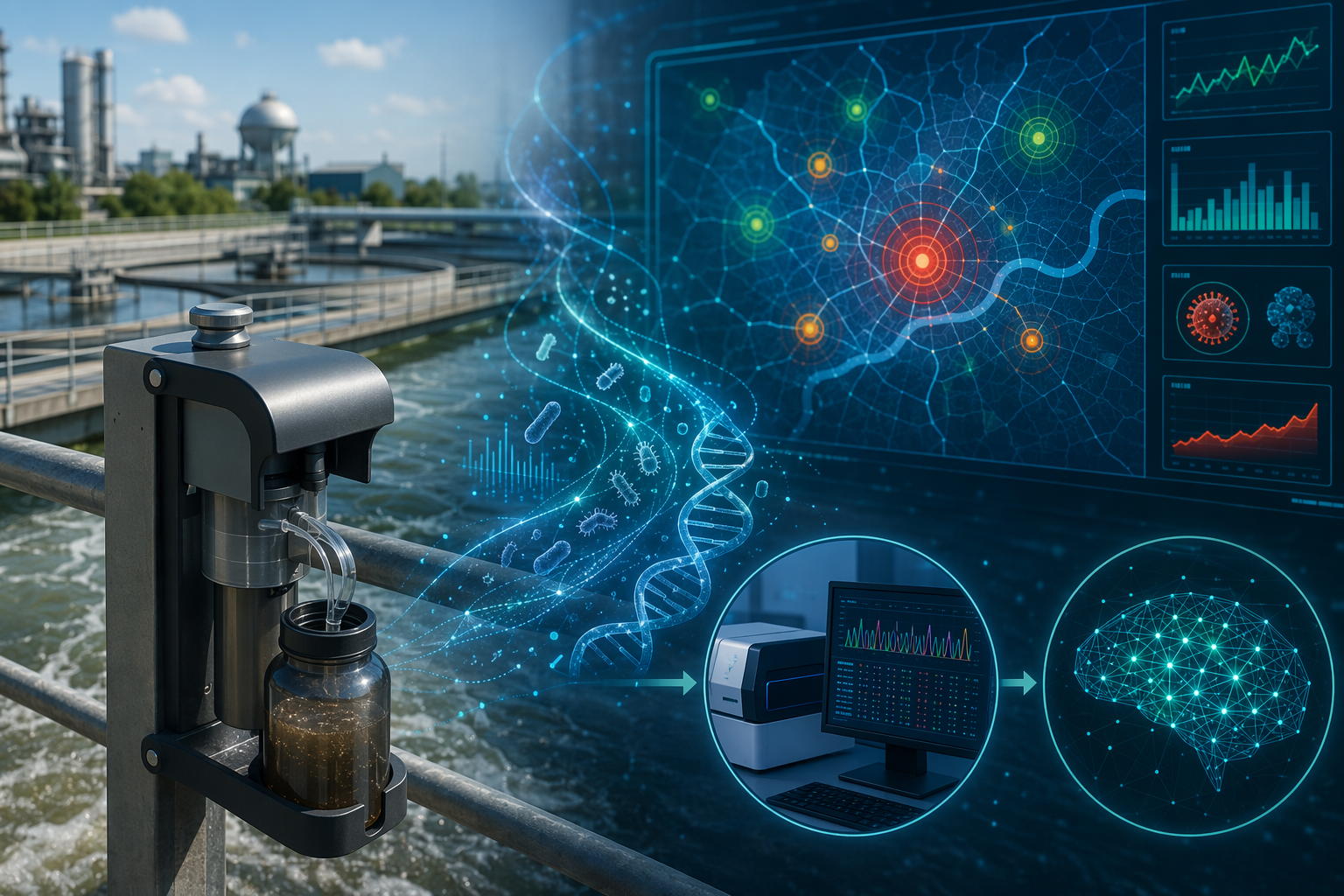
The strongest recent example is a UNLV-led study published in Nature Communications in July 2025. The research team reported that an AI algorithm could detect emerging variants of influenza, RSV, mpox, and measles from as few as 2–5 wastewater samples, without prior knowledge of the variant’s genetic makeup. The same study analyzed 3,659 wastewater samples over 2 years and compared wastewater signals with 8,810 clinical SARS-CoV-2 genomes, giving the method an unusually concrete test against clinical genomic evidence rather than treating wastewater as a standalone curiosity.[1]
That is the promise worth taking seriously: a signal can appear before case counts rise, and it can do so for pathogens beyond SARS-CoV-2. During the 2025 measles outbreak in Mesa County, Colorado, wastewater monitoring detected wild-type measles virus approximately 4 days before clinical case counts rose, offering an operational example of wastewater surveillance working outside the familiar COVID-era use case.[2]
Four days is not trivial in infection prevention. It can change when a health department starts looking harder, when a hospital reviews isolation readiness, or when a school-linked exposure investigation gets more urgency. But “days earlier” is not the same thing as “ready for action.” A wastewater signal becomes useful only when someone knows who receives it, what level of confidence it carries, and which clinical or epidemiologic evidence must be checked before the signal becomes public health intelligence.
What the AI is actually doing
In this setting, AI is not diagnosing patients. It is not deciding whether an individual has measles, influenza, RSV, mpox, or COVID-19. It is working on aggregated wastewater data: genetic fragments shed by many people, collected from a treatment plant or sewer catchment, processed through laboratory assays or sequencing, and then interpreted as a community-level signal.
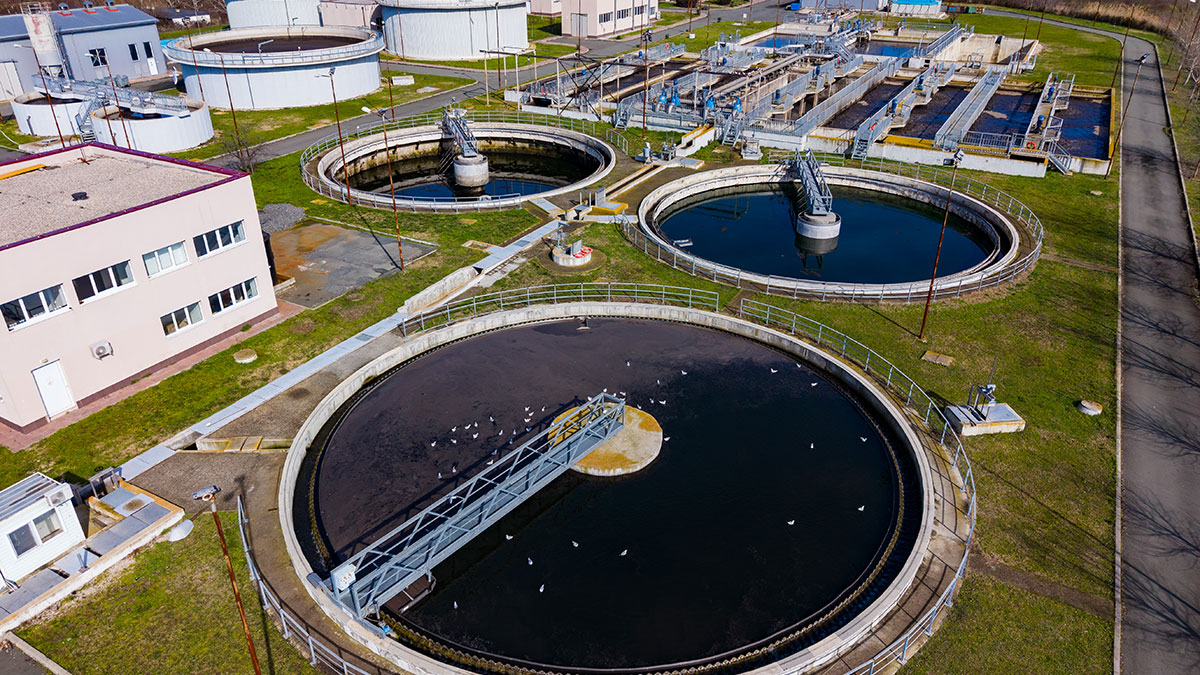
The workflow starts with sampling. A treatment facility or collection site provides wastewater specimens on a schedule. The laboratory then measures pathogen material, often through RT-qPCR assays for targeted detection or sequencing approaches when the goal is to examine genetic variation. Those outputs are not clean clinical records. They contain mixtures from many people, variable dilution, environmental noise, changing sewer flows, and differences in laboratory practice.
The AI layer tries to make that mess interpretable. In the UNLV-led work, the central advance was anomaly and variant detection: identifying unexpected genetic patterns in wastewater that may indicate an emerging variant, even when the system has not been given that variant’s genetic signature in advance.[1] That matters because surveillance systems are often weakest when the threat is not yet neatly named.
Where clinical genomes exist, wastewater findings can be compared against patient-derived sequences. That comparison does not make wastewater a substitute for clinical testing, but it helps answer a narrower and more important question: did the population-level signal appear in a way that matches later clinical evidence? In the UNLV study, the comparison with 8,810 clinical SARS-CoV-2 genomes gave the researchers a way to evaluate whether wastewater variant signals aligned with observed clinical genomic patterns.[1]
| Layer | What it contributes | What it cannot settle alone |
|---|---|---|
| Wastewater sampling | Captures a population-level signal that is less dependent on care-seeking and test access | Who is infected, how sick they are, or whether transmission is concentrated in a specific household |
| Laboratory assays or sequencing | Measures pathogen material or genetic variation in the sample | Whether differences across jurisdictions reflect biology or different methods |
| AI-driven anomaly detection | Flags unexpected variant patterns or shifts that may precede clinical counts | Whether the signal should trigger public messaging, resource deployment, or clinical policy changes |
| Clinical and epidemiologic correlation | Checks whether wastewater signals match patient testing, genomic data, or outbreak investigations | Complete coverage where clinical testing, reporting, or sequencing is sparse |
This is also where wastewater AI differs from many event-based outbreak tools. Systems that scan emergency visits, media reports, or digital traces depend on human behavior after symptoms, testing, reporting, or public attention have already begun. Wastewater can move earlier in the chain, although it still needs the rest of the surveillance stack around it. Readers comparing this layer with broader signal-detection systems may find it useful to place wastewater AI beside the AI stack powering outbreak surveillance and current AI-powered outbreak detection platform comparisons.
Why the UNLV evidence is stronger than a simple early-warning claim
Many early-warning claims sound persuasive until the denominator disappears. A signal found in one outbreak, one city, or one retrospective dataset can be interesting without proving much about routine deployment. The UNLV-led study deserves more attention because it combined method development with scale, multiple pathogens, and clinical comparison.[1]
The sample base matters: 3,659 wastewater samples over 2 years is enough to test the algorithm against changing background conditions rather than a single snapshot. The clinical comparison matters too. Matching wastewater observations against 8,810 clinical SARS-CoV-2 genomes gave the researchers a way to evaluate variant emergence against a separate stream of evidence.[1]
The pathogen range matters for a different reason. SARS-CoV-2 taught public health agencies how powerful wastewater monitoring could be, but an early-warning layer that only works comfortably for one virus is a narrow tool. The reported ability to detect emerging variants of influenza, RSV, mpox, and measles suggests a broader surveillance role, especially for pathogens where clinical testing may be inconsistent or delayed.[1]
The 2–5 sample finding is the eye-catching part, and it should be read carefully. It shows that the algorithm required as few as 2–5 wastewater samples per variant under the study conditions, not that every health department can collect a handful of specimens and immediately run a dependable variant early-warning program. Real-world performance depends on sampling cadence, catchment design, laboratory methods, sequencing quality, reporting pipelines, and the availability of clinical evidence to check the signal.
The rural delay is not a footnote
One of the most important findings in the UNLV-led study is also one of the least flattering for national surveillance optimism: rural wastewater showed variant emergence with a 7–9 day delay behind urban centers.[1] That does not make the method weak. It makes the deployment uneven.
A 7–9 day lag can be the difference between a meaningful early signal and a delayed confirmation, especially for infection prevention teams that are trying to decide whether to change screening posture, prepare isolation capacity, or intensify communication with local clinicians. Rural communities are often asked to act on thinner data while having less sampling density and weaker infrastructure. If AI-enhanced wastewater surveillance widens warning time in large metro areas but narrows it elsewhere, the national map can look more reassuring than the local reality.
This is where the technology needs a practical equity test. Does the alert arrive early enough for the people expected to act on it? Does the rural health department have enough sampling frequency to distinguish a real rise from noise? Is there a clinical testing pathway ready to confirm or refute the signal? Without those answers, the model may be scientifically impressive and still operationally frustrating.
How reliable is the signal?
Reliability in wastewater AI is not one thing. It is a chain. The sample has to represent the catchment. The laboratory method has to measure the target consistently. The algorithm has to detect a meaningful deviation rather than a processing artifact. Clinical or epidemiologic data then have to tell public health teams whether the signal corresponds to actual transmission.
The research evidence is encouraging. The UNLV-led study tested a large wastewater dataset, compared findings against clinical SARS-CoV-2 genomes, and extended the approach to several pathogens.[1] The Mesa County measles experience adds a different kind of evidence: not just a retrospective method paper, but an operational validation in which wastewater detected wild-type measles virus approximately 4 days before clinical case counts rose.[2]
The national deployment context is also real. CDC’s National Wastewater Surveillance System scaled from 209 sites to more than 1,500 sites by December 2022, covering approximately 47% of the U.S. population, and has tracked SARS-CoV-2, influenza A, RSV, mpox, and measles.[3] That gives wastewater surveillance a footprint large enough to matter for public health operations, not just academic demonstration.
But footprint is not the same as completeness. Roughly 47% population coverage still leaves substantial gaps, and coverage by population does not guarantee timely coverage by geography, rurality, or risk setting.[3] A national dashboard can show movement while individual jurisdictions remain unsure whether their local absence of signal means absence of pathogen, insufficient sampling, or delayed data flow.
Infrastructure fragility also matters. Jacobs and colleagues reported that 38 of 82 CDC databases were paused during the 2025–2026 disruption, a reminder that surveillance systems depend not only on clever analytics but on stable public data infrastructure.[4] If agencies are expected to rely on wastewater AI as an early-warning layer, the data pipes, governance arrangements, and public reporting systems need to be treated as core infrastructure, not administrative afterthoughts.
The standardization problem
The hardest comparison in wastewater surveillance is often not between this week and last week in the same sewershed. It is between one jurisdiction and another. Sampling methods differ. RT-qPCR assays differ. Bioinformatic pipelines differ. Those differences can change what is detected, how quickly it is detected, and how confident an analyst should be when comparing signals across places.
This is not a minor methods complaint. If one region collects samples more frequently, uses a different assay, sequences more deeply, or applies a different pipeline, its “early” signal may not be directly comparable to a neighboring region’s delayed or absent signal. Standardization gaps across sampling, RT-qPCR assays, and bioinformatic workflows make cross-jurisdictional interpretation difficult, especially when the signal is being used to guide action across health systems or state lines.[5]
For infection control teams, this means wastewater alerts should be read as part of a triangulation process. A rising wastewater signal may justify checking syndromic trends, reviewing laboratory positivity, asking whether clinicians are testing for the relevant pathogen, or preparing targeted communications. It should not, by itself, be treated like a confirmed clinical outbreak.
What agencies can act on before cases rise
A wastewater AI alert is most useful when it triggers low-regret verification steps before public-facing escalation. The point is not to wait passively for clinical cases, but to avoid pretending that a population-level molecular signal has already answered questions it cannot answer.
- Check whether the signal is persistent across repeated samples rather than appearing once.
- Review local testing patterns to see whether clinical under-detection could explain a mismatch between wastewater and case counts.
- Compare the signal with syndromic surveillance, laboratory positivity, genomic sequencing, and outbreak investigation notes where available.
- Clarify who receives the alert, who grades confidence, and who decides whether to notify clinicians or the public.
- Document assay, sequencing, and pipeline details so neighboring jurisdictions understand whether their data are comparable.
Those steps are not glamorous, but they determine whether early detection becomes useful. A rural hospital cannot staff an isolation unit based on a vague anomaly. A local health department cannot ask clinicians to change testing behavior without explaining why the signal is credible. A state epidemiologist cannot compare counties confidently if the underlying methods are incompatible.
The same lesson applies to pathogen-specific AI surveillance. Wastewater may become part of how agencies interpret enteric threats, respiratory virus activity, or environmental signals linked to diseases such as Legionnaires’ disease. But it will sit beside other evidence streams, not above them. For related examples of pathogen-specific surveillance questions, see ClinicalMind’s discussions of whether AI can predict Salmonella outbreaks and how AI supports Legionnaires’ disease care and detection.
A credible early-warning layer, not a standalone alarm
AI-enhanced wastewater surveillance is becoming credible because it solves a real surveillance problem: clinical data are delayed by care-seeking, testing access, provider behavior, reporting systems, and sequencing capacity. Wastewater can see population-level pathogen signals through a different window, and AI can help detect unexpected variant patterns earlier than conventional clinical counts.
The evidence now includes a large UNLV-led research study with 3,659 wastewater samples, 8,810 clinical SARS-CoV-2 genomes, multiple pathogens, and a reported 2–5 sample detection threshold under study conditions.[1] It also includes an operational measles example in Mesa County, where wastewater detected wild-type measles virus approximately 4 days before clinical case counts rose.[2] Those findings justify attention from public health agencies and infection prevention teams.
They do not justify treating wastewater AI as a standalone alarm system. The method lacks individual diagnosis and clinical severity data. Rural areas may receive less warning time. National coverage remains incomplete. Federal data infrastructure can be disrupted. Sampling, RT-qPCR assays, and bioinformatic pipelines are not yet standardized enough to make every cross-jurisdictional comparison straightforward.
The disciplined middle ground is the useful one: wastewater AI should be treated as an early warning layer that prompts verification, coordination, and faster clinical awareness. Its value is not that it replaces clinical surveillance. Its value is that, when the laboratory method, sampling cadence, algorithmic detection, clinical correlation, and governance line up, it can give public health teams a few precious days to look harder before the case curve makes the problem obvious.
References
- DRI Contributes to Study Using AI in Wastewater Surveillance for Detection of Emerging Virus Pathogens. DRI.edu, July 2025; Nature Communications, DOI: 10.1038/s41467-025-61280-5.
- Measles wastewater monitoring validation during the 2025 Mesa County, Colorado outbreak. CDC wastewater monitoring program, 2025.
- National Wastewater Surveillance System. Centers for Disease Control and Prevention.
- Jacobs et al., Annals of Internal Medicine report on paused CDC databases. Annals of Internal Medicine, 2026.
- Artificial intelligence in early warning systems for infectious disease surveillance: a systematic review. PMC.
Comments
Join the discussion with an anonymous comment.