
 AI Patient Engagement Platform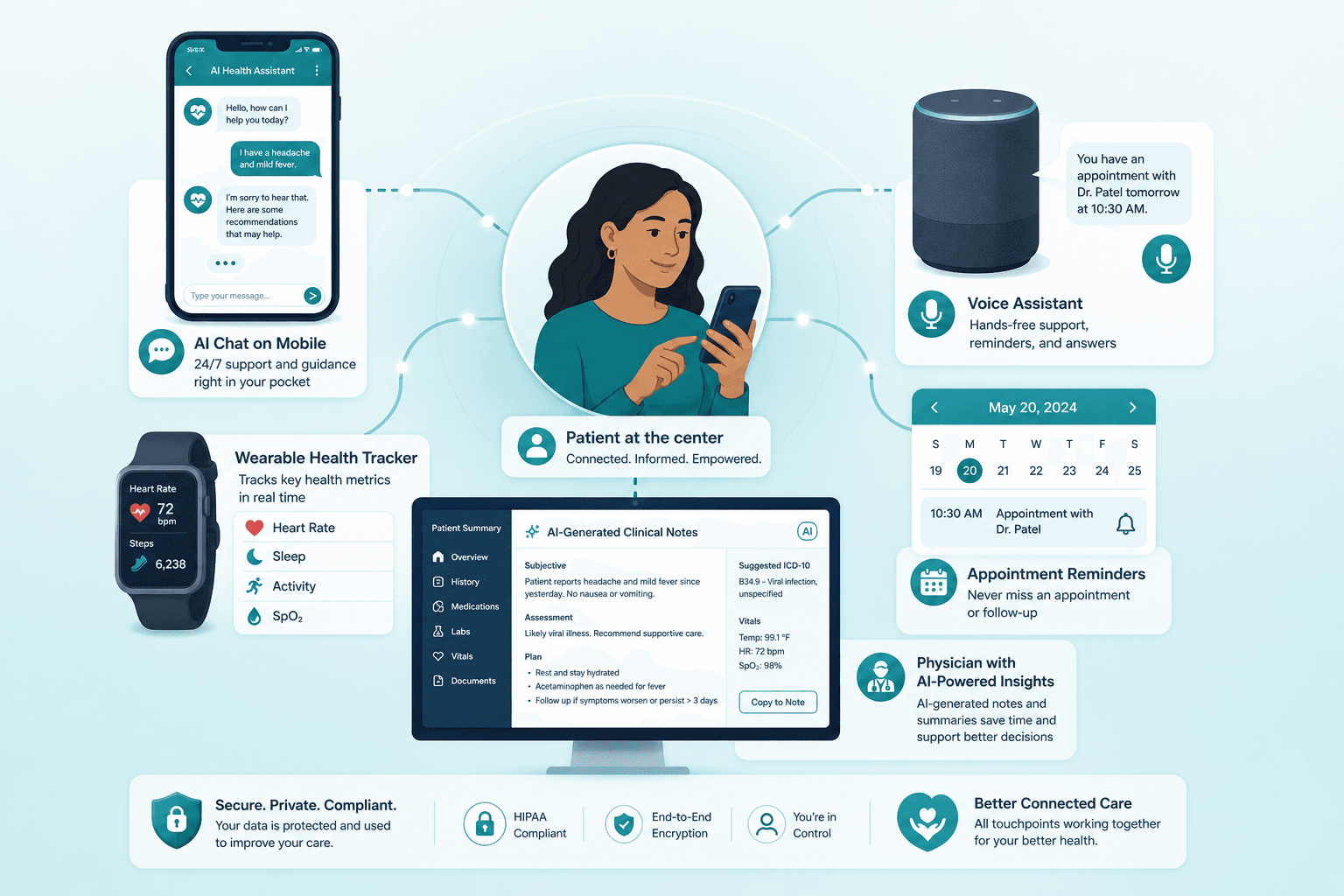
What Is AI Patient Engagement?
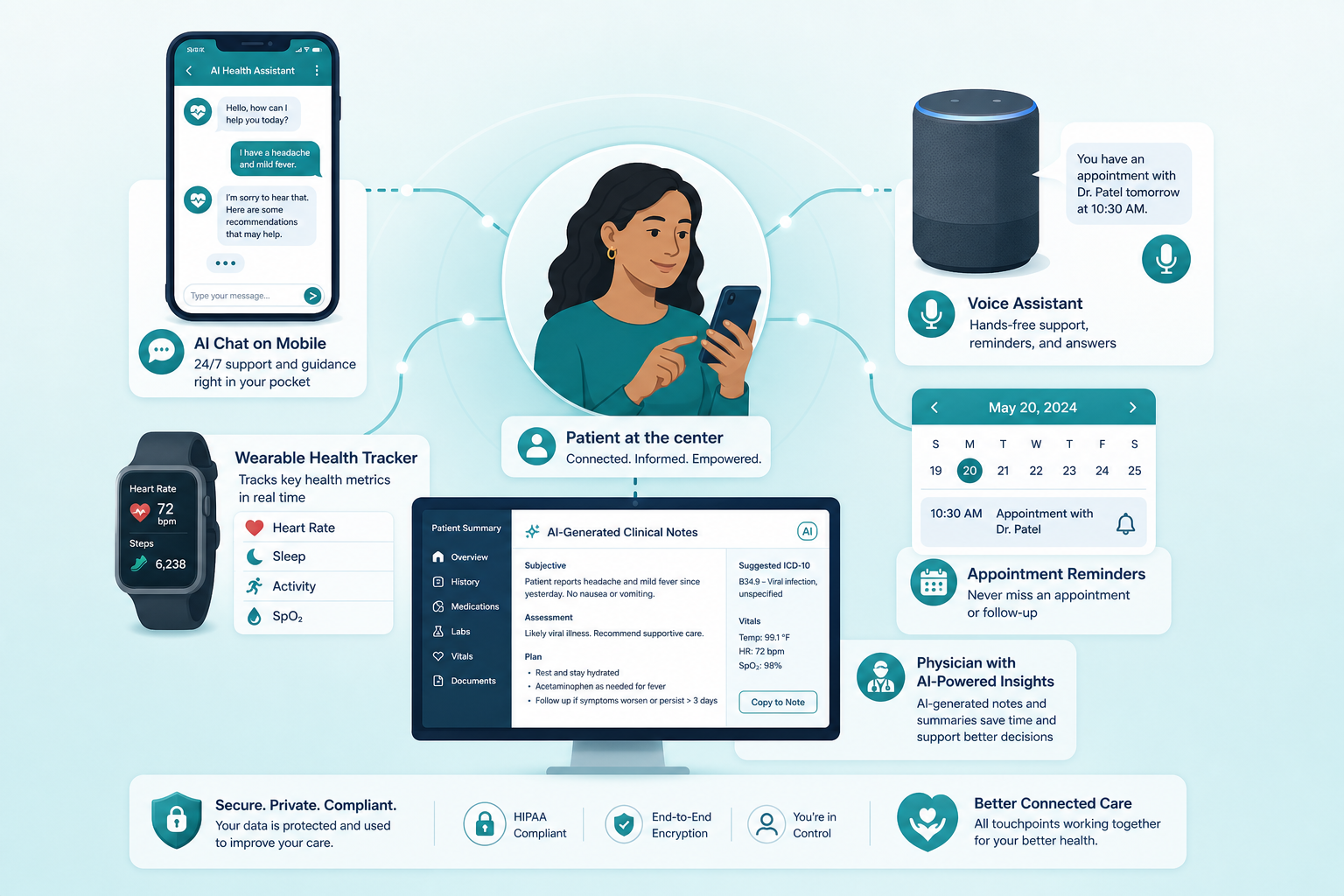
AI patient engagement refers to the use of artificial intelligence — particularly natural language processing, conversational AI, and predictive analytics — to automate, personalize, and scale interactions between healthcare organizations and their patients. It is not a single product category but a set of capabilities that span the patient journey: appointment scheduling and reminders, pre-visit intake, billing and insurance inquiries, medication adherence support, chronic disease management outreach, and post-discharge follow-up.
For health system administrators and CFOs evaluating these tools, the relevant technologies fall into several functional groups:
- Conversational AI and chatbots: Handle routine patient inquiries — scheduling, prescription refills, billing questions — through voice or text interfaces, often integrated with existing EHR and practice management systems.
- Automated multichannel reminders: Send personalized appointment reminders via SMS, email, voice calls, or patient portal notifications, using predictive models to target patients at highest risk of no-show.
- Ambient AI scribing: Capture and structure clinical conversations in real time, generating draft clinical notes that reduce documentation burden and free clinician time for direct patient interaction.
- Intelligent patient portals: Use AI to surface relevant health information, lab results, and care recommendations based on individual patient profiles and preferences.
- Predictive analytics for engagement: Identify patients who are likely to miss appointments, fail medication adherence, or require readmission, enabling proactive outreach.
The common thread across these applications is the replacement of manual, one-size-fits-all communication with intelligent, context-aware interactions that adapt to patient behavior, language preference, and clinical needs. The business case for investment rests on whether these capabilities translate into measurable financial and operational returns.
The Cost of the Status Quo: Missed Appointments, Call Abandonment, and Burnout
Before building a business case for AI patient engagement, it is essential to quantify the problems it is meant to solve. The baseline costs of fragmented, manual patient communication are substantial and well-documented.
Missed appointments alone cost the US healthcare system an estimated $150 billion annually, according to analyses cited in the Prosper AI guide. Each no-show represents lost clinical capacity, wasted staff time, and delayed care for patients who could have been seen in that slot. For a typical multi-specialty group, no-show rates range from 5% to 30% depending on patient population and specialty, with higher rates in primary care, behavioral health, and lower-income communities.
Call center inefficiency compounds the problem. In a national health system deployment documented by PwC, the client operated 50+ contact centers where routine inquiries — scheduling, billing, prescription refills — consumed significant staff hours. High call abandonment rates indicated that patients were hanging up before reaching an agent, creating a poor experience and lost revenue opportunities.
Physician burnout from administrative burden represents another hidden cost. The Prosper AI guide notes that doctors spend nearly two hours on paperwork for every one hour of patient care. Ambient AI scribing, which automates clinical documentation, has been associated with a nearly 31% reduction in physician burnout in one study, a figure that directly impacts retention, recruitment, and quality of care.
| Problem | Estimated Annual Cost / Impact | Source Context |
|---|---|---|
| Missed appointments | $150B | Cited in Prosper AI guide; multiple industry estimates |
| Healthcare IT fragmentation | $30B | Prosper AI guide; cost of data integration issues |
| Physician admin burden | 2 hours paperwork per 1 hour care | Prosper AI guide |
| Call abandonment (single health system) | 85% pre-intervention rate | PwC case study (unnamed client) |
| Staff time on data issues | 10–20 hours/week per staff member | Prosper AI guide; >40% of staff affected |
Comments
Join the discussion with an anonymous comment.