
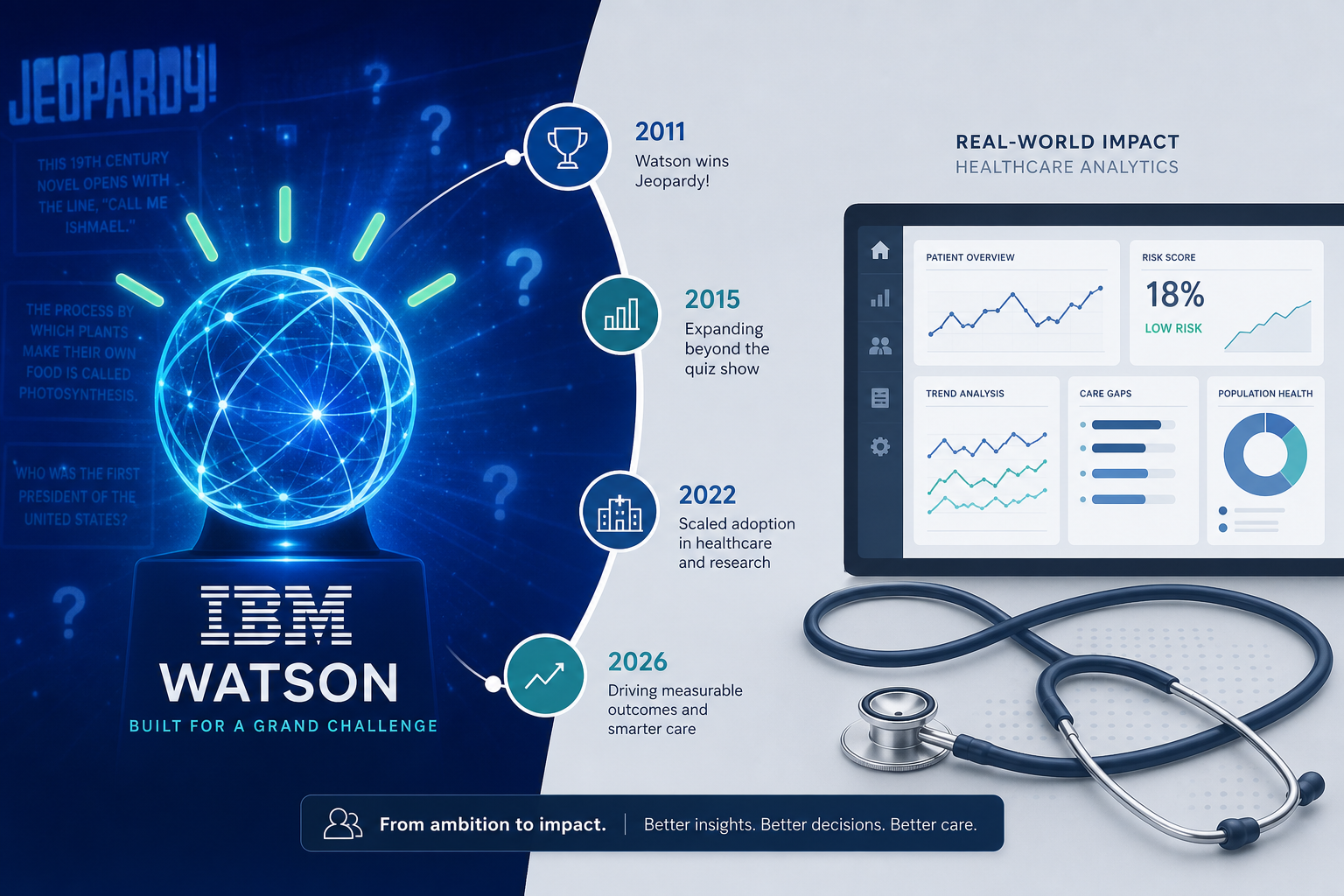
 IBM Watson Health (now Merative)
Why Watson Health Still Matters in 2026
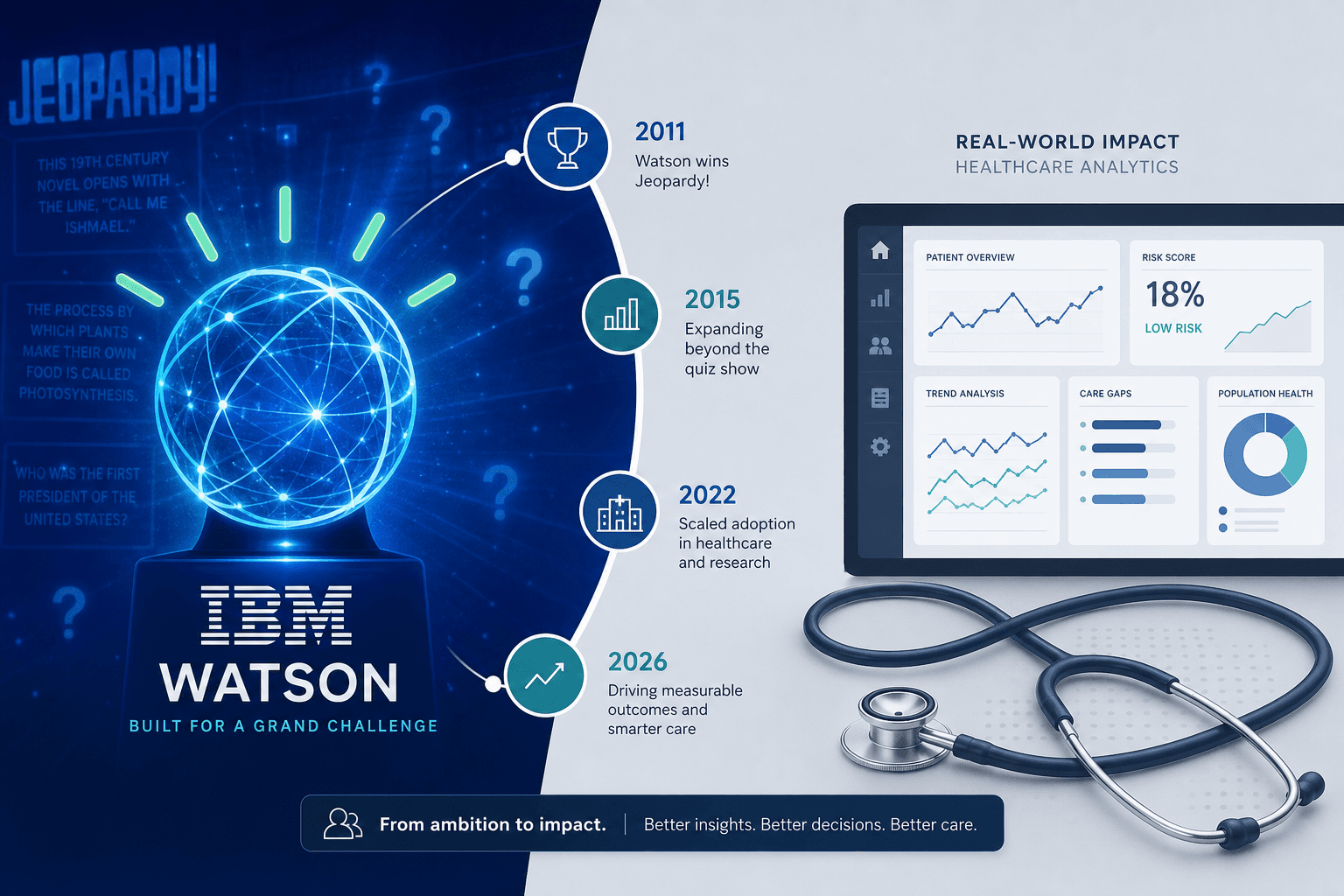
In 2026, the healthcare AI landscape is markedly more mature than it was a decade ago. Yet the shadow of IBM Watson Health looms larger than ever. Between 2011 and 2022, IBM funneled well over $4 billion into building what was supposed to be the defining AI platform in medicine. In January 2022, the division was sold to Francisco Partners for approximately $1 billion — a loss of more than 75% of its invested capital. The newly formed company, Merative, pivoted away from grand AI promises to focus on data analytics and clinical decision support.
For startup founders, product managers, and health system innovation officers, the Watson Health story is not ancient history. It is a field-tested case study in how not to build, market, and scale AI in healthcare. The mistakes were not subtle: they were structural, well-documented, and entirely avoidable. This article distills four evidence-backed lessons from that collapse, each anchored to specific data points and mapped to actionable prescriptions for AI teams operating in 2026.
Lesson 1: Build Clinical Evidence Before You Market
The most damning indictment of Watson Health is not that it failed — it is that it marketed itself as a clinical breakthrough without ever producing a single peer-reviewed study demonstrating improved patient outcomes. Despite years of deployment at prestigious institutions, no published research showed that Watson's recommendations led to better survival rates, reduced complications, or any measurable clinical benefit.
The MD Anderson pilot project is the clearest illustration. Launched in 2013 with great fanfare, the collaboration aimed to use Watson to help oncologists identify treatment options. By 2016, the project was cancelled after spending $62 million — $39.2 million paid to IBM and $21.2 million to PricewaterhouseCoopers, according to a University of Texas audit. The result? Zero patients treated, zero clinical studies published, and a scathing audit that noted a "consistent pattern of PwC fees set just below MD Anderson's Board approval threshold."
Even where Watson was deployed, the evidence was underwhelming. In a 656-patient colon cancer study at Gachon University Gil Medical Center in South Korea, Watson's top treatment recommendations matched those of expert oncologists only 49% of the time. More concerning, doctors reported that Watson recommended surveillance instead of aggressive treatment for certain patients with metastatic cancer — a potentially dangerous error. An MD Anderson study published in The Oncologist in 2018 found that Watson's NLP achieved 90–96% accuracy for clear concepts like diagnosis, but dropped to 63–65% for time-dependent information like therapy timelines.
The prescription for today's AI teams is straightforward but demanding: clinical evidence must precede clinical marketing. The NIST AI Risk Management Framework provides a structured approach — the GOVERN, MAP, MEASURE, and MANAGE functions — that can help teams build governance frameworks before making clinical claims. Regulatory-grade evidence, including FDA clearance through 510(k) or De Novo pathways, should be a milestone, not an afterthought.
Lesson 2: Acquire to Augment, Not to Absorb
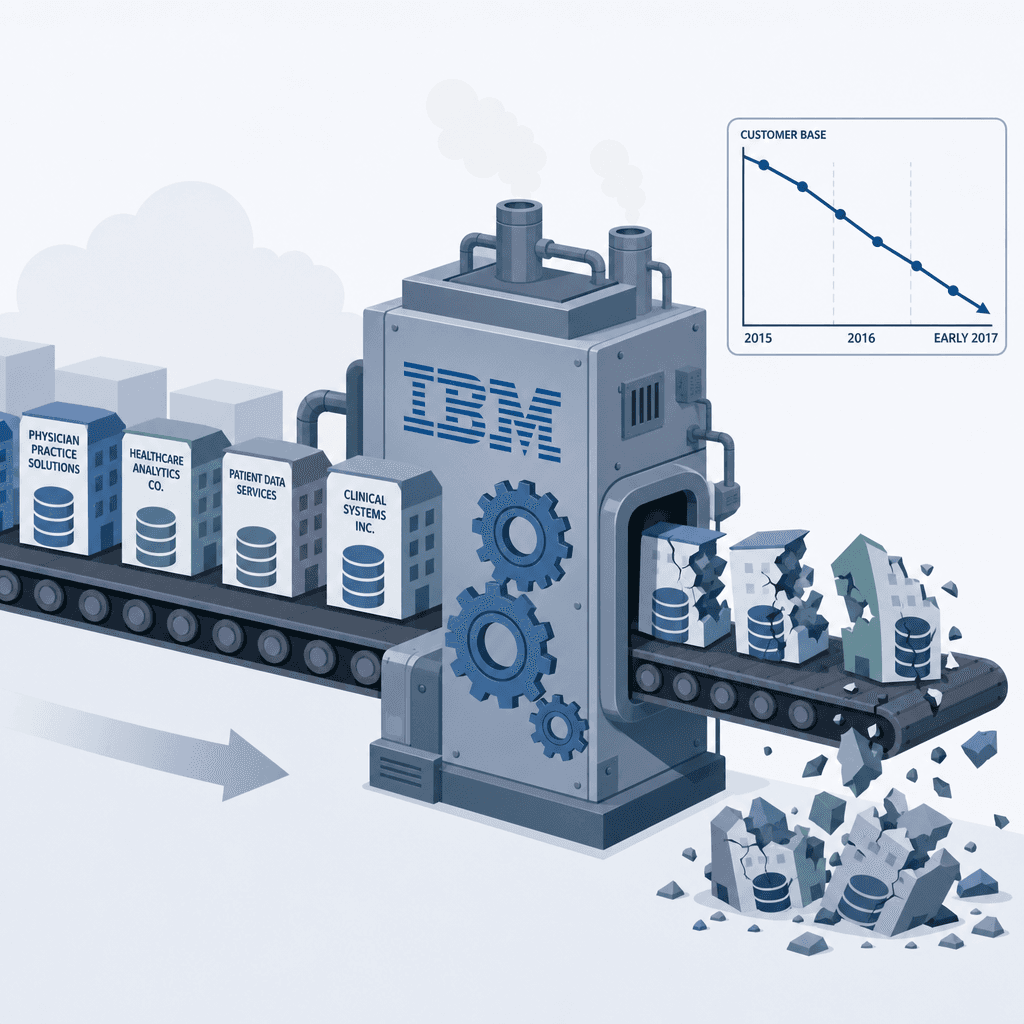
Between 2015 and 2016, IBM acquired at least four major healthcare data companies: Explorys (population health), Phytel (care management), Truven Health Analytics (market data), and Merge Healthcare (medical imaging). The total cost was well over $4 billion. The strategy, as one analyst described it, was a "haphazard Pokémon card collection strategy" — acquire everything in sight and force it all into the IBM mold.
That mold was called "Blue Washing." Acquired companies were required to convert their technology stacks to IBM's proprietary systems. Explorys, which had dozens of healthcare customers and arguably the largest clinical repository in the U.S. at the time of acquisition in April 2015, was forced to migrate to IBM's Hadoop distribution. IBM then terminated that product shortly after the conversion was complete. Internal teams spent almost an entire year merging databases from Phytel and Explorys, putting core product functionalities on hold. Customers began asking for the original Phytel offerings.
The results were predictable and devastating. Contract terminations for Explorys started in 2017. The Explorys point of no return was arguably the beginning of 2017 — the business effectively went off the rails in less than two years after acquisition. KLAS's tepid review in Fall 2017 was described as "the final nail in the coffin."
| Integration Approach | IBM's 'Blue Washing' | Recommended Strategy |
|---|---|---|
| Technology stack | Force acquired companies to convert to IBM proprietary systems | Preserve the acquired company's existing stack; integrate only where it adds clear value |
| Product roadmap | Put core product functionalities on hold for 12+ months during integration | Maintain product evolution during transition; avoid extended feature freezes |
| Customer relationships | Treat acquired customers as IBM customers; ignore existing relationships | Preserve and nurture the acquired company's customer relationships and trust |
| Cultural integration | Impose IBM's processes and hierarchy on acquired teams | Allow acquired teams to retain operational autonomy where effective |
| Outcome | Customer defection within 2 years; KLAS ratings collapse | Sustained customer retention; continued product innovation |
The lesson for today's AI teams is clear: acquisitions should augment capabilities, not absorb them. When a larger company acquires a smaller one, the instinct to standardize is strong — but in healthcare, where customer relationships are built on trust and product reliability, forcing a technology migration can destroy the very value the acquisition was meant to capture.
Lesson 3: Match AI Capabilities to Narrow, Solvable Problems
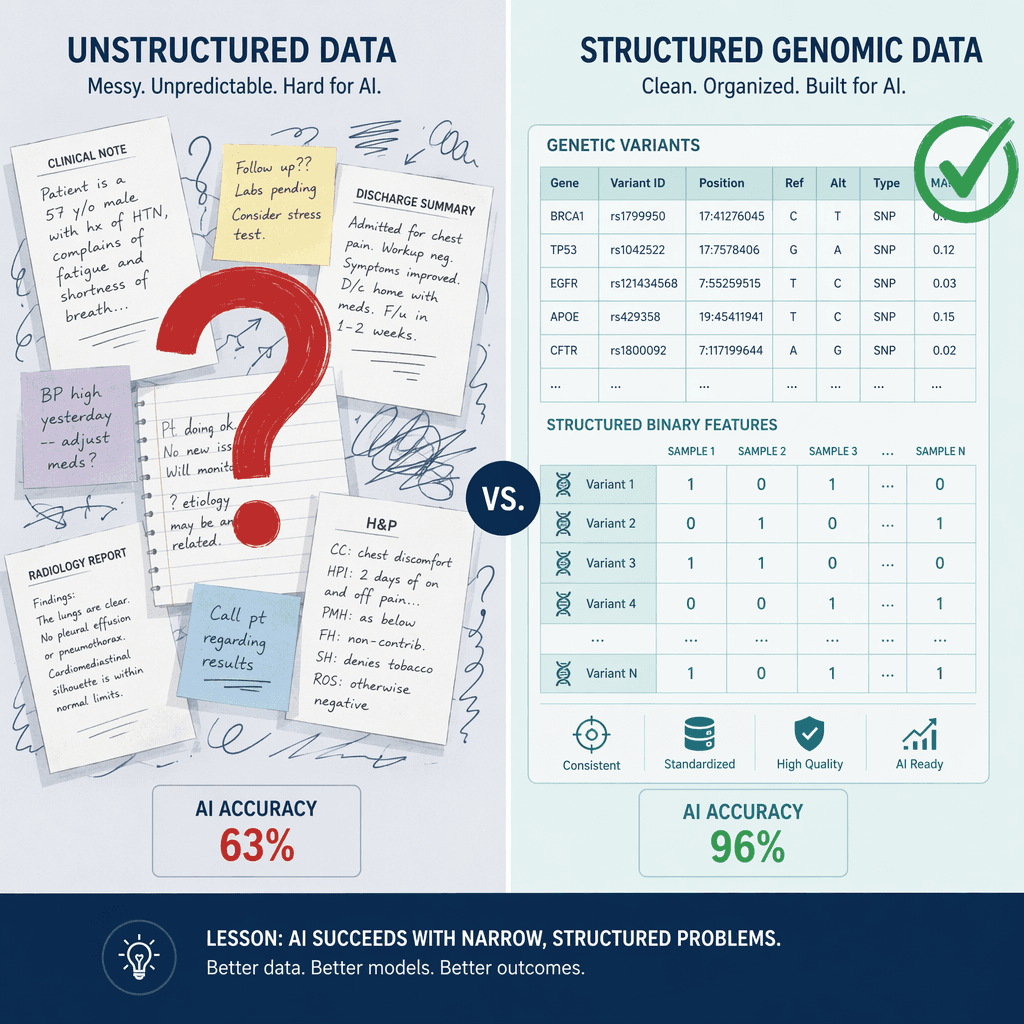
IBM's marketing positioned Watson as a general-purpose AI that could tackle any medical problem. The reality was far more constrained. Watson's NLP, while impressive for a question-answering system, was fundamentally limited when applied to the messy, unstructured world of clinical text. The MD Anderson study published in The Oncologist in 2018 documented this precisely: Watson achieved 90–96% accuracy for clear concepts like diagnosis, but only 63–65% for time-dependent information like therapy timelines.
The contrast with Watson for Genomics is instructive. Where Watson for Oncology struggled with free-text clinical notes, Watson for Genomics succeeded because genetic data is structured — binary mutation present/absent, well-defined gene panels, standardized reporting formats. The same underlying AI technology performed dramatically differently depending on the data modality.
This lesson has direct implications for AI teams in 2026. Rather than pursuing broad "AI for healthcare" ambitions, successful companies are starting with well-defined, data-rich problems. Tempus built its business on structured genomic data and clinical outcomes. Paige AI and PathAI focused on digital pathology — a domain with standardized slide formats and well-defined diagnostic tasks. These companies did not try to solve all of medicine; they solved one problem well.
Lesson 4: Align Organizational Culture and Technical Strategy
The final lesson is perhaps the hardest to quantify but the most consequential. IBM in the 2010s was a company built on decades of enterprise sales, long product cycles, and hierarchical decision-making. The startups it acquired — Explorys, Phytel, Merge — were agile, customer-obsessed, and fast-moving. The cultural clash was inevitable and destructive.
ACM Communications documented the pattern in detail: acquired companies were asked to pay the same hosting prices as the public for IBM's SoftLayer cloud. Internal teams spent months on database migrations that added no customer value. Product roadmaps were dictated from Armonk, not from the clinicians and health systems that actually used the tools. The result was talent loss, delayed releases, and eroded trust.
- Talent loss: Engineers and product managers from acquired companies left when their autonomy was stripped away.
- Delayed releases: Product functionalities were put on hold for 12+ months during technology migrations.
- Eroded trust: Customers who had chosen Explorys or Phytel for their specific capabilities found those capabilities degraded or abandoned.
- Misaligned incentives: IBM's sales force was incentivized to sell bundled enterprise deals, not to optimize individual product experiences.
The prescription for health systems and AI companies is to treat cultural compatibility as a first-order concern in partnerships and acquisitions. Today's successful AI companies — Abridge, Ambience, and others profiled in our AI company landscape — have maintained their startup cultures even as they scale. They prioritize clinical partnerships over enterprise sales cycles, and they keep product decisions close to the end users.
How Today's AI Companies Are Applying These Lessons
The Watson Health story has not been forgotten by the current generation of healthcare AI companies. In fact, many of them are explicitly structured to avoid the four failures outlined above.
- Abridge: Focuses on a narrow, well-defined use case (ambient clinical documentation) and has built its evidence base through prospective studies rather than marketing hype.
- Ambience: Targets specific clinical workflows (prior authorization, clinical coding) where structured data and clear success metrics exist.
- Tempus: Built its business on structured genomic data and clinical outcomes, avoiding the unstructured text problems that plagued Watson for Oncology.
- Merative (the successor to Watson Health): Has abandoned the grand AI vision entirely, focusing instead on data analytics and clinical decision support — a pragmatic pivot that has allowed it to serve 187 million people globally.
These companies are not immune to the challenges that felled Watson Health. But they have the advantage of learning from a very public failure. The real clinical deployments happening today are more measured, more evidence-driven, and more focused than anything IBM attempted.
Conclusion: A Necessary Failure That Matured the Industry
The collapse of IBM Watson Health was painful — $4 billion in investment, years of lost opportunity, and a cautionary tale that still echoes through boardrooms and innovation labs. But it was also necessary. The failure forced the healthcare AI industry to confront uncomfortable truths about evidence, integration, scope, and culture.
The four lessons are not abstract principles. They are concrete, evidence-backed prescriptions that any AI team can apply today:
- Build clinical evidence before you market — no exceptions.
- Acquire to augment, not to absorb — preserve what makes acquisitions valuable.
- Match AI capabilities to narrow, solvable problems — structured data first.
- Align organizational culture and technical strategy — treat culture as a first-order concern.
The healthcare AI industry in 2026 is better positioned than it was in 2016 precisely because of the Watson Health failure. The hype has been tempered by reality. The evidence bar has been raised. The scope of AI applications has been narrowed to where the technology can actually deliver. The question is not whether AI will transform healthcare — it already is, in measured, evidence-backed ways. The question is whether today's teams will remember the lessons of the cautionary tale that made that transformation possible.
Comments
Join the discussion with an anonymous comment.