
The evidence is now strong enough to take the category seriously
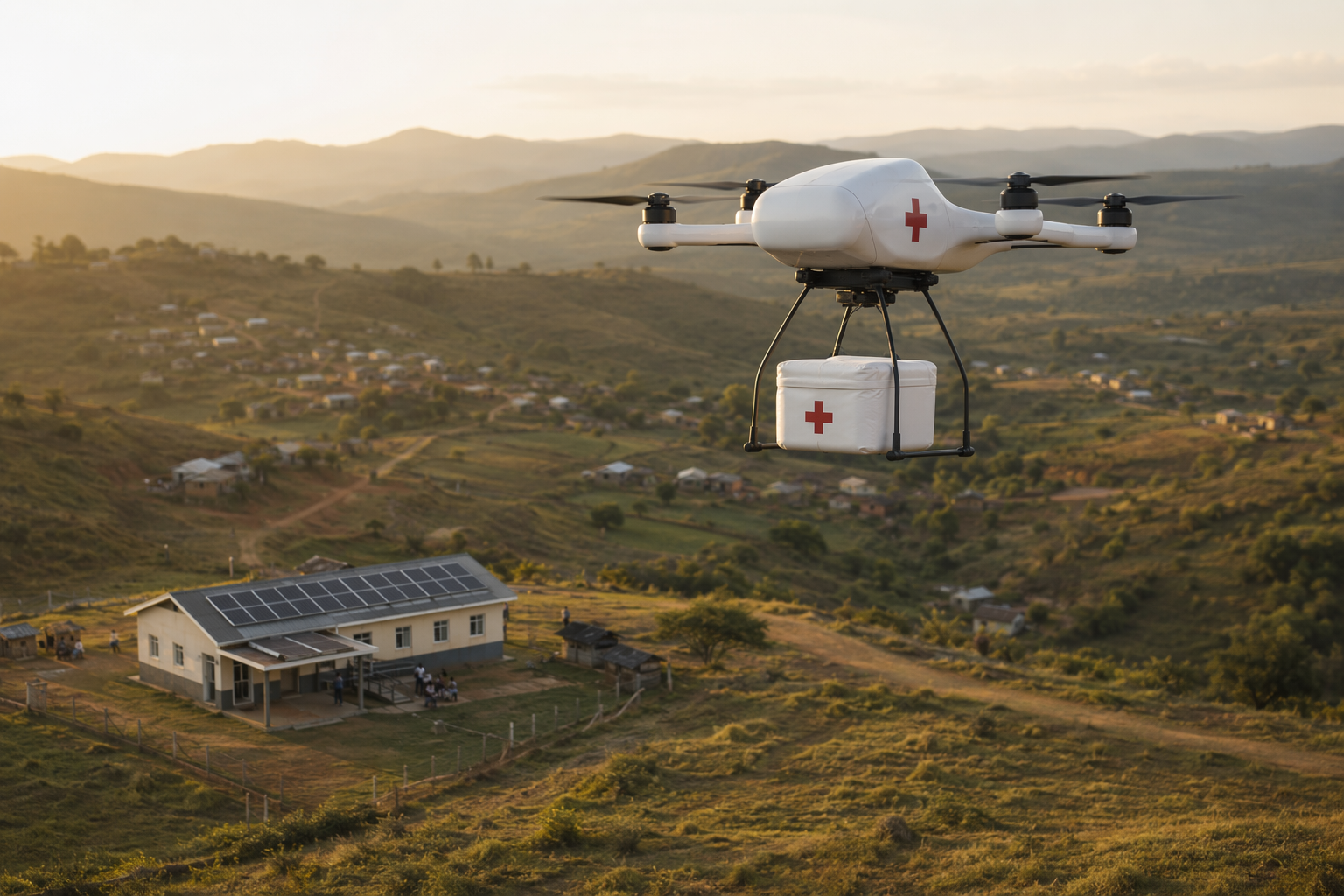
AI-powered drone technology for medical supply delivery has moved beyond proof-of-concept. A 2026 scoping review of 21 case studies across five continents found a median 72% reduction in delivery time, from 305 minutes by ground to 45 minutes by drone, and a median per-delivery cost of $16.07 in 2025 USD.[1] That is enough to make the logistics case worth taking seriously, but not enough to turn faster flight into clinical proof. The same review was available only as an abstract and highlights section, so the broad signal matters more than any temptation to overread individual case studies.[1]
Blood products and stockouts are where the operational case is easiest to see
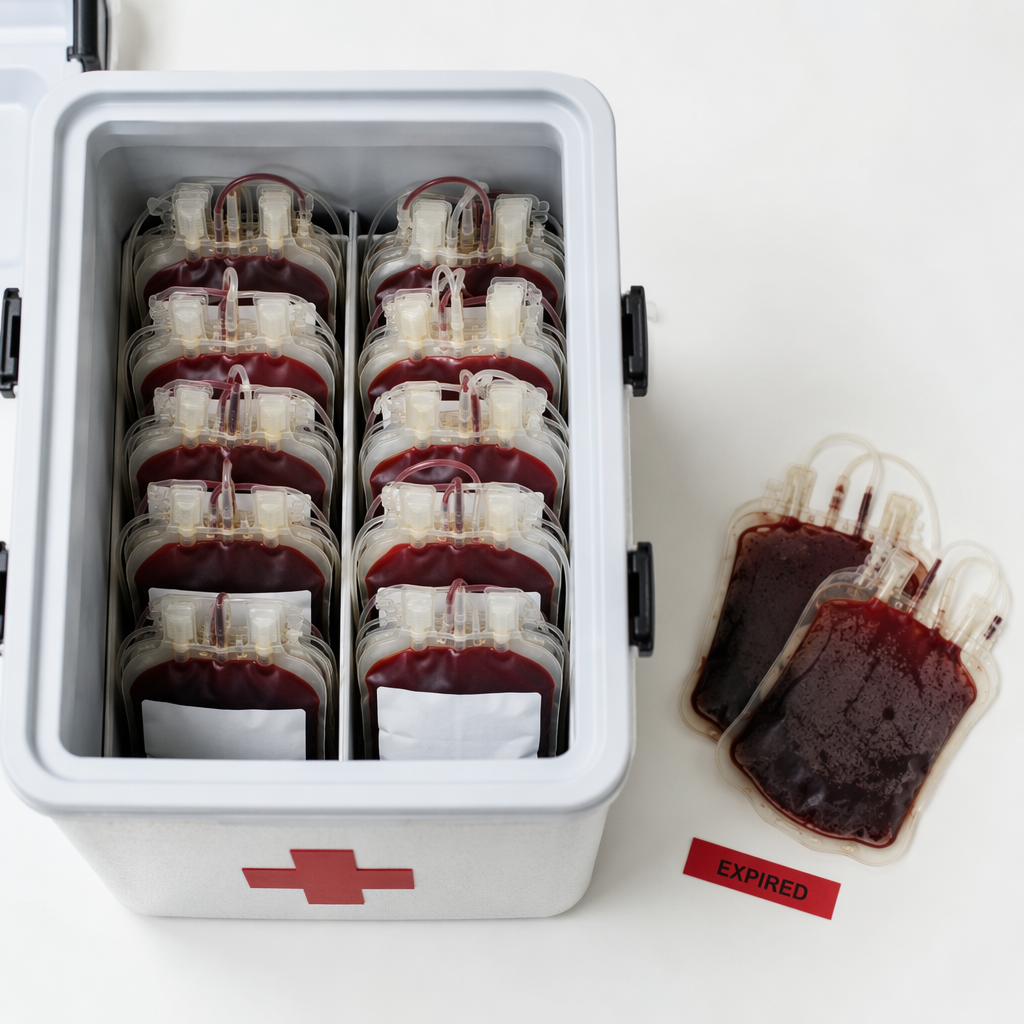
The clearest reason this topic deserves more than pilot status is blood logistics. The Rwanda blood-product study reported a 67% reduction in wastage and about seven fewer expired blood units per month. In practical terms, that means fewer units sitting on the shelf until they age out and more chance that scarce blood is available when a district hospital actually needs it.[1] That kind of result matters because it changes inventory behavior, not just delivery speed.
A similar pattern shows up in vaccines. The case-study literature summarized in the review includes a Gates Foundation-funded study in which stockouts fell by 60%, while stockout duration dropped from 5.3 to 3.2 days.[1] That is still not the same as proving better immunization outcomes, but it does show why drone delivery becomes attractive where the bottleneck is delay, not demand.
The per-delivery cost figure matters for the same reason. A median $16.07 per delivery is not a universal price tag, but it suggests the service can be operationally repeatable rather than merely impressive. For district managers, the relevant question is not whether a drone can arrive quickly once; it is whether the system can keep blood, vaccines, and other time-sensitive stock moving reliably enough to justify the procurement line.
Clinical outcome claims are encouraging, but attribution is still the hard part
Zipline’s published impact data say its operations in Rwanda and Ghana are associated with a 56% decrease in maternal mortality and a 66% decrease in missed malaria treatment opportunities.[2] Those figures deserve attention because they point beyond logistics and toward care that was actually reached. But they are company-affiliated findings, not independent randomized trials, so they should be read as strong signals rather than settled causal proof. Operational success can plausibly contribute to better outcomes, yet it should not be casually converted into system-wide mortality claims.
Some company materials also report very high delivery success rates, but those figures belong to the vendor evidence layer, not independent verification. That distinction matters in medical logistics, where on-time arrival is only one part of the chain and clinical reliability depends on what arrived, how it was handled, and whether it could be used without compromise.
The missing evidence is about stability, comparability, and security
The strongest evidence is about movement of goods, not pharmacology. The available materials still leave limited data on how vibration, altitude, temperature shifts, and flight duration affect biologics, insulin, and other temperature-sensitive medicines. There is also no strong drone-versus-ground pharmacokinetic or pharmacodynamic comparison in the evidence base reviewed here, which means the question of whether a delivered dose behaves the same way after flight remains largely open. Organ transport is even more mature as an evidence category, and cybersecurity has lagged behind deployment enthusiasm despite the fact that routing, telemetry, and payload control are part of the operating system rather than a side issue.
That is why the operational data and the clinical data should not be collapsed into one claim. Faster delivery and lower wastage are real achievements. They justify investment, especially in blood banking and stockout-sensitive supply chains. They do not, by themselves, prove that every medicine, biologic, or emergency payload can be scaled safely across every setting.
Adoption pressure is rising, but market size depends on what is being counted
Commercial interest is clearly real. One market report places the medical drone delivery services market at $166.5 million in 2025 and projects growth to $2.1 billion by 2035 at a 29.1% CAGR.[3] That headline should be read as a definition problem as much as a forecast. Reports that bundle hardware, services, geographic scope, or adjacent logistics will not produce the same number, so a larger or smaller market estimate does not tell you much about whether the underlying evidence is stronger. What it does tell you is that procurement pressure is already moving ahead of the last unanswered research questions.
The current evidence base is therefore best read as operationally mature but clinically incomplete: strong for blood products and other time-sensitive supplies, promising for vaccines and some treatment access measures, and still too thin for broad confidence in drug stability, organ transport, cost-effectiveness at scale, and technical safety across systems.
References
- Use of drones for the delivery of medical supplies: a scoping review of case studies — ScienceDirect, 2026 — https://www.sciencedirect.com/science/article/abs/pii/S2213624X2600129X
- Zipline Fact Sheet — Zipline — https://www.zipline.com/about/zipline-fact-sheet
- Medical Drone Delivery Services Market Report — GMI — https://www.gminsights.com/industry-analysis/medical-drone-delivery-services-market
Comments
Join the discussion with an anonymous comment.