
The Grifols Clayton pharmaceutical plant emergency response on July 20, 2026, was the kind of event that can look small after the fact and still deserve careful attention. A storm-related power outage at the Clayton, North Carolina, campus led to a transient loss of air-handling pressurization, reports of an unfamiliar odor, and 13 employees saying they felt ill. Emergency medical services evaluated all 13 employees, none required transport, and joint air monitoring by Grifols and the Clayton Fire Department found no hazard. Grifols reported no injuries, no environmental harm, and same-day resumption of operations.[1][2]
That is not a disaster narrative. It is also not nothing. In biopharma operations, a same-day recovery can still be a useful near-miss, especially when the affected site is not a peripheral warehouse or a single-product packaging room but one of the world’s major plasma-medicine manufacturing campuses.
Four days after the incident, the public record supports a narrow conclusion: the emergency appears operationally minor on available evidence. There are no public regulatory findings, no disclosed batch-disposition decisions, no released compound-level identification of the odor, and no public internal investigation. The more important question is structural rather than forensic: why does a brief facilities event at one North Carolina campus matter to the continuity of global plasma therapeutics?
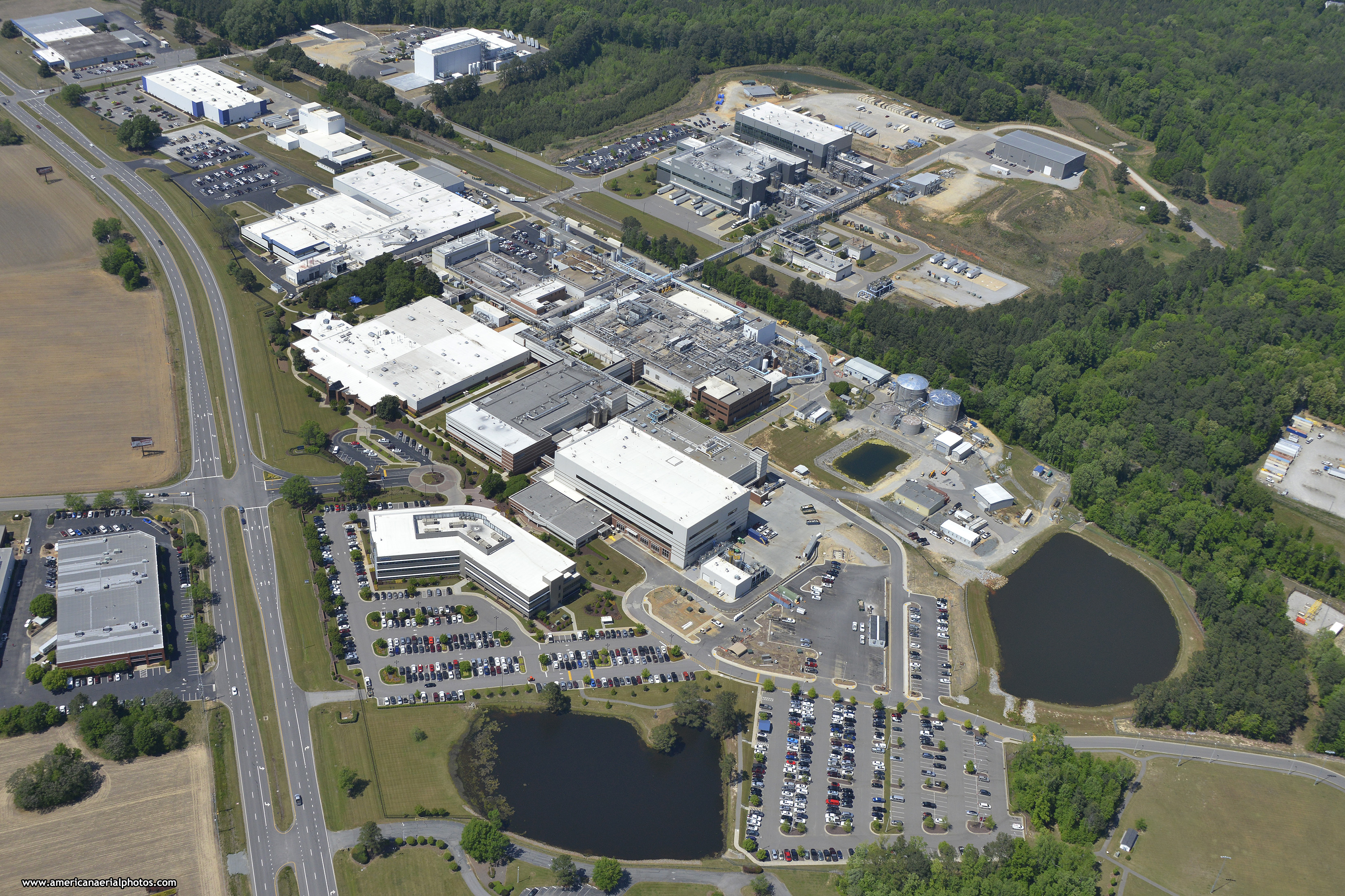
What Actually Happened at Clayton
The public sequence is compact. A storm affected the site’s power. The outage caused a transient loss of HVAC pressurization. Employees reported an unfamiliar odor and some felt ill. Emergency responders came to the site. Thirteen employees were evaluated by EMS. None were transported. Grifols and the Clayton Fire Department conducted air monitoring and found no hazard. The company said operations resumed the same day.[1][2]
The important discipline is to stop there. The odor was not publicly identified. The symptoms were not publicly described beyond employees feeling ill. No Grifols-specific standard operating procedures, investigation report, or regulator observations have been released. Local comment speculation about generator performance is not evidence and should not be treated as such.
There is a tendency, after an incident resolves without injury, to file it under harmless interruption. There is an opposite tendency to treat any emergency response at a critical drug plant as proof of deeper failure. Neither reading is supported by the available record. The incident matters because it briefly touched the physical systems that keep a highly concentrated manufacturing asset in a controlled state.
Clayton Is Not Just Another Dot on a Manufacturing Map
Grifols’ Clayton site covers about 700 acres and employs more than 1,600 people. It processes roughly 12 million liters of plasma annually and produces more than 14 million vials per year, representing about 40% of Grifols’ total medicinal output.[3] That last number needs precision: it is not 40% of the global plasma market. It is about 40% of Grifols’ medicinal output. Even with that narrower meaning, it is a large share of one major plasma company’s production anchored to one campus.
The site’s product mix is also what makes the facility strategically sensitive. Clayton manufactures plasma-derived medicines including Gamunex-C, Xembify, albumin, alpha-1 antitrypsin, and clotting factors.[3] These are not interchangeable consumer products that can be substituted by a retailer overnight. Immunoglobulin therapies support patients with immune deficiencies and other chronic conditions. Albumin is used in serious medical settings. Alpha-1 antitrypsin and clotting-factor therapies serve patient populations where continuity can be clinically important.
Plasma manufacturing also has a calendar problem that finished-goods statistics can hide. Plasma collection, testing, fractionation, purification, filling, release, and distribution are linked by long operational lead times. A short facilities interruption may be absorbed by buffers, scheduling, or unaffected units. A prolonged interruption at a site of Clayton’s scale would not be the same problem with a larger timestamp attached. It would start colliding with batch release plans, inventory positioning, customer allocations, and patient continuity.
Efficiency Creates the Exposure
Clayton’s importance is not accidental. Grifols has invested more than $1 billion in the site over the last decade. In November 2023, the company announced FDA approval for a 150,000-square-foot immunoglobulin purification and filling facility at Clayton, adding 16 million grams per year of capacity.[4] That investment makes sense in an industry where scale, process control, trained labor, utilities, quality systems, and regulatory history all matter.
Large, deeply integrated campuses can be more efficient than dispersed small plants. They concentrate expertise. They simplify certain logistics. They justify specialized infrastructure. They allow expensive utilities and quality systems to support high-volume output. For plasma-derived medicines, those advantages are real.
The same design concentrates dependency. A campus that processes 12 million liters of plasma annually is not easy to replace during a bad week. Filling capacity cannot be conjured by pointing to a second corporate location. Validated processes, approved facilities, trained operators, quality-release capacity, and regulatory filings determine what can actually move where. Redundancy is not a map with several dots. It is the ability to move specific products through specific qualified steps without breaking supply commitments.
| Clayton feature | Why it matters for continuity |
|---|---|
| 700-acre campus | Physical scale signals a major integrated manufacturing asset, not a small support site. |
| More than 1,600 employees | Recovery depends on people as much as equipment: operators, quality teams, maintenance, safety, and emergency coordination. |
| 12 million liters of plasma processed annually | A prolonged outage would affect upstream and downstream schedules, not only the day of the event. |
| About 40% of Grifols’ medicinal output | The concentration is company-level, but strategically material. |
| Gamunex-C, Xembify, albumin, alpha-1 antitrypsin, clotting factors | The output supports chronic, rare, or life-sustaining treatment needs. |
Incident Severity and Concentration Risk Are Different Questions
The July 20 event did not publicly become a product-shortage event, a contamination event, or a regulatory enforcement event. On the available record, it was a facilities and emergency-response event that resolved quickly. That matters. A sober analysis should not use an odor report and EMS evaluations to imply product impact when none has been disclosed.
But concentration risk is not measured only by whether the latest incident caused harm. It is measured by what would be at stake if the same site were unavailable for longer, if the affected utility were harder to restore, if a quality hold followed, or if recovery collided with a tight release schedule. Business-continuity planning has to ask those questions before the record includes a crisis.
This is especially true in plasma therapeutics because supply is constrained by biological input and regulated manufacturing capacity. A company cannot simply buy more plasma-derived finished medicine from a generic equivalent supplier in the way a hospital might source a commodity item. The constraint is embedded in collection networks, manufacturing approvals, production timing, and release testing.
What Diversification Does, and Does Not, Answer
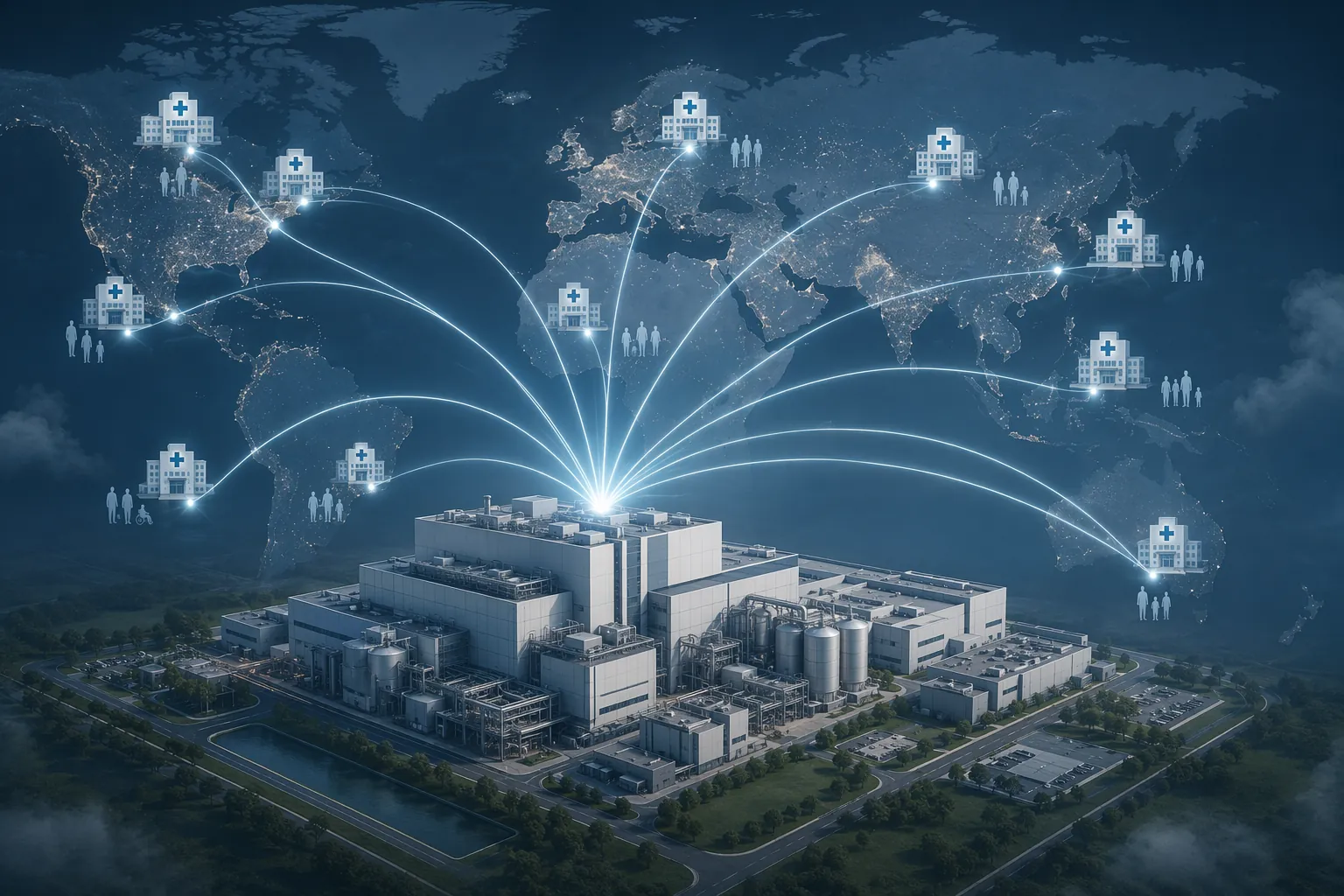
Grifols is not a one-site company. The company has additional facilities, including operations in Montreal and a newer NFF facility.[5] Those assets matter when assessing resilience. They are evidence of geographic and network diversification, and they should keep the Clayton discussion from turning into an exaggerated single-point-of-failure claim.
They do not, by themselves, settle the continuity question. The relevant test is product-by-product and step-by-step. Which therapies can be purified, filled, tested, released, and supplied through other qualified capacity? How much surge capacity exists after normal demand is met? How long would a transfer take if the disruption were more than a transient outage? Which inventories sit upstream as plasma intermediates, and which sit downstream as released finished goods?
Those answers are not public, and they may differ across Gamunex-C, Xembify, albumin, alpha-1 antitrypsin, and clotting factors. That is why the Clayton incident is useful less as an accusation than as a diagnostic case. A diversified network can still contain a very large dependency if one campus carries a disproportionate share of output or a specialized step.
The Four-Day Record Is Still Thin
As of July 24, 2026, the public information is still close to the event. That timing should make readers careful. No FDA Form 483 or similar regulatory observation has been reported. No long-term business-impact assessment has been disclosed. No public batch-disposition decision has been tied to the incident. No public record identifies the odor at the compound level. No public medical detail expands on the statement that 13 employees felt ill and were evaluated without transport.[1][2]
For executives and analysts, the absence of those findings is not permission to invent them. It is also not permission to ignore the event. The proper reading is narrower and more useful: a major plasma-manufacturing site experienced a storm-related utility disruption, emergency protocols engaged, responders found no hazard, operations resumed the same day, and the episode briefly exposed how much strategic weight sits behind the word “Clayton.”
In a less concentrated operation, the same incident might remain a local facilities note. At Clayton, it becomes a reminder that continuity planning cannot stop at injury status, air-monitoring results, or same-day restart. Those are necessary facts, and in this case they are reassuring facts. They do not answer what a longer outage would mean for a site that processes millions of liters of plasma and supplies a large share of one company’s global medicinal output.
The Signal from a Non-Disaster
The Clayton emergency should not be inflated into evidence of product failure or regulatory breakdown. The available record does not support that. It should also not be minimized because no one was injured and operations resumed the same day. On the public record, the July 20 event was operationally minor, but it highlighted a real business-continuity issue: plasma therapeutics depend on large, specialized, highly regulated manufacturing assets whose efficiency can also concentrate risk. Clayton’s role in Grifols’ network makes that visible.
References
- Grifols Clayton incident coverage, WRAL, July 20, 2026.
- Grifols Clayton incident coverage, JoCoReport.
- Grifols 50th-anniversary news release, Grifols.
- Grifols FDA-approval news release, Grifols, November 2023.
- Grifols grand-opening news release, Grifols.
Comments
Join the discussion with an anonymous comment.