
Healthcare is not merely another sector trying to adapt to AI in supply chain cybersecurity. It is the sector reporting the highest exposure: 87% of healthcare organizations said they experienced at least one supply-chain breach, the highest rate across industries in the 2026 data summarized from BlueVoyant reporting.[1] That number should make a hospital board pause before accepting the familiar assurance that a vendor has the matter in hand.
The risk is not confined to one breached software supplier or one compromised billing partner. Healthcare supply chains now include electronic medical record integrations, credentialing platforms, imaging software, connected infusion pumps, claims processors, logistics tools, AI-enabled diagnostic devices, cloud analytics vendors, and outsourced revenue-cycle operations. A procurement decision made as a routine operational improvement can quietly become a clinical continuity dependency.

AI changes the economics of attacking that environment. It can accelerate reconnaissance across exposed vendors, support malware-free intrusion, generate convincing vendor impersonation, mutate attack code, and interfere with the data and models that health systems are beginning to rely on for operations and care-adjacent decisions. CrowdStrike reported an 89% year-over-year increase in AI-enabled adversary attacks, while 82% of detections were malware-free and the fastest observed eCrime breakout time dropped to 27 seconds.[2] A security review that assumes yesterday’s attacker tempo is already behind.
The awkward part is that many organizations know this in the abstract and still run third-party risk programs that do not see most of the third parties. SecurityScorecard found that AI-driven threats ranked as the top supply chain risk for security leaders, yet 67% of organizations still rely on static security audits.[3] The same report found that 78% of organizations say their cybersecurity programs cover less than half of their vendor ecosystem, even as 90% of leaders express confidence in business continuity during a vendor breach.[3] Confidence is doing more work than coverage.
The breach cost is not only financial
Financial loss still matters. IBM reported that the average breach cost for U.S. healthcare reached $7.42 million in its 2025 Cost of a Data Breach Report.[4] Supply-chain compromises averaged $4.91 million and took 267 days to identify and contain, the longest lifecycle among breach vectors in that report.[4] Those figures are useful for budget conversations, but they understate the operational problem in hospitals.
A delayed lab interface, unavailable imaging system, disabled medication cabinet connection, or compromised scheduling platform does not sit neatly inside an incident-response binder. It creates queues, workarounds, diverted staff attention, delayed decisions, and manual reconciliation after the fact. The people who inherit the remediation are often not the people who approved the platform.
Medical devices sharpen the issue because they sit close to care delivery and often remain in use for years after their original software assumptions have aged. RunSafe’s 2026 Medical Device Cybersecurity Index found that 24% of healthcare facilities experienced a direct cyberattack on a medical device in the previous year; among affected facilities, 80% reported moderate-to-significant patient care impact.[5] The same report found that 57% of healthcare organizations now use AI-enabled medical devices, while 80% express at least moderate concern about the cybersecurity risks those devices introduce.[5]
That is where the phrase Internet of Medical Things, or IoMT, becomes more than a technical label. IoMT refers to connected medical devices and related systems that collect, transmit, or act on clinical and operational data. In a hospital, those devices are rarely isolated assets. They depend on updates, remote support, embedded components, vendor portals, cloud services, and sometimes AI models maintained outside the four walls of the health system.
Why vendor sprawl gives AI-enabled attacks room to move
Healthcare’s supply-chain problem is not simply that there are many vendors. It is that the vendor map is layered, partially invisible, and operationally uneven. A health system may have a formal inventory for major clinical systems while individual departments adopt AI scheduling tools, procurement analytics, transcription assistants, logistics optimization products, or vendor-hosted reporting dashboards without the same review. That shadow AI does not need to be malicious to create an unexamined dependency.
Static audits struggle in this environment because the object being audited changes. A questionnaire completed at onboarding may say little about the vendor’s later model update, new data processor, retraining pipeline, open source dependency, synthetic data practice, or integration with another subcontractor. The original procurement file can remain tidy while the actual risk surface expands.

The scale of a single vendor compromise is different when the vendor provides AI infrastructure or AI-enabled services to many institutions. Censinet’s 2026 analysis warned that one compromised AI vendor can affect 50 to 200 healthcare institutions.[6] That is not the same as saying every vendor incident produces that blast radius, but it is enough to challenge the old habit of reviewing vendors as isolated bilateral relationships.
A compromised logistics model, for example, does not have to touch protected health information to become consequential. If it influences product allocation, staffing assumptions, delivery timing, or shortage planning, the attacker may be interfering with the conditions under which care is delivered. If the system is supplied through an external vendor, the health system may not have direct visibility into the training data, model changes, or anomaly logs that would reveal manipulation.
Data poisoning is one of the clearest examples of why AI supply-chain risk does not fit neatly into ordinary vendor security language. In data poisoning, an attacker corrupts training data, validation data, or feedback loops so that a model learns the wrong pattern or behaves incorrectly under selected conditions. Censinet, citing published academic research, reported that attackers may need as few as 100 to 500 poisoned samples to compromise healthcare AI systems, with success rates over 60%, and that such breaches often go undetected for 6 to 12 months.[6] The narrow reading is important: this does not prove every healthcare AI system is easily poisoned. It does show that small manipulations can matter when model governance is weak.
Deepfake vendor impersonation sits at the other end of the chain. A finance employee, credentialing coordinator, biomedical engineering contact, or procurement analyst may receive a voice or video message that appears to come from a known vendor representative. The goal may be payment diversion, credential theft, or approval of a malicious software update. The attacker does not need to defeat the hospital’s entire security architecture if a trusted vendor channel can be made to look routine.
Polymorphic malware and malware-free intrusion make the handoff problem worse. AI-assisted tools can help attackers vary code, generate convincing lures, and move quickly through exposed identity paths. CrowdStrike’s finding that most detections were malware-free matters for hospitals because many third-party relationships depend on accounts, tokens, remote support sessions, and service integrations rather than a single executable that traditional tools can quarantine.[2]
The open source layer is now part of the clinical risk conversation
AI supply chains also inherit the risk of public software ecosystems. Health systems may not build models from scratch, but their vendors often depend on AI and machine learning libraries pulled from public registries. Sonatype identified more than 454,600 new malicious open source packages in 2025, a 75% year-over-year increase.[7] That figure is not healthcare-specific, but the relevance to healthcare is direct: an AI-enabled device or operations platform can carry vulnerable or malicious dependencies into a hospital through a vendor’s build process.
This is where a Software Bill of Materials, or SBOM, becomes operationally useful. An SBOM is an inventory of software components used in a product. It does not make a device secure by itself, and it does not replace testing, patching, or vendor oversight. It does give the hospital a way to ask a better question when a library is compromised: are we exposed, where, and through which vendor-managed product?
RunSafe found that 35% of medical-device purchasing decision-makers will not consider a device without an SBOM, and 81% rate SBOMs as important or essential.[5] That is a meaningful signal from the purchasing side. It also raises a governance question: if SBOM expectations matter during acquisition, they need to survive contract execution, renewals, model updates, and vulnerability response.
| AI-enabled supply-chain exposure | Why ordinary vendor review may miss it |
|---|---|
| Model retraining or tuning by a vendor | The original audit may not cover later training data, evaluation methods, or drift monitoring |
| Public AI/ML package dependency | The hospital may see the finished product but not the libraries embedded in the vendor build |
| Deepfake vendor communication | The control weakness may be workflow trust, not a missing firewall rule |
| Shadow AI in procurement or logistics | Department-level adoption can bypass central security and compliance review |
| Connected AI-enabled medical device | The device may depend on remote updates, cloud analytics, and third-party support paths |
General frameworks are necessary, but not sufficient
General supply-chain cybersecurity frameworks help establish discipline: inventory assets, assess vendors, manage vulnerabilities, restrict access, prepare continuity plans, and review contracts. Healthcare needs those controls. The problem is sector fit. A generic framework may not force the right questions about AI model lineage, clinical downtime, connected devices, patient-care impact, or the nested vendor relationships behind an AI-enabled product.
The NIST AI Risk Management Framework, often shortened to NIST AI RMF, gives organizations a structure for governing AI risks. It is valuable because it treats AI risk as more than software vulnerability management. But a hospital still has to translate that structure into questions a procurement team, compliance office, biomedical engineering group, legal department, and CISO can use during vendor selection and ongoing oversight.
The same is true for HICP, the Health Industry Cybersecurity Practices framework. It gives healthcare organizations a sector-relevant cybersecurity foundation. What changed in 2026 is that third-party AI risk has become specific enough to require its own transparency expectations, not just a reference back to broad cybersecurity hygiene.
The HSCC guide marks a practical pivot
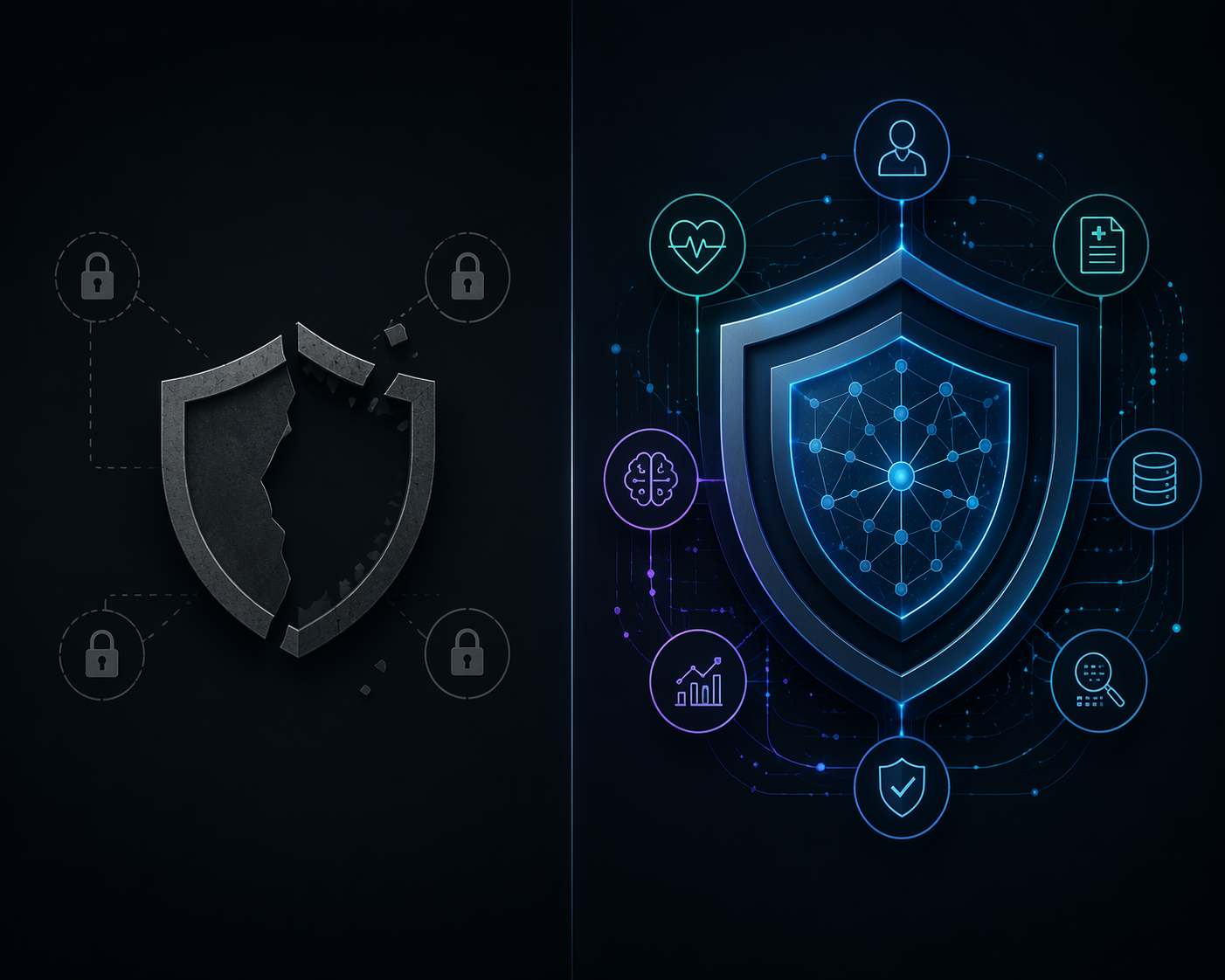
In April 2026, the Healthcare and Public Health Sector Coordinating Council, known as HSCC, released a 109-page Third-Party AI Risk and Supply Chain Transparency Guide, along with a companion AI Cyber Glossary.[8][9] HSCC is not a single hospital or vendor; it is a sector coordinating body for healthcare and public health cybersecurity. That matters because the guide attempts to name the controls that healthcare buyers and suppliers need in common language.
The guide adapts NIST AI RMF and HICP concepts for healthcare third-party AI risk, according to Health-ISAC and AHA coverage.[8][9] The available summaries identify control areas that general supply-chain reviews often treat lightly or not at all: data lineage tracking, model auditability, synthetic data misuse, training data leakage, and adversarial inference.[8][9] The guide itself was not directly available in the research materials used here, so the fair claim is that these are the highlighted domains in public coverage, not an exhaustive account of every control in the document.
Data lineage tracking asks where the data came from, how it changed, who handled it, and whether it remains appropriate for the model’s intended use. In a healthcare supply chain, that question can cross institutional, vendor, subcontractor, and public-data boundaries. Without lineage, a hospital may be unable to determine whether a model’s output reflects validated clinical or operational data, outdated assumptions, synthetic substitutions, or contaminated sources.
Model auditability asks whether a vendor can explain how a model was developed, evaluated, changed, monitored, and retired. This does not mean every hospital will inspect every model parameter. It does mean a vendor claiming AI-enabled performance should be able to produce evidence of testing, change control, performance monitoring, security review, and escalation procedures when model behavior becomes suspect.
Synthetic data misuse deserves attention because synthetic data can be helpful without being harmless. It may reduce some privacy exposure, but it can also create false confidence if the generated data fails to represent operational reality, leaks patterns from source data, or is used to train systems beyond its appropriate scope. The issue for procurement is not whether synthetic data is good or bad. The issue is whether the vendor can document its role, limits, and controls.
Training data leakage and adversarial inference move the discussion from access control to model behavior. Training data leakage can expose sensitive information through the model or its outputs. Adversarial inference can allow an attacker to extract information or manipulate conclusions by probing a model. These are not the kinds of risks that a standard financial stability review or annual SOC report was built to resolve.
The contradiction leaders have to resolve
The sector now has a more appropriate language for third-party AI risk. It does not yet have evidence that the language has become routine practice. That is the tension in the 2026 data: AI-enabled threats are ranked first among supply-chain risks, but static audits still dominate; leaders report high confidence in continuity, but most programs cover less than half the vendor ecosystem.[3]
Boards should be careful with self-reported survey figures. They may overstate exposure, confidence, or maturity depending on who answered and how the questions were framed. But the caveat does not remove the pattern. BlueVoyant’s healthcare breach rate, CrowdStrike’s AI-enabled attack trend, SecurityScorecard’s coverage gap, IBM’s breach lifecycle data, RunSafe’s medical-device findings, Censinet’s AI vendor blast-radius warning, and Sonatype’s malicious package count all point toward the same operational conclusion: healthcare supply-chain security cannot be treated as a generic vendor-management exercise with AI appended at the end.[1][2][3][4][5][6][7]
That conclusion does not require an AI cybersecurity panic cycle. It requires a stricter discipline around who is connected to the health system, what AI functions they provide, what data and software components they rely on, how their models can be audited, and how quickly the hospital can act when an upstream weakness becomes a clinical operations problem.
For CISOs, procurement directors, compliance officers, and boards, the immediate shift is from static vendor confidence to continuous supply-chain visibility. Vendor inventories have to include AI-enabled tools adopted outside central IT. Contracts have to ask for transparency around data lineage, model changes, SBOMs, subcontractors, incident notification, and audit rights. Exception logs have to show who accepted a risk, for how long, and with what compensating controls.
The vendor may handle part of the technology. The hospital still owns the consequence when that technology interrupts care, exposes data, corrupts a model, or disables a connected device. In 2026, healthcare supply-chain cybersecurity has to be built around that handoff.
References
- BlueVoyant healthcare supply-chain breach statistics, as cited in Forbes and DeepStrike.io 2026 supply chain statistics roundups. Forbes / DeepStrike.io, May 2026.
- 2026 Global Threat Report. CrowdStrike, 2026.
- 2026 Supply Chain Cybersecurity Trends Report. SecurityScorecard, 2026.
- Cost of a Data Breach Report 2025. IBM, 2025.
- 2026 Medical Device Cybersecurity Index. RunSafe, 2026.
- The Healthcare Cyber Storm. Censinet, 2026.
- 2026 open source software supply chain report. Sonatype, 2026.
- HSCC releases Third-Party AI Risk and Supply Chain Transparency Guide. Health-ISAC, April 2026.
- HSCC issues guide on third-party AI risk and supply chain transparency. American Hospital Association, April 2026.
Comments
Join the discussion with an anonymous comment.