
If a clinician needs a defensible answer today, Gotham Greens, Little Leaf Farms, and sweetgreen are the three names to use as lower-risk lettuce choices during the active cyclospora outbreak, because they sit outside the Taylor Farms recall and rely on controlled greenhouse supply chains rather than the recalled field-grown iceberg supply.[1][2]
That is a relative-risk statement, not a guarantee. It means these brands sit on a different part of the contamination ladder, not that they are sterile or immune from handling problems.
Lower-risk brands
| Brand | Why it sits lower on the risk ladder | What to tell patients |
|---|---|---|
| Gotham Greens[1] | Closed greenhouse production reduces soil, runoff, and wildlife exposure, and keeps it outside the current Taylor Farms recall boundary.[1][2] | Reasonable lower-risk raw lettuce option, but not zero risk. |
| Little Leaf Farms[1] | Closed greenhouse production with controlled water systems; the company has publicly emphasized that it has not had a human pathogen outbreak.[1] | Useful when a patient wants a named brand with strong environmental controls. |
| sweetgreen[1] | Its public non-involvement statements and controlled supply chain place it on the lower-risk side of the current outbreak discussion.[1][2] | Use the same caveat: lower risk, not immunity. |
What the outbreak covers
CDC reported 1,644 confirmed cases and 94 hospitalizations, with about 7,000 suspected cases across 34 states during May 13 to July 13, 2026.[3] The same investigation also produced a Taco Bell traceback, which matters because it shows this is a specific supply-chain problem, not just a vague leafy-greens scare.[4]
The recall boundary is narrower than the public fear around it: Taylor Farms de Mexico iceberg lettuce, including two Marketside bagged salads sold at Walmart, and roughly 1% of U.S. iceberg supply.[2] A later FDA positive test was retracted as a false positive, which lowers certainty about direct product contamination but does not erase the recall or the traceback convergence.[5]
Why production method matters
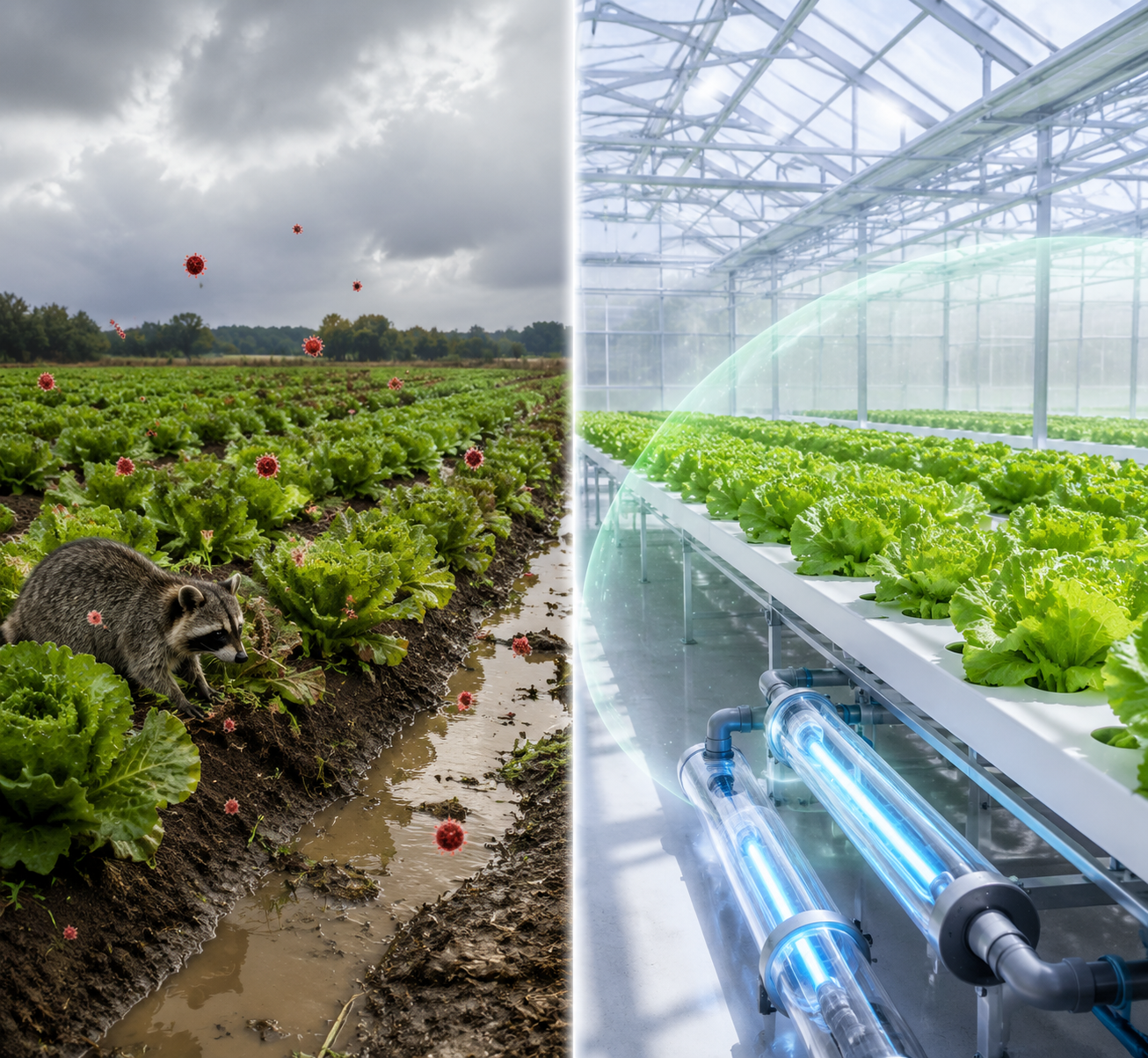
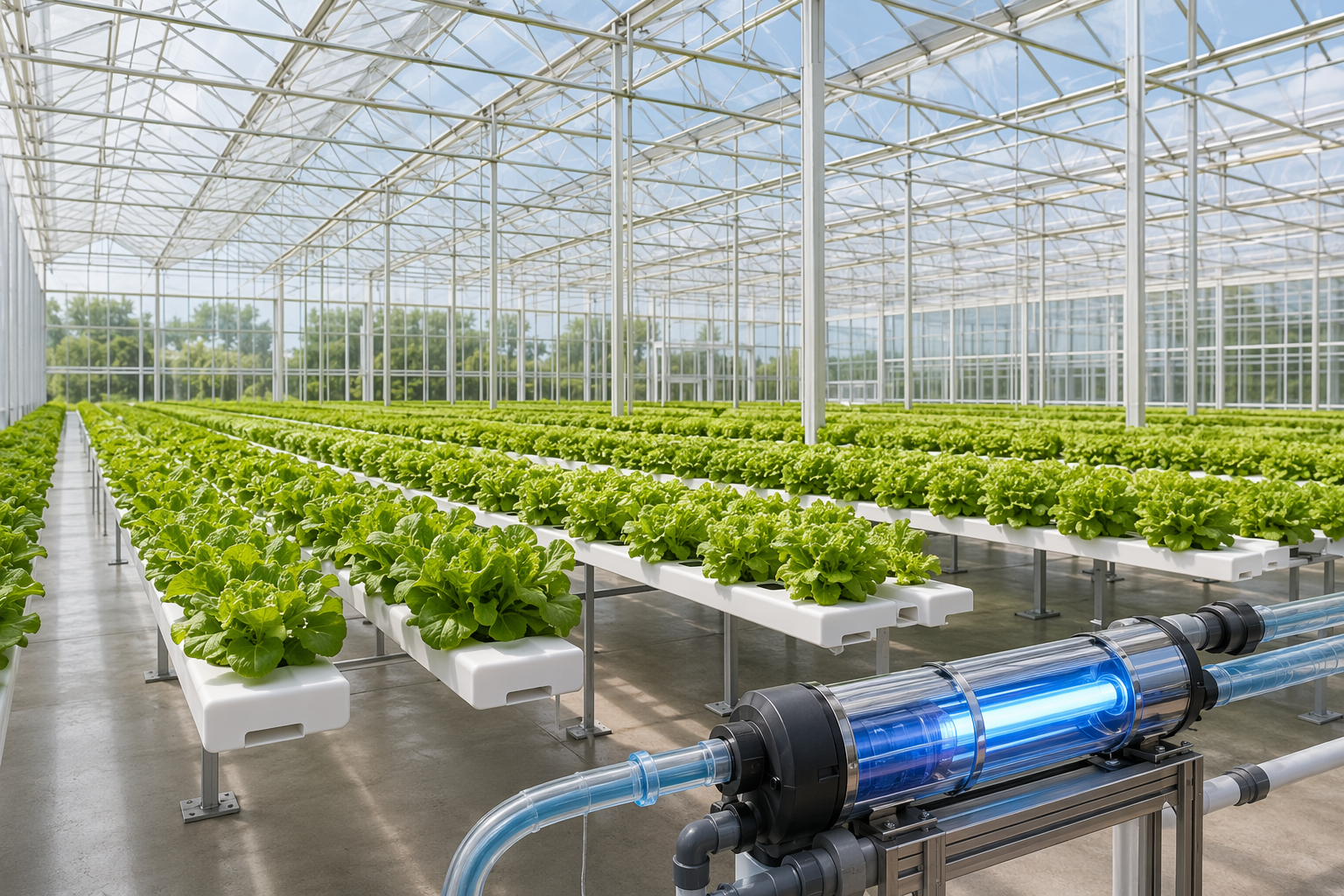
Cyclospora does not care whether lettuce is branded; it cares about contamination routes. Closed greenhouse systems keep crops off soil, reduce exposure to wildlife and runoff, and use controlled water systems. Some operators also describe UV-sterilized water. Those controls do not make the product sterile, but they do remove several pathways that field-grown lettuce cannot control.[1]
That is why the safest practical message is not "avoid lettuce" but "separate field-grown from controlled-environment supply when you can." Most lettuce still comes from field production, so greenhouse options are a narrower slice of the market rather than a universal substitute.
How to counsel patients
For patients at higher clinical risk, the question is usually not whether they can eat any raw greens at all. It is which raw greens carry the least unresolved exposure. Whole-head lettuce sits higher on the risk ladder than bagged or pre-cut lettuce; greenhouse-grown lettuce sits below field-grown lettuce; and cooked greens are safer than raw greens when cooking is an option.
Washing does not solve cyclospora exposure. A 2021 study cited by Consumer Reports found that washing removed only 11% to 69% of Cyclospora from raspberries, and the parasite is resistant to chlorine, bleach, and vinegar.[6] That is enough to make "wash it well" an incomplete clinical script.
Testing and treatment should stay targeted. Patients with compatible symptoms after exposure, especially those who are immunocompromised or dehydrating, deserve a lower threshold for evaluation. When treatment is indicated, trimethoprim-sulfamethoxazole is the usual option, commonly for 7 to 10 days.
Clinically, Gotham Greens, Little Leaf Farms, and sweetgreen are reasonable lower-risk names during the active outbreak, but no lettuce brand is zero-risk, and CDC updates should be rechecked as case counts and traceback details continue to evolve.[3][5]
References
- Cyclospora Parasite: Safe Salad, Leafy Greens During Outbreak — Newsweek — https://www.newsweek.com/cyclospora-parasite-safe-salad-leafy-greens-outbreak-12206182
- Taylor Fresh Foods Statement Regarding Cyclospora Outbreak — Taylor Farms — https://www.taylorfarms.com/newsroom/taylor-fresh-foods-statement-regarding-cyclospora-outbreak/
- Investigation Update: Outbreaks of Cyclosporiasis — CDC — https://www.cdc.gov/cyclosporiasis/outbreaks/07-26/investigation.html
- Outbreaks of Cyclosporiasis Linked to Taco Bell — CDC — https://www.cdc.gov/cyclosporiasis/outbreaks/07-26/index.html
- What We Truly Know About the Huge US Cyclospora Outbreak and What We Don't — CIDRAP — https://www.cidrap.umn.edu/cyclospora/what-we-truly-know-about-huge-us-cyclospora-outbreak-and-what-we-don-t
- You Shouldn't Avoid Fruits and Vegetables Due to Cyclospora — Consumer Reports — https://www.consumerreports.org/health/food-safety/you-shouldnt-avoid-fruits-and-vegetables-due-to-cyclospora-a9570579349/
Comments
Join the discussion with an anonymous comment.