
The Tempus AI acquisition of Personalis is easiest to misread if it is treated as a sudden $1.5 billion bid for a cancer genomics company with a promising minimal residual disease assay. The deal is bigger than that, and also more conditional than the headline makes it sound. Tempus agreed in July 2026 to acquire Personalis in a transaction valuing the company at $16.25 per share, with consideration structured as 100% stock and an option for Personalis shareholders to elect up to 50% cash, subject to proration. Reuters reported that Personalis shares fell 12% and Tempus shares fell 9% on the announcement day, a useful reminder that even strategically tidy deals can look expensive or dilutive in the first market read-through.[1]
What makes Personalis the keystone is not only its NeXT Personal MRD test. Tempus already had a commercial relationship with Personalis and held a 12.5% stake before moving to buy the rest of the company.[2] That sequence matters. This looks less like a platform company waking up to the value of recurrence monitoring and more like a company exercising an option after watching a partner move closer to commercial scale.
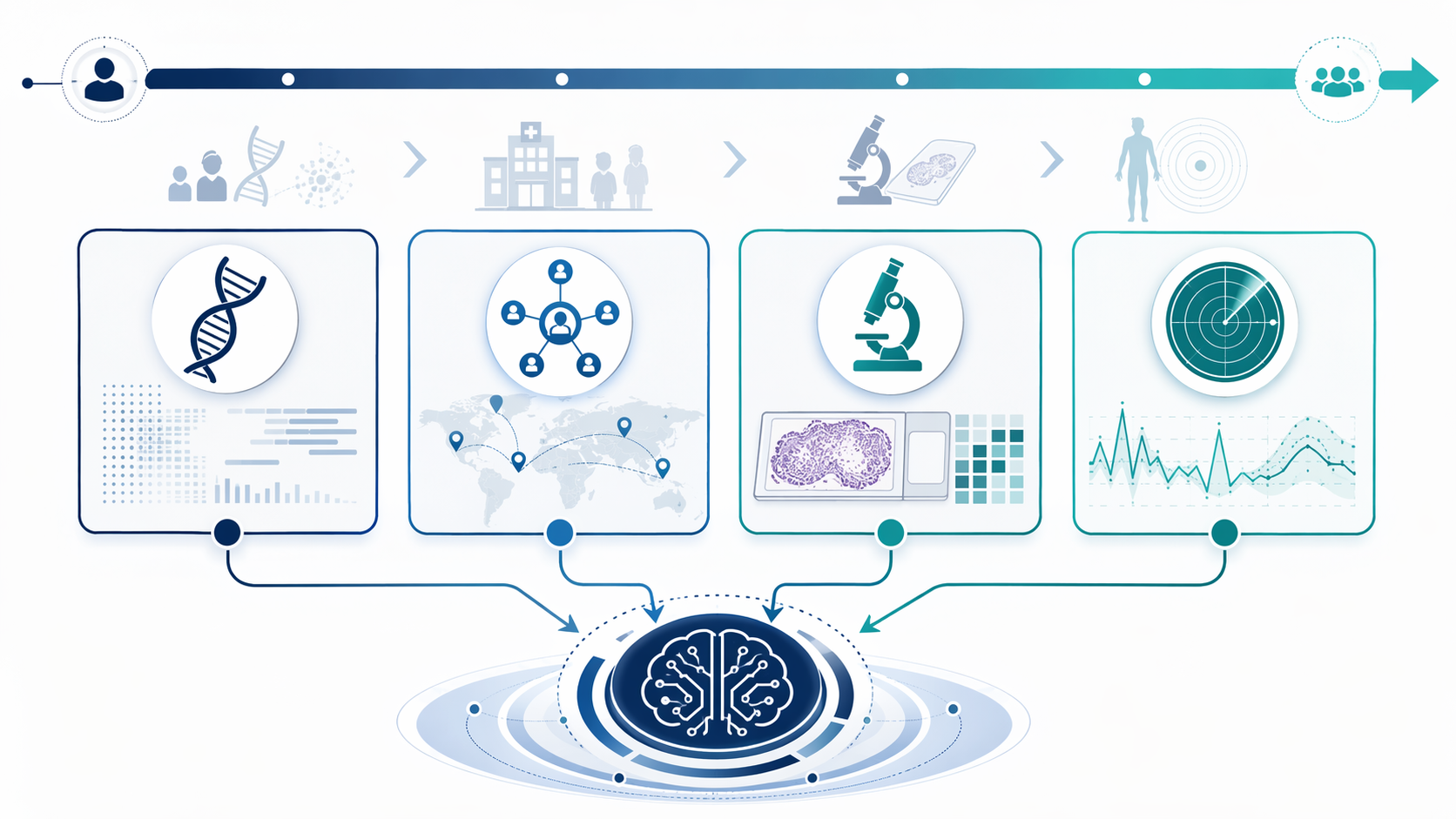
The four-deal map behind the Personalis acquisition
Tempus has now assembled, in under 18 months, a set of assets that map almost too neatly onto the cancer care continuum: inherited risk, tissue diagnosis, trial matching, and post-treatment surveillance. Clean platform stories deserve suspicion because they often become tidy only after the fact. In this case, though, the order is hard to ignore.
| Acquisition | Timing and value | Oncology layer added | Why it matters to the platform |
|---|---|---|---|
| Ambry Genetics | Closed February 2025; $600 million | Germline risk testing | Adds inherited cancer risk and hereditary testing data upstream of diagnosis |
| Deep 6 AI | March 2025 | Clinical trial recruitment | Adds patient identification and matching capabilities for studies and care pathways |
| Paige | August 2025; $81.25 million | Digital pathology and foundation-model capabilities | Adds tissue image data and pathology AI into the diagnostic layer |
| Personalis | Announced July 2026; $1.5 billion | MRD and recurrence surveillance | Adds longitudinal monitoring after treatment, the layer Tempus did not fully own |
This is the operating map: Ambry reaches patients and families before or around diagnosis through germline testing; Paige pushes Tempus deeper into digital pathology and tissue interpretation; Deep 6 AI sits in the pragmatic middle of identifying patients for trials; Personalis extends the relationship after initial treatment, when the commercial question becomes whether recurrence can be detected and monitored early enough to change management.
The sequencing also suggests a particular view of oncology AI. Tempus is not merely buying algorithms. It is buying data-generating workflows. A risk test, a pathology slide, a trial-matching engine, and a recurrence assay each create different kinds of signals. If those signals remain in separate commercial and technical silos, the acquisitions become a roll-up with good vocabulary. If they can be normalized, linked, sold, reimbursed, and fed back into model development, they become something more defensible.
Why Personalis fills the missing longitudinal layer
The Personalis deal changes the shape of the Tempus platform because MRD is not simply another diagnostic category. It is a surveillance business. A patient may need tumor profiling once, germline testing once, and pathology review around diagnosis or progression. MRD monitoring, by contrast, can create repeated testing moments after surgery or other treatment, depending on cancer type, clinician practice, reimbursement, and evidence. That makes it commercially attractive and operationally demanding.
Personalis appeared to be moving into exactly the kind of commercial inflection that would make an acquirer’s prior stake more valuable. The company reported preliminary, unaudited Q2 2026 revenue of $22.4 million and 10,384 tests, with test volume up 33% quarter over quarter. Tempus’s own sales of Personalis tests also rose sharply, from about 5,500 in Q1 to about 9,000 in Q2.[4] Those are not clinical utility endpoints, but they are highly relevant to an acquisition thesis. They show a product beginning to move through the channel Tempus would ultimately control.
Eric Lefkofsky described the timing in commercial terms, saying Tempus waited until Personalis was nearing the point where “you go from zero revenue to significant revenue.” He also said the market had “shifted pretty dramatically” toward tumor-informed MRD assays.[5] That framing is revealing. Tempus did not need to believe that all MRD questions are settled to decide that the category had become strategically unavoidable. It needed to believe that tumor-informed monitoring was moving from science project to reimbursable, repeat-use oncology workflow.
NeXT Personal gives Tempus a technically differentiated asset in that fight. The assay is designed to track up to 1,800 personalized variants and uses very deep plasma sequencing; Personalis describes the approach as using about 100,000X sequencing depth. Analytical validation reported sub-1 PPM sensitivity framing, with LOD50 around 1 PPM and LOD95 of 3.45 PPM.[6][7] The practical commercial message is straightforward: Personalis is trying to compete on ultra-sensitive, tumor-informed detection, not on broad, one-size-fits-all screening logic.
That distinction matters because Tempus is not entering an empty market. Natera’s Signatera has built strong recognition in tumor-informed MRD. Guardant has been pushing liquid biopsy into clinical and payer channels. Abbott and Exact Sciences, now combined in a larger diagnostics footprint, bring scale. Freenome represents another version of the blood-based cancer detection push. The competitive question for Tempus is not whether MRD is interesting. It is whether Tempus can make Personalis more valuable inside a broader oncology data network than Personalis could be on its own.
The MRD market is large, but not as large in every model
Tempus has described the U.S. MRD opportunity as a $20 billion market with penetration below 10%.[2] That is the kind of number that belongs in a deal deck, but it should not be allowed to float by itself. External market estimates are more conservative: Grand View Research estimated the current MRD testing market at about $2.5 billion, while Persistence Market Research projected the market reaching roughly $4 billion to $5.6 billion by 2030 to 2033, depending on scope and assumptions.[8][9]
| Market view | Estimate | What it likely captures |
|---|---|---|
| Tempus internal opportunity framing | $20 billion U.S. opportunity; penetration below 10% | A future-facing addressable opportunity that appears to assume broader adoption, expanded indications, and recurring monitoring use |
| Grand View Research | About $2.5 billion current MRD testing market | A narrower current-market estimate |
| Persistence Market Research | Roughly $4 billion to $5.6 billion by 2030–2033 | A growth projection that remains well below Tempus’s stated opportunity framing |
The gap does not make Tempus’s number useless. It makes the assumptions the entire story. A $20 billion opportunity requires broad clinician adoption, payer coverage, repeated testing over time, expansion across tumor types, and enough demonstrated actionability that oncologists do more than admire a sensitive assay. A $2.5 billion current-market estimate tells a very different operating story: attractive growth, but with reimbursement, evidence, guideline, and workflow constraints still determining how fast the category converts from potential to revenue.
This is why the preliminary Q2 Personalis numbers matter more than the TAM slide. Test volume growth and Tempus channel traction show that the market is not theoretical. They do not prove the top end of the opportunity, and they certainly do not settle competitive durability. But they give Tempus a stronger argument than simply saying MRD is early and large.
Clinical signals help the story, but they do not close the case
Personalis has promoted strong clinical signals, including ASCO 2026 colorectal cancer relapse data described as showing 100% early detection, as well as TRACERx lung cancer data.[10] Those claims are important commercially because MRD adoption depends on clinician confidence, payer willingness, and a belief that earlier detection can lead to useful intervention. But the ASCO 2026 colorectal relapse statement, as available through the cited company materials, should be treated as a company-disclosed conference claim rather than independently reviewed full-text evidence.
For an industry analysis, that boundary is not a minor technicality. A sensitive assay can detect molecular relapse earlier and still face hard questions about what clinicians should do with the result, how often patients should be tested, which tumor types justify routine use, and how payers define medical necessity. Tempus is buying into a category where analytical performance, clinical validity, clinical utility, coverage, and sales execution all move at different speeds.
What the platform has to integrate after the press release
The attractive version of the Tempus platform is easy to sketch. A patient enters through hereditary risk testing or tumor profiling. Pathology images and molecular data enrich the diagnostic record. Trial-matching tools identify relevant studies. MRD monitoring extends the relationship into recurrence surveillance. Over time, the company sees more patients, more samples, more outcomes, more treatment decisions, and more longitudinal signals than any single-point diagnostic vendor can capture.
The harder version lives with the people who have to make that diagram operational. Ambry, Paige, Deep 6 AI, and Personalis were not born inside the same lab workflow, software stack, sales motion, evidence package, or payer strategy. Germline testing has different ordering patterns and counseling implications than MRD. Digital pathology foundation models create different integration work than ultra-sensitive liquid biopsy. Trial recruitment software sells into a different operational budget than clinical diagnostics. The commercial force asked to cross-sell those assets will need more than a platform narrative; it will need clear handoffs, reimbursement logic, and customers who see fewer workflow steps rather than more.
There is also the basic public-company pressure of proving that acquisition-led growth can become durable economics. Tempus revenue rose from $531.6 million in 2023 to $693.2 million in 2024, and the company reported Q1 2026 revenue of $318.1 million while expecting about $1.1 billion for 2026.[11] That trajectory helps explain why Tempus can pursue a larger platform strategy, but it also raises the bar. Investors will not evaluate Personalis as a science trophy. They will look for attach rates, reimbursement progress, gross margin contribution, lower customer acquisition friction, and evidence that data scale improves commercial defensibility rather than simply increasing organizational complexity.
The announcement-day share declines reported by Reuters fit that ambiguity.[1] Personalis shareholders may have expected more cash or a different premium. Tempus shareholders may have been reacting to dilution, integration risk, or the prospect of absorbing another specialized business before the previous acquisitions have fully settled. Same-day trading is not a verdict, but it is a useful interruption to the idea that strategic fit automatically prices itself.
Why this still looks more planned than opportunistic
Despite the risks, the Personalis acquisition has a coherence that many healthcare AI acquisitions lack. Tempus did not simply buy a collection of fashionable acronyms. It built toward a longitudinal oncology position: risk, diagnosis, trial access, and surveillance. Personalis is the piece that makes the platform less episodic. Without MRD, Tempus could still argue that it supports precision oncology decisions. With MRD, it can argue that it participates in the patient journey after initial treatment, when recurrence risk becomes a recurring clinical and commercial question.
The prior commercial partnership and 12.5% stake are central to that judgment. Tempus had a way to observe demand, channel fit, operational friction, and test adoption before buying the company. The Q1-to-Q2 increase in Tempus-sold Personalis tests gives the acquisition a data point that most platform stories lack: a visible commercial relationship already producing volume before the full integration begins.[2][4]
Still, adjacency is not integration. The strongest case for Tempus is that it has assembled a plausible end-to-end precision oncology platform faster than most rivals could build one internally. The next proof point is not another acquisition announcement. It is whether Ambry, Deep 6 AI, Paige, and Personalis become durable revenue streams inside reimbursed clinical workflows, and whether the combined data asset gives Tempus a defensible advantage in a crowded MRD market rather than a more complicated version of the same competitive fight.
References
- Tempus to acquire Personalis for $1.5 billion — Reuters, July 20, 2026
- Tempus to Acquire Personalis, More Tightly Integrating Molecular Profiling and MRD Testing — Tempus Investor Relations
- Acquisitions by Tempus — Tracxn
- Tempus AI Buying Personalis in $1.5B Deal to Expand Cancer MRD Testing — MedCity News, July 2026
- Tempus buys out cancer genomics specialist Personalis in $1.5B deal — Fierce Biotech
- Analytical validation of NeXT Personal, an ultra-sensitive, tumor-informed ctDNA assay — PMC
- NeXT Personal Dx — Personalis
- Minimal Residual Disease Testing Market Size, Share & Trends Analysis Report — Grand View Research
- Minimal Residual Disease Market — Persistence Market Research
- Personalis Announces New Data from Landmark Lung Cancer Trial — Personalis Investor Relations
- Tempus Reports First Quarter 2026 Results — Tempus Investor Relations
Comments
Join the discussion with an anonymous comment.