
Using AI to compare health benefits of foods sounds, at first, like a ranking problem: show the system two meals and ask which one is better. The evidence supports a narrower and more useful answer. Current systems can recognize foods, estimate portions and nutrients, classify processing level, and infer nutrition-profile patterns with strong technical performance in controlled settings. A 2024 scoping review of AI applications for measuring food and nutrient intake found food detection accuracy ranging from 74% to 99.85% across 25 studies, with reported macronutrient estimation errors around 10% to 15% in some systems.[1] That is not trivial. It is also not the same as proving that an AI tool can make clinically meaningful food comparisons for diverse patients in real time.
The practical question is where the comparison happens. A model may compare image pixels to labeled food categories. Another may compare a product description to a food-processing taxonomy. Another may compare nutrient profiles against patterns seen in a database. Each comparison can be accurate on its own terms while still falling short of telling a patient, a dietitian, or a diabetes educator what dietary choice will improve health outcomes.
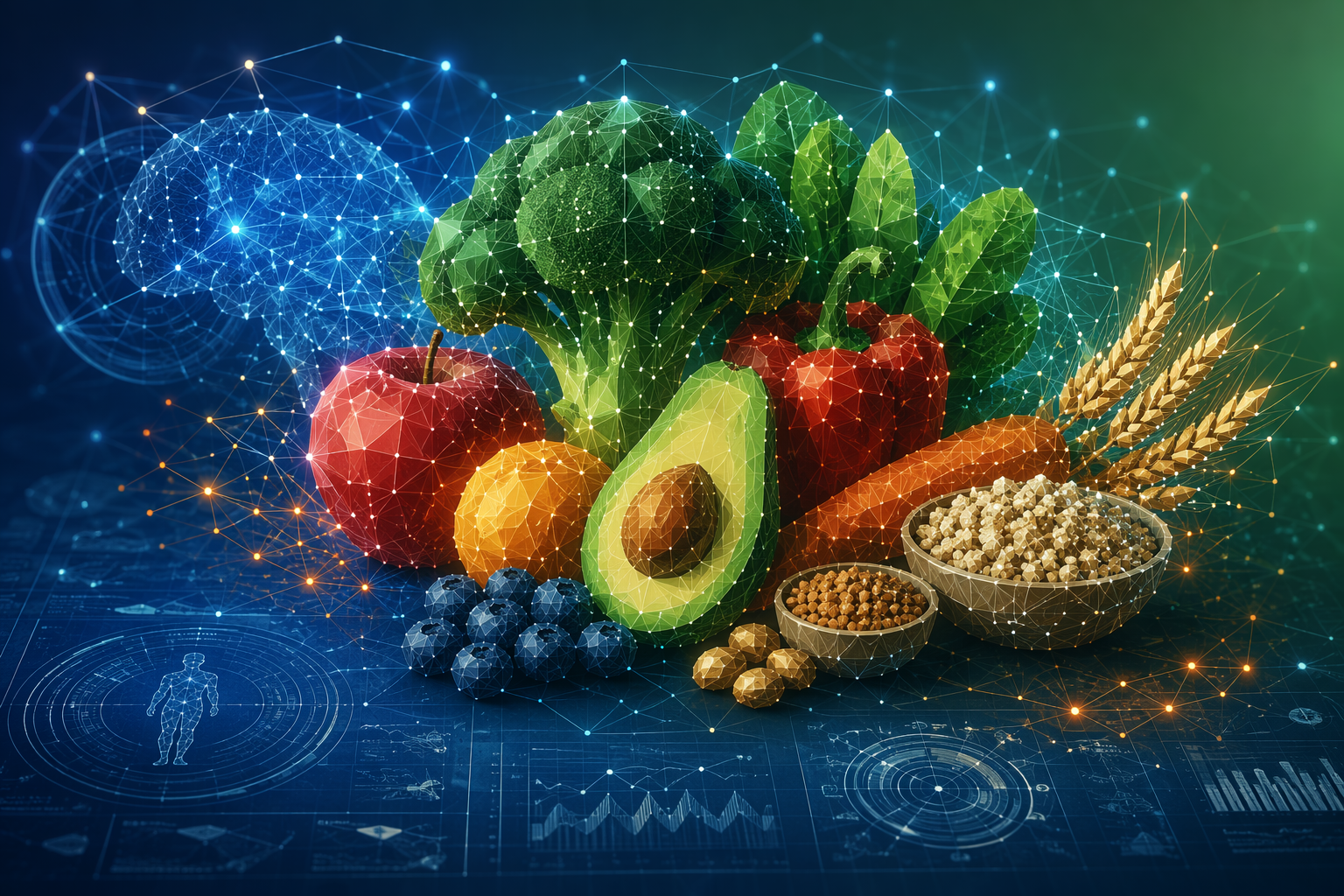
What AI Is Actually Comparing
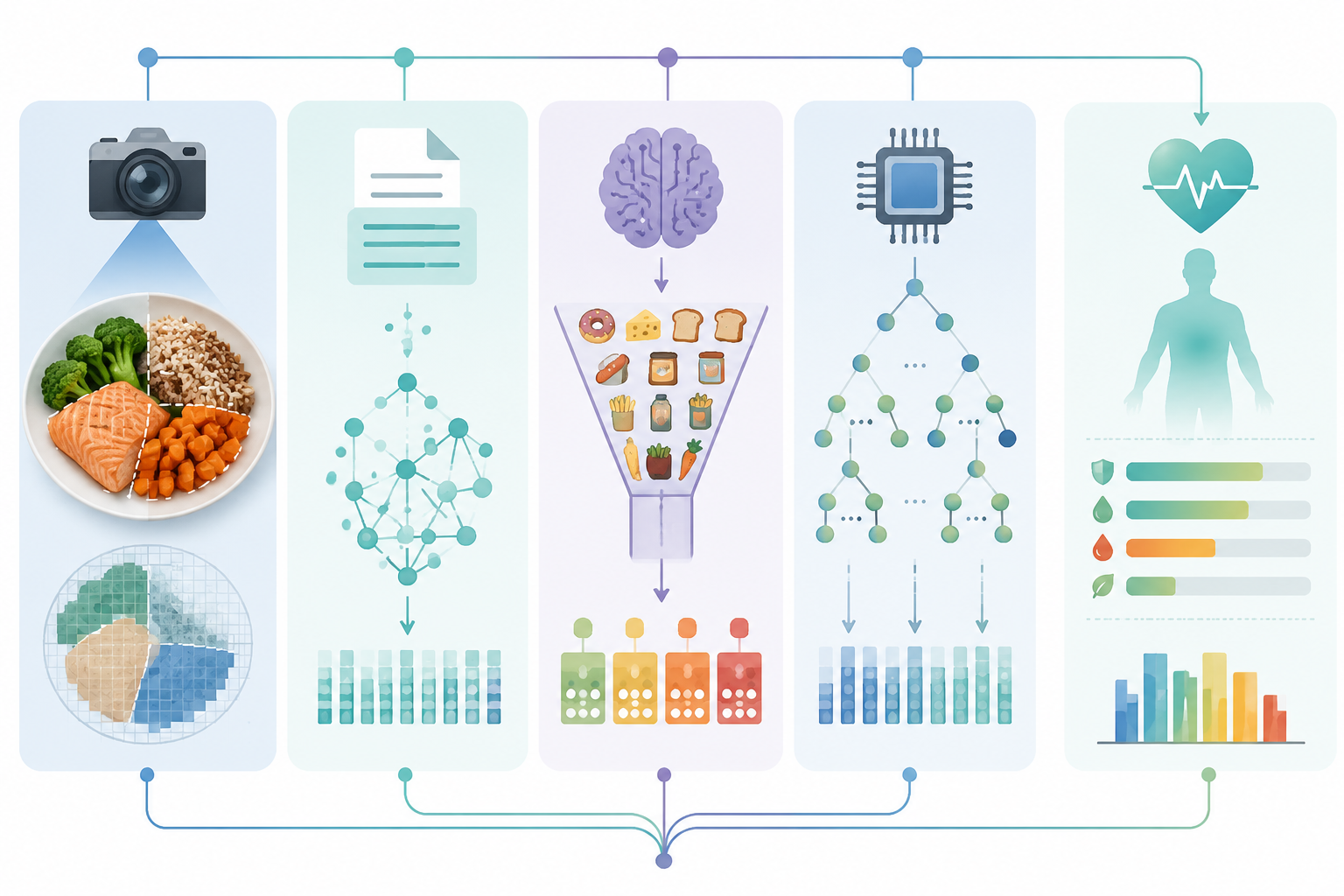
In nutrition work, “health benefit” is rarely visible in the raw input. A meal photo does not directly contain glycemic response, long-term cardiovascular risk, satiety, cultural acceptability, affordability, or adherence. AI systems usually start several steps earlier: identifying the food, estimating quantity, mapping that estimate to a food composition database, or classifying a product according to processing level or nutrient profile.
That distinction matters because an error in the first step travels forward. If a mixed dish is recognized as the wrong food, a precise nutrient calculation only makes the wrong answer look cleaner. If the food is identified correctly but the portion size is off, carbohydrate counting can still mislead insulin dosing support. If a packaged food is classified correctly by NOVA processing level, that does not automatically settle whether it is the better choice for a particular patient with kidney disease, diabetes, dysphagia, food insecurity, or a therapeutic diet order.
| AI task | What the model compares | What the result can support | What it does not prove by itself |
|---|---|---|---|
| Food recognition | Meal images against labeled food categories | Food logging, tray analysis, dietary assessment cleanup | That the recognized food is healthier than another option |
| Portion and nutrient estimation | Image-derived portions against food composition data | Energy, carbohydrate, protein, fat, or intake estimates | That the estimate improves clinical outcomes |
| Processing classification | Descriptions, ingredients, or nutrient profiles against NOVA-like categories | Consistent categorization of packaged foods or database items | That processing score equals individual health benefit |
| Food ranking or scoring | Nutrient patterns or categories against a scoring framework | Screening, research stratification, decision support inputs | That an AI-generated rank should replace dietetic judgment |
Food Recognition Has Become Strong, Especially When the Task Is Narrow
Computer vision is the most intuitive part of the field because it resembles the work clinicians and patients already do badly under time pressure: look at a tray, a plate, or a phone photo and decide what was eaten. The high end of reported performance is impressive. In the JMIR scoping review, food detection accuracy reached 99.85% in the best-performing studies, though the full range across included studies was much wider, from 74% to 99.85%.[1]
The range is more informative than the maximum. It signals that performance depends heavily on the dataset, the image conditions, the number of food categories, and whether the system is being asked to identify neat single items or ordinary meals. A model that performs beautifully on a benchmark of recognizable foods may still struggle when a patient photographs a stew, a casserole, a rice bowl with toppings, leftovers in a container, or a culturally specific mixed dish that was underrepresented in training.
For clinical users, the promise is not that a camera can replace assessment. The promise is that it can reduce some of the least reliable manual work. Food records are often incomplete, staff estimates are rushed, and patient-entered logs can be burdensome enough that the data disappear altogether. In that context, an imperfect but consistently validated system may still be useful if its limits are visible and the workflow gives a dietitian or educator a chance to review uncertain outputs.
The Hospital Tray Evidence Shows Why This Field Is Worth Taking Seriously
The strongest practical case is not a consumer app promising personalized nutrition. It is a constrained clinical workflow: monitoring hospital food intake. Papathanail and colleagues evaluated an AI-based system for hospital nutrition monitoring and reported macronutrient estimation error below 15%, with energy error of 11.64%.[2] In the same study, nursing staff estimates had errors exceeding 30%, making the comparison clinically recognizable rather than merely technical.[2]
That contrast matters because hospital intake documentation is exactly the kind of work that is important, repetitive, and easy to degrade when wards are busy. Under-documenting or misestimating intake can affect nutrition intervention decisions, especially for patients at risk of malnutrition. A tray-monitoring system does not need to solve all of nutrition science to be useful. It needs to identify the tray contents, estimate what remains, calculate intake accurately enough for the decision at hand, and make the uncertainty reviewable.
Still, the study does not prove that AI monitoring improves patient outcomes. It shows better estimation against a comparator. That is an important intermediate endpoint, particularly when the comparator is common clinical documentation, but it remains upstream from outcomes such as improved nutrition status, fewer complications, shorter length of stay, or better disease management.
Carbohydrate Counting Is Closer to Clinical Use, but Still Narrow
Carbohydrate counting for type 1 diabetes is one of the more clinically concrete use cases because the output maps to an immediate management task. The GoCARB system, discussed in the scoping review, represents an AI-based approach to carbohydrate estimation with approximately 10% mean absolute percentage error.[1] That level of error is plausible enough to attract clinical interest, especially when compared with the burden of manual carbohydrate counting.
But carbohydrate counting also shows why “food health comparison” is too broad a label. A system may estimate carbohydrates well enough to support a diabetes workflow while saying little about overall diet quality. A food with a lower carbohydrate estimate is not automatically healthier for every person, and a more accurate carbohydrate count does not by itself demonstrate better glycemic outcomes unless that downstream effect is tested.
Processing-Level Classification Is Accurate Enough to Be Useful, With Important Caveats
A different branch of nutrition AI does not look at plates at all. It classifies foods by processing level, often using product names, ingredient lists, nutrient values, or database fields. This is where the evidence for high classification performance is especially strong. Campbell and colleagues reported machine learning models for NOVA food-processing classification with F1 scores from 0.86 to 0.98 across multiple national databases.[3]
Those scores are meaningful because NOVA classification is labor-intensive when applied across large food databases. If a supervised model can classify many items consistently, researchers can analyze dietary data at a scale that would otherwise require extensive manual coding. Clinical systems could also use such classification as one input when flagging ultra-processed foods or summarizing diet records.
The caveat is that processing classification is not the same as a complete health-benefit comparison. NOVA categories are useful, but they are still categories. They do not capture all therapeutic contexts, and they do not turn an individual patient’s meal pattern into a proven intervention. A model can be excellent at assigning a category and still be silent about whether changing that food, at that time, for that patient, will produce a measurable benefit.
Random Forest Models Can Infer Processing Signals From Nutrient Profiles
FoodProX, described by Menichetti and colleagues, takes a related but distinct approach. The system uses a random forest classifier to predict NOVA categories from nutrient profiles alone and reported greater than 95% AUC, then uses that approach to generate a continuous FPro score.[4] The attraction is obvious: many datasets contain nutrient profiles even when ingredient lists or manual NOVA labels are incomplete.
This kind of model can make hidden structure visible. If nutrient profiles carry enough signal to distinguish processing categories, large food datasets can be scored more consistently and at lower manual cost. But the inference runs through the available database. It is not a direct measurement of how the food was made, and it is not a direct measurement of health outcome. The result is best treated as a processing-related score that can support research or screening, not as a standalone clinical verdict.
Language Models Help With Product Descriptions, but Geography Still Shows Up
Natural language processing is useful when the nutrition problem is buried in text: product names, ingredient lists, and food descriptions. Hu and colleagues fine-tuned a BERT language model on 18,916 Canadian products and reported an F1 score of 0.979 in that source setting.[5] When generalized to Argentina and the United States, performance remained strong but lower, with F1 scores of 0.889 and 0.947 respectively.[5]
That drop is not a failure; it is a useful warning. Food language is local. Product naming conventions, fortification practices, ingredient terminology, regulatory labels, and market composition vary by country. A model that reads Canadian products very well may still need validation before it is used to classify foods in another national database or a multilingual clinical population.
Where Accuracy Numbers Can Mislead
The headline accuracy numbers are real, but they answer different questions. Detection accuracy answers whether the system found the right food class in an image. Mean absolute percentage error answers how far an estimate was from a reference value. F1 score answers how well a classifier balanced precision and recall across categories. AUC answers how well a model separated classes across thresholds. None of these metrics, on its own, answers whether AI-guided food comparisons improve patient care.
The first common overreach is to treat food identification as nutrition interpretation. Recognizing “pizza,” “lentil soup,” or “rice with vegetables” is only the start. The recipe, portion size, preparation method, condiments, brand, and leftovers matter. Mixed dishes remain a major weak point because the visually obvious label may hide the ingredients that drive the nutrient estimate.
The second overreach is to treat database coverage as population coverage. Packaged foods with barcodes and standardized labels are easier to classify than home-cooked meals, informal foods, shared plates, or regional dishes. This creates a quiet equity problem: the patients whose foods are least represented may receive the least reliable outputs, while the interface presents the same confidence.
The third overreach is to treat nutritional labels as health benefit. Labels and nutrient profiles are valuable inputs, but clinical benefit depends on the person and the intervention. Sodium content may be central for one patient, carbohydrate timing for another, texture modification for another, and adequate energy intake for another. A general-purpose rank can obscure those priorities unless the system makes its criteria explicit.

Clinical Readiness Depends on the Link Between Ranking and Outcome
The most important gap is not whether AI can produce a ranking. It can. The gap is whether that ranking is clinically valid for the decision being made. A nutrition research scoping review described machine learning approaches across nutrition research, but the field remains largely developmental and validation-oriented rather than defined by real-time clinical deployment with measured patient outcomes.[6]
For a clinical dietitian, a useful AI comparison would need to show its work. It should state whether it is comparing foods by energy density, carbohydrate content, saturated fat, sodium, fiber, NOVA category, ingredient pattern, or a disease-specific rule. It should show the food composition source, the confidence of recognition, the portion assumption, and the reason one food was ranked above another. Without that transparency, the model output becomes another undocumented estimate in a workflow already full of undocumented estimates.
For researchers, the bar is slightly different but not lower. AI can help clean food records, classify large databases, and reduce manual coding. Yet studies still need to report the population, food database, cuisine coverage, validation method, and failure modes. A high F1 score in one national database should not be silently imported into another setting. A model validated on packaged foods should not be assumed to work for household recipes or hospital trays unless that use was tested.
For patients, the concern is consequence. If the output is a broad educational message, a modest classification error may have limited harm. If the output affects insulin support, renal diet counseling, malnutrition monitoring, or automated clinical documentation, the tolerance for unexplained error changes. The closer the model gets to treatment decisions, the more it needs prospective evaluation, workflow safeguards, and human review.
A More Careful Way to Use AI Food Comparisons
The better near-term role for AI is not to declare the healthiest food in a universal sense. It is to make specific comparisons faster and more consistent within defined boundaries. In a hospital, that may mean estimating tray intake more accurately than routine staff documentation. In diabetes care, it may mean reducing the burden of carbohydrate estimation. In nutrition research, it may mean classifying food databases by processing level at scale. In public health analysis, it may mean identifying patterns that deserve closer human interpretation.
- Use computer vision outputs when the food image, portion assumptions, and uncertainty can be reviewed.
- Use NLP or BERT-style models when the task is reading product text, not when the task requires interpreting an unlabeled mixed meal.
- Use NOVA or FPro-style scores as processing-related inputs, not as complete substitutes for nutrition assessment.
- Validate models in the population, country, food environment, and workflow where their outputs will be used.
- Require outcome evidence before treating AI-guided rankings as clinical interventions.
Food detection up to 99.85%, macronutrient errors near the 10% to 15% range, NOVA F1 scores of 0.86 to 0.98, and BERT classification near 0.979 in a source-country product set all point to a field that has moved beyond toy performance.[1][3][5] Those numbers support constrained use, not a universal claim that AI can judge food health benefits for every patient and setting.
So the accurate answer is conditional. AI can compare foods by recognized category, estimated nutrients, processing classification, and nutrient-profile-derived scores with strong performance in selected settings. It cannot yet be assumed to compare the health benefits of foods in a clinically complete way. That step requires transparent validation across diverse diets, explicit linkage to established nutrition science, and prospective evidence that AI-guided comparisons improve outcomes rather than merely produce cleaner rankings.
References
- AI Applications to Measure Food and Nutrient Intakes, JMIR, 2024.
- An Artificial Intelligence-Based System for Monitoring Food Intake in Hospitalized Patients, Nutrients, 2021.
- Machine learning models for NOVA food processing classification, British Journal of Nutrition, 2026.
- Machine learning prediction of the degree of food processing, Nature Communications, 2023.
- A BERT-Based Natural Language Processing Model for Food Processing Classification, Nutrients, 2023.
- Artificial Intelligence in Nutrition Research: A Scoping Review, Nutrients, 2024.
Comments
Join the discussion with an anonymous comment.