
The best current answer to “do artificial sweeteners cause memory loss in older adults?” is more complicated than the headline permits. The largest prospective study to date found that higher intake of low- and no-calorie artificial sweeteners was associated with faster decline in global cognition and memory over 8 years, with a clear dose-response pattern. Yet the same study found no statistically significant association among participants aged 60 and older, the group most people have in mind when they ask about memory loss in the elderly. That age split is not a footnote; it is central to how the evidence should be used in clinic. [1]
The study, from ELSA-Brasil, followed 12,772 adults across 3 assessment waves and examined consumption of several individual sweeteners rather than treating “artificial sweeteners” as one vague exposure. Participants in the highest consumption tertile had faster global cognitive decline than non-consumers, with an estimated β of −0.024 and a 95% confidence interval from −0.040 to −0.008; the authors described the magnitude as roughly equivalent to 1.6 years of accelerated brain aging. Memory showed a similar pattern. [1]
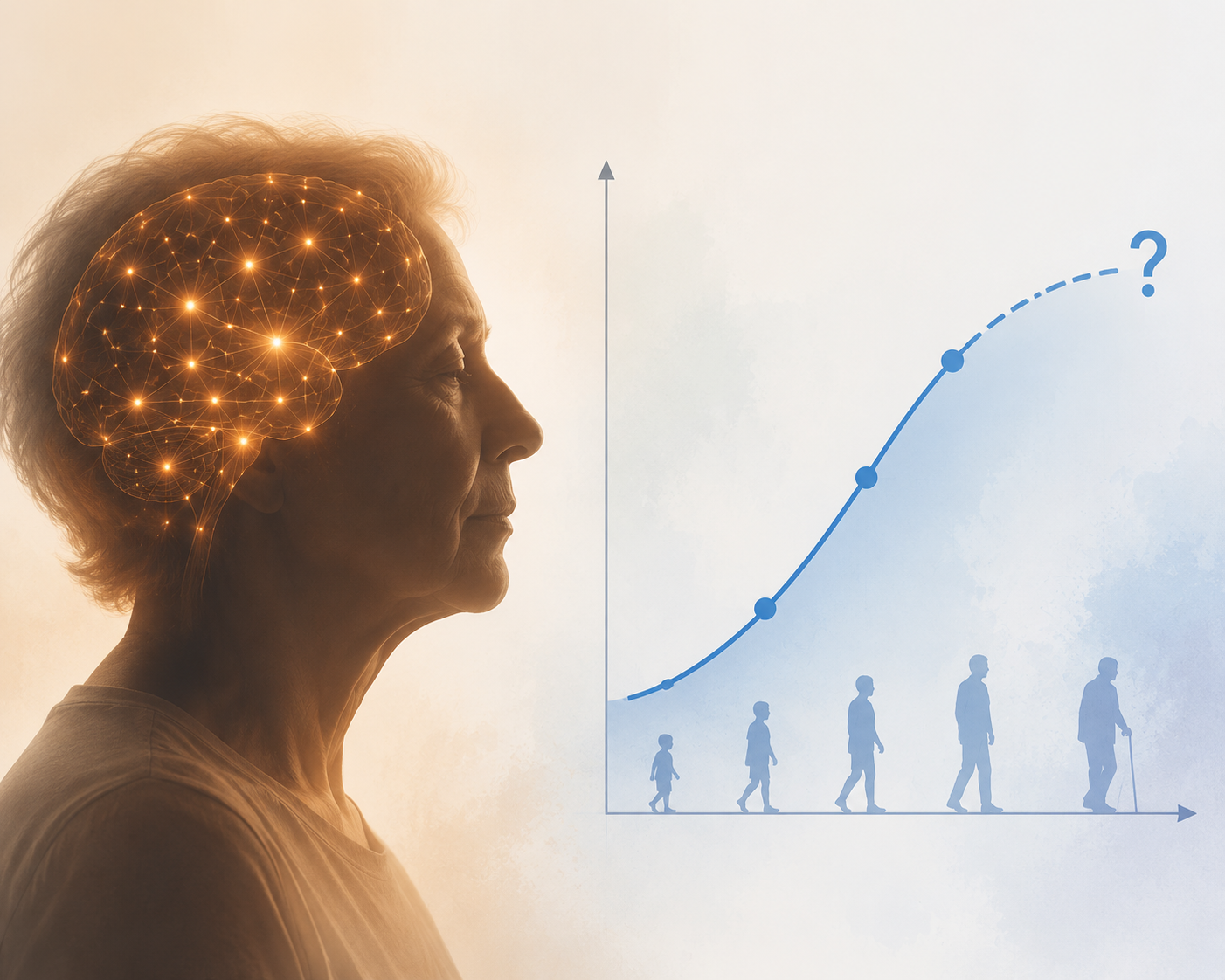
What the ELSA-Brasil findings actually show
The most persuasive feature of the ELSA-Brasil result is not simply that the highest-consumption group did worse. It is that the association moved in a graded direction. Compared with non-consumers, the middle consumption tertile showed 35% faster decline, and the highest tertile showed 62% faster decline in global cognition. A monotonic gradient does not prove causality, but it makes the result harder to dismiss as a random contrast between two groups. [1]
| Finding | What it means clinically |
|---|---|
| Middle tertile: 35% faster global cognitive decline | The association was not confined to the highest consumers. |
| Highest tertile: 62% faster global cognitive decline | The strongest exposure group showed the clearest signal. |
| Approximate equivalent: 1.6 years of accelerated brain aging | A useful scale marker, though not the same as diagnosing dementia. |
| No statistically significant association in participants aged 60+ | The evidence should not be presented as strongest in older adults. |
That last row changes the counseling conversation. If a 52-year-old patient with diabetes is drinking several artificially sweetened beverages a day, the ELSA-Brasil signal is clinically relevant. If a 74-year-old patient asks whether the sweetener in one cup of coffee is causing memory loss, the study does not support that kind of direct claim. It measured cognitive trajectories, not a clinical syndrome of sudden memory loss, and the older subgroup did not carry the statistically significant result. [1]
The age finding has several possible explanations, none settled by the study. Midlife may be the more sensitive exposure window. Survivor bias may make the older group harder to interpret. Older adults may also be more heterogeneous in vascular burden, medication exposure, education, frailty, and preclinical neurodegenerative disease, making a small diet-related signal harder to detect. Expert commentary after publication raised similar possibilities, but these are interpretations rather than resolved mechanisms. [2][3]
Diabetes is where the result becomes hardest to ignore
The diabetes subgroup deserves attention because it is both biologically plausible and clinically awkward. Patients with diabetes are often encouraged, implicitly or explicitly, to replace sugar with low- or no-calorie sweeteners. In ELSA-Brasil, the sweetener-cognition association was amplified among participants with diabetes across multiple cognitive domains. [1]
This does not mean sweeteners are the cause of cognitive decline in diabetes. Diabetes itself, vascular risk, weight history, medication patterns, sleep apnea, kidney disease, and diet quality can all travel with sweetener use. But it does mean the common clinical shortcut—“use sweeteners instead of sugar and move on”—is probably too thin for patients who are already metabolically vulnerable.
The more defensible conversation is about lowering the overall preference for sweetness. For many patients, that means gradually reducing sweetened beverages, sweetened yogurts, tabletop packets, and diet products rather than repeatedly exchanging one sweet stimulus for another. It also avoids turning the visit into a false choice between sugar and artificial sweetener, when both may reinforce a diet pattern the patient is trying to leave behind.
The individual sweeteners did not behave identically
One reason the ELSA-Brasil paper is useful is that it did not stop at total intake. Six of seven sweeteners—saccharin, sucralose, aspartame, acesulfame-K, neotame, and advantame—were individually associated with faster decline. Tagatose was the consistent null. [1]
That pattern argues against a lazy class-wide verdict. It also argues against over-interpreting any one packet label. The study was not a randomized comparison of sweeteners, and product use can cluster with socioeconomic, medical, and dietary patterns. Still, the fact that most sweeteners moved in the same direction while one did not is exactly the kind of detail that should shape future trials.
Why this is not yet a causal finding
Prospective cohorts are valuable because exposure is measured before the outcome is observed. They are also limited because people do not choose foods at random. In this question, confounding by indication is a stubborn alternative explanation: people with weight gain, prediabetes, diabetes, or cardiovascular risk may switch to artificial sweeteners precisely because they are already at higher long-term risk for cognitive decline.
Statistical adjustment helps, but it cannot fully reconstruct the counterfactual patient—the same person, with the same metabolic history and diet pattern, randomly assigned to more or less sweetener for years. No randomized trial has shown that reducing artificial sweetener intake slows cognitive decline. That absence matters, especially when the outcome is gradual cognitive change rather than an immediate adverse reaction.
Dietary measurement is another weak point. ELSA-Brasil relied on self-reported intake, which is vulnerable to recall error and imperfect product knowledge. Patients often know they use “diet” products but not which sweetener is in them, and formulations can change. The baseline intake data also came from 2008, when consumption patterns and product availability may have differed from current exposure in some countries. [1]
Generalizability is reasonable but not automatic. ELSA-Brasil is a Brazilian cohort, and sweetener exposure depends on national food supply, beverage habits, labeling, and diabetes care norms. A clinician in the United States or Europe can learn from the dose-response pattern, but should not assume the exact exposure distribution maps onto their own patient panel.
How much does other human evidence support the signal?
The Framingham Offspring cohort provides a useful comparison, though it should not be treated as a duplicate of ELSA-Brasil. In 2,888 participants followed for 10 years, daily artificially sweetened beverage consumption was associated with an approximately 2.9-fold higher risk of Alzheimer’s disease dementia. That study focused on beverages and incident clinical outcomes, not the broader sweetener exposure and repeated cognitive testing used in ELSA-Brasil. [4]
Taken together, the two cohorts make the concern more credible than a single isolated finding. They still do not settle causality. Beverage choice, cardiometabolic disease, baseline diet quality, and health behavior can confound both studies, and dementia diagnosis is not the same endpoint as change in cognitive test performance.
The World Health Organization’s 2023 guideline also gives context, though not specifically for memory clinics. WHO issued a conditional recommendation against using non-sugar sweeteners for weight control, citing lack of long-term benefit and possible undesirable effects. That recommendation was broader than cognition and should not be inflated into a dementia warning, but it does place the ELSA-Brasil finding within a larger pattern of uncertainty about long-term benefit. [5]
Possible pathways are not proof
Mechanistic work gives several plausible routes by which sweeteners could affect brain health indirectly: changes in glucose handling, shifts in gut microbiome composition, inflammatory signaling, or effects of specific metabolites. Human and experimental studies have reported that non-caloric artificial sweeteners can alter glycemic responses and the microbiome, including work published in Nature in 2014 and Cell in 2022. [6][7]
Those studies are useful for plausibility, not for bedside certainty. A mechanistic pathway can exist without producing a clinically meaningful cognitive effect at usual intake levels. Conversely, an epidemiologic association can be real even before the mechanism is fully mapped. The two bodies of evidence should inform each other, not be substituted for each other.
The same caution applies to newer network toxicology work. A 2026 Frontiers in Nutrition paper reported 75 shared targets between aspartame and Alzheimer’s disease using network toxicology and molecular docking methods. That is hypothesis-generating, computational evidence; it does not demonstrate that aspartame causes Alzheimer’s disease in humans. [8]
What to say to patients now
For an older adult who is worried that artificial sweeteners are causing memory loss, the most accurate answer is that current evidence does not prove that. The strongest recent cohort found faster cognitive decline with higher intake overall, but not a statistically significant association in participants aged 60 and older. That distinction often lowers unnecessary alarm without dismissing the patient’s concern. [1]
For middle-aged adults, especially those with diabetes or high cardiometabolic risk, the counseling can be firmer: frequent use of artificially sweetened products should not be treated as a risk-free long-term strategy. The practical target is not a dramatic purge of every packet or diet beverage, but a gradual reduction in sweetened foods and drinks overall.
- Ask what the patient is actually consuming: diet soda, tabletop packets, sweetened coffee drinks, flavored yogurts, protein products, or “sugar-free” desserts.
- Separate diabetes counseling from dementia counseling: avoiding sugar spikes may still matter, but replacing sugar with sweeteners does not automatically create a brain-health intervention.
- Use the age nuance plainly: the ELSA-Brasil association was strongest before age 60 and was not statistically significant after 60.
- Encourage step-down changes: less sweet coffee, fewer sweetened beverages per week, more unsweetened options, and fewer products whose main appeal is sweetness without sugar.
- Avoid overpromising: no trial has shown that stopping artificial sweeteners improves memory or slows cognitive decline.
The right clinical posture is neither reassurance by reflex nor alarm by headline. ELSA-Brasil gives a concerning dose-response association, a particularly relevant signal in diabetes, and an important null result in adults over 60. That is enough to justify more thoughtful counseling about sweetness habits. It is not enough to tell older patients that artificial sweeteners cause memory loss.
References
- Association Between Consumption of Low- and No-Calorie Artificial Sweeteners and Cognitive Decline: An 8-Year Prospective Study. Neurology. 2025.
- Artificial sweeteners may speed declines in memory and thinking. Harvard Health.
- Neurology Today expert roundup. Neurology Today.
- Sugar- and Artificially-Sweetened Beverages and the Risks of Incident Stroke and Dementia. Stroke. 2017.
- Use of non-sugar sweeteners: WHO guideline. World Health Organization. 2023.
- Artificial sweeteners induce glucose intolerance by altering the gut microbiota. Nature. 2014.
- Personalized microbiome-driven effects of non-nutritive sweeteners on human glucose tolerance. Cell. 2022.
- Investigating the impact of aspartame on Alzheimer's disease through network toxicology and molecular docking. Frontiers in Nutrition. 2026.
Comments
Join the discussion with an anonymous comment.