
For most adults, the safe daily coffee limit for heart health is best translated as up to 400 mg of caffeine per day. That is the practical ceiling used in the American Heart Association’s 2026 scientific statement on caffeine and cardiovascular disease and in patient-facing dosing guidance from Mayo Clinic; in everyday terms, Mayo Clinic frames 400 mg as roughly the amount in about 5 cups of 8-ounce brewed coffee, depending on strength and serving size.[1][2]
That answer is useful, but it is not complete. A patient with well-controlled blood pressure who drinks two mugs of paper-filtered coffee before lunch is not in the same counseling category as a patient with severe hypertension drinking large unfiltered coffees, sweetened coffee beverages, and an energy drink in the afternoon. The number on the caffeine label matters; so do blood pressure status, preparation method, added ingredients, total caffeine exposure, and whether the patient develops palpitations, insomnia, tremor, or blood pressure spikes after caffeine.
This is a research-evidence reference, not individualized medical advice. In clinic, the safer move is not to turn coffee into a virtue or a vice. It is to identify who can keep a normal habit, who needs a narrower limit, and which version of “coffee” is doing the cardiovascular work.

Start With Caffeine Dose, Not Cup Count
The 400 mg threshold works because it is memorable. It also fails quickly if “cup” is treated as a standardized clinical unit. The AHA’s synthesis supports moderate coffee intake as generally safe for most adults and not associated with increased cardiovascular risk, with moderate consumption commonly falling around 2 to 4 cups per day in the evidence base.[1] Mayo Clinic’s dosing guide gives the practical anchor: up to 400 mg of caffeine per day for most adults, while noting that caffeine content varies by product and serving size.[2]
The translation problem is obvious in real life. One person’s “two coffees” may mean two measured 8-ounce brewed coffees. Another person’s “two coffees” may mean two large shop drinks, each with extra espresso, syrup, and whipped cream. The cardiovascular conversation should therefore ask two separate questions: how much caffeine is the patient getting, and what else is coming with it?
| Counseling question | Why it changes the answer |
|---|---|
| How many milligrams of caffeine per day? | The usual safe upper limit for most adults is 400 mg/day, but drink size and strength vary. |
| Is the coffee filtered or unfiltered? | Unfiltered coffee retains LDL-raising diterpenes; paper filtering removes much of them. |
| What is added? | Sugar, syrups, and cream can shift the drink from coffee exposure to dessert-like calorie and saturated fat exposure. |
| What is the patient’s blood pressure category? | Severe hypertension is the boundary where routine reassurance should become more cautious. |
| Are energy drinks included? | Energy drinks are not simply coffee in another container; high-dose formulations carry distinct cardiovascular concerns. |
The caffeine range in brewed coffee is one reason cup-based advice becomes slippery. Mayo Clinic reports coffee caffeine content varying substantially, with brewed coffee estimates in the range of 9.4 to 20.6 mg per fluid ounce.[2] At that spread, the same volume can land very differently on a daily caffeine tally.
What the Cardiovascular Evidence Actually Supports
The AHA’s 2026 statement gives clinicians permission to be less reflexively alarmed about ordinary coffee use. Its synthesis concludes that moderate coffee consumption is generally safe for most adults and is linked in observational evidence with lower risks of heart disease, heart failure, and stroke.[1] That wording matters: linked is not the same as proven to cause a lower risk.
Large observational cohorts can see patterns that short trials cannot, but they also inherit the usual nutrition-research problems: differences in diet, sleep, smoking, alcohol, socioeconomic status, medication use, and health-seeking behavior may travel with coffee habits. The better conclusion is not “coffee prevents cardiovascular disease.” It is that moderate coffee intake, as consumed in large populations, does not look like a cardiovascular hazard for most adults and often trends in a favorable direction.
That distinction is enough for many patient conversations. If a patient with stable cardiovascular risk factors drinks moderate filtered coffee, tolerates it well, and is under the 400 mg/day ceiling, the evidence does not support automatically removing coffee from the diet just because it contains caffeine.
Hypertension Is Not One Counseling Category
Hypertension is where coffee advice often becomes unnecessarily blunt. A 2026 systematic review and meta-analysis in BMC Cardiovascular Disorders included 38 studies and 2.86 million participants and found that coffee consumption was associated with lower cardiovascular disease risk in people with hypertension.[3] That finding complicates the common assumption that any patient with elevated blood pressure should be told to stop coffee.
The clinically useful message is narrower. For many patients with hypertension, especially if blood pressure is treated and stable, moderate coffee intake does not appear to be automatically harmful in the available observational literature. That does not mean caffeine is invisible at the bedside. Some patients do have measurable blood pressure increases, palpitations, anxiety, or sleep disruption after caffeine, and those responses deserve more weight than a population-average reassurance.
Severe hypertension is the point where the tone should change. In a 2022 Journal of the American Heart Association study by Teramoto and colleagues, which included 18,600 participants, people with blood pressure of at least 160/100 mm Hg who drank 2 or more cups of coffee per day had about double the risk of cardiovascular disease death compared with non-drinkers.[4] That is not a reason to generalize fear to every patient with mild or controlled hypertension, but it is a reason not to wave severe hypertension past the same 400 mg/day sentence.
There is also a population caveat. The severe-hypertension study was conducted in a Japanese population, and the research brief notes that CYP1A2 allele frequencies differ across populations.[4] That limits how confidently the exact risk estimate should be transported to every practice setting. It does not erase the clinical signal: severe hypertension deserves separate counseling, closer blood pressure monitoring, and often a lower caffeine target.
Filtered and Unfiltered Coffee Are Not the Same Exposure
Preparation method is one of the least dramatic and most useful ways to change the recommendation without turning it into an anti-coffee message. The AHA statement distinguishes filtered from unfiltered coffee because unfiltered preparations retain the diterpenes cafestol and kahweol, which can raise LDL cholesterol; paper filters remove much of these compounds.[1]
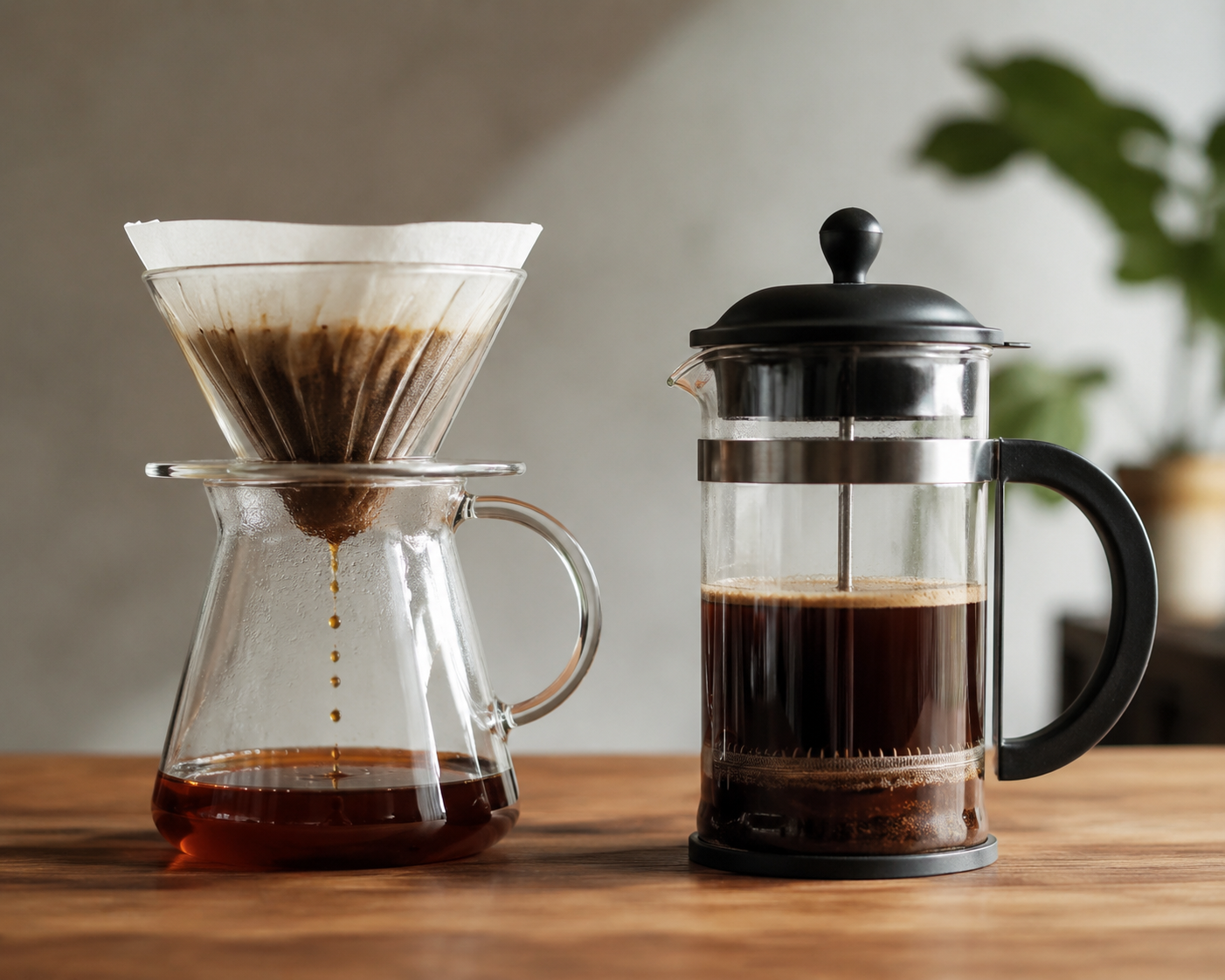
That changes the counseling for patients with elevated LDL cholesterol, established atherosclerotic cardiovascular disease, or a strong family history. The question is not only “How many cups?” It is “How are you brewing it?” A patient who wants to keep coffee but improve lipid risk may be better served by switching from French press, boiled coffee, or other unfiltered methods to paper-filtered coffee than by receiving a vague instruction to “cut back.”
This is a good example of precision that preserves normal life. If the LDL issue is the brewing method, the intervention can be the brewing method. It does not need to become a sweeping judgment about coffee as a habit.
The Additives May Matter More Than the Coffee
A plain cup of coffee and a sweetened coffee drink should not be collapsed into the same exposure. The AHA statement’s favorable framing of moderate coffee intake is not a license to ignore sugar, syrups, cream, or large dessert-like beverages.[1] When those additions are habitual, the cardiovascular conversation shifts toward added sugar, excess calories, saturated fat, weight trajectory, glycemic control, and lipid profile.
The practical history is short: what size, how many shots, what milk or cream, how much sweetener, and how often? If the patient drinks one sweetened specialty coffee occasionally, it is a different issue from using a large sweetened drink as a daily breakfast. The latter may technically sit under a caffeine limit while still working against cardiometabolic goals.
Energy Drinks Belong in a Separate Conversation
Energy drinks should not be treated as interchangeable with brewed coffee. The AHA statement flags energy drinks as a distinct concern, particularly at high doses.[1] They can combine caffeine with other stimulants and are often consumed quickly, sometimes before exercise, during sleep deprivation, or with alcohol. That pattern is not the same as sipping coffee with breakfast.
For patients with palpitations, arrhythmia concerns, poorly controlled blood pressure, or stimulant sensitivity, the caffeine inventory should include coffee, tea, sodas, pre-workout products, tablets, and energy drinks. A patient may report “only two coffees” while the actual daily stimulant load is much higher.
Timing Is Interesting, but Not Yet a Rule
Morning coffee has recently attracted attention for a reason. A 2025 European Heart Journal study from Tulane investigators included 40,725 participants and reported that morning coffee drinkers had 31% lower cardiovascular mortality than non-coffee drinkers.[5] That is a clinically interesting signal, especially because late caffeine can disrupt sleep, and poor sleep can complicate blood pressure, weight, glucose regulation, and arrhythmia symptoms.
Still, this should not be over-converted into a rule that every patient must drink coffee only before noon. The timing study was observational, and the morning-versus-all-day pattern has not been tested in a randomized trial.[5] In practice, timing is most useful when the patient has insomnia, nocturnal palpitations, reflux, anxiety, or difficult-to-control blood pressure. For those patients, moving caffeine earlier or reducing afternoon caffeine is a reasonable experiment; it is not proof that morning coffee itself causes lower cardiovascular mortality.
How Confident Should Clinicians Be?
The strongest coffee-and-heart evidence is not a long-term randomized trial proving that coffee improves cardiovascular outcomes. The AHA statement relies heavily on observational data, while randomized evidence remains limited and tends to measure short-term surrogate endpoints rather than myocardial infarction, stroke, heart failure hospitalization, or cardiovascular death.[1]
The CRAVE trial illustrates the boundary. It randomized 100 participants and tested short-term physiologic and behavioral effects of caffeinated coffee, not long-term cardiovascular outcomes.[6] That kind of evidence can help with questions about rhythm, activity, sleep, or glucose signals over a short window. It cannot settle whether coffee prevents or causes cardiovascular events over years.
That evidence hierarchy leads to a disciplined counseling sentence: moderate coffee intake appears safe for most adults and is often associated with favorable cardiovascular outcomes, but the evidence should not be inflated into a causal prescription to start coffee for heart protection. Patients who do not drink coffee do not need to begin drinking it for cardiovascular prevention.
A Clinician-Ready Framework
For the common patient question, “Do I have to stop coffee?” the evidence supports a qualified answer:
- Most adults: up to 400 mg of caffeine per day is a reasonable safe upper limit, provided the patient tolerates caffeine and total intake from all sources is counted.[1][2]
- Moderate coffee drinkers: 2 to 4 cups per day often looks neutral or favorable in observational cardiovascular evidence, but this is association, not proof of protection.[1]
- Patients with hypertension: do not assume automatic harm from moderate coffee, but check control, symptoms, home blood pressure response, and total caffeine exposure.[3]
- Patients with severe hypertension: be more cautious, especially at 2 or more cups per day, because the JAHA severe-hypertension subgroup showed higher cardiovascular mortality risk.[4]
- Patients with high LDL or ASCVD risk: ask about brewing method and favor paper-filtered coffee over unfiltered preparations when coffee is continued.[1]
- Patients using sweetened coffee drinks or energy drinks: counsel on the whole beverage pattern, not just the caffeine number.[1]
References
- Caffeine and Cardiovascular Disease, American Heart Association newsroom, July 20, 2026, link
- Caffeine: How much is too much?, Mayo Clinic, 2025, link
- Coffee consumption and cardiovascular disease risk in patients with hypertension: a systematic review and meta-analysis, BMC Cardiovascular Disorders, 2026, link
- Coffee and Green Tea Consumption and Cardiovascular Disease Mortality Among People With and Without Hypertension, Journal of the American Heart Association, 2022, link
- Coffee drinking timing and mortality in US adults, European Heart Journal, 2025, link
- Acute Effects of Coffee Consumption on Health among Ambulatory Adults, CRAVE trial, link
Comments
Join the discussion with an anonymous comment.