
Tau has lived for so long in the Alzheimer’s literature as a pathological signature that its ordinary work in a healthy neuron can seem almost incidental. That has always sat uneasily beside another line of evidence: mice lacking tau often learn tasks and recall them normally, at least when tested soon after training. If tau is central enough to become a defining protein of neurodegeneration, why did its absence look so quiet in standard memory assays?
The useful answer is not that tau is either a villain or a bystander. Kosonen et al. narrow the question to a much more exact one: whether phosphorylation of tau at threonine-205 helps a newly encoded memory remain retrievable after time has passed. In mice, their answer is yes. Tau-deficient animals learned normally and showed normal recent recall, but they were selectively impaired when recall was tested remotely, from 21 days to 4 months after training, across cued fear conditioning, pairwise visual discrimination, and the Morris water maze.[1]
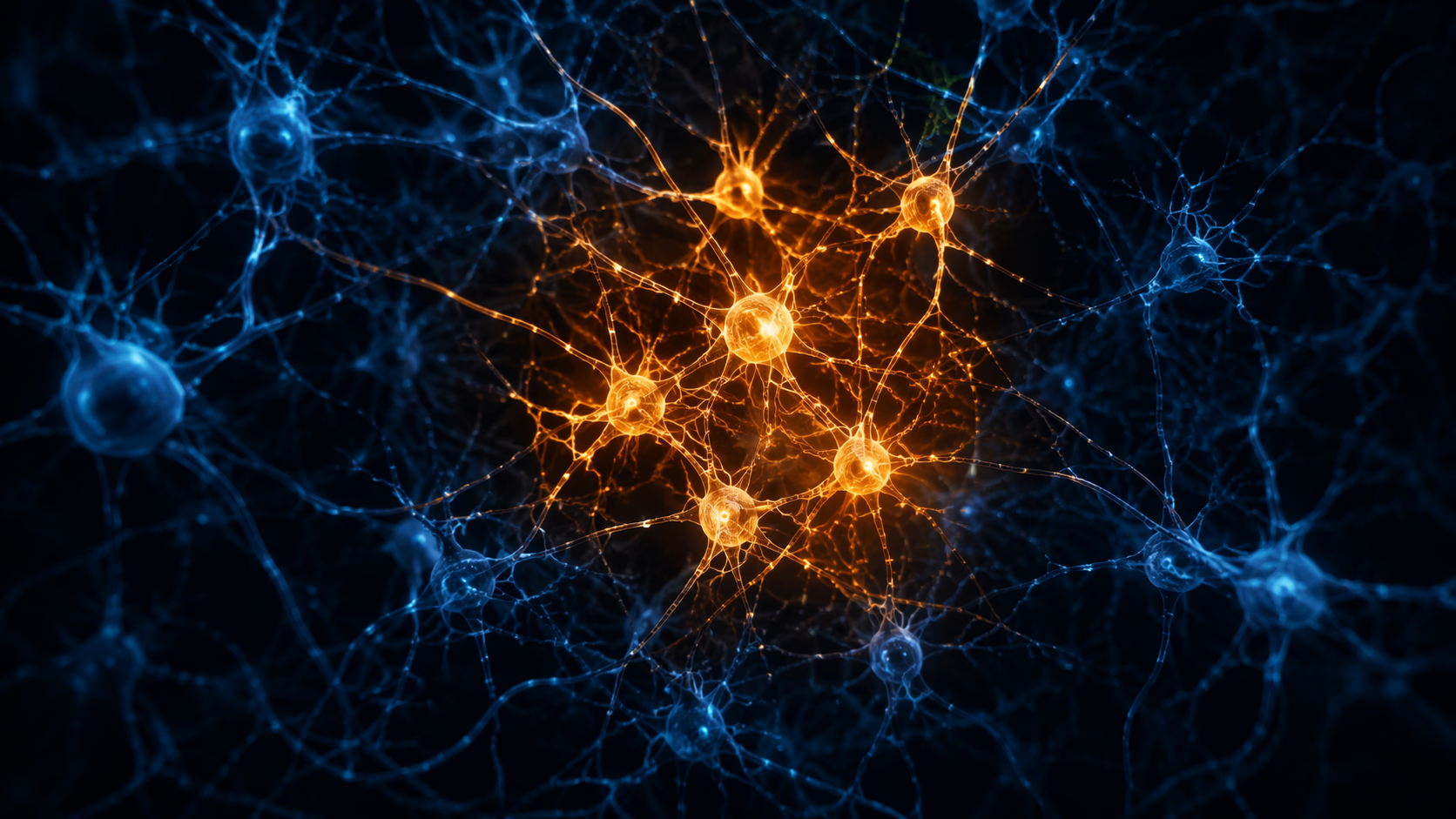
The negative tau-knockout result was not wrong; it was early in the timeline
The first important move in the 2026 study is temporal. “Memory impairment” is too blunt a phrase if the animal can acquire the task, retrieve it soon afterward, and then fail later. That pattern says something different from failed learning. It points toward consolidation, systems-level stabilization, or access to a stored trace rather than toward an inability to form an association in the first place.
That distinction matters because older work can be read less as a contradiction than as a narrower test. Biundo et al., for example, reported a role for tau in learning, memory, and synaptic plasticity, but the broader cluster of earlier tau-knockout behavioral findings often emphasized short-term or recent memory readouts.[2] Kosonen et al. essentially ask what happens after the period those assays were best positioned to see. Their mice do not reveal tau’s contribution at the moment of ordinary acquisition. They reveal it when natural cues must retrieve a memory after a delay.
The breadth of behavioral testing is doing real work here. Cued fear conditioning tests an associative fear memory. Pairwise visual discrimination in a touchscreen operant setup tests a different kind of learned choice. The Morris water maze asks the animal to use spatial information. Tau-deficient mice showed preserved learning and recent recall in these paradigms, while remote recall was impaired when tested days to months later.[1] The point is not that these tasks are equivalent. It is that the same temporal dissociation survived across them.
| Behavioral question | What the 2026 mouse data showed | Interpretive consequence |
|---|---|---|
| Can tau-deficient mice learn the task? | Learning was preserved across the tested paradigms. | The phenotype is not a simple acquisition failure. |
| Can they recall soon after training? | Recent recall was preserved. | Earlier negative findings are not surprising if they mainly sampled this window. |
| Can they recall remotely? | Remote recall was selectively impaired from 21 days to 4 months after training. | Tau’s relevant contribution emerges in the durability or cue accessibility of memory over time. |
T205 keeps the finding from collapsing back into generic tau biology
Tau is a microtubule-associated protein, and that fact can easily swallow every discussion about its normal function. The sharper result in this paper is that the remote-memory phenotype maps to a specific phosphorylation event. Mice carrying a tauT205A knock-in mutation, in which threonine-205 cannot be phosphorylated, recapitulated the tau-knockout phenotype.[1]
That does not prove tau has no structural relevance to neurons. It does mean that this memory effect should not be lazily filed under “tau stabilizes microtubules, therefore memory suffers when tau is absent.” The experiment points instead to a regulatory event: phosphorylation at T205 is necessary for the remote-memory function Kosonen et al. measured.[1]
The study also places p38γ kinase upstream of this event during the encoding window, which the authors frame as roughly 20–70 hours.[1] That window is worth keeping in view. It is not a claim that tau phosphorylation is uniformly beneficial at every time, every site, or every disease stage. It is a claim about a physiological event needed during a bounded period in mouse memory processing.
The memory trace is present; the access route is dirty
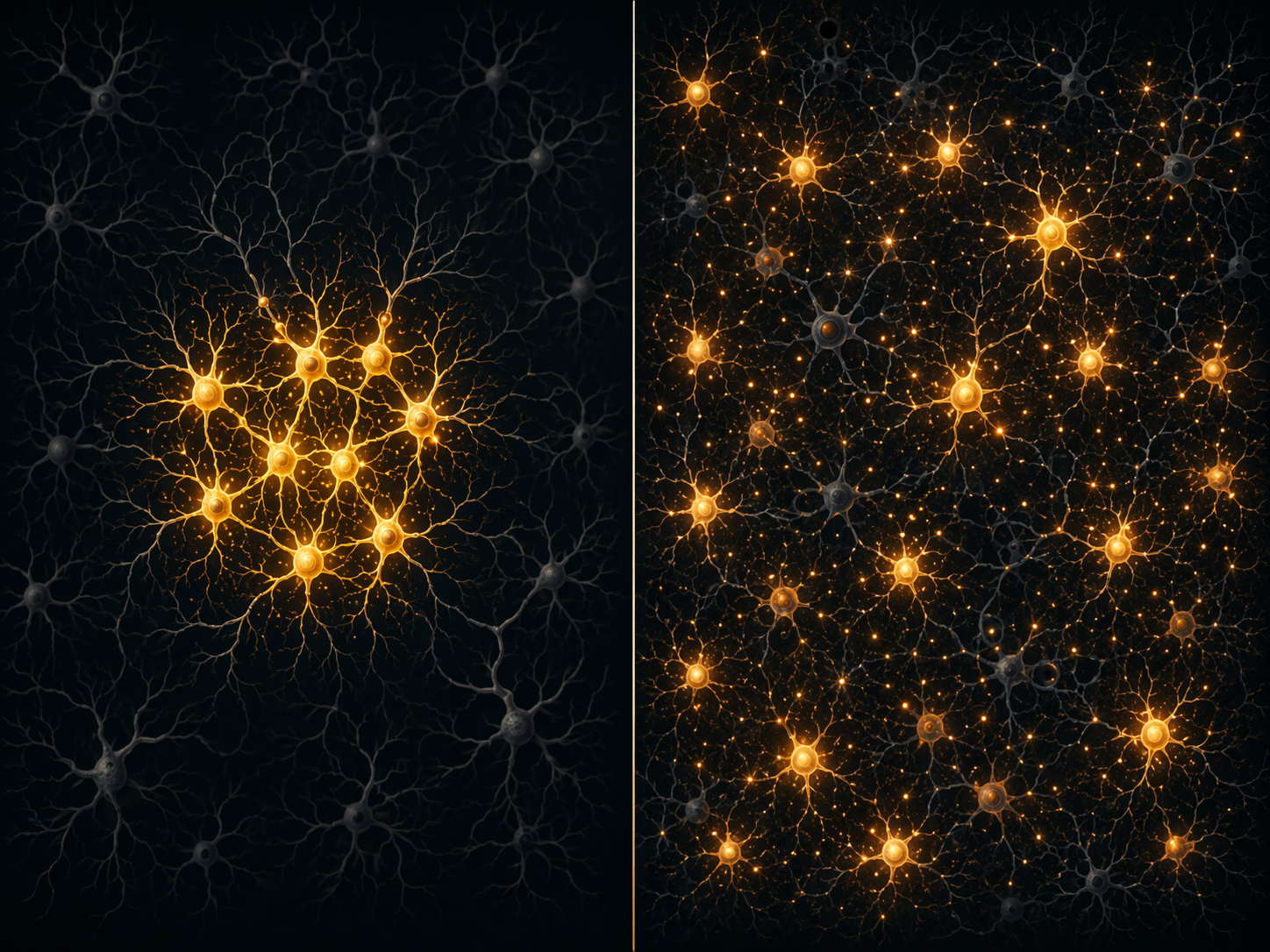
The most consequential part of the study is not simply that tau-deficient mice forget at remote time points. It is how they fail. Kosonen et al. used engram-tagging approaches to ask whether the cells representing the memory were properly recruited. In tau-deficient mice, encoding was accompanied by excessive c-Fos-positive local activation, but much of that activation had low overlap with the RAM-tagged engram population.[1]
That pattern is more interesting than a missing signal. The system is not silent. It is too noisy in the wrong neighborhood. Cells become active around the encoding event, but they are not recruited with the same precision into the memory-bearing ensemble. T205 phosphorylation, in this reading, helps suppress extraneous local activation so that the relevant engram is selected more cleanly.
This is where the study’s logic becomes more satisfying than a standard lesion-style behavioral phenotype. A tau-deficient mouse that freezes less to a remote cue could have failed in several ways: it might never have encoded the memory, it might have encoded and then lost it, or it might still carry the trace but fail to reach it through ordinary cue-driven retrieval. Those are not interchangeable states, either biologically or therapeutically.
Optogenetic reactivation separates storage from natural retrieval
The optogenetic experiment is the hinge. Kosonen et al. used a dual-AAV strategy, combining RAM-d2tTA-Cre with floxed-ChR2-YFP, to tag active engram cells and later reactivate them wirelessly. When the tagged ensemble was directly stimulated 22 days later, tau-deficient mice showed normal freezing behavior.[1]
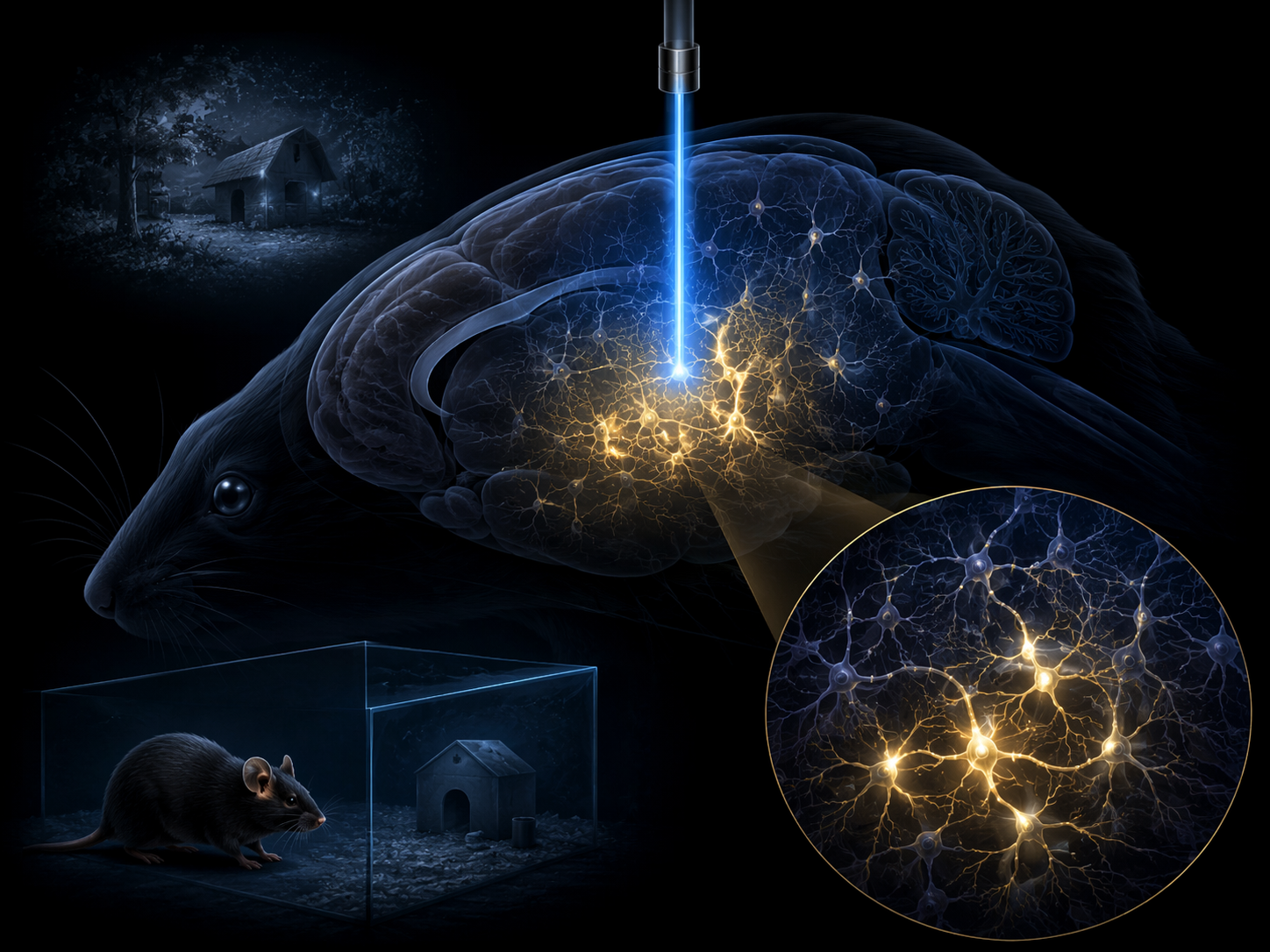
That result deserves to be read carefully. Direct stimulation did not improve learning, because the learning had already happened. It did not prove that every aspect of remote memory was normal. It showed that the trace capable of driving the behavioral response still existed. Natural cues could not access it cleanly, but direct activation could.
For memory neuroscience, that is a meaningful distinction. It shifts tau’s physiological role away from being a passive support for whether a memory is written at all. In this mouse model, T205 phosphorylation appears to help determine whether the right cells are recruited during encoding so that the memory can later be found by the cues that are supposed to find it.
Pathogenic tau mirrors the same mechanism from the disease side
The disease-facing experiments in the same paper are not a full Alzheimer’s model, and they should not be treated as one. They are more useful as a mechanistic mirror. When pathogenic tauP301S was targeted to active ensemble cells during encoding, it produced anterograde amnesia; when targeted during recall, it produced retrograde amnesia. In both settings, the amnesia was associated with aberrant local hyperactivation.[1]
The symmetry is striking but bounded. Physiological tau T205 phosphorylation helps restrain irrelevant activation during encoding. Pathogenic tau introduced into active ensembles is associated with excessive local activation and memory failure. That does not reduce Alzheimer’s disease to one phosphorylation site or one encoding mechanism. It does, however, make it harder to speak about tau removal as if all tau activity were expendable noise.
What this means for tau-lowering therapy is caution, not a clinical instruction
The therapeutic temptation is obvious: if pathological tau contributes to neurodegeneration, reduce tau. But the physiological finding complicates the timing and specificity of that logic. A 2025 review of tau biology notes that several tau-targeted approaches, including BIIB080 ASO, beprenamab, semorinemab, and AADvac1, have shown limited efficacy, while emphasizing unresolved questions about tau’s pathogenic and physiological mechanisms.[3]
Kosonen et al. do not show that any human tau-lowering therapy harms memory encoding. They do not establish a safe or unsafe dosing window in people. They do suggest a principle that future therapy design will have to respect: tau is not merely pathological cargo. At least in mice, a site-specific tau phosphorylation event during a defined encoding period supports the later accessibility of memory.
For clinical and computational readers, the relevant lesson is methodological as much as therapeutic. Behavioral outcomes become interpretable only when the experiment can separate acquisition, recent recall, remote recall, ensemble recruitment, and direct trace reactivation. Automated behavioral quantification, machine vision-supported tracking, optogenetics, telemetric recording, and computational models will matter most when they preserve those distinctions rather than compress them into a single memory score.
AI-assisted therapeutic stratification may eventually help model when tau depletion is likely to reduce pathogenic burden without interrupting physiological encoding processes. That remains a future use case, not a conclusion from this mouse study. The present evidence is mechanistic: it tells us what kind of biological distinction a useful model would need to learn.
A more precise answer to tau’s role in memory
The cleanest reading of the evidence is narrow and important. In mice, tau is not required for ordinary learning or recent recall in the paradigms tested. It is required for remote recall. More specifically, phosphorylation at T205 is required, and the function appears to be engram selection: suppressing extraneous local activation during encoding so that the recruited cellular ensemble remains accessible to natural cues over time.[1]
That interpretation reconciles much of the older tau-knockout literature without dismissing it. It also warns against flattening tau biology into a target list. The same protein family that marks disease can still perform physiological work, and the relevant unit may be a phosphorylation site, a time window, and a cellular ensemble rather than the whole protein in abstraction.
Human relevance remains open. Alzheimer’s disease remains vastly more complex than a remote-recall assay in mice. But the study gives tau a job that is precise enough to test: T205 phosphorylation helps a memory become retrievable over time by keeping the original engram from being crowded out by surrounding activity.
References
- Tau T205 phosphorylation modulates engram cell recruitment and remote memory in mice — Nature Communications, 2026.
- A role for tau in learning, memory and synaptic plasticity — Scientific Reports, 2018.
- Tau protein: Physiological functions and multifaceted roles in neurodegenerative and psychiatric disorders — Genom Psychiatry, 2025.
Comments
Join the discussion with an anonymous comment.