
The Taylor Farms lettuce recall tied to Cyclospora is the wrong outbreak to use for a clean “AI tracking” victory lap. As of July 14, 2026, CDC had counted 1,645 confirmed cases, with more than 5,100 additional illnesses under analysis across 34 states; that confirmed count was 6.6 times the 249 cases reported at the same point in 2025.[1][2] Patients ranged from age 2 to 95, with a median age of 44, and 9% were hospitalized.[1] Those numbers describe a broad, still-moving public health event, not a tidy retrospective data exercise.
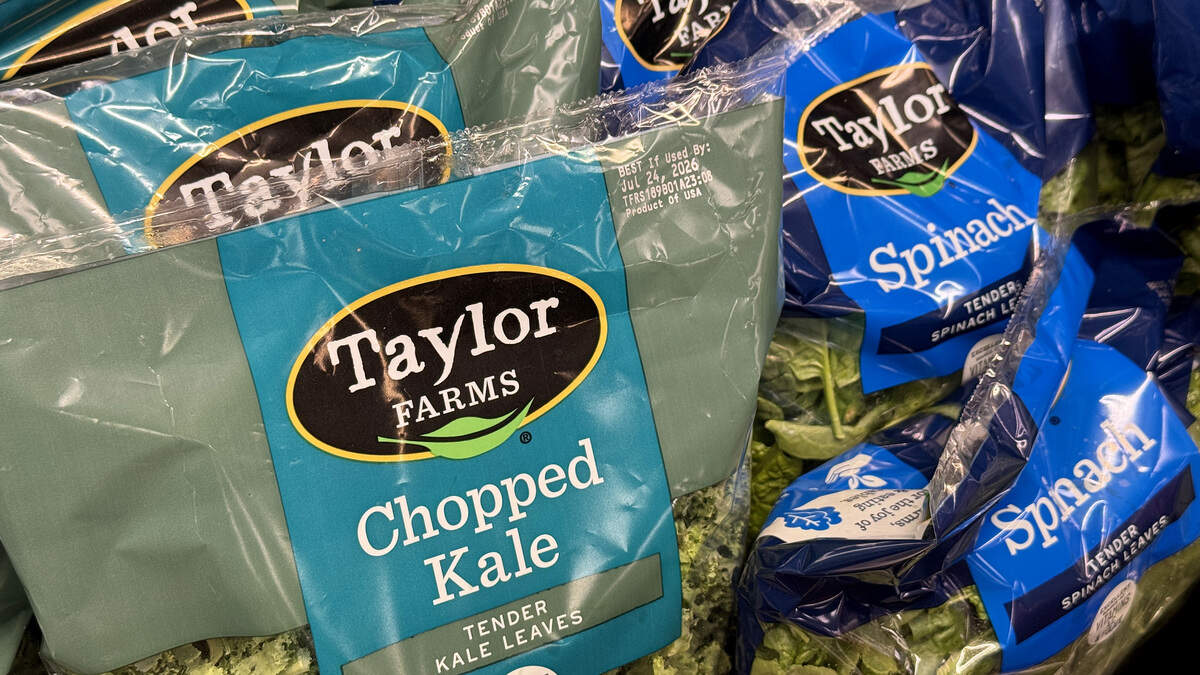
The suspected vehicle has been traced to Taylor Farms shredded iceberg lettuce served at Taco Bell locations in five states, followed by a Taylor Farms recall.[3][4] That matters operationally because lettuce moves through fast, distributed supply chains, and because Taylor Farms has appeared in several major outbreak investigations, including a 2013 Cyclospora outbreak with 631 cases, a 2024 E. coli O157:H7 outbreak with 104 cases and one death, and the 2026 Cyclospora outbreak.[4][5][6] It does not, by itself, prove a permanent company-specific failure pattern. It does tell investigators where the reconstruction burden lands: procurement records, distribution lots, restaurant-level exposure histories, laboratory reports, and interviews that arrive at different speeds.
There is another reason to be careful with the phrase “PulseNet missed it.” PulseNet is one of the strongest pieces of foodborne disease infrastructure in the United States, but it was built around bacterial whole-genome sequencing. It works for pathogens such as Salmonella, E. coli, and Listeria because isolates can be cultured and sequenced, allowing public health laboratories to compare genetic fingerprints across patients and jurisdictions.[7] Cyclospora is a parasite. It cannot be cultured in the same way, and current routine genomic pipelines do not provide the same outbreak-linking backbone for it.[7]
The Surveillance Gap Was Upstream of the Model
A foodborne outbreak detection system has to answer three practical questions before any analytics layer can help much: what signal is being collected, how it is confirmed, and what action follows. For Salmonella, a stool specimen can lead to a culture isolate, a sequence, and a cluster match. For Cyclospora, the chain is weaker at the exact point where PulseNet is usually strongest.
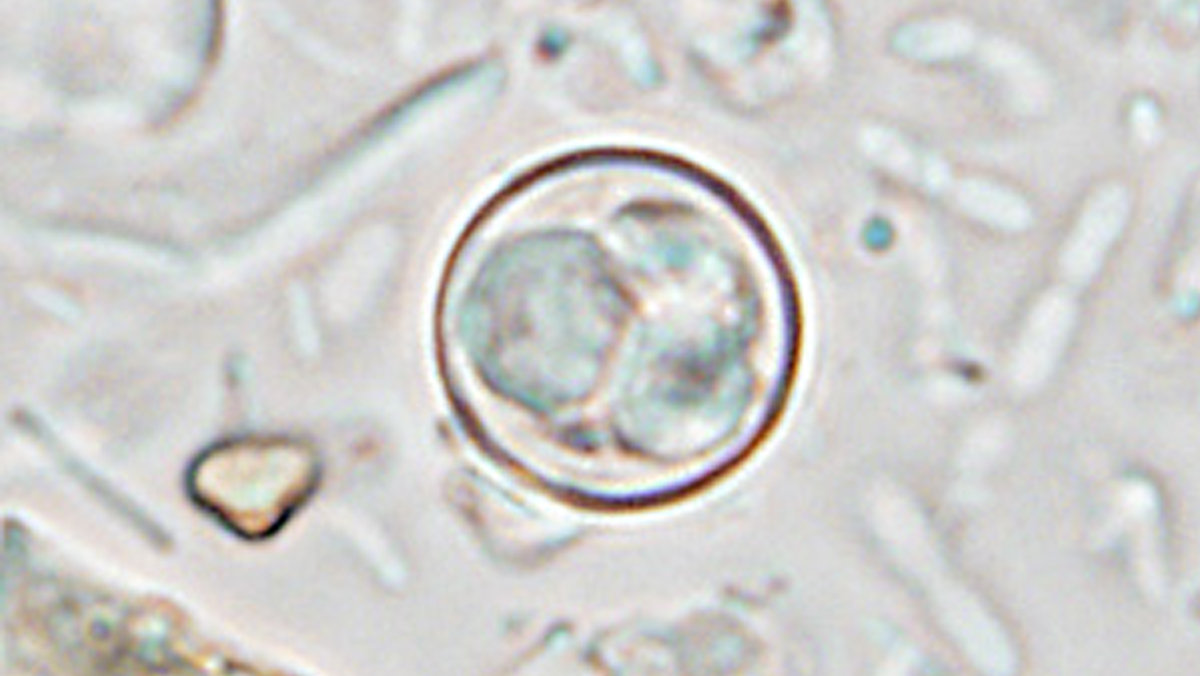
Cyclospora cayetanensis is diagnosed from stool, but the parasite’s biology blocks the standard bacterial playbook. Without culture-based isolates and a large comparable genomic database, there is no national genomic net that can rapidly say that cases in two states are part of the same cluster. A model cannot infer a missing laboratory substrate into existence. It can only work around the blind spot by looking for earlier, noisier signals.
This is where the case count volatility matters. The outbreak was still ongoing on July 18, 2026, and federal and state figures were not moving in lockstep. Michigan reported 4,312 cases by July 16, a number far above the federal confirmed total available two days earlier, likely reflecting reporting lag, different classification status, or cases still awaiting federal reconciliation.[2] That discrepancy is not a footnote. It is the daily operating condition of outbreak surveillance: one dashboard is confirmed, another is provisional, and the signal is already affecting patients.
The reporting environment also changed just before this surge. In July 2025, CDC made Cyclospora reporting optional under FoodNet, reducing mandatory visibility for a pathogen that already lacks the sequencing support available for many bacterial outbreaks.[2][8] The timing is uncomfortable. It should not be overstated as proven causation; the policy change did not create the parasite, the lettuce distribution network, or the diagnostic limitations. But weakening structured reporting for a hard-to-link pathogen is exactly the kind of decision that shows up later as missing time.
| Surveillance Layer | What It Can See | What It Cannot Do for Cyclospora |
|---|---|---|
| PulseNet-style bacterial WGS | Genetic relatedness among cultured bacterial isolates | Provide routine outbreak linkage when the parasite cannot be cultured and sequenced through the same pipeline |
| FoodNet and reportable disease data | Laboratory-confirmed and reported illness patterns | Recover cases that are not tested, not reported, or reported under optional participation |
| AI syndromic surveillance | Abnormal patterns in searches, reviews, posts, complaints, or diagnostic demand | Confirm the pathogen, identify the vehicle, or replace case interviews and lab confirmation |
Where AI Could Have Helped Earlier
The useful AI question is not whether an algorithm could have named Cyclospora from the open internet. It could not. The useful question is whether abnormal illness behavior around restaurants, locations, or symptoms might have been surfaced earlier, giving epidemiologists a reason to look harder before confirmed reports accumulated.
Google’s FINDER is the cleanest published example of that idea. In a 2018 npj Digital Medicine study, the system used search and location signals to identify restaurants more likely to have active food safety violations. It reported a ROC AUC of 0.85, an F1 score of 0.74, and 3.1 times higher accuracy than conventional inspection targeting in finding restaurants with active violations.[9] That is worth attention because it moves inspection resources toward places where consumer behavior suggests a problem. It is not pathogen identification, and the published deployment covered 2016–2017; the public record does not establish that U.S. health departments are using FINDER operationally in 2026.[9]
A FINDER-like signal in a lettuce-linked Cyclospora outbreak would have been useful only if it changed a real workflow: a local inspector gets a prioritized facility list, an epidemiologist compares complaints against exposure interviews, or a state health department asks whether a cluster of gastrointestinal illness reports shares a distributor. The model’s value would be the earlier nudge, not a definitive answer.
Social media work points in the same direction. A 2023 Foods study using logistic regression on Twitter data reported approximately 80% accuracy in predicting foodborne outbreak periods.[10] That kind of model may catch public complaint patterns before formal surveillance stabilizes, especially when people describe diarrhea, vomiting, restaurant names, or shared meals online. But it is still estimating periods of elevated risk from noisy public speech. It does not know whether the etiologic agent is Cyclospora, nor whether shredded iceberg lettuce is the vehicle.
The UK Health Security Agency is exploring a related path: large language models to detect foodborne illness signals from online restaurant reviews, announced in March 2025.[11] Restaurant reviews are not clinical records, but they can preserve symptom narratives and venue names that never become formal complaints. For public health use, the key question is not whether the language model sounds fluent. It is whether it can route a credible, timely signal to the people who can inspect, interview, test, and report.
Diagnostics AI Helps at the Bench, Not Across the Network
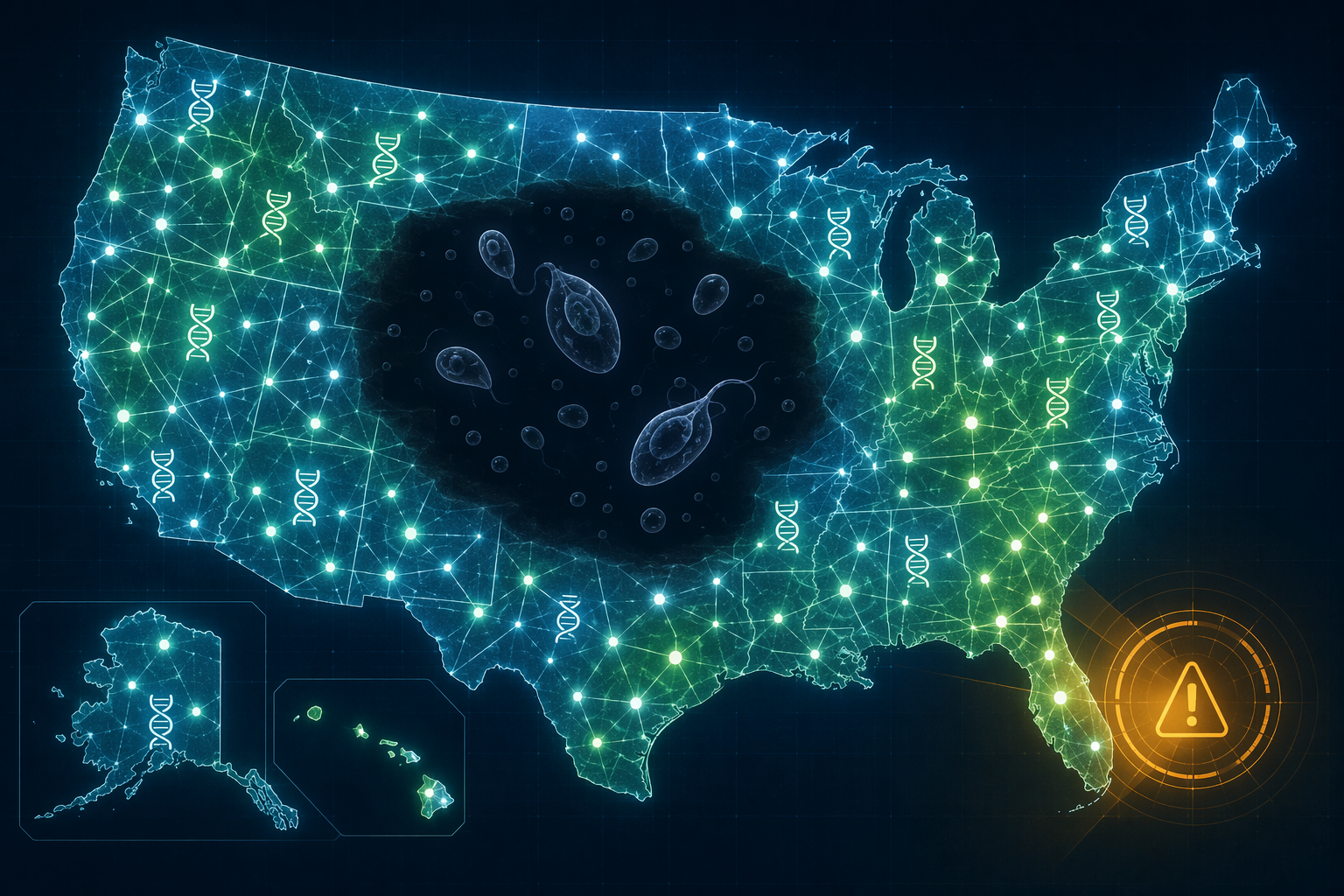
There is a separate, narrower place where AI already looks useful: clinical parasitology volume. ARUP Laboratories reported using a convolutional neural network-based ova and parasite screening tool during the 2026 outbreak, alongside an approximately 200% testing volume surge and about 50 positives per day.[12] That is a meaningful operational contrast. If a diagnostic lab can screen more slides or prioritize review more efficiently, patients may get answers sooner and clinicians may order treatment sooner.
But that does not solve national outbreak linkage. A faster positive Cyclospora result is not the same as knowing whether cases in separate jurisdictions share a lettuce supplier, whether a restaurant batch overlaps, or whether a state should alert neighboring jurisdictions. Bench-level AI can relieve testing pressure. It cannot replace the reporting obligations and comparable data structures that turn individual diagnoses into surveillance.
What an Earlier Warning Would Need to Trigger
For AI-assisted surveillance to matter in a Taylor Farms Cyclospora recall, the alert has to land in a decision pathway. A spike in search queries or reviews might justify targeted inspections, faster complaint triage, or a request for recent stool testing patterns from clinical laboratories. It might prompt investigators to compare purchase histories, restaurant exposures, and supplier records before the confirmed case curve is obvious. It might help decide which interviews deserve same-day follow-up.
The alert cannot carry the evidentiary load alone. Public health action against a food vehicle still needs laboratory confirmation, exposure assessment, traceback, and a threshold for regulatory intervention. If reporting is optional, if diagnostic testing is sparse, or if the pathogen cannot be typed into a national cluster, the AI layer is left pointing at smoke while investigators still have to find the fire by hand.
That is why the 2026 outbreak is less an indictment of PulseNet than a reminder of its design limits. PulseNet did not fail to sequence Cyclospora in the way it sequences Salmonella; the system was never built to do that. The more serious policy question is why a parasite with known produce-associated outbreak risk entered a surge period with less mandatory FoodNet visibility than before.
AI can widen the front end of surveillance by surfacing abnormal illness patterns from searches, reviews, social posts, complaints, and diagnostic testing demand. It can help local staff decide where to look first. It can support clinical laboratories when parasite testing volume jumps. It cannot replace mandatory reporting, validated diagnostics, or culture and genomic infrastructure that does not exist for Cyclospora. For readers mapping where AI belongs inside an investigation workflow, ClinicalMind’s CDC GI outbreak protocol analysis and public health AI surveillance deployment review are the right operational companions to this outbreak.
References
- CDC Health Alert Network Notice HN00531, Centers for Disease Control and Prevention, July 2026.
- CDC reports record Cyclospora cases, CIDRAP, July 2026.
- Cyclospora outbreak linked to lettuce served at Taco Bell, The Washington Post, July 2026.
- Cyclospora Outbreak Linked to Taylor Farms Shredded Iceberg Lettuce, Centers for Disease Control and Prevention, 2026.
- Taylor Farms outbreaks, Marler Blog, 2026.
- Taylor Farms linked to past outbreaks, NBC News, 2026.
- PulseNet, Centers for Disease Control and Prevention.
- CDC made Cyclospora reporting optional under FoodNet, USA Today, 2026.
- Machine-learned epidemiology: real-time detection of foodborne illness at scale, npj Digital Medicine, 2018.
- Using Twitter Data for Foodborne Illness Outbreak Surveillance, Foods, 2023.
- Using AI to detect foodborne illness from restaurant reviews, UK Health Security Agency, March 2025.
- ARUP Uses AI to Help Detect Cyclospora Amid Outbreak, GovInfoSecurity, July 17, 2026.
Comments
Join the discussion with an anonymous comment.