
The health risks of wildfire smoke and AI air quality monitoring do not sit at the same evidentiary level. The health side is already serious: wildfire smoke PM2.5 appears more toxic per unit than ordinary ambient PM2.5 from fossil-fuel sources, and a recent synthesis reports no safe threshold for exposure.[1][2] The AI side is more mixed. Machine-learning systems can improve low-cost sensor readings, blend sparse measurements with models, and produce finer smoke forecasts. What they have not yet clearly shown is a downstream reduction in emergency visits, hospitalizations, deaths, or exposure disparities.
That distinction matters because wildfire smoke is not just a visibility problem, and a better map is not automatically a public-health intervention. The relevant question is whether more precise exposure intelligence changes decisions for the people inhaling the plume: patients with asthma or heart failure, pregnant people, children in schools, outdoor workers, older adults, and local officials deciding whether to issue warnings before the exposure curve has fully appeared.
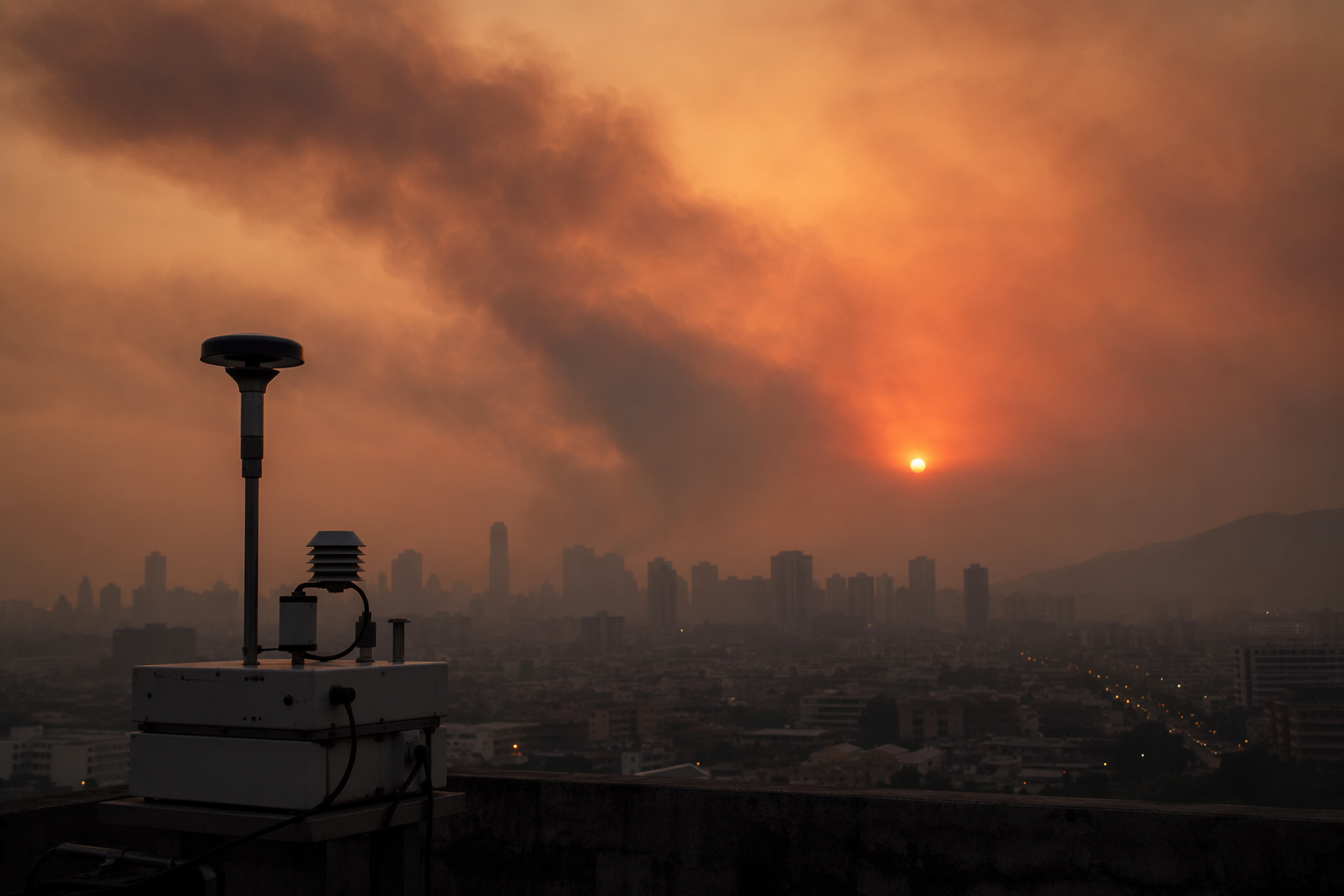
Wildfire Smoke PM2.5 Is Not Just Ordinary PM2.5 With a Different Origin
PM2.5 is a size category, not a single chemical exposure. Particles smaller than 2.5 micrometers can come from traffic, industry, power generation, dust, cooking, or burning vegetation and structures. The lungs do not receive only a particle diameter; they receive a mixture of carbonaceous material, metals, organic compounds, gases, and irritants shaped by what burned, how hot it burned, how long the plume aged, and what it mixed with on the way downwind.
That is why source matters. A Stanford report summarized emerging evidence that wildfire smoke may be about 10 times more toxic per unit of PM2.5 than fossil-fuel PM2.5.[1] This does not mean every smoke episode has the same toxicity, or that a single sensor reading tells the whole biological story. It does mean that treating smoke PM2.5 as interchangeable with routine urban PM2.5 can understate the hazard, especially when public communication reduces the event to a color-coded air-quality index.
The acute evidence is already strong enough to guide action. A 2024 Annual Review of Medicine synthesis reported same-day increases per 1 microgram per cubic meter of wildfire PM2.5: all-cause mortality rose by 0.15%, respiratory hospitalizations by 0.25%, and respiratory emergency department visits by 0.36%.[2] Those increments look small only until they are spread across millions of exposed people during a regional smoke event.
Same-day signals capture the visible edge of the problem: asthma exacerbations, COPD flares, respiratory infections, chest symptoms, and acute physiologic stress. They are useful for health systems because they align with staffing, triage, pharmacy demand, and public advisories. But they should not be mistaken for the full burden. Smoke exposure also accumulates, recurs, and may interact with baseline disease, heat, housing quality, occupational exposure, and access to clean indoor air.
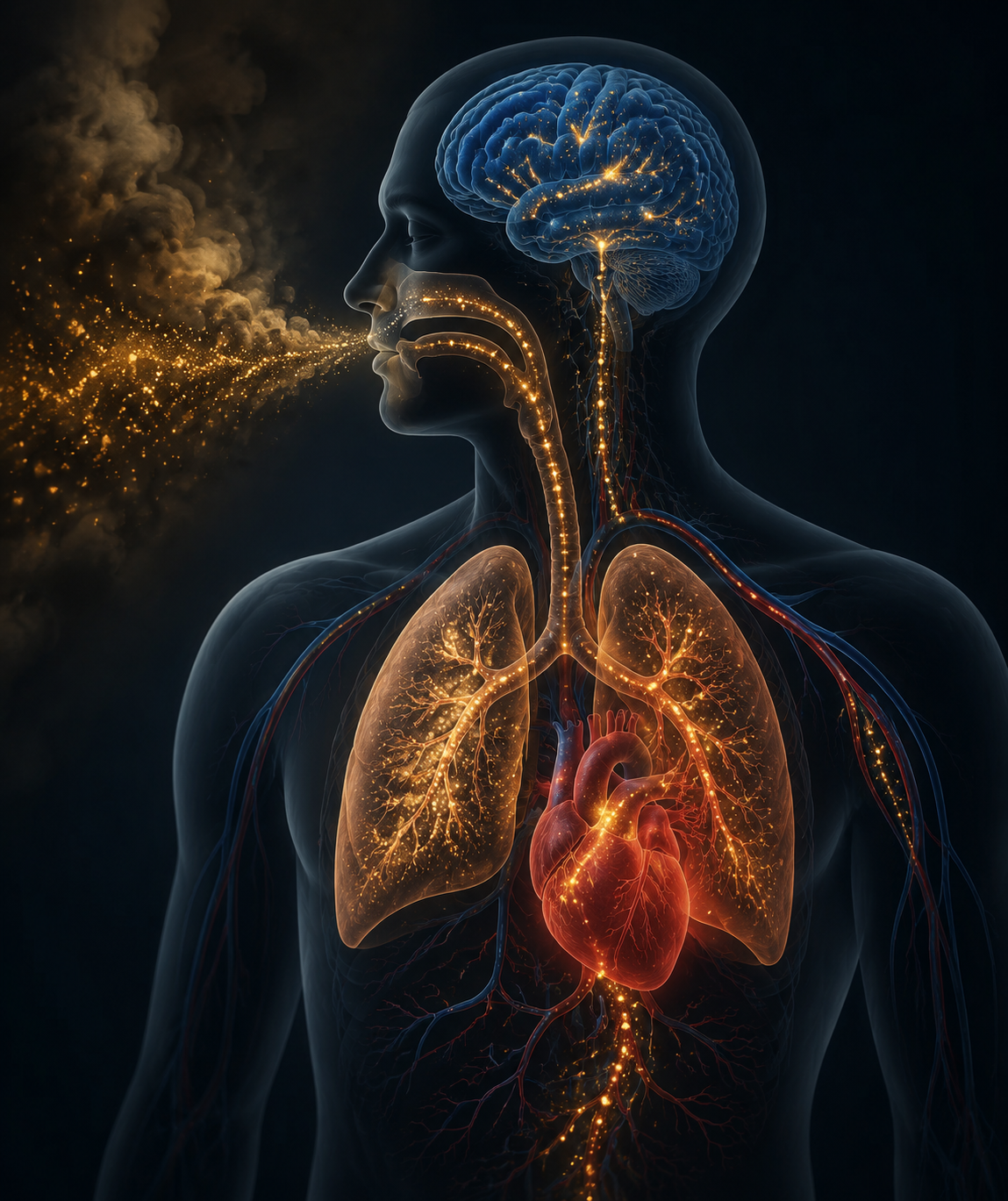
The Health Evidence Now Spans Acute Care, Chronic Disease, and Mortality
Respiratory disease remains the most direct and best-established pathway. Smoke particles reach deep into the lungs, irritate airways, and can aggravate existing respiratory conditions. A Harvard Salata Institute synthesis reported that a 10 microgram per cubic meter increase in wildfire PM2.5 was associated with up to a 10% increase in respiratory hospital admissions, described as roughly 10 times the effect observed for the same concentration of ambient PM2.5.[3] The comparison is not a license to ignore non-smoke pollution; it is a warning against diluting smoke-specific risk into a generic “bad air” category.
Cardiovascular outcomes are less intuitive to the public but familiar to clinicians. Fine particles can trigger inflammation, autonomic imbalance, endothelial dysfunction, and thrombogenic pathways. During smoke season, a patient with coronary disease, heart failure, arrhythmia risk, or poorly controlled hypertension may be vulnerable even if the presenting symptom is not “smoke inhalation” in the dramatic sense. The public-health challenge is that these outcomes may appear as routine medical events unless exposure is measured and linked.
Cancer evidence needs careful language. The American Association for Cancer Research reported links between wildfire smoke exposure and increased risk of lung, colorectal, breast, bladder, and blood cancers.[4] “Linked to” is doing important work here. Cancer latency, exposure reconstruction, co-exposures, and migration patterns make causal attribution difficult. The responsible interpretation is not that one smoky week causes a specific cancer, but that repeated and intense smoke exposure is biologically plausible and increasingly epidemiologically concerning across several cancer sites.
The evidence base has also widened beyond the lungs and heart. The Harvard Salata Institute synthesis notes concerns involving cognitive performance decline, increased suicide risk of about 2% per additional smoke day, and adverse birth outcomes.[3] These endpoints should not be flattened into a single claim that smoke “causes everything.” They show that smoke exposure may affect systems that are easy to miss in emergency response: pregnancy care, school performance, mental health services, and the cumulative stress of repeated smoke days.
Mortality studies put the scale into sharper focus. Qiu and colleagues projected 1.9 million cumulative excess deaths from smoke PM2.5 during 2026–2055 under a high-warming scenario.[5] Because this is a projection, it depends on climate, emissions, fire, demographic, and exposure assumptions; it should not be read as a counted death toll. Its value is different: it estimates what repeated smoke exposure could mean if fire conditions and population vulnerability continue along a damaging path.
A separate Berkeley summary of research by Schwarz and colleagues reported a 7% higher all-cause mortality risk over 3 years among people with repeated high wildfire smoke exposure, with the greatest risk observed in Black adults aged 60–75.[6] That finding is especially important because it shifts attention from the day the sky turns orange to the years after repeated exposure. It also makes equity impossible to treat as an afterthought: risk is not distributed only by plume location, but also by age, race, baseline health, housing, work, and the ability to avoid exposure.
What AI Air Quality Monitoring Actually Does
AI air quality monitoring is often described as if it were a single tool. In practice, it is a workflow. A low-cost sensor measures particles imperfectly. A calibration model tries to correct bias. A data-fusion system combines sensors, regulatory monitors, satellite observations, meteorology, emissions information, and chemical transport models. A forecast model estimates where smoke is likely to move. A dashboard or alerting system turns the estimate into something a school district, clinic, emergency manager, or household might use.
| Workflow component | What it improves | What it does not prove by itself |
|---|---|---|
| Low-cost sensors | Spatial coverage in neighborhoods without dense regulatory monitors | That the raw readings are accurate under all smoke conditions |
| Machine-learning calibration | Agreement between sensor readings and reference-grade measurements | That calibrated data will change exposure behavior |
| Data fusion | Completeness across space and time by blending multiple information sources | That the fused estimate is equally reliable in every geography |
| Hyperlocal forecasting | Near-term warning for smoke movement and intensity | That warnings reduce hospitalizations or deaths |
| Dashboards and alerts | Operational visibility for agencies and the public | That all exposed groups can receive and act on the information |
The calibration step is not cosmetic. Low-cost PM2.5 sensors are attractive because they can be deployed more densely than regulatory monitors, but their readings are affected by humidity, aerosol composition, sensor aging, temperature, and local conditions. Ravindra and colleagues reported that machine-learning calibration improved low-cost PM2.5 sensor accuracy from an R² of about 0.40 to greater than 0.99; in one Decision Tree model, RMSE fell from 77.7 to 0.61 micrograms per cubic meter.[7] Those are large technical gains, and they are exactly the kind of gains needed before sensor networks can be treated as operational evidence rather than decorative maps.
Still, calibration performance is not universal truth. A model trained in one region may fail when the aerosol mixture changes, when smoke ages differently, or when meteorology differs from the training data. This is not a minor caveat during wildfire events, because smoke chemistry and particle behavior can change over distance and time. The better question is not whether AI calibration can work; it clearly can. The question is whether it has been validated for the exposure conditions and population decisions at hand.
Forecasting introduces a second layer. An AI-based data-fusion approach known as ML-MMF was reported to achieve more than 90% forecast accuracy and to perform 66% better than chemical transport models alone.[8] That kind of improvement can matter during smoke season, when officials need to know whether tomorrow morning’s school commute, outdoor clinic, shelter operation, or work shift will occur under hazardous conditions. But forecast accuracy is not the same as health-effect prediction. A model that estimates PM2.5 well is still one step removed from estimating who will develop bronchospasm, present to an emergency department, or die.
That boundary is worth keeping clean. Monitoring systems estimate exposure conditions; health-effect models try to predict clinical outcomes from exposure and vulnerability data. Readers who want the second question can compare this discussion with How Well Does AI Predict Wildfire Smoke Health Effects? which treats outcome prediction as its own problem. Conflating the two makes monitoring sound more clinically proven than it is.
Operational Deployments Are Real, but the Evidence Is Mostly Upstream
The technology is not hypothetical. The EPA’s Wildfire Smoke Air Monitoring Response Technology program, or WSMART, provides an operational framework for deploying air sensors during smoke events.[9] Its importance is practical: it recognizes that regulatory monitoring networks, while essential, may be too sparse for neighborhood-level smoke gradients during a fast-moving fire season.
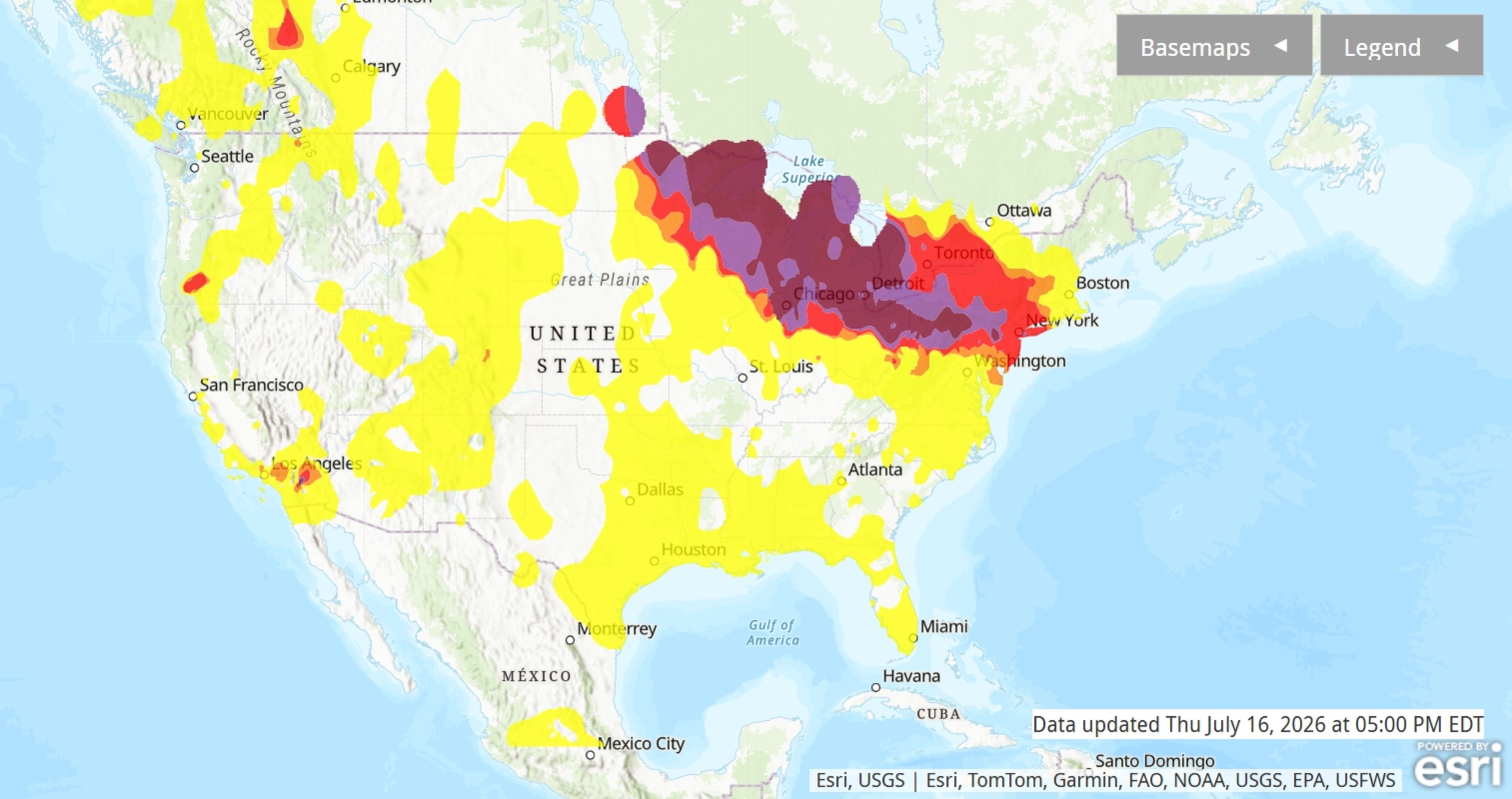
The EPA Fire & Smoke Map is one visible expression of that shift toward integrated information. During the January 2025 Los Angeles wildfires, Clarity reported that more than 200 of its sensors were integrated into the EPA Fire & Smoke Map, providing real-time neighborhood-level data used to guide school closures and health warnings.[10] This is deployment evidence from a commercial source, not independent proof of health benefit, but it is still operationally relevant. When smoke varies block by block and hour by hour, a single distant monitor can be a poor proxy for the decision a principal, clinic director, or emergency manager has to make.
Commercial platforms such as Aethair similarly describe wildfire monitoring deployments that use sensor networks, analytics, and alerts to support situational awareness.[11] These examples show market and agency demand for denser smoke intelligence. They should not be read as clinical outcome studies. Vendor materials can document where systems are placed and what features they offer; they rarely establish whether the system reduced exposures, narrowed disparities, or prevented emergency visits.
This is the central evidence gap. Technical studies can show that calibrated sensors match reference instruments more closely. Forecasting evaluations can show that fused models predict smoke better than older approaches. Program descriptions can show that agencies and companies have deployed networks during real fires. None of those, by themselves, answer the public-health question: did people breathe less smoke because of the system, and did that translate into fewer adverse outcomes?
Where Monitoring Can Change Decisions
The absence of outcome proof does not make monitoring useless. Public health often acts on intermediate signals because waiting for hospitalization data means waiting until harm has already occurred. A more precise smoke estimate can support several decisions before the clinical signal is visible.
- Schools can shift recess, athletics, outdoor events, transportation planning, or closure decisions when local smoke is forecast to exceed safe operating conditions.
- Clinics and hospitals can anticipate respiratory demand, prepare messaging for high-risk patients, and consider staffing or triage adjustments during severe smoke episodes.
- Emergency managers can decide where to place clean-air shelters, portable filtration, public advisories, and outreach teams.
- Occupational health teams can modify outdoor work schedules, respiratory protection policies, and heat-smoke risk communication.
- Households with vulnerable members can decide when to run filtration, seal indoor spaces, relocate temporarily, or avoid outdoor exertion.
These are plausible and important uses, but plausibility is not the same as demonstrated effectiveness. A dashboard that is correct but ignored has little health value. An alert that reaches only people with flexible jobs, air conditioning, filtration, and paid sick leave may improve information while leaving the highest-risk exposure patterns intact. A school closure can reduce outdoor exposure and also create childcare and wage burdens. The outcome depends on the decision chain after the data point.
This is where evaluation should move next. Monitoring programs should not be judged only by sensor uptime, map coverage, or forecast error. They should also be tested against operational endpoints: whether alerts arrive before exposure peaks, whether agencies use them in documented decisions, whether vulnerable populations receive them, whether indoor clean-air interventions are targeted more effectively, and whether respiratory utilization changes compared with plausible counterfactuals.
Equity Is Built Into the Exposure Pathway
Smoke does not become equitable because the map is high-resolution. Hyperlocal monitoring may reveal neighborhood differences that were previously averaged away, but acting on that information requires resources. Clean indoor air depends on housing quality, filtration, ventilation, electricity costs, tenancy conditions, and whether a person can stay indoors. Avoiding outdoor smoke depends on employment, transportation, caregiving, school policy, and access to warnings in usable formats.
The Schwarz finding of higher risk among Black adults aged 60–75 after repeated high smoke exposure makes this more than a communications issue.[6] If risk concentrates in groups with less ability to reduce exposure, then AI monitoring can widen or narrow disparities depending on implementation. A neighborhood alert that triggers portable filtration in senior housing, clinic outreach, and employer action is different from a neighborhood alert that appears only on a smartphone app.
Equity evaluation should therefore be attached to the monitoring workflow itself. Which neighborhoods receive sensors? Which languages and channels carry alerts? Are warnings tied to transportation, shelter, filtration, school operations, and workplace protections? Are community clinics and local health departments able to use the data, or is the useful interface reserved for agencies and subscribers with technical capacity? These questions determine whether granular monitoring becomes public-health infrastructure or simply a finer description of unequal exposure.
The Disciplined Bottom Line
Wildfire smoke is a high-confidence and expanding health threat. The evidence supports concern across acute respiratory utilization, cardiovascular pathways, mortality, cancer associations that require careful framing, cognitive and mental health concerns, and birth outcomes. The evidence also supports smoke PM2.5 as epidemiologically distinct from ordinary ambient PM2.5, with no safe threshold reported in synthesis literature and source-specific toxicity that may be substantially higher than fossil-fuel PM2.5.[1][2]
AI air quality monitoring is credible as exposure-intelligence infrastructure. Machine learning can improve sensor calibration, data fusion can strengthen forecasts, and operational systems are already being used during smoke events. That is enough to justify serious public-health attention, especially where official monitors are too sparse for neighborhood decisions.
It is not enough to call these systems health interventions without stronger downstream evidence. The next standard should be direct evaluation: reduced exposure, better-timed closures and warnings, improved clinical preparedness, fewer emergency visits or hospitalizations where measurable, and narrower exposure disparities. Until then, AI monitoring should be described as a promising and increasingly operational way to see and forecast the hazard, not as proof that the hazard has been reduced.
References
- Assessing wildfire health risks, Stanford Report, January 2025.
- Wildfire Smoke Exposure and Human Health: Significant Gaps in Research for a Growing Public Health Issue, Annual Review of Medicine, 2024.
- How exposure to wildfire smoke impacts human health now, soon and later, Harvard Salata Institute.
- Exposure to Wildfire Smoke May Be Linked to Increased Risk of Developing Several Cancers, American Association for Cancer Research, 2025.
- Global mortality burden attributable to wildfire-related PM2.5 under climate change, Nature, 2025.
- Wildfire smoke raises risk of death after the air clears, Berkeley Public Health, December 2025.
- Machine learning calibration of low-cost sensors for PM2.5 monitoring, npj Climate and Atmospheric Science, 2024.
- AI can help forecast air quality, but freak events like 2023’s summer of wildfire smoke require traditional methods too, The Conversation, 2023.
- Wildfire Smoke Air Monitoring Response Technology (WSMART), U.S. Environmental Protection Agency.
- Air Quality Monitoring for Wildfire Smoke, Clarity.
- Wildfire Air Quality Monitoring Solutions, Aethair.
Comments
Join the discussion with an anonymous comment.