
The clinical problem with wildfire smoke health effects and air quality alerts is not that clinicians ignore smoke. Most already tell patients to check the AQI, stay indoors when smoke is heavy, use filtration when available, and seek care for severe symptoms. The problem is that this advice often treats smoke as a same-day irritant. The newer evidence does not fit that frame: wildfire PM2.5 appears more damaging per unit than ordinary ambient PM2.5 for respiratory outcomes, and some cardiorespiratory risks may remain elevated after the sky looks normal again.
A 2024 synthesis in Annual Review of Medicine estimated that each 1 μg/m³ increase in wildfire PM2.5 was associated with a 0.15% increase in same-day all-cause mortality, a 0.36% increase in same-day respiratory emergency department visits, and a 0.25% increase in same-day respiratory hospitalizations.[1] A 2025 study of medium-term exposure then extended the concern beyond the acute smoke episode, reporting that cardiorespiratory effects of wildfire smoke particles can persist for up to three months after a fire has ended, with hypertension showing the greatest increase in delayed hospitalization risk.[2]
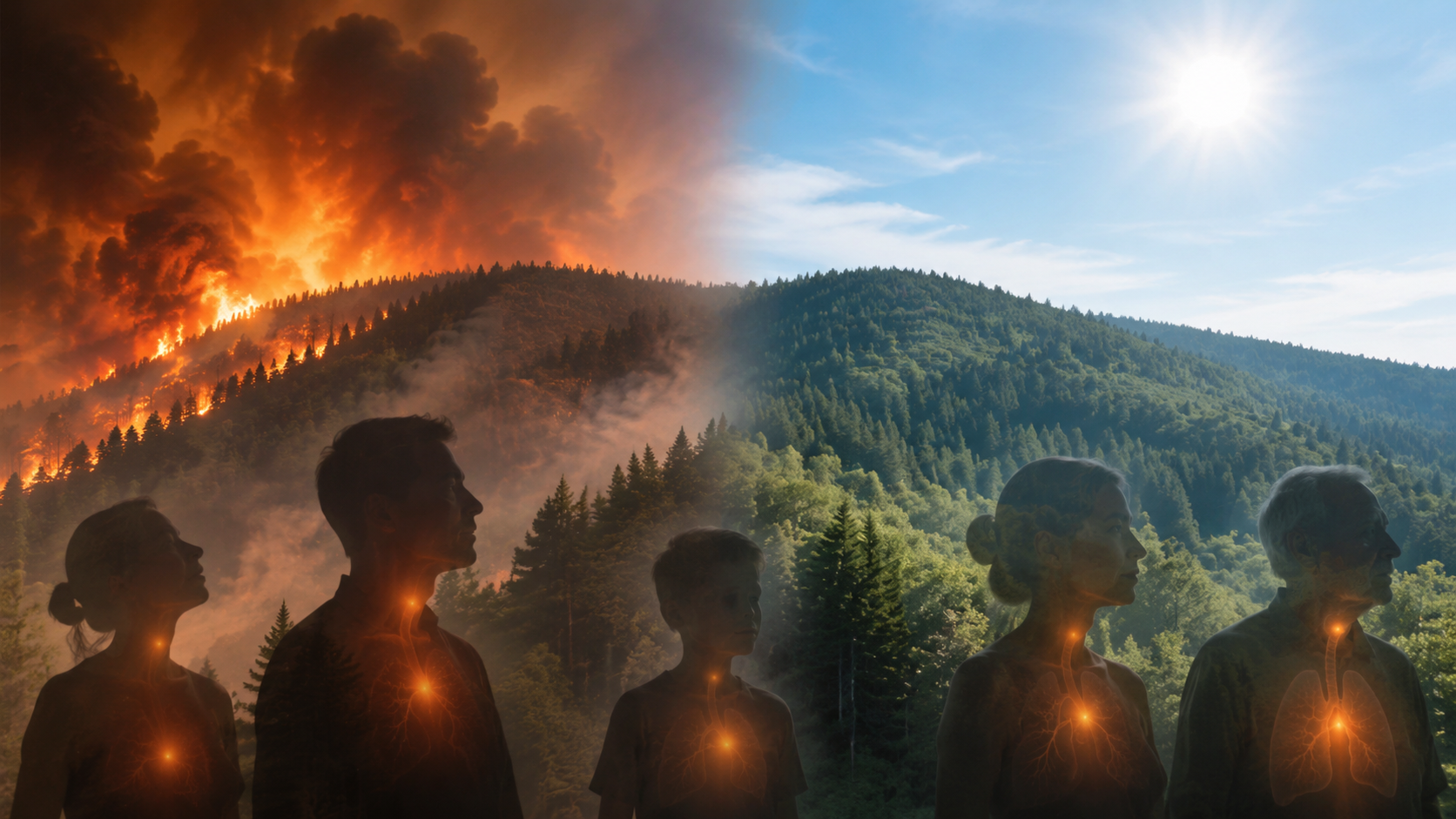
That combination changes the bedside question. It is no longer only whether the patient was outdoors on the worst smoke day. It is how intense the smoke exposure was, which respiratory or cardiovascular conditions could be destabilized, and whether follow-up should remain alert to cough, dyspnea, blood pressure instability, chest discomfort, palpitations, or worsening exercise tolerance after the alert has expired.
Per-Unit Risk Matters More Than the AQI Color
Clinicians are used to thinking of PM2.5 as a mass concentration. That is useful, but it can quietly imply that a microgram of wildfire PM2.5 carries the same health meaning as a microgram of ambient PM2.5 from traffic, industrial sources, or other fossil-fuel combustion. The wildfire evidence argues against that shortcut.
The Gould synthesis highlights evidence that wildfire PM2.5 may be up to 10 times more potent per μg/m³ for respiratory harm than ambient PM2.5.[1] The clinical translation is straightforward but often missed: a modest-looking change in particle concentration during a smoke event may not be equivalent to a routine urban pollution fluctuation of the same size.
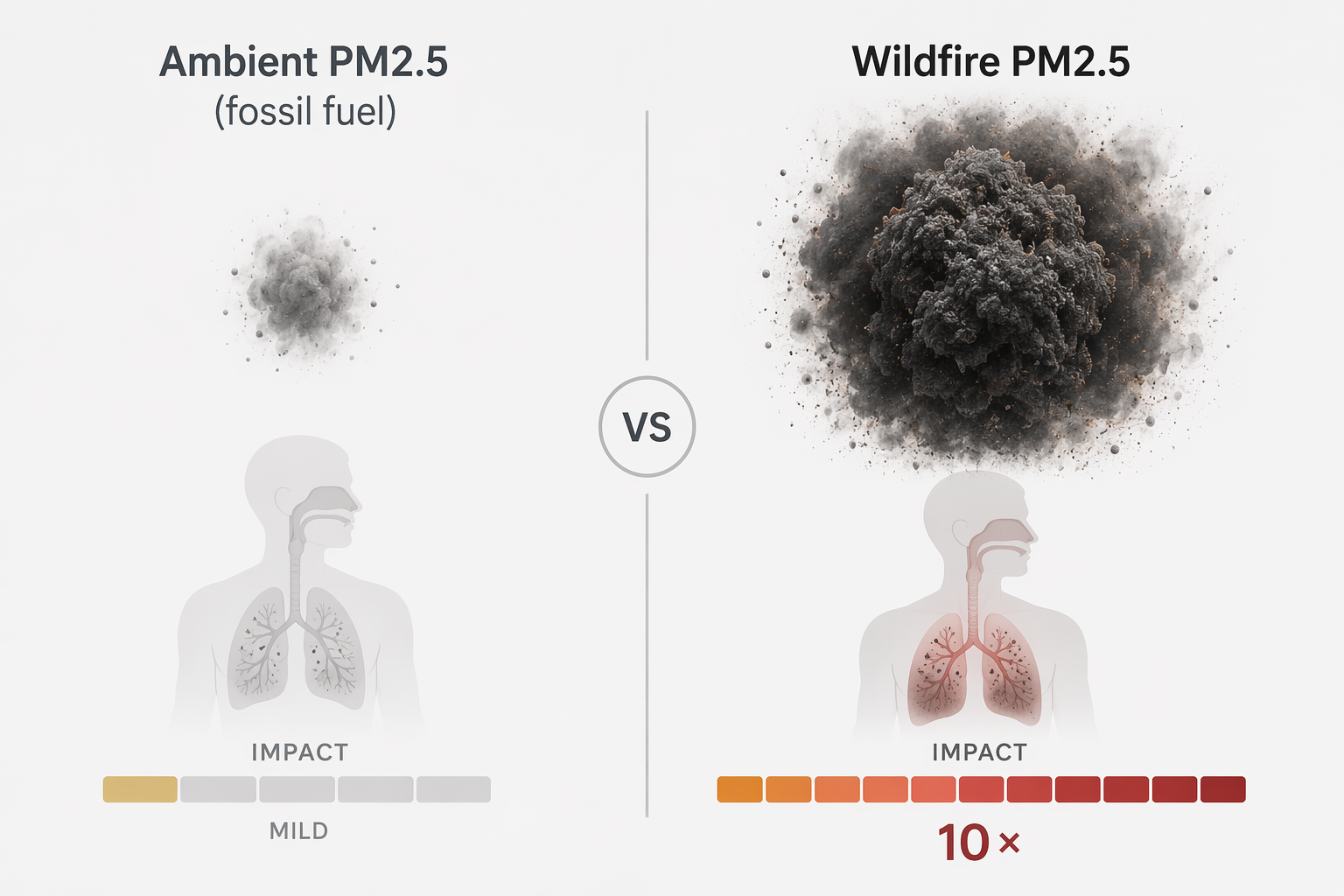
The per-μg estimates also help prevent two opposite errors. One error is reassurance based on a concentration that looks numerically small. The other is overstatement, as if a percentage increase can tell one patient exactly what will happen next. These estimates describe population-level changes in risk. They are not a bedside prediction tool for an individual patient, and they do not replace clinical evaluation when symptoms worsen.
| Exposure Change | Outcome Measured | Reported Association |
|---|---|---|
| Each 1 μg/m³ increase in wildfire PM2.5 | Same-day all-cause mortality | 0.15% increase |
| Each 1 μg/m³ increase in wildfire PM2.5 | Same-day respiratory ED visits | 0.36% increase |
| Each 1 μg/m³ increase in wildfire PM2.5 | Same-day respiratory hospitalizations | 0.25% increase |
The boundary of that synthesis matters. Gould and colleagues excluded studies restricted to vulnerable subpopulations such as children-only or elderly-only cohorts.[1] That makes the pooled estimates cleaner for broader population inference, but it also means clinicians should not assume the same effect sizes apply to every high-risk subgroup seen in practice.
Respiratory Harm Is the Most Consistent Signal
Respiratory counseling is where the evidence is strongest and where outpatient instructions are most likely to be actionable. The same-day rise in respiratory ED visits and hospitalizations is exactly the kind of finding that should change how clinicians frame smoke exposure for patients with asthma, COPD, recurrent bronchitis, post-viral airway sensitivity, or occupational exposure constraints.
The practical issue is not only whether a patient can avoid the outdoors. Some cannot. A home health aide, agricultural worker, delivery driver, school staff member, or patient without reliable indoor filtration may be told to “stay inside” when that is barely an option. In those cases, the more useful counseling is concrete: reduce exertion during high-smoke periods, use properly fitted respiratory protection when exposure is unavoidable, run effective filtration where available, keep rescue medications accessible, and have a low threshold for contacting care if symptoms increase rather than waiting for the next routine visit.
AQI remains useful as a shared language, but it is a blunt exposure proxy. Outdoor monitors may not capture indoor conditions, commuting exposure, worksite exposure, or the effect of filtration. Those measurement gaps are one reason broader discussions of indoor and outdoor wildfire smoke monitoring matter. For clinical counseling, however, imperfect alert data is still better than pretending the exposure history is unknowable.
The Cardiovascular Evidence Is Serious, but Less Uniform
Cardiovascular findings deserve attention without being flattened into certainty. Across the literature, respiratory associations are more consistent than cardiovascular associations. Still, the cardiovascular signals are strong enough that smoke exposure should not be treated as a lung-only problem, especially in patients with coronary disease, heart failure, arrhythmia history, uncontrolled hypertension, diabetes, chronic kidney disease, or high baseline vascular risk.
The American Heart Association reported in 2025 that heart attack emergency room visits increased 42% within one day of dense smoke exposure.[3] Earlier research in the Journal of the American Heart Association reported a 70% increase in out-of-hospital cardiac arrest risk associated with wildfire smoke exposure.[4] These are not findings that can be handled by advising every patient simply to close the windows and wait for the sky to clear.
For the emergency department and urgent care clinician, this matters at discharge. A patient seen for smoke-triggered wheeze may also have elevated cardiovascular vulnerability during and after the event. A patient seen for chest discomfort during wildfire smoke may need the same careful return precautions that would follow other transient cardiovascular stressors, even if the initial evaluation is reassuring.
Mechanistically, the cardiovascular concern is plausible. A 2024 Circulation Research review describes pathways that include autonomic dysregulation, systemic inflammation, and endothelial dysfunction.[5] Those mechanisms help explain why the clinical picture may include blood pressure changes, ischemic symptoms, arrhythmia susceptibility, or decompensation in patients who already have limited cardiopulmonary reserve. They do not prove that every post-smoke event was caused by smoke, but they make it harder to dismiss smoke as only an airway irritant.
The Risk Curve May Extend for Months
The Wei study is clinically disruptive because it moves the relevant time window. Many smoke instructions are written for the acute event: what to do today, when the alert is active, while the smell is obvious. Wei and colleagues reported that cardiorespiratory effects of wildfire smoke particles can persist for up to three months after a fire has ended, with hypertension showing the greatest increase in delayed hospitalization risk.[2]
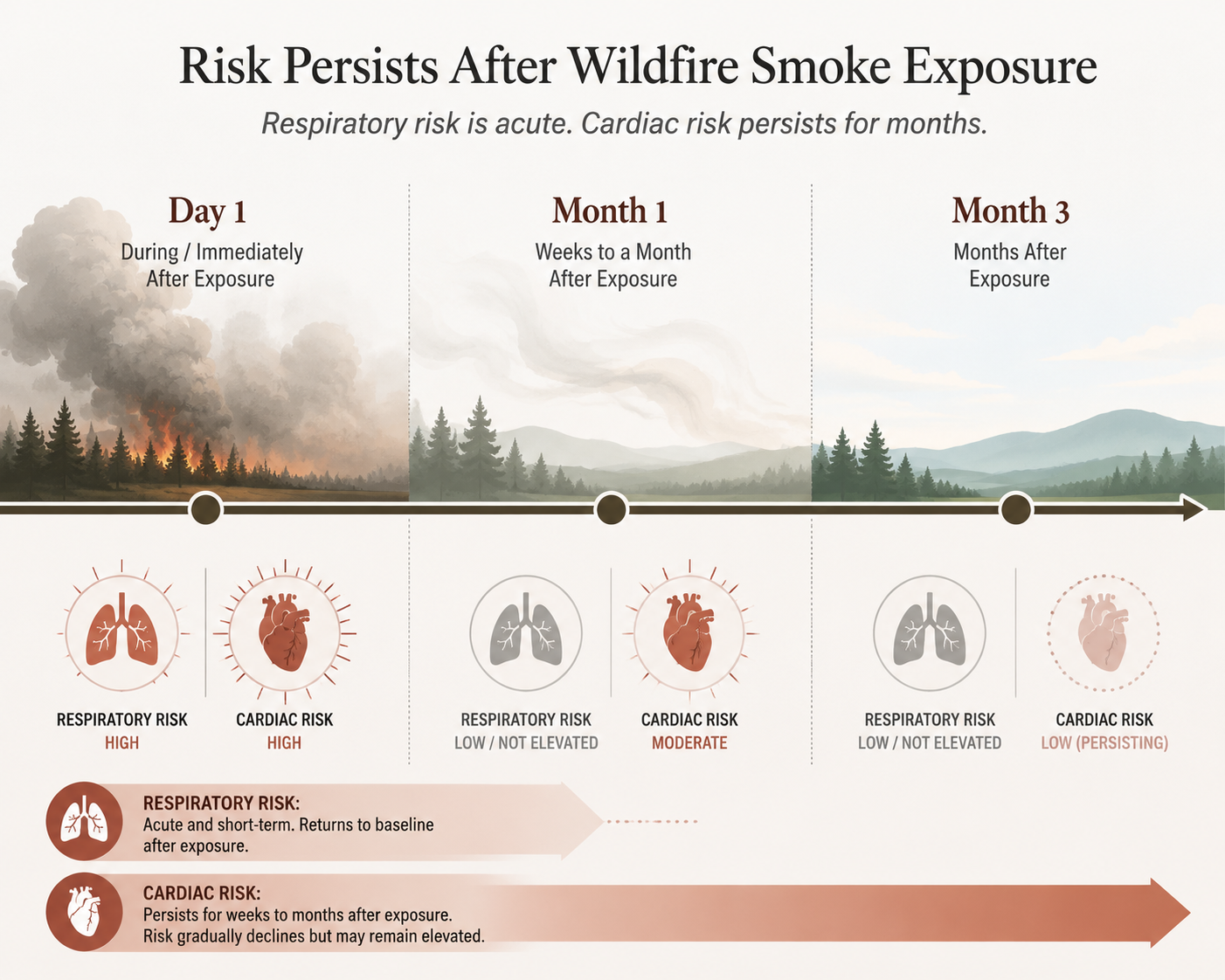
That does not mean clinicians should attribute three months of symptoms to smoke by default. It does mean that recent wildfire smoke exposure belongs in the clinical history for longer than many templates currently allow. If a patient presents weeks later with worsened dyspnea, unstable blood pressure, increased angina frequency, new palpitations, or a heart failure flare, the smoke episode may be a relevant exposure rather than environmental trivia.
The hypertension signal is especially important because blood pressure follow-up is often treated as routine chronic disease management. A patient whose home readings drift upward after a smoke-heavy week may not connect the change to wildfire exposure. A clinician who never asks about that exposure may miss a useful context for counseling, monitoring, or deciding how quickly reassessment should occur.
What Air Quality Alerts Can and Cannot Do Clinically
Air quality alerts should not be converted into individualized diagnosis or treatment instructions. An AQI value cannot determine whether one patient’s chest pain is ischemic, whether a COPD exacerbation requires steroids, or whether an arrhythmia episode was smoke-triggered. The evidence does not support that level of precision.
But alert data can improve the clinical handoff. It can prompt clinicians to document smoke exposure during visits, add smoke-specific return precautions to discharge instructions, identify patients who may need earlier follow-up after severe smoke periods, and tailor counseling for those whose work, housing, or comorbidities make avoidance unrealistic.
- During active smoke: ask about exposure intensity, exertion, indoor filtration, work requirements, respiratory symptoms, chest discomfort, palpitations, and blood pressure changes.
- At discharge: include return precautions for worsening dyspnea, persistent chest pain, syncope, new neurologic symptoms, severe hypertension symptoms, or arrhythmia symptoms.
- At follow-up: consider recent wildfire smoke exposure when evaluating delayed respiratory worsening, destabilized hypertension, or cardiovascular symptoms.
- In population health workflows: flag high-risk patients during prolonged smoke events for targeted outreach when resources allow.
This is where the evidence meets the practical failure point. Education alone is fragile. A clinician may remember that smoke is bad and still fail to ask about it two weeks later. A patient may remember an AQI alert and still not know that blood pressure destabilization or exertional chest symptoms should be taken seriously after the visible smoke has passed.
Protocols make the exposure harder to forget. Air quality alert data can sit alongside heat alerts, respiratory virus surges, pollen periods, and other environmental signals that already shape clinical volume and patient risk. More advanced exposure estimation and forecasting tools may eventually refine this work; for now, broader discussions of AI air quality health risk predictions should not distract from the simpler first step of making smoke exposure visible in routine care.
The Counseling Gap Is Now an Evidence Gap in Practice
The usual vulnerable-population language still applies: children, older adults, pregnant patients, people with chronic lung disease, and people with cardiovascular disease need particular caution. A broader organ-system review of wildfire smoke health effects can cover that terrain in more detail. The point here is narrower and more operational: the 2024–2026 evidence makes short, generic smoke advice look underbuilt.
When wildfire PM2.5 may be far more potent per unit for respiratory outcomes, same-day respiratory and mortality risks rise measurably, heart attack visits spike after dense smoke, and cardiorespiratory risk may persist for up to three months, the clinical conversation cannot end when the AQI improves.[1][2][3] The alert is the beginning of risk recognition, not the whole risk model.
The practice implication is modest but important. Clinicians should integrate air quality alert data into counseling protocols, discharge instructions, exposure histories, and risk-aware follow-up. The evidence does not allow AQI alone to predict an individual patient’s outcome or dictate treatment. It does support asking a better set of questions after wildfire smoke: how intense was the exposure, which cardiorespiratory risks may be amplified, and how long should concern reasonably persist?
References
- Health Effects of Wildfire Smoke. Annual Review of Medicine. 2024.
- Cardiorespiratory effects of wildfire smoke particles can persist for months, even after a fire has ended. Harvard T.H. Chan School of Public Health. 2025.
- Where there’s smoke, there’s fire — and heart health risks. American Heart Association. May 2025.
- Jones et al. Journal of the American Heart Association. 2020.
- Wildfire Smoke and Cardiovascular Health. Circulation Research. 2024.
Comments
Join the discussion with an anonymous comment.