
The important detail in the July 2026 cetirizine recall is not the word “voluntary.” It is the red dots.
Unique Pharmaceutical Laboratories recalled Cetirizine Hydrochloride Tablets USP, 5 mg, NDC 16571-401-10, lots GY825029 through GY825032, expiration 10/2028, after a pharmacy technician observed red-colored dots and discoloration on tablets that were later associated with ranitidine cross-contamination.[1] That is the point where the event stops being only a medication-safety notice and becomes a manufacturing-quality story: a visible abnormality traveled far enough through the supply chain that the decisive detection layer was a pharmacy employee looking at tablets, not the manufacturer’s own quality system.
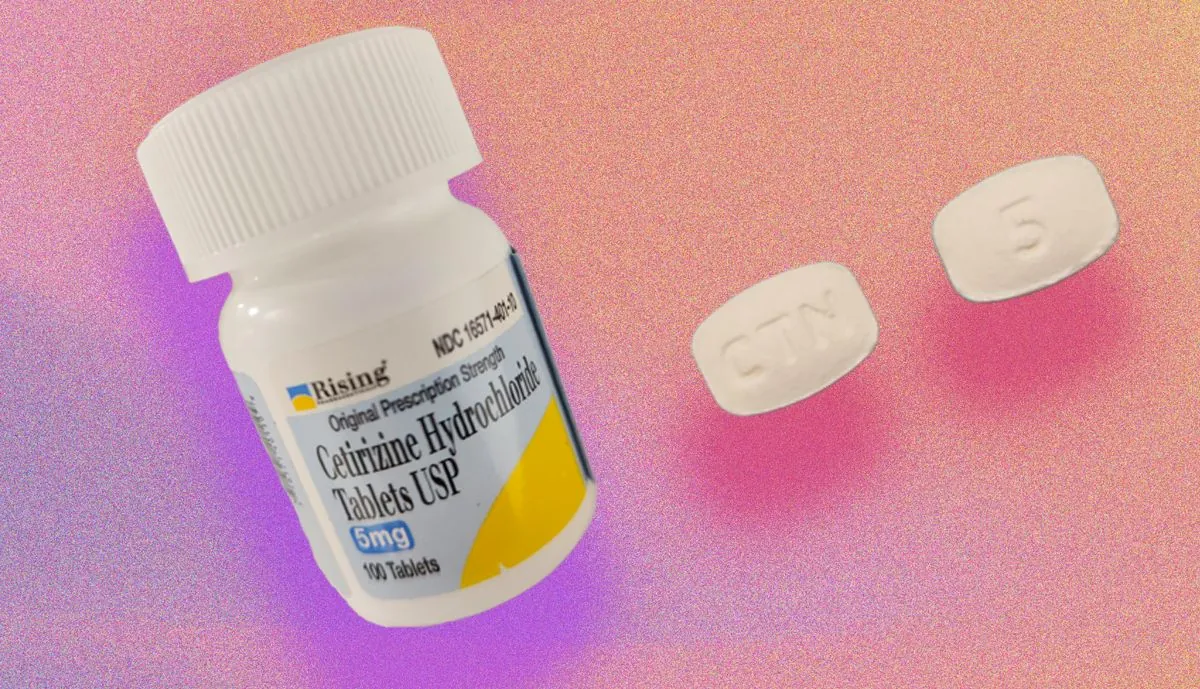
For patients and caregivers looking for what to do with a bottle at home, the companion guide, Key Facts About the 2026 Generic Zyrtec Recall, is the better place to start. The narrower question here is why a contaminant that could be seen at the pharmacy level was not stopped upstream.
The Discovery Path Matters
A recall notice can look bureaucratic from a distance: product name, lot numbers, expiration date, firm name, reason for recall. In practice, those fields determine whether a pharmacy director can pull the right bottles without guessing. Here, the notice is unusually concrete. It identifies one dosage strength, one NDC, four lots, and a single expiration date: 10/2028.[1]
| Recall field | Affected product information |
|---|---|
| Manufacturer | Unique Pharmaceutical Laboratories |
| Product | Cetirizine Hydrochloride Tablets USP, 5 mg |
| NDC | 16571-401-10 |
| Lots | GY825029 through GY825032 |
| Expiration | 10/2028 |
| Observed defect | Red-colored dots and discoloration associated with ranitidine cross-contamination |
That level of specificity is useful downstream, but it also sharpens the upstream question. Red dots and discoloration are not a hidden assay result buried in a laboratory chromatogram. They are visible features. A pharmacy technician saw them. The manufacturer’s release process, packaging-stage checks, and any in-process visual inspection steps either did not see them, did not interpret them correctly, or did not prevent affected units from leaving control of the facility.
The recall notice states that no adverse events had been reported as of the notice.[1] That caveat matters, especially because the recall was recent as of July 24, 2026. It does not erase the quality concern. It means the present record supports a serious potential hazard and a documented product defect, not a confirmed injury pattern.
Why the Risk Language Points Toward Class I
The posted recall notice describes “a reasonable probability” of serious adverse events, including severe hypersensitivity reactions and anaphylaxis, and characterizes the risk as life-threatening.[1] FDA’s own recall framework defines a Class I recall as a situation in which there is a reasonable probability that use of, or exposure to, a violative product will cause serious adverse health consequences or death.[2]
That does not mean the posted notice should be rewritten as though FDA had already displayed a formal Class I label on it. The distinction is small but important. The notice language appears to meet FDA’s Class I definition; the publicly available notice, as described in the current materials, does not explicitly carry that classification label. For compliance teams, that is enough to treat the event as high-severity risk communication while still preserving the documentary distinction.
The risk is also specific. This is not a general warning that all cetirizine is unsafe, nor a claim that all generic antihistamines have a shared defect. The available notice ties the event to Unique Pharmaceutical Laboratories’ Cetirizine Hydrochloride Tablets USP, 5 mg, NDC 16571-401-10, lots GY825029 through GY825032, expiration 10/2028.[1] Precision is not cosmetic here. It is what prevents a legitimate recall from turning into vague public alarm.
Voluntary Is a Procedure, Not a Comfort Word
“Nationwide voluntary recall” often reads softer than it should. In FDA recall practice, voluntary means the firm initiated the recall action rather than waiting for a mandatory order. It does not lower the severity of the defect, and it does not tell a hospital, wholesaler, or pharmacy how the defect escaped control in the first place.
In this case, the comforting interpretation is especially weak. The abnormal tablets were not identified solely by a pre-release analytical screen inside the manufacturing system. The trigger described in the notice was a pharmacy technician’s observation of red dots and discoloration.[1] That person deserves the practical credit in this chain. The fact that the technician became the detection point is also the operational embarrassment.
A multi-product generic manufacturing facility is expected to manage more than final-label correctness. It has to control material movement, equipment status, cleaning, line clearance, batch segregation, and visual or analytical checks in a way that prevents one product from entering another product’s stream. When cross-contamination becomes visible after distribution, the downstream recall is a repair mechanism. It is not evidence that the preventive system worked.
What GMP Controls Are Supposed to Prevent
Current Good Manufacturing Practice is often discussed as though it were a paperwork regime. Documentation is part of it, but the purpose is physical control: the right active ingredient in the right product, the right batch in the right container, the right equipment status before the next product touches it, and enough in-process checking to catch a failure before release.
Ranitidine appearing in cetirizine raises several quality-system questions. Was the same equipment used for both products or product intermediates? Were cleaning procedures validated for the relevant residues? Were line-clearance checks performed and documented? Were tablets inspected after compression, coating, packaging, or bottle fill? Were deviations opened before distribution, or only after the pharmacy-level observation? The current public materials do not answer those questions, and they should not be treated as settled facts. They are the questions the defect naturally creates.
The visible nature of the defect narrows the plausible comfort zone. Some cross-contamination failures are invisible without laboratory testing. Here, the reported red dots and discoloration mean at least part of the abnormality was available to human sight.[1] That does not prove exactly which inspection step failed. It does make it harder to describe the event as an unavoidable surprise discovered only through sophisticated science.
For health systems, the procurement implication is not simply “avoid recalled lots.” Lot control is the immediate task. Supplier qualification is the larger one. A purchasing file that contains price, availability, and contracting terms but cannot absorb information about repeat quality signals is incomplete. A pharmacy may not have direct visibility into a manufacturer’s cleaning validation or deviation history, but it can decide whether a recall like this changes the level of scrutiny applied to future sourcing decisions.
Ranitidine Is Not a Random Contaminant
The contaminant also matters because it is ranitidine. If the tablet defect had involved an unrelated inert dye or an unknown speck, the quality-control concern would still be real. Ranitidine brings a separate regulatory history with it.
In 2019, Valisure filed a citizen petition after reporting that ranitidine products could contain N-nitrosodimethylamine, or NDMA, a probable human carcinogen.[3] FDA then conducted its own testing and monitored a widening set of recalls before requesting in April 2020 that manufacturers withdraw all prescription and over-the-counter ranitidine drugs from the market.[4]
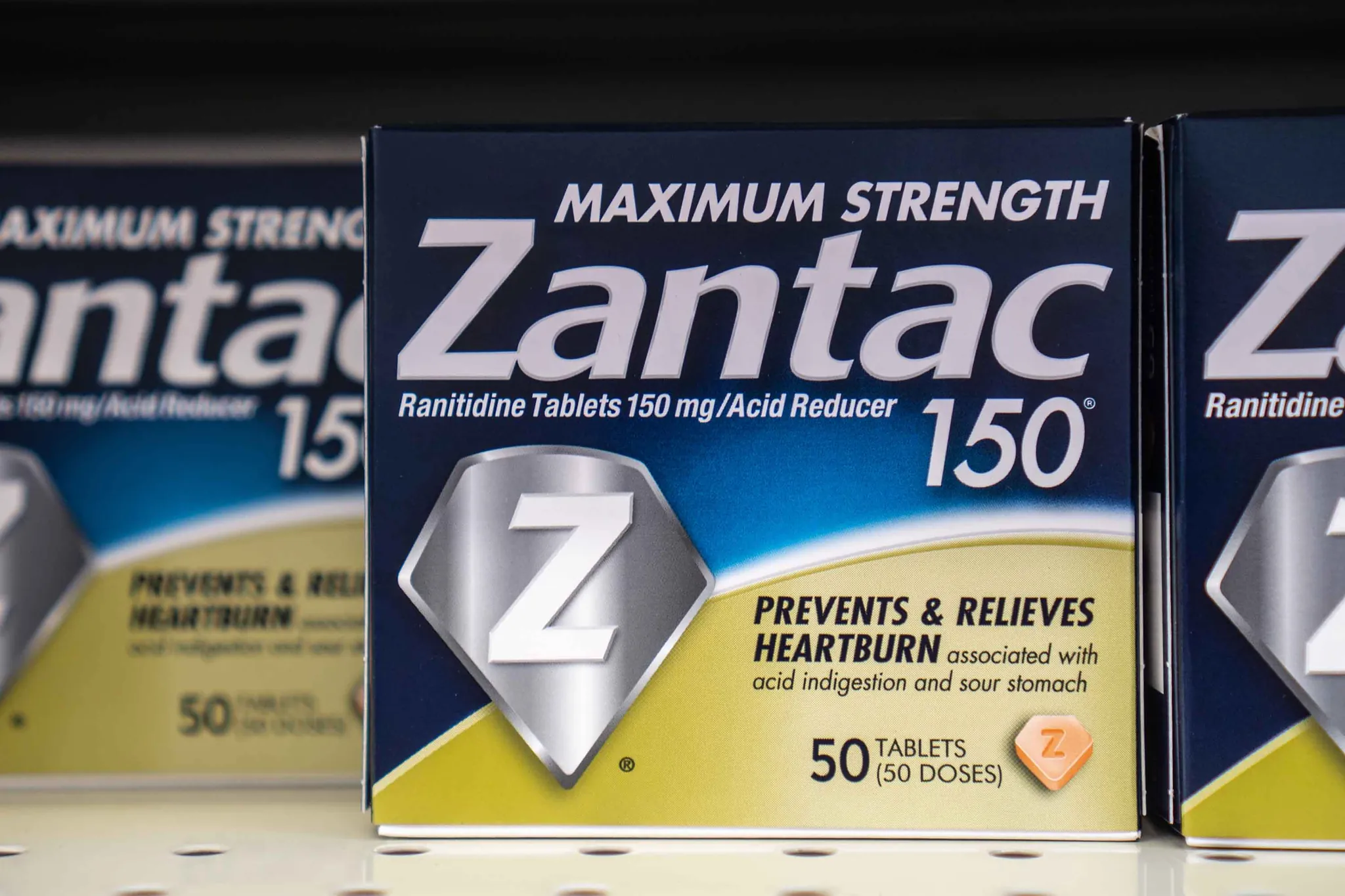
That earlier crisis was not the same event as the 2026 cetirizine recall. The 2019-2020 concern centered on NDMA impurity risk in ranitidine products; the 2026 notice concerns ranitidine cross-contamination in cetirizine tablets.[1][4] Conflating them would be sloppy. But treating the name “ranitidine” as an ordinary contaminant would also miss the regulatory context. This is a compound whose recent history already forced FDA and manufacturers into a large market-level intervention.
The 2025 reformulation point should be handled carefully. Secondary reporting has described approval of a reformulated ranitidine product in 2025, but that fact should not be stretched into a claim about the source, acceptability, or regulatory status of the ranitidine implicated in the 2026 cetirizine recall.[5] The available recall materials support a narrower conclusion: ranitidine has reappeared in a significant FDA recall context, this time as a cross-contaminant in another drug product.
The Policy Signal for Generic Oversight
Generic-drug oversight depends on confidence that products with ordinary labels have ordinary composition. Cetirizine is not an obscure oncology product or a drug administered only under specialist supervision. It is a common antihistamine. That makes the quality failure less tolerable, not more. Routine products move widely, sit in pharmacies and homes, and are often treated as low-friction substitutions in procurement and dispensing systems.
The recall also shows why postmarket detection is a weak substitute for controlled manufacturing. Once a visible defect reaches a pharmacy, the system has already asked downstream workers to do work that upstream controls should have finished. Pharmacy technicians are trained to notice product abnormalities, and that vigilance matters. It should not be the first reliable barrier against cross-contamination in distributed inventory.
There are limits to what can be concluded from the public record as of July 24, 2026. The available materials do not establish how many bottles were distributed, whether FDA will later post a formal classification, whether inspectional observations will follow, or whether adverse event reports will emerge after the initial notice. The notice states that no adverse events had been reported as of its issuance.[1] That should remain attached to any serious discussion of the risk.
Still, the regulatory meaning is not vague. FDA recall communication can identify the product, frame the hazard, and give the supply chain a path for containment after discovery. Prevention sits elsewhere. It sits in GMP execution, in-process controls, cleaning validation, line clearance, and the discipline of multi-product manufacturing. In this recall, the troubling fact is not that a recall occurred. It is that the decisive quality signal came from outside the manufacturer’s own system.
References
- Unique Pharmaceutical Laboratories Issues Voluntary Nationwide Recall of Cetirizine Hydrochloride Tablets USP, 5 mg Due to Potential Cross-Contamination with Ranitidine — U.S. Food and Drug Administration, July 20, 2026.
- Recalls Background and Definitions — U.S. Food and Drug Administration.
- Valisure Citizen Petition on Ranitidine — Valisure, September 2019.
- FDA Requests Removal of All Ranitidine Products (Zantac) from the Market — U.S. Food and Drug Administration, April 1, 2020.
- Zantac Returns to Shelves After Reformulation — The Hill, 2025.
Comments
Join the discussion with an anonymous comment.