
The July 2026 Code Purple air quality alert was not just another bad-smoke day. It was a stress test of how public health instructions work when the warning area becomes too large to treat as a meaningful operating unit. Smoke from Canadian and Minnesota wildfires spread across more than a dozen states, with reports describing nearly 900 Canadian wildfires, more than 200 of them out of control, PM2.5 levels reaching roughly 150–250+ µg/m³ in affected areas, and air quality alerts covering more than 100 million Americans.[1]
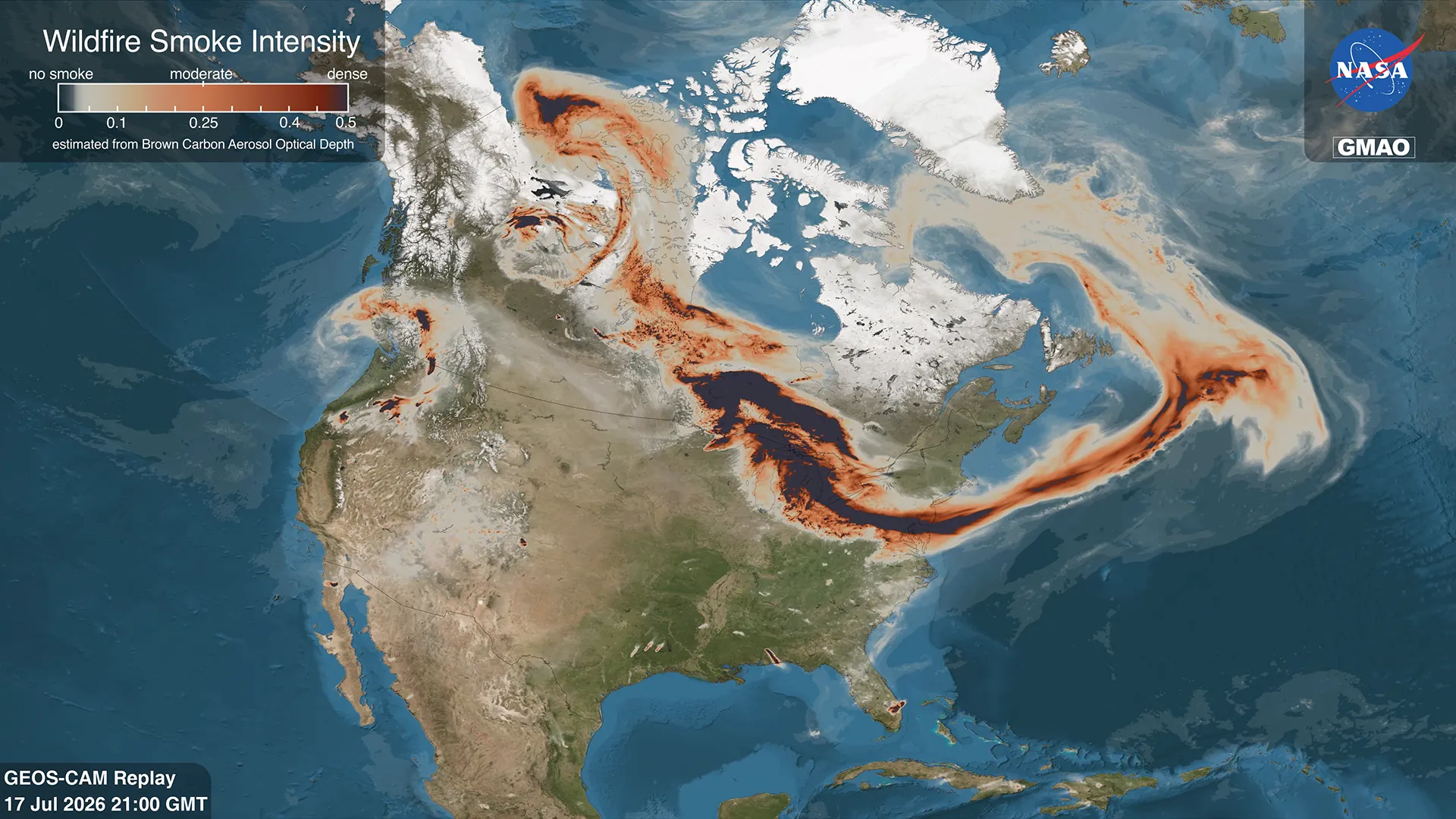
Under the EPA’s AirNow AQI framework, Code Purple means an AQI of 201–300, classified as “Very Unhealthy.” For PM2.5, that corresponds to 150.5–250.4 µg/m³, and the health message is blunt: the risk of health effects is increased for everyone.[2] That statement is formally correct. At those concentrations, it would be irresponsible to tell the public that only patients with cardiopulmonary disease need to pay attention.
But a formally correct warning can still fail as an instruction. If more than 100 million people are told to reduce exposure, cancel outdoor plans, or change routines, the operational question becomes unavoidable: how many people actually need to follow the activity guidance to prevent one serious cardiopulmonary event? That is where the current Code Purple system begins to look less like a clinical intervention and more like a broad orientation signal.
The NNT problem hiding inside a purple map
The most useful evidence on this question is not another description of wildfire smoke toxicity. It is the 2024 JAMA Network Open study by Brook et al., which translated EPA AQI activity recommendations into number needed to treat, or NNT: the number of people who would need to follow the recommendation on a single day to prevent one serious event.[3]
For Code Purple alerts in 2026, the question is not only whether PM2.5 is hazardous. It is whether the same instruction should be delivered with the same urgency to a healthy adult, a patient discharged after heart failure last month, and a person with COPD who has already had repeated exacerbations.
At Code Purple levels, Brook et al. estimated that roughly 3.5 million adults in the general population would need to follow EPA activity guidance to prevent one serious atherosclerotic cardiovascular disease event. Among adults with preexisting ASCVD, the estimated NNT was still about 375,000. Among adults with asthma or COPD, the estimated NNT for preventing one pulmonary exacerbation was much lower, about 15,000.[3]
| Population considered | Modeled outcome | Approximate NNT at Code Purple |
|---|---|---|
| General adult population | Serious ASCVD event | 3.5 million |
| Adults with preexisting ASCVD | Serious ASCVD event | 375,000 |
| Adults with asthma or COPD | Pulmonary exacerbation | 15,000 |
| Very high-risk cardiovascular subgroup, such as recent MI or heart failure within 90 days | Cardiovascular event | 3,500 |
| Very high-risk pulmonary subgroup, such as patients with 2+ COPD exacerbations per year | Pulmonary event | 1,750 |
These numbers do not say that wildfire smoke is harmless. They say something narrower and more useful: when the endpoint is a serious acute cardiopulmonary event prevented by same-day activity guidance, the benefit of blanket recommendations is thinly distributed across the general adult population. The average adult may still cough, feel eye irritation, avoid exercise, or make a reasonable decision to stay indoors. But the serious preventable events that justify clinical mobilization are concentrated in much smaller groups.
That distinction is easy to lose when every phone screen turns purple. A public map tells people that risk exists over a region. A hospital preparedness team needs a different object: a list of patients whose risk is high enough that an outreach call, a medication check, a postponed appointment, or a transportation change is worth the staff time.
“Questionable public health relevance” is not the same as “no health risk”
Brook et al. concluded that “existing PM2.5 AQI activity recommendations are of questionable public health relevance in present-day conditions.”[3] That sentence should not be flattened into a culture-war claim about the EPA exaggerating smoke hazards. The study did not test whether fine particles are biologically safe, and it did not argue that people should ignore AirNow alerts.
Its challenge is more specific. EPA activity guidance is framed for broad AQI categories, but the study’s modeled benefit changes dramatically depending on baseline risk. At the same Code Purple exposure, the estimated NNT moves from millions in the general adult population to thousands in very high-risk clinical subgroups.[3] That gradient is too large to treat as a footnote.
In public health terms, this is an absolute-risk problem. A person at low baseline risk can experience a real relative increase in risk during smoke exposure while still having a very low absolute probability of a serious event that day. A patient with recent heart failure or repeated COPD exacerbations starts from a different baseline. The same exposure increment can produce a much more actionable absolute risk.
That is why the cigarette-equivalence style of communication is a weak foundation for policy. During the July 2026 event, CBS Pittsburgh reported a public health claim that every two hours in Code Purple air was equivalent to smoking one cigarette.[4] It may be memorable. It may even move some people indoors. But without independent support in the available materials, it should not carry the analytical load. Dose comparisons like that can distract from the more actionable question: which people are likely to benefit enough from intervention that someone should actively reach them?
Why the July 2026 event makes the old framework feel too blunt
AQI guidance was built to be legible. Color categories are easy to broadcast, easy to display on a weather app, and easy to use in school, parks, and event decisions. That simplicity still has value. When a region enters Code Purple, universal alerts help people orient quickly, understand that conditions are not merely unpleasant, and take baseline steps such as moving activity indoors or checking on vulnerable household members.
The problem is what happens after orientation. In July 2026, the alert footprint was so large that “everyone should reduce exposure” became administratively diffuse. Public agencies could post the alert. Newsrooms could show the map. Employers could adjust outdoor work. Schools and event organizers could consult cancellation guidance, a topic covered separately in Code Purple health and event cancellations. But health systems still had to decide whether to use scarce outreach capacity on broad reminders or on identifiable patients with much higher expected benefit.
A pulmonology nurse does not have the same decision problem as a weather app. A discharge planner cannot call everyone in the county. A primary care practice that sends the same message to every adult patient may satisfy a communication requirement while missing the people whose medication supply, oxygen access, transportation, or follow-up plan could actually change the outcome.

This is where the Brook study’s alternative model becomes important. When the authors examined a targeted strategy for very high-risk populations, the NNT values fell to roughly 3,500 for cardiovascular events and 1,750 for pulmonary events at Code Purple levels.[3] Those are still not magic numbers. They do not prove that an outreach program will work. But they are finally in the range where a health system can begin to ask practical questions about registries, staffing, message timing, and clinical escalation.
What risk-stratified guidance would change
A risk-stratified Code Purple policy would not replace the public AQI map. It would add a second layer that says, explicitly, which populations require active outreach and what institutions are expected to do when forecast or current PM2.5 reaches dangerous levels.
For health systems, the first change would be pre-identification. Patients with recent myocardial infarction, recent heart failure, repeated COPD exacerbations, severe asthma, oxygen dependence, or other locally defined very high-risk profiles should not be discovered after the smoke arrives. They should already exist in a registrable cohort, with responsibility assigned to a clinic, care management team, or population health function.
The second change would be message specificity. “Avoid prolonged outdoor exertion” is too vague for a patient discharged after heart failure who is waiting for a ride to a follow-up appointment. More useful instructions name the action: keep rescue medications accessible, confirm oxygen supplies, shift outdoor appointments when clinically safe, use cleaner indoor air spaces where available, contact the clinic for worsening dyspnea, and avoid unnecessary outdoor exertion during the highest-exposure window.
The third change would be timing. Same-day AQI guidance is often too late for complex patients, especially when transportation, caregiver availability, durable medical equipment, or medication refills are involved. Forecasting and risk stratification tools may help create earlier operational lead time, as discussed in AI smoke forecasting for health systems and AI-based wildfire smoke risk stratification. The policy point does not depend on AI, however. Even a basic registry is more actionable than a universal alert with no target list.
For public agencies, the change would be to stop treating the color category as the whole intervention. A Code Purple notice can still say that risk is increased for everyone. But it should also specify which groups warrant proactive contact, which settings should have protocols ready, and which decisions should not be left to individual interpretation after the alert has already been issued.
The evidence is strong enough to update guidance, not strong enough to overclaim
There are three important limits to applying the Brook study to the July 2026 wildfire smoke episode. First, the study modeled single-day exposure, while the July event involved multi-day smoke across large regions. Cumulative exposure could change the risk calculation.[3] A one-day NNT should not be casually stretched across a prolonged episode without saying so.
Second, the study did not isolate wildfire PM2.5 from ambient PM2.5.[3] That matters because wildfire smoke may have different toxicity profiles, especially for acute respiratory outcomes. For readers who want the clinical background, wildfire smoke health effects are not always interchangeable with ordinary urban particle exposure.
Third, the targeted alternative in Brook et al. was modeled, not tested as a real outreach intervention.[3] A lower NNT in a very high-risk subgroup does not automatically produce fewer emergency visits unless the right patients are identified, the message arrives in time, and the recommended action is feasible for the patient.
Those limitations weaken any claim that risk-stratified smoke guidance is already proven at scale. They do not rescue the current one-size-fits-all framework. If anything, they clarify the policy task: keep universal AQI alerts for public awareness, but stop pretending that a single activity recommendation is a sufficient health intervention across a population of 100 million people.
A better Code Purple alert would have two audiences
The first audience is the public. Code Purple should continue to mean that air quality is very unhealthy, that risk increases for everyone, and that reducing exposure is sensible. Broad civic messaging still helps schools, workplaces, families, and local governments coordinate around a shared signal.
The second audience is institutional. Health systems, clinics, nursing facilities, home health agencies, shelters, and emergency planners need guidance that converts the purple map into a triage rule. Which patients should be contacted first? Which appointments should be moved indoors or rescheduled? Which patients need medication, oxygen, transportation, or cleaner-air support checked before exposure peaks?
That second layer is where the current framework is weakest. The evidence now supports an update: universal AQI alerts for orientation and baseline behavior, paired with explicit risk-stratified guidance for patients with very low NNT values and for the institutions responsible for reaching them. In 2026, a Code Purple alert that warns everyone but operationally targets no one is no longer good enough.
References
- Canada wildfire smoke brings unhealthy air quality to over a dozen states, ABC News, July 17, 2026.
- AQI Basics, AirNow.gov.
- Public Health Relevance of US EPA Air Quality Index Activity Recommendations, JAMA Network Open, April 2024.
- CBS Pittsburgh coverage of July 2026 Code Purple cigarette-equivalence claim, CBS Pittsburgh.
Comments
Join the discussion with an anonymous comment.