
The phrase “cyclospora outbreak Taco Bell menu changes” sounds, at first, like a restaurant operations story: lettuce pulled, items adjusted, customers inconvenienced, supply chains reviewed. It is more revealing than that. By the time a fast-food menu becomes the public-facing evidence of a Cyclospora problem, the epidemiological question has already moved downstream: who got sick, when did the illnesses cluster, what food exposure connected them, and why did the signal become operationally unavoidable before it became nationally clear?
As of mid-July 2026, CDC reported 1,645 confirmed Cyclospora cases, more than 5,100 additional cases under analysis, an estimated roughly 7,000 illnesses across 34 states, 141 hospitalizations, and no deaths; known illness onsets in the public alert ran from May 28 to July 5 before CDC confirmed the outbreak publicly on July 8.[1] That span matters. It is the interval in which local interviews, state reporting, laboratory confirmation, exposure histories, and federal characterization either converge quickly enough to shape action or arrive late enough to explain what has already happened.
The confirmed national total also did not sit comfortably beside what states were seeing. Michigan reported 4,312 suspected cases on July 17-18, a figure that dwarfed CDC’s confirmed national count while still meaning something narrower than “confirmed Cyclospora infections.” The discrepancy is not a clerical curiosity. It shows the practical difference between suspected cases moving through state systems and confirmed cases that meet federal reporting standards. Treating only the federal number as real misses outbreak burden. Treating every suspected state case as confirmed erases the laboratory and case-definition work that protects outbreak investigation from noise.
The Missing Capacity Was Not Just Another Database
Before July 2025, FoodNet was one of the less glamorous parts of the U.S. food safety system, which is often a sign that it was doing useful work. Established in 1996, it tracked the incidence of eight pathogens: Campylobacter, Cyclospora, Listeria, Salmonella, Shiga toxin-producing E. coli, Shigella, Vibrio, and Yersinia. It did so through active surveillance at 10 sites covering about 15% of the U.S. population.[2]
Active surveillance is not just passive reporting with better stationery. In passive systems, health authorities largely receive what is reported to them. In active systems, investigators look for cases, check in with laboratories, standardize collection, and build a denominator that lets incidence trends mean something. For a parasite such as Cyclospora, where delays in diagnosis and reporting are already a problem, that distinction is not bureaucratic. It changes when a cluster looks like a cluster.
The July 2025 contraction cut FoodNet’s active surveillance scope from eight pathogens to two: Salmonella and STEC. CDC said “funding has not kept pace,” and the same change reduced FoodNet’s annual enrollment survey from 50,000 households to zero.[2] That survey was not a public-relations flourish. It collected detailed exposure information that could help investigators generate hypotheses about contaminated foods before a traceback had hardened into an official conclusion.
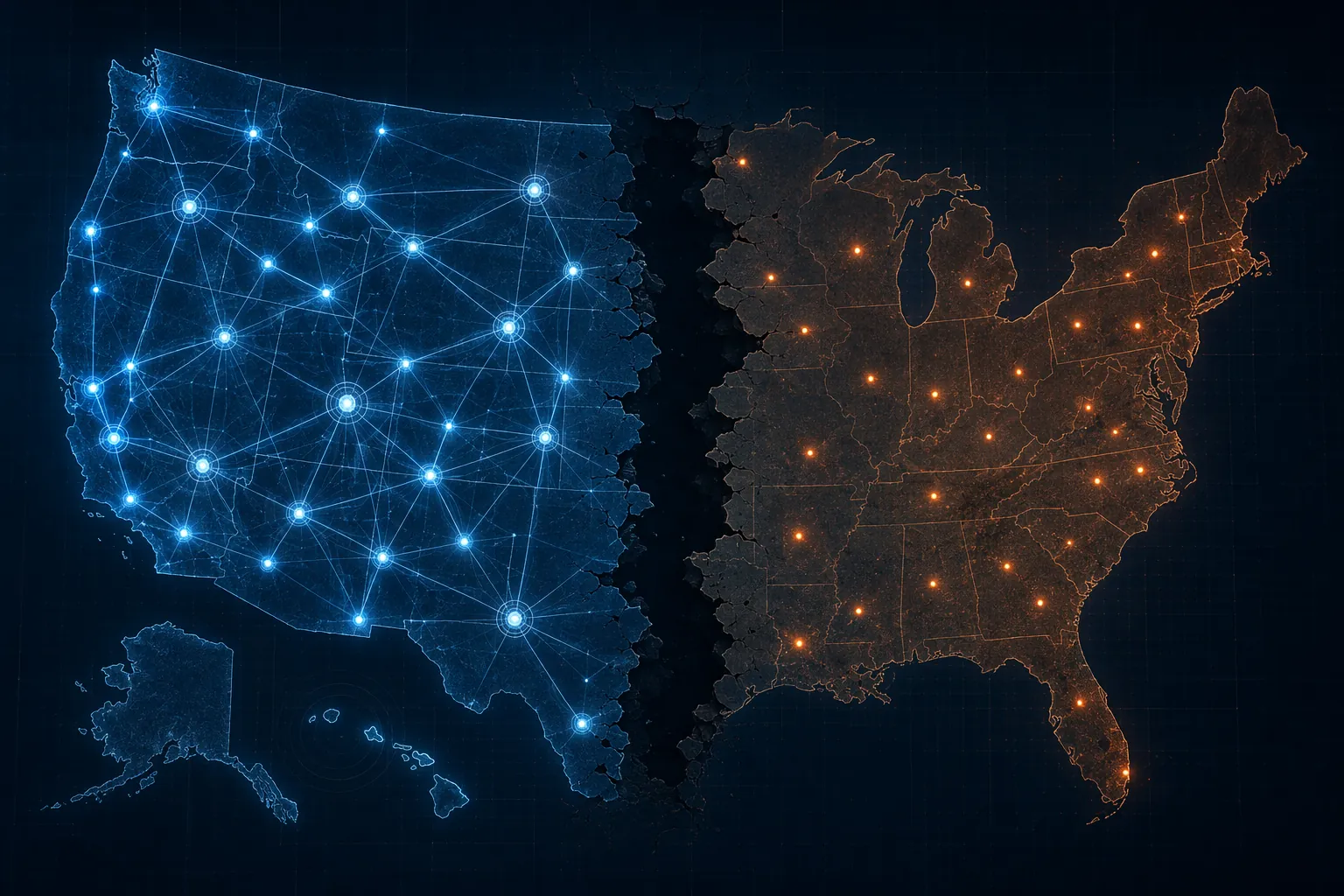
That is the part of the 2026 outbreak that should not be smoothed over by the comforting phrase “other surveillance systems.” Other systems did exist. NNDSS, PulseNet, and disease-specific initiatives can still receive reports, compare laboratory patterns, and help connect cases. But for Cyclospora in this outbreak, the question is not whether the federal government had any surveillance architecture left. It is whether that architecture produced early, granular, exposure-linked intelligence quickly enough to alter the trajectory.
What the Six-Week Window Made Harder to See
The earliest known illness onset in the CDC alert was May 28. The public federal confirmation came July 8.[1] In outbreak work, that interval is not simply “delay” in the abstract. It is time during which a produce item may still be moving, a restaurant chain may still be serving, local health departments may be interviewing cases with incomplete exposure prompts, and state epidemiologists may be comparing signals without the benefit of a stronger national frame.
The illness curve later showed two peaks around June 25 and July 7, suggesting at least two contamination events. That does not prove a preventable second wave. It does show how a pattern can become obvious only after enough cases accumulate and enough onset dates are plotted. If the first peak is recognized late, the second can look, in real time, like more of the same diffuse background rather than a separate operational warning.
Barbara Kowalcyk of George Washington University described the FoodNet cuts as having “weakened the nation’s ability to detect and respond to emerging foodborne threats.” Dr. J. Glenn Morris of the University of Florida called active surveillance “the canary in the coal mine.”[3][2] Those comments should not be used as decoration around a predetermined conclusion. They are useful because they name the missing function: early warning, not retrospective accounting.
Craig Hedberg of the University of Minnesota has also linked the surveillance reduction to degraded outbreak detection.[3] The relevant policy point is not that FoodNet would have instantly identified every contaminated lettuce lot or prevented every illness. No surveillance program works like that. The narrower point is stronger: removing active Cyclospora surveillance and eliminating the household exposure survey made it harder to detect scale, compare exposures, and generate food hypotheses while those findings could still guide interventions.
Confirmed Cases, Suspected Cases, and the Burden Shift to States
The Michigan number is a warning against two bad readings at once. It would be wrong to say that 4,312 suspected Michigan cases were equivalent to CDC’s confirmed national cases. Suspected state reports move faster and include uncertainty. It would also be wrong to pretend that CDC’s lower confirmed total was the only meaningful measure of the outbreak. Confirmed cases are a filtered view of reality, shaped by who seeks care, who gets tested, which tests are ordered, how laboratories report, and how quickly data move upward.
When FoodNet still included Cyclospora, active case-finding helped reduce dependence on that uneven chain. Investigators could look for cases across defined sites, track incidence with more consistency, and collect exposure information through a standing workflow. After July 2025, more of the burden fell onto passive reporting and the ordinary stress points of outbreak response: local interviews, state aggregation, laboratory confirmation, and federal synthesis.
That burden shift matters because local and state teams are often the first to see something abnormal and the last to get credit for making it legible. They are also the ones asking people what they ate, where they ate it, when symptoms began, whether anyone else in the household was sick, and whether the same item appeared across cases that otherwise seem unrelated. A national system that receives those signals late can still produce a correct report. It may not produce a timely one.
Lettuce Traceback Is Not the Same as Product Proof
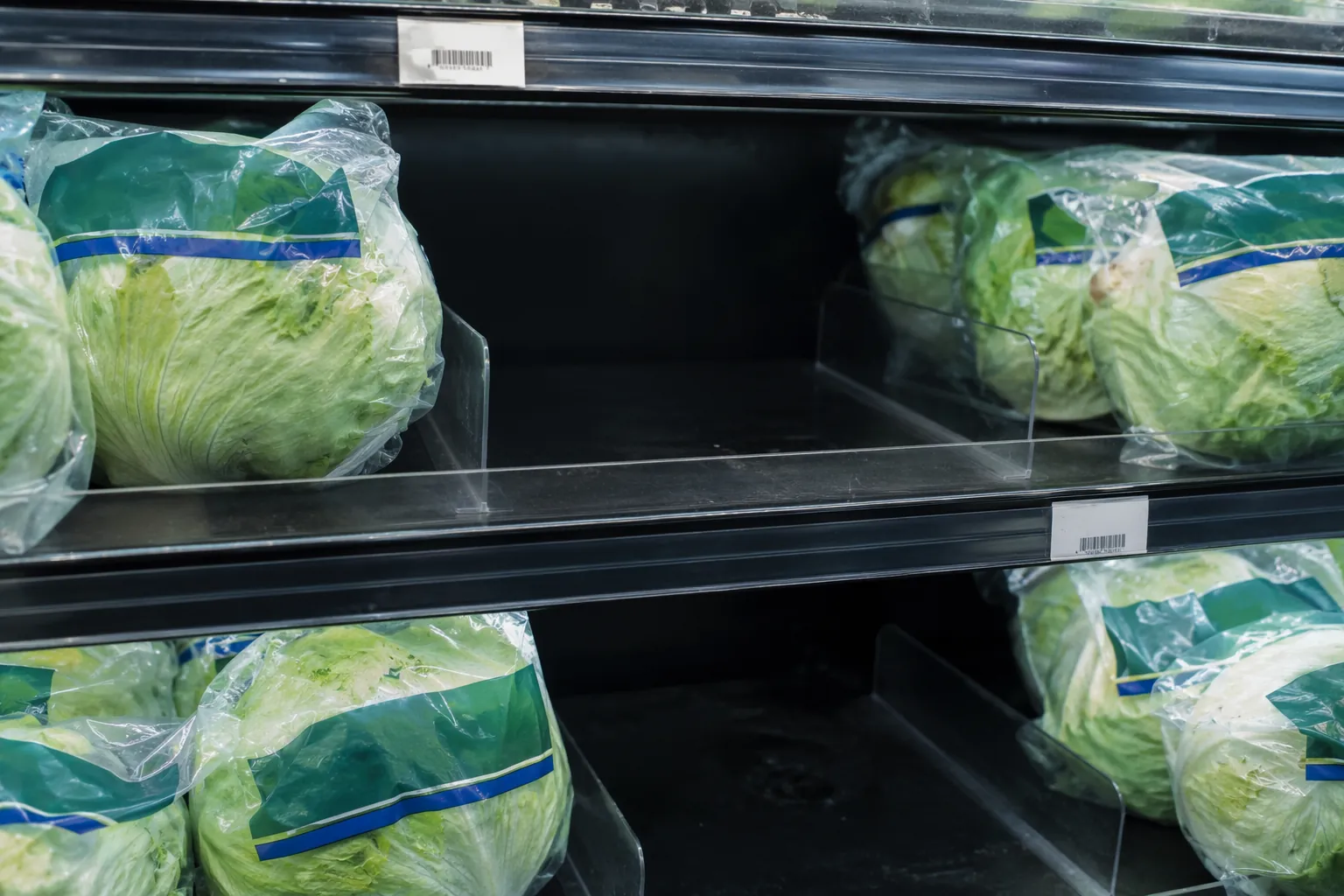
The Taco Bell menu disruption and traceback attention around lettuce gave the outbreak a visible object. That visibility is useful, but it can also flatten the evidence. Taylor Farms was identified as the lettuce supplier, yet as of mid-July the company stated that “no single positive product test result for Cyclospora” had been found.[3] In practical terms, the lettuce connection rested on epidemiological linkage, not a positive microbiological test from a product sample.
That distinction is not a loophole. Produce outbreaks are often reconstructed from exposure histories, distribution records, illness timing, and traceback data because the contaminated item may be gone by the time investigators know where to look. A negative or absent product test does not clear an exposure pathway. It does, however, limit what can be claimed. The evidence can point toward lettuce strongly enough to drive menu and supply-chain action while still falling short of laboratory confirmation from a sampled product.
This is where the lost household survey becomes more than an administrative footnote. Early exposure data can help investigators distinguish a shared ingredient from a shared restaurant, a regional supplier from a national menu item, and one contamination event from more than one. Without that intake, the system leans harder on reports that arrive after symptoms, testing, interviews, and state review have already consumed precious time.
CDC’s Counterargument Deserves More Than a Footnote
CDC’s position is not that foodborne surveillance disappeared. The agency has pointed to other systems, including NNDSS, PulseNet, and related surveillance programs, as continuing sources of coverage.[2] That is a real argument. A public health system is not one program, and it would be careless to imply that the loss of active FoodNet surveillance for six pathogens left investigators blind.
But the existence of parallel systems does not answer the operational question. PulseNet is powerful when laboratory data can be compared. NNDSS is essential for reportable disease flow. Neither is a full substitute for active case-finding paired with structured exposure collection in a defined surveillance population. For this outbreak, the gap was not the absence of any signal. It was the slower conversion of scattered signals into a usable national picture.
The fiscal context is also narrower than the politics around it. CDC’s FY2026 food safety budget request was $72 million, while broader HHS budget pressure was shaped in part by proposed Medicare cuts. Those facts matter insofar as they explain why surveillance capacity becomes vulnerable. They do not, by themselves, prove what happened in a specific outbreak.
Where AI Helps, and Where It Does Not Replace Field Epidemiology
The post-FoodNet surveillance landscape is already being filled, at least rhetorically, with technological alternatives: large language model analysis of restaurant reviews, smartphone mobility data, predictive models, and faster anomaly detection. Those tools are worth examining. ClinicalMind’s work on AI for foodborne outbreak detection and how AI detects foodborne illness outbreaks treats them as potential augmentation rather than magic replacement.
That is the right standard. AI systems may help identify unusual complaint patterns earlier, triage signals across messy public data, or flag clusters that deserve human follow-up. They do not interview patients. They do not create laboratory confirmation. They do not know whether a person ate lettuce, salsa, cilantro, or several shared ingredients unless someone collects that information accurately. A model can widen the listening field, but it cannot rebuild the epidemiological bridge if the bridge’s human and institutional supports have been removed.
For compliance teams and health system administrators, the lesson is practical: surveillance resilience is not measured by how many dashboards exist. It is measured by whether data move from sick person to local interview, from laboratory to state epidemiologist, from exposure history to traceback, and from federal synthesis back to action while action still matters.
The Narrow Lesson From the Taco Bell Menu Changes
The 2026 Cyclospora outbreak does not prove that every delayed case was caused by the July 2025 FoodNet cuts. It does not prove that a positive product test was missed. It does not erase the value of NNDSS, PulseNet, laboratory confirmation, or state reporting. Those cautions are necessary because outbreak investigations punish certainty that arrives faster than evidence.
It does show something more bounded and more useful. Once active Cyclospora surveillance was removed from FoodNet, the U.S. food safety system had less early-warning capacity for this pathogen, less routine exposure-detail collection, and a weaker bridge between scattered state signals and federal characterization. The Taco Bell menu changes were not the center of the story. They were the point at which a surveillance problem finally became visible to everyone else.
References
- CDC Health Alert Network HAN-00531, Centers for Disease Control and Prevention, July 13, 2026.
- CDC quietly scaled back surveillance program for foodborne illnesses, NBC News, August 2025.
- Unresolved Cyclospora Outbreak Raises Questions Over CDC Cuts, Forbes, July 13, 2026.
Comments
Join the discussion with an anonymous comment.