
By the time CDC issued HAN-00531 on July 14, 2026, the national alert described Cyclospora illnesses that had been reportable since May 1. That is the first thing to know about the 2026 Cyclospora outbreak, including for readers arriving through searches for “cyclospora outbreak Taco Bell 2025 what to know”: the central public record is not a settled restaurant-source story, but a 10-week interval between reportable illness activity and a coordinated federal advisory. [1]
The July 2025 FoodNet cuts did not create the contamination event. FoodNet did not plant Cyclospora in produce, restaurant supply chains, or anyone’s kitchen. But the change removed an active surveillance layer that had helped federal and state officials see Cyclospora trends across a defined population before scattered local signals hardened into a national emergency. That distinction matters because it is the difference between blaming a surveillance program for a pathogen and asking whether the country weakened one of the systems that could have recognized escalation earlier.
The Missing Line In The Timeline
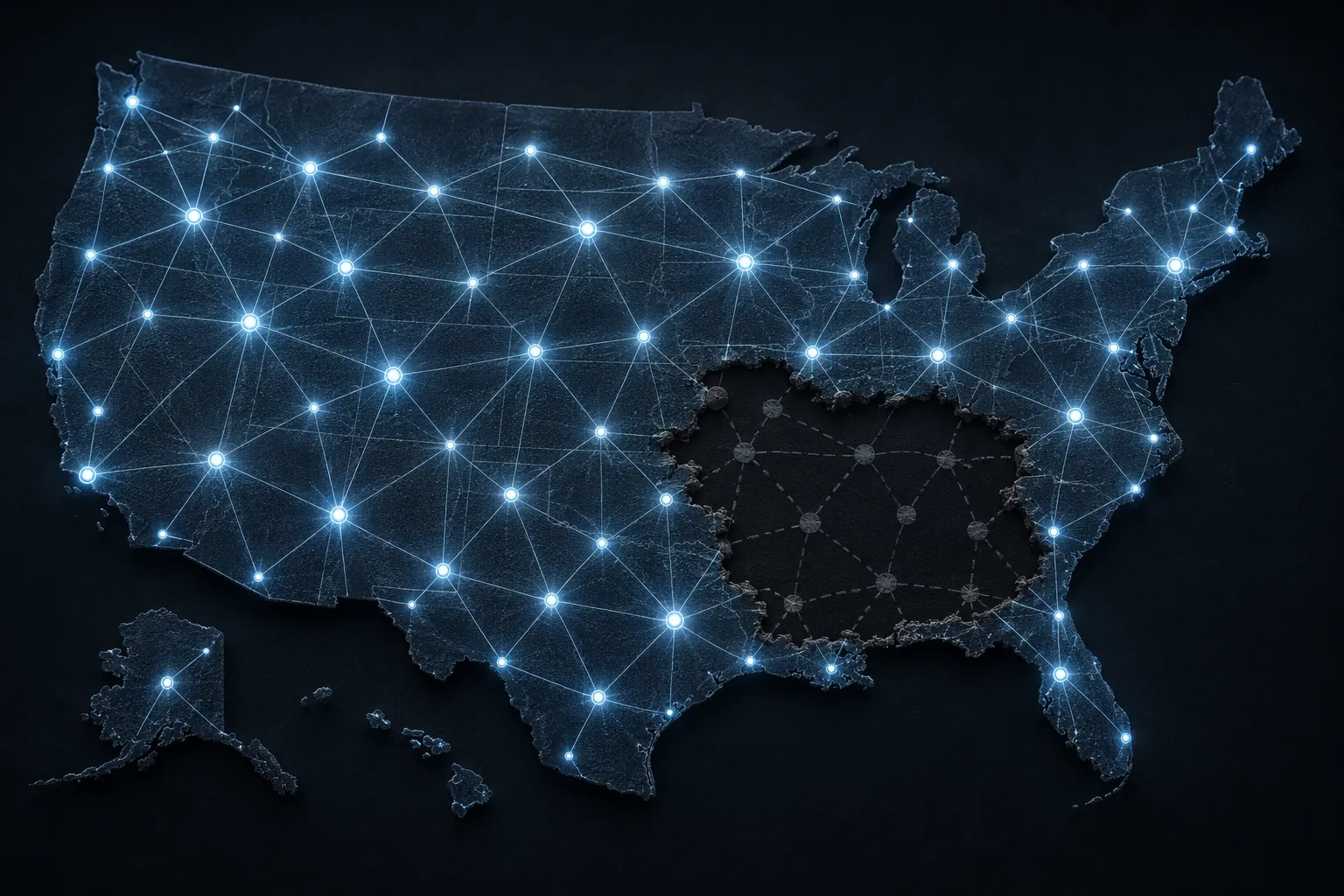
The timeline is short enough to be uncomfortable. On July 1, 2025, CDC made Cyclospora reporting optional under FoodNet, after years in which the network had tracked Cyclospora as part of its broader foodborne illness surveillance scope. Snopes later rated as true the claim that the Trump administration’s CDC cut tracking of the parasite before the 2026 outbreak. [2]
FoodNet had not been a full national census of foodborne illness. Before the July 2025 change, CDC described it as a collaboration across 10 sites covering about 16% of the U.S. population and tracking eight pathogens, including Cyclospora. [3] That design is easy to underestimate. A sentinel network covering a slice of the population is not a complete map, but if it is stable over time, it can show when the shape of illness activity changes.
Then came the 2026 rise. CDC’s July 14 advisory told clinicians and public health officials that cyclosporiasis cases had increased since May 1 and noted that 47 states report cyclosporiasis cases through the National Notifiable Diseases Surveillance System. The same advisory also cautioned that confirmation can lag illness onset by about six weeks. [1] A six-week reporting lag does not explain away the full interval, but it does show why early pattern recognition depends on more than one slow, passive stream of case reports.
| Date | What changed | Why it matters |
|---|---|---|
| July 1, 2025 | Cyclospora reporting became optional under FoodNet. | The active trend-monitoring layer became less consistent across the network. |
| May 1, 2026 | CDC later identified rising reportable illness activity beginning from this date. | The outbreak signal existed before the federal advisory. |
| July 13, 2026 | Early national reporting described a large unresolved outbreak and questioned the effect of the surveillance cuts. | The public picture was still being assembled outside a fully synchronized federal view. |
| July 14, 2026 | CDC issued HAN-00531. | A national alert finally gave clinicians and health departments a common frame. |
What FoodNet Could And Could Not Do
The cleanest way to misread this outbreak is to say CDC stopped all Cyclospora reporting. It did not. NNDSS remained intact. States could still report cyclosporiasis through the national notifiable disease system, and CDC’s July 14 advisory explicitly relied on that national reporting structure. [1]
The weakened part was different: active FoodNet trend monitoring. NNDSS is a national notifiable disease reporting system. It depends on cases being diagnosed, reported, classified, and transmitted through public health channels. FoodNet, by contrast, has value because it watches selected populations consistently over time. It is not omniscient, and it was not designed to identify every outbreak source. Its value is that stable surveillance can make a rise look like a rise before every jurisdiction has decided whether its own numbers are abnormal.
That is why the July 2025 change matters even if one accepts the narrowest defense of it. Making Cyclospora optional did not erase laboratories, state epidemiologists, or notifiable disease reporting. It did, however, make one of the more disciplined federal trend windows less dependable just before a season in which trend recognition became the whole problem.
Forbes was among the early outlets to connect the unresolved 2026 outbreak to the prior CDC surveillance change, while still framing the source investigation as incomplete. [4] That incompleteness is important. The evidence supports a surveillance-delay argument; it does not support a claim that FoodNet cuts caused the contamination itself or that a specific restaurant chain can be treated as the outbreak source without confirmation.
A National Outbreak Seen Through State Windows
The strongest evidence of surveillance fragility is not any single dramatic number. It is the mismatch among numbers that were all defensible inside their own reporting rules.
A 50-state survey published by Marler Blog found Michigan reporting 7,664 cases, Ohio describing roughly 1,119 cases in one region, Illinois saying it had no evidence of a large outbreak at 216 cases, and New York treating about 470 cases as not a major deviation from the norm. [5] Michigan’s own dashboard showed the 7,664 figure, but that number included probable cases, which makes it broader than CDC’s stricter confirmed-count frame. [6]
That is not a clerical footnote. If Michigan is counting probable-heavy activity, CDC is emphasizing confirmed cases, and another state is judging the same season against its own baseline, the country can have a large outbreak without having a single shared denominator. Each jurisdiction may be acting rationally, yet the federal picture remains late.

CDC’s own outbreak locations page provided a state-by-state breakdown, but the federal confirmed count remained far below the estimated scale being described elsewhere. [7] By July 13, CDC had confirmed about 1,645 cases while estimates of actual cases exceeded 7,000, leaving a discrepancy of more than 5,000 cases. [4]
Some of that gap reflects method, not negligence. Confirmed cases require testing and classification. Cyclospora diagnosis is not automatic in routine stool testing, and CDC’s advisory urged clinicians to order specific testing when cyclosporiasis is suspected. [1] But methodological explanations do not make the gap harmless. A surveillance system can be technically intact and still too fragmented to give decision-makers a timely view of escalation.
Why The Gap Became A Policy Question
The policy question is not whether FoodNet was a magic alarm bell. It was not. CIDRAP’s analysis captured that constraint through Craig Hedberg of the University of Minnesota, who argued that FoodNet was designed for trend surveillance rather than outbreak detection. [8] That point should stop any claim that the FoodNet change alone explains the federal delay.
The same CIDRAP analysis also included Barbara Kowalcyk of George Washington University, who argued that cutting FoodNet’s Cyclospora tracking weakened overall situational awareness. [8] That point should stop the opposite overcorrection: the idea that FoodNet could not have mattered because it was not formally an outbreak-detection system.
Both statements can be true. A system built for trends may not identify the contaminated ingredient, supplier, or restaurant exposure. But trend surveillance can still tell officials that ordinary seasonal noise has become something else. In an outbreak with a long reporting lag, uneven testing, and state-specific definitions, that earlier recognition function is not ornamental. It is part of response capacity.
This is also why brand-centered coverage can mislead even when it captures search interest. If a consumer wants to know whether a Taco Bell meal was implicated, the responsible answer is to look for confirmed exposure findings, not infer source from keyword traffic or lawsuit speculation. The better-supported lesson is broader and less satisfying: the surveillance apparatus that should have helped reconcile state signals was weaker than it had been the previous year.
The Human Cost Of Slow Recognition
Cyclospora is often described through symptoms, but this article is not clinical guidance. The relevant operational consequence is simpler: when recognition is delayed, clinicians may not test specifically for Cyclospora, local health departments may not see their caseload as part of a national rise, and investigators may begin interviewing patients after memories of meals and purchase locations have faded.
CDC’s advisory reflected that reality by asking clinicians to consider cyclosporiasis in patients with compatible symptoms, order specific diagnostic testing, and report cases to public health authorities. [1] Those instructions are routine in form, but their timing matters. A mid-July national alert for cases rising since May 1 means many people had already moved through illness, care-seeking, testing, or non-testing before the country had a common outbreak frame.
Consumer Reports Advocacy used the outbreak to argue for stronger prevention and surveillance reforms, including improvements that would make outbreak signals faster and less dependent on fragmented local visibility. [9] The reform debate should not be reduced to a single administrative act, but the July 2025 FoodNet change belongs in it because it removed a layer whose value becomes obvious precisely when ordinary reporting channels are slow.
AI Cannot Repair Missing Upstream Data
The outbreak also exposes a limit in the current enthusiasm for algorithmic surveillance. AI can help detect unusual patterns, connect weak signals, and prioritize investigations, but it cannot reliably compensate for optional reporting, inconsistent case definitions, delayed laboratory confirmation, or missing upstream feeds.
That is the connection to ClinicalMind’s broader coverage of AI’s limits in the 2026 Cyclospora outbreak, how AI detects foodborne illness outbreaks, and what the evidence shows for AI foodborne outbreak detection. The most sophisticated model still needs timely, comparable public health data. If the inputs arrive late or disagree by definition, the model’s confidence can become another layer of confusion rather than an early warning.
A related question is whether AI could have helped track Cyclospora signals that traditional laboratory systems miss. That is a real operational possibility, especially for a parasite that does not fit every existing detection pathway; it is also why any serious discussion of Cyclospora surveillance gaps or earlier AI-assisted outbreak spotting has to begin with surveillance infrastructure, not software procurement.
The Narrow Conclusion The Evidence Supports
The July 2025 FoodNet cuts did not cause the 2026 Cyclospora outbreak. They did not identify the food vehicle, determine the exposure site, or replace the work of state laboratories and local health departments. NNDSS remained in place, and the confirmed-versus-probable case gap reflects real methodological differences.
But the cuts weakened the country’s ability to see escalation early. When cases rose from May 1 and the national advisory did not arrive until July 14, the problem was not only a parasite moving through the food system. It was a surveillance system asking states to interpret partial views, then trying to assemble a federal picture after the rise was already unmistakable. [1]
That is the durable lesson from the 2026 outbreak as of late July 2026: public health surveillance is infrastructure. It rarely looks dramatic when it works. When it is made optional, narrowed, or left to fragmented streams, the delay shows up later as uncertainty, uneven counts, and people waiting for a national signal that should have formed sooner.
References
- HAN-00531, CDC, July 14, 2026.
- Trump's CDC cut tracking of 'explosive diarrhea' parasite before 2026 outbreak, Snopes.
- About FoodNet, CDC.
- Unresolved Cyclospora Parasite Outbreak Raises Questions About CDC Cuts, Forbes, July 13, 2026.
- 50-state survey of how each state defined/reported the outbreak, Marler Blog.
- Michigan DHHS dashboard, Michigan Department of Health and Human Services.
- Cyclosporiasis Outbreak Locations, CDC.
- What we truly know about the huge US Cyclospora outbreak—and what we don't, CIDRAP.
- Cyclospora Outbreak 2026: What Consumers Need to Know and What Must Change, Consumer Reports Advocacy.
Comments
Join the discussion with an anonymous comment.