
The phrase “zyrtec recall 2026 fda” is easy to misread. The July 2026 FDA notice does not say that all Zyrtec products, all cetirizine products, or brand-name Zyrtec have been recalled. It concerns four specific lots of generic Cetirizine Hydrochloride Tablets USP 5 mg, sold in 100-count bottles by Unique Pharmaceutical Laboratories, a division of J.B. Chemicals & Pharmaceuticals Ltd.[1]
The recall was announced in an FDA-posted company notice dated July 18, 2026. The affected product has NDC 16571-401-10, expiration October 2028, and one of four lot numbers: GY825029, GY825030, GY825031, or GY825032.[1]
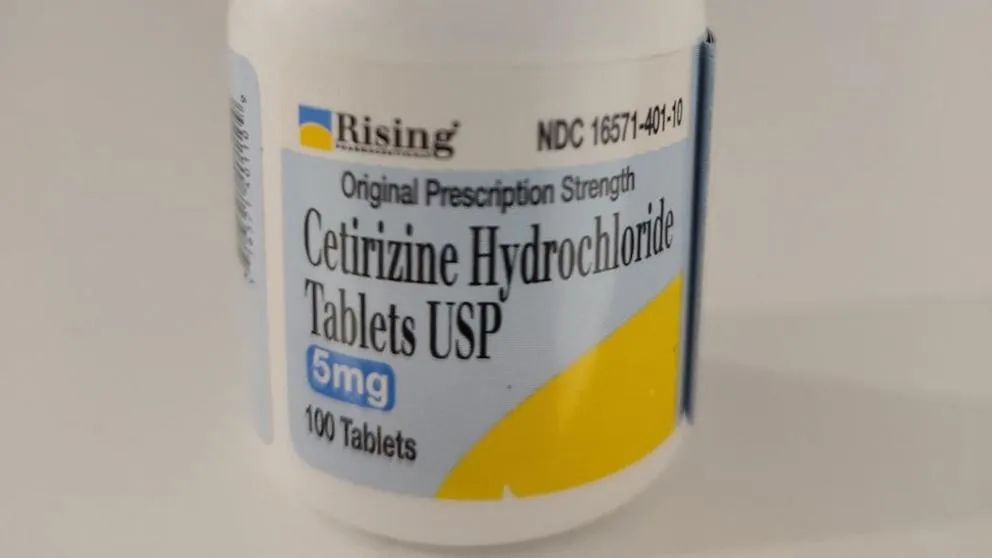
The Affected Product, Without the Brand-Name Shortcut
Cetirizine is the active ingredient many consumers associate with Zyrtec, but the recall notice identifies a generic product, not the branded Johnson & Johnson/Kenvue product. That distinction matters at the pharmacy counter and at home: a patient who throws away an unaffected bottle may lose access to a medicine they rely on, while a patient who assumes “my bottle is generic, so this headline is probably vague” may miss the exact lot match.
| Verification field | Affected recall detail |
|---|---|
| Product name | Cetirizine Hydrochloride Tablets USP 5 mg |
| Bottle size | 100-count HDPE bottle |
| NDC | 16571-401-10 |
| Lot numbers | GY825029, GY825030, GY825031, GY825032 |
| Expiration | October 2028 |
| Manufacturer | Unique Pharmaceutical Laboratories, division of J.B. Chemicals & Pharmaceuticals Ltd. |
| Recall date in FDA public notice | July 18, 2026 |
If any one of those fields does not match, the bottle is not identified in the FDA notice. If the NDC and lot number do match, the bottle should be treated as affected even if the tablets look normal. Visible discoloration was how the problem was found, not a required condition for risk.
How to Check a Bottle at Home or in a Pharmacy
The safest verification starts with the bottle label, not with the tablet shape, a store receipt, or a search-result headline. For consumers, the practical question is whether the label shows all of the recall identifiers at once: product name, strength, NDC, lot number, bottle count, and expiration date.
- Find the product name: Cetirizine Hydrochloride Tablets USP 5 mg.
- Check the NDC: 16571-401-10.
- Check the lot number against GY825029, GY825030, GY825031, and GY825032.
- Check the expiration date: October 2028.
- If the medication was dispensed into a pharmacy vial, call the dispensing pharmacy and ask staff to verify the original stock bottle’s NDC and lot.
That last step is especially important for patients who no longer have the manufacturer’s bottle. A pharmacy vial may show the drug name and directions but not the manufacturer lot. The dispensing pharmacy is the place most likely to have the stock-bottle record needed to confirm whether the patient received tablets from one of the recalled lots.
For clinicians and pharmacy teams, the same workflow should be used before reassuring a patient. “Generic Zyrtec” is not specific enough. “Cetirizine 5 mg, NDC 16571-401-10, lot GY825030, expiring October 2028” is specific enough to act on.

The Recall Started With a Tablet That Did Not Look Right
The most consequential detail in the notice is not corporate boilerplate. It is the discovery mechanism: a pharmacy technician observed red dots and discoloration on tablets during dispensing. The FDA-posted notice says the discoloration was later identified as potential cross-contamination with ranitidine.[1]
That is a small interruption in ordinary pharmacy work: a person handling routine allergy medication notices that the tablets do not look as expected and stops long enough for the concern to move upstream. In medication safety, those interruptions are not cosmetic. They are the point at which a product that has already moved through manufacturing, packaging, distribution, and stocking can still be caught before a patient swallows it.
Public reports from CBS News, USA Today, ABC News/GMA, AARP, and The Hill echoed the same broad consumer message: this is a limited generic cetirizine recall tied to possible ranitidine cross-contamination, not a recall of every allergy pill labeled or understood as Zyrtec.[2][3][4][5][6]
Why Ranitidine Cross-Contamination Matters
Ranitidine is not another name for cetirizine. Cetirizine is an antihistamine used for allergy symptoms. Ranitidine is an H2 blocker historically associated with heartburn treatment. The recall concern is potential cross-contamination: a tablet that should contain cetirizine may have been exposed to ranitidine.[1]
The FDA-posted notice does not frame the main risk as ordinary allergy-treatment failure. It warns that people with hypersensitivity to ranitidine could experience a potentially life-threatening allergic reaction, including anaphylaxis. The notice identifies hypotension, dyspnea, and angioedema among possible symptoms.[1]
Those terms deserve plain language. Hypotension means dangerously low blood pressure. Dyspnea means difficult or labored breathing. Angioedema means deeper swelling, often involving areas such as the face, lips, tongue, throat, or airway. In the wrong patient, an unintended exposure is not a labeling nuisance; it is a possible emergency.
The FDA-posted notice says no adverse events had been reported to date.[1] That is reassuring only within its limits. It means reported harm had not reached the company or FDA through the channels reflected in the notice at that point; it does not make an affected lot safe to keep using.
What This Recall Is Not
This is not a recall of brand-name Zyrtec. It is not a recall of all cetirizine. It is not a finding that every generic cetirizine product is contaminated. The recall notice names one product presentation, one NDC, four lots, and one expiration month.[1]
It is also not the same issue as the earlier ranitidine market withdrawal tied to NDMA impurity concerns. That history explains why the word “ranitidine” attracts attention, but the July 2026 cetirizine recall is about potential cross-contamination with ranitidine, not an NDMA finding in cetirizine.
There are several facts the public notice does not provide. It does not release a total number of bottles or units affected. It does not state that adverse events have occurred. It does not, in the notice itself, confirm a recall class such as Class I, Class II, or Class III. Some secondary accounts may use classification language, but the FDA-posted company notice should not be stretched beyond what it actually says.
What Consumers Should Do With an Affected Bottle
Consumers with a matching bottle should stop using the recalled product and follow the return instructions in the FDA-posted notice. Unique Pharmaceutical Laboratories instructed consumers to return recalled bottles to the place of purchase.[1]
- Do not keep taking tablets from a bottle that matches the recalled NDC, lot, and expiration.
- Do not rely on tablet appearance alone; absence of visible red dots does not rule out an affected lot.
- If the tablets were placed in a pharmacy vial, contact the pharmacy for lot verification.
- If symptoms suggest a serious allergic reaction after possible exposure, seek emergency medical help.
- Report suspected adverse events through the FDA MedWatch program, as directed in the recall notice.
Patients who use cetirizine regularly should ask a pharmacist or clinician about an unaffected alternative rather than simply going without needed allergy treatment. The recall identifies a narrow product problem; it does not remove cetirizine as a therapeutic option for patients whose products are not part of the affected lots.
What Pharmacies and Clinicians Need to Check
For pharmacies, the practical work is inventory segregation and patient-level traceability. Matching stock should be removed from dispensing areas, marked so it cannot be used by mistake, and returned through the appropriate channel. If tablets from an affected stock bottle were already dispensed into amber vials, the pharmacy record becomes the patient’s only reliable path back to the manufacturer lot.
Clinicians fielding patient calls should resist the loose shorthand that created much of the confusion. A patient asking about a “Zyrtec recall” needs a product check, not a broad warning to avoid all cetirizine. The right next question is whether the patient has brand-name Zyrtec, another generic cetirizine product, or the Unique Pharmaceutical Laboratories 5 mg bottle identified in the recall notice.
The limited scope does not make the recall trivial. Four lots can still matter if one patient with ranitidine hypersensitivity receives the wrong exposure. The safety lesson is also larger than the lot list: the signal came from a pharmacy technician looking closely at ordinary tablets during ordinary dispensing. That kind of downstream vigilance is not glamorous, but in this recall it was the line that mattered.
References
- Unique Pharmaceutical Laboratories Issues Voluntary Nationwide Recall of Cetirizine Hydrochloride Tablets USP 5 mg Due to Potential Cross Contamination with Ranitidine, FDA, July 18, 2026, link
- Allergy medication recall 2026: Zyrtec, CBS News, July 21, 2026, link
- Antihistamine cetirizine hydrochloride recalled, USA Today, July 21, 2026, link
- Allergy med recalled over cross-contamination with ranitidine, ABC News / GMA, July 2026, link
- Cetirizine Allergy Medication Recall July 2026, AARP, July 2026, link
- Allergy medication recalled over potentially life-threatening cross-contamination, The Hill, link
Comments
Join the discussion with an anonymous comment.